
MENU

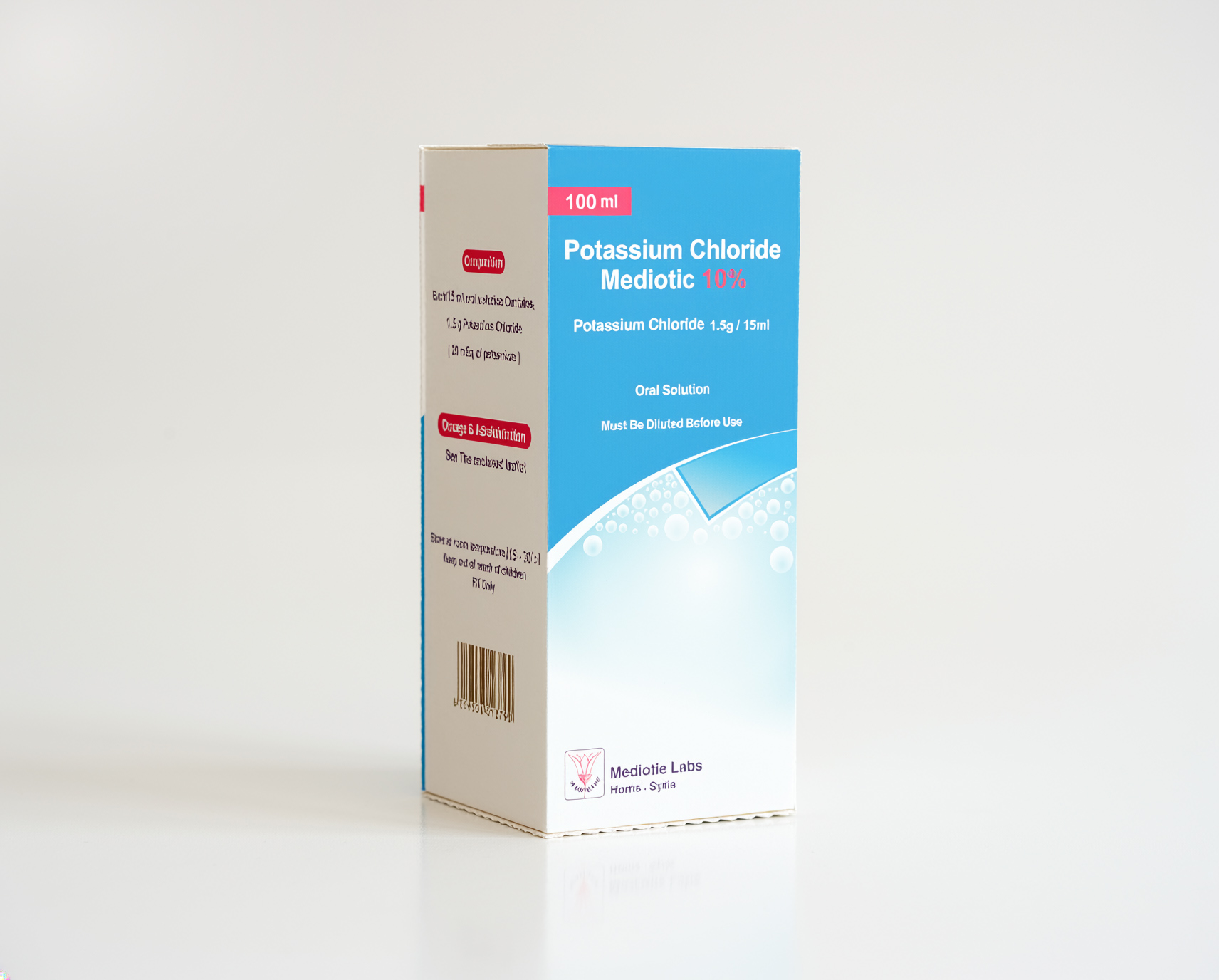
POTASSIUM CHLORIDE MEDIOTIC

Composition:

Potassium Chloride Mediotic 10% Oral Solution: Each 15 ml (tablespoonful) contains: 20 mEq of potassium (1.5 g of potassium chloride), in a palatable, orange flavored, sugar free, alcohol free vehicle.

Excipients: Citric acid anhydrous, Glycerin, Methylparaben, Natural/artificial orange flavor, Propylene glycol, Propylparaben, Purified water, Sodium citrate dihydrate, Sucralose, Sunset yellow.

Mechanism of Action and Pharmacodynamics: Potassium Chloride Mediotic oral solution 10% and Extended Release Tablets are electrolyte replenishers.

The potassium ion (K+) is the principal intracellular cation of most body tissues. Potassium ions participate in a number of essential physiological processes including the maintenance of intracellular tonicity; the transmission of nerve impulses; the contraction of cardiac, skeletal, and smooth muscle; and the maintenance of normal renal function.

The intracellular concentration of potassium is approximately 150 to 160 mEq per liter. The normal adult plasma concentration is 3.5 to 5 mEq per liter. An active ion transport system maintains this gradient across the plasma membrane.

Potassium is a normal dietary constituent, and under steady-state conditions the amount of potassium absorbed from the gastrointestinal tract is equal to the amount excreted in the urine. The usual dietary intake of potassium is 50 to 100 mEq per day.

Pharmacokinetics: The potassium chloride in extended-release tablets is completely absorbed before it leaves the small intestine. The wax matrix is not absorbed and is excreted in the feces; in some instances the empty matrices may be noticeable in the stool. When the bioavailabilty of the potassium ion from the potassium chloride extended-release tablets is compared to that of a true solution the extent of absorption is similar. The extended-release properties of potassium chloride extended-release tablets are demonstrated by the finding that a significant increase in time is required for renal excretion of the first 50% of the potassium chloride extended-release tablets dose as compared to the solution. Increased urinary potassium excretion is first observed 1 hour after administration of potassium chloride extended-release tablets, reaches a peak at approximately 4 hours, and extends up to 8 hours. Mean daily steady-state plasma levels of potassium following daily administration of potassium chloride extended-release tablets cannot be distinguished from those following administration of potassium chloride solution from control plasma levels of potassium ion.

Based on published literature, the rate of absorption and urinary excretion of potassium from KCI oral solution were higher during the first few hours after dosing relative to modified release KCI products. The bioavailability of potassium, as measured by the cumulative urinary excretion of K+ over a 24 hour post dose period, is similar for KCI solution and modified release products.

Indications:

  1. For the treatment of patients with hypokalemia, with or without metabolic alkalosis; in digitalis intoxication; and in patients with hypokalemic familial periodic paralysis. If hypokalemia is the result of diuretic therapy, consideration should be given to the use of a lower dose of diuretic, which may be sufficient without leading to hypokalemia.
  2. For the prevention of hypokalemia in patients who would be at particular risk if hypokalemia were to develop, e.g., digitalized patients or patients with significant cardiac arrhythmias.

The use of potassium salts in patients receiving diuretics for uncomplicated essential hypertension is often unnecessary when such patients have a normal dietary pattern and when low doses of the diuretic are used. Serum potassium should be checked periodically, however, and if hypokalemia occurs, dietary supplementation with potassium-containing foods may be adequate to control milder cases. In more severe cases, and if dose adjustment of the diuretic is ineffective or unwarranted, supplementation with potassium salts may be indicated. Contraindications: Potassium supplements are contraindicated in patients with hyperkalemia since further increase in serum potassium concentration in such patients can produce cardiac arrest. Hyperkalemia may complicate any of the following conditions: chronic renal failure, systemic acidosis such as diabetic acidosis, acute dehydration, extensive tissue breakdown as in severe burns, adrenal insufficiency, or the administration of a potassium-sparing diuretic (e.g., spironolactone, triamterene, amiloride).

Extended-release formulations of potassium chloride have produced esophageal ulceration in certain cardiac patients with esophageal compression due to an enlarged left atrium. Potassium supplementation, when indicated in such patients, should be given as a liquid preparation. All solid oral dosage forms of potassium chloride are contraindicated in any patient in whom there is structural, pathological (e.g., diabetic gastroparesis) or pharmacologic (use of anticholinergic agents or other agents with anticholinergic properties at sufficient doses to exert anticholinergic effects) cause for arrest or delay in tablet passage through the gastrointestinal tract.

Side Effects: One of the most severe adverse effects is hyperkalemia. There also have been reports of upper and lower gastrointestinal conditions including obstruction, bleeding, ulceration and perforation.

The most common adverse reactions to the potassium salts are nausea, vomiting, flatulence, abdominal pain/discomfort and diarrhea. These symptoms are due to irritation to the gastrointestinal tract and are best managed by diluting the preparation further, taking the dose with meals, or reducing the amount taken at one time.

Warnings & Precautions: POTASSIUM CHLORIDE ORAL SOLUTION 10% LIQUIDS WILL CAUSE GASTROINTESTINAL IRRITATION IF ADMINISTERED UNDILUTED.

Increased dilution of the solution and taking with meals may reduce gastrointestinal irritation.

Drug & Food Interactions:

Potassium-sparing diuretic: Use with potassium-sparing diuretic can produce severe hyperkalemia. Avoid concomitant use.

Angiotensin converting enzyme inhibitors: Use with angiotensin converting enzyme (ACE) inhibitors produces potassium retention by inhibiting aldosterone production. Potassium supplements should be given to patients receiving ACE inhibitors only with close monitoring.

Angiotensin Receptor Blockers: Use with angiotensin receptor blockers (ARBs) produces potassium retention by inhibiting aldosterone production. Potassium supplements should be given to patients receiving ARBS only with close monitoring.

Use in Special Populations:

Pregnancy Category C: It is unlikely that potassium supplementation that does not lead to hyperkalemia would have an adverse effect on the fetus or would affect reproductive capacity.

Nursing Mothers: The normal potassium ion content of human milk is about 13 mEq per liter. Since oral potassium becomes part of the body potassium pool, so long as body potassium is not excessive, the contribution of potassium chloride supplementation should have little or no effect on the level in human milk.

Pediatric Use: The safety and effectiveness of potassium chloride have been demonstrated in children with diarrhea and malnutrition from birth to 16 years.

Geriatric Use: Clinical studies of potassium chloride did not include sufficient numbers of subjects aged 65 and over to determine whether they respond differently from younger subjects. Other reported clinical experience has not identified differences in responses between the elderly and younger patients. In general, dose selection for an elderly patient should be cautious, usually starting at the low end of the dosing range, reflecting the greater frequency of decreased hepatic, renal, or cardiac function, and of concomitant disease or other drug therapy.

clinical status of the patient. Correct volume status, acid-base balance and electrolyte deficits as appropriate. Administration:

If hypokalemia is the result of diuretic therapy, consideration should be given to the use of a lower dose of diuretic, which may be sufficient without leading to hypokalemia.

The usual dietary potassium intake by the average adult is 50 to 100 mEq per day. Potassium depletion sufficient to cause hypokalemia usually requires the loss of 200 mEq or more of potassium from the total body store.

Dosage must be adjusted to the individual needs of each patient. The dose for the prevention of hypokalemia is typically in the range of 20 mEq per day. Doses of 40-100 mEq per day or more are used for the treatment of potassium depletion. Dosage should be divided if more than 20 mEq per day is given such that no more than 20 mEq is given in a single dose.

Potassium chloride extended-release tablets should be taken with meals and with a glass of water or other liquid. This product should not be taken on an empty stomach because of its potential for gastric irritation.

NOTE: Potassium chloride extended-release tablets must be swallowed whole and never crushed, chewed or sucked.

BECAUSE OF REPORTS OF INTESTINAL AND GASTRIC ULCERATION AND BLEEDING WITH EXTENDED-RELEASE POTASSIUM CHLORIDE PREPARATIONS, THESE DRUGS SHOULD BE RESERVED FOR THOSE PATIENTS WHO CANNOT TOLERATE OR REFUSE TO TAKE LIQUID OR EFFERVESCENT POTASSIUM PREPARATIONS OR FOR PATIENTS IN WHOM THERE IS A PROBLEM OF COMPLIANCE WITH THESE PREPARATIONS.

Dilute the potassium chloride solution with at least 4 ounces (118.294 ml of cold water).

If serum potassium concentration is less than 2.5 mEq/L, use intravenous potassium instead of oral supplementation. Adult Dosing

Treatment of Hypokalemia:

Daily dose range from 40 to 100 mEq. Give in 2 to 5 divided doses: limit doses to 40 mEq per dose. The total daily dose should not exceed 200 mEq in a 24 hour period.

Maintenance or Prophylaxis:

Typical dose is 20 mEq per day. Individualize dose based upon serum potassium levels.

Studies support the use of potassium replacement in digitalis toxicity. When alkalosis is present, normokalemia and hyperkalemia may obscure a total potassium deficit. The advisability of use of potassium replacement in the setting of hyperkalemia is uncertain. Pediatric Dosing

Treatment of Hypokalemia:

Pediatric patients aged birth to 16 years old: The initial dose is 2 to 4 mEq/kg/day in divided doses; do not exceed as a single dose 1 mEq/kg or 40 mEq, whichever is lower; maximum daily doses should not exceed 100 mEq. If deficits are severe or ongoing losses are great, consider intravenous therapy.

Maintenance or Prophylaxis:

Pediatric patients aged birth to 16 years old: Typical dose is 1 mEq/kg/day. Do not exceed 3 mEq/kg/day.

Overdosage (Symptoms & Treatment): It is important to recognize that hyperkalemia is usually asymptomatic and may be manifested only by an increased serum potassium concentration (6.5-8.0 mEq/L) and characteristic electrocardiographic changes (peaking of T-waves, loss of P- wave, depression of S-T segment, and prolongation of the QT interval). Late manifestations include paralysis and cardiovascular collapse from cardiac arrest (9-12 mEq/L).

Treatment measures for hyperkalemia include the following:

  1. Elimination of foods and medications containing potassium and of any agents with potassium-sparing properties.
  2. Intravenous administration of 300 to 500 ml/hr of 10% dextrose solution containing 10-20 units of crystalline insulin per 1,000 ml.
  3. Correction of acidosis, if present, with intravenous sodium bicarbonate.
  4. Use of exchange resins, hemodialysis, or peritoneal dialysis.

In treating hyperkalemia, it should be recalled that in patients who have been stabilized on digitalis, too rapid a lowering of the serum potassium concentration can produce digitalis toxicity.

Packaging:

Glass bottle of 100 ml / carton box with measuring plastic cup.

Storage Conditions: “Keep out of reach of children”

“Store at room temperature, between 15° – 30° C”

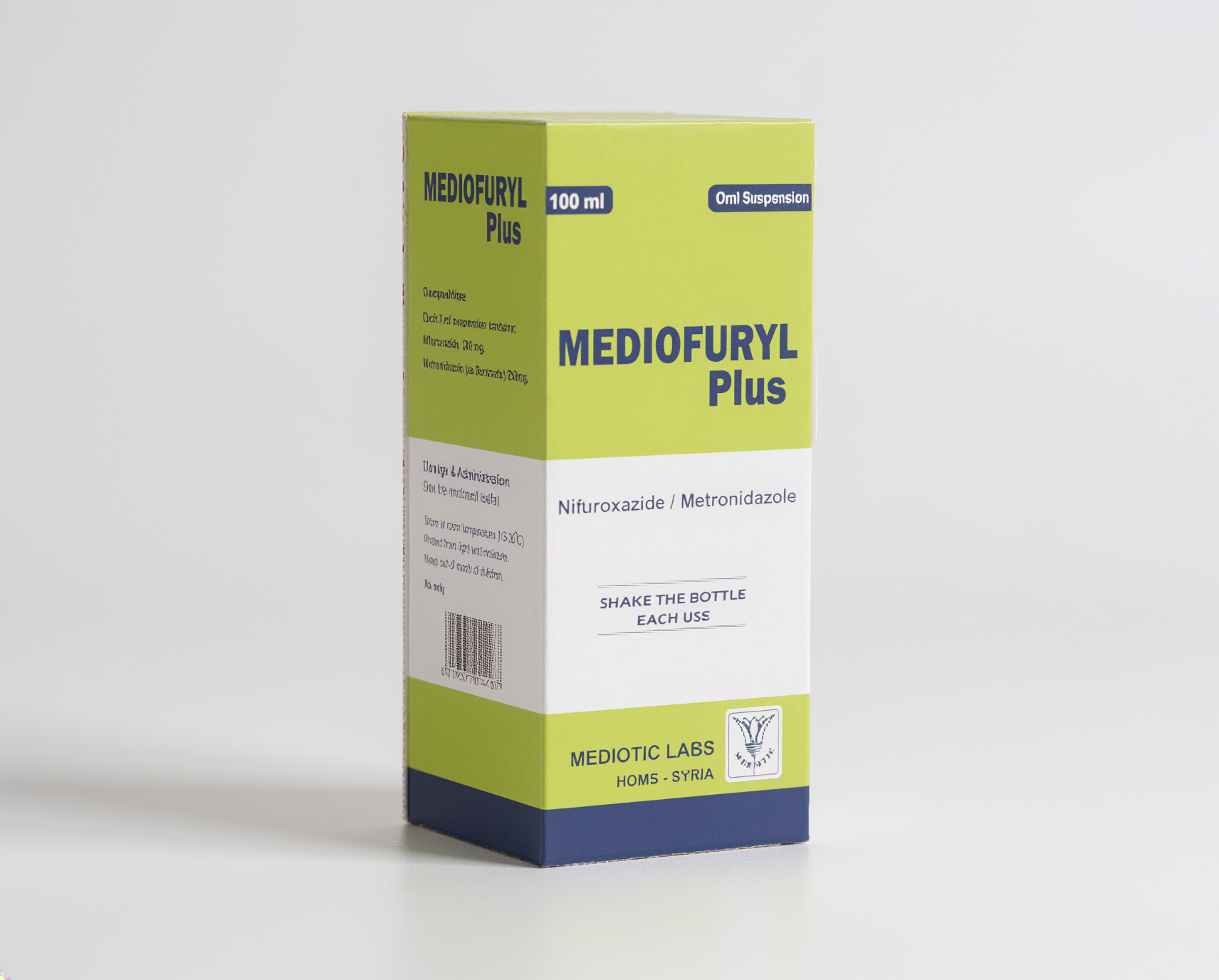
MEDIOFURYL plus

Nifuroxazide+ Metronidazole

200/250mg in 5 ml suspension

Chemical composition: Each 5 ml suspension contains: NIFUROXAZIDE

200 mg + METRONIDAZOLE (as benzoate) 250 mg.

Excipients: Cellulose, Sugar, Banana flavor, Glycerin, Polysorbate 80, Sorbitol, Methyl paraben, Propyl paraben. PHARMACOKINETICS AND

PHARMACODYNAMICS:

The presence of nifuroxazide is given in order to achieve a drug synergy avoiding amoeba-bacteria symbiosis. Nifuroxazide is an intestinal antiseptic with strictly local antibacterial action. Nifuroxazide has the advantage of not affecting the intestinal saprophytic flora. It is effective against Escherichia coli, S. paratyphi, S. faecalis and S. dysenteriae, so indicated for cases of bacillary dysentery and infectious diarrhea. Pseudomonas is resistant nature.

It is not absorbed through the digestive tract unless there is a significant lesion at the mucosal level. The treatment with this combination should not be extended to more than ten days because of the medical indication previously proposed. Due to the formulation presented, fewer doses are needed to administer metronidazole. Nitrofurans inhibit the synthesis of ATP by blocking the enzymatic systems at the level of the bacterial Krebs cycle.

Metronidazole is a synthetic oral antiparasitic, which is well absorbed orally. Its half-life is 8 hours with fecal excretion of 6 to 15% of the administered dose.

It is also known for its antibacterial properties. Its biotransformation is carried out by oxidation, reduction and conjugation with glucuronic acid. Renal clearance is approximately 10 ml/min.

The plasma protein binding of the circulating metronidazole is approximately 20%. The presence of food does not affect the absorption of metronidazole metronidazole are effective against Entamoeba histolytica, Trichomonas vaginalis and Giardia lamblia (at concentrations of 1 to 50 mcg/mL in vitro). Its mechanism of action is inhibitor of the DNA synthesis of the parasite or the bacteria affected.

The original metronidazole and some of its metabolites are excreted in various proportions in the urine, after the subject ingests the primary compound. The liver is the main organ in which it is metabolized.

INDICATIONS:

Extraintestinal and luminal amebiasis associated with bacterial intestinal infection. Intestinal Giardiasis, associated with bacterial intestinal infection.

CONTRAINDICATIONS:

Patients with a history of nitrofuran allergy and hypersensitivity to metronidazole.

First trimester of pregnancy.

PRECAUTIONS:

Patients with severe hepatic disease metabolize metronidazole slowly resulting accumulation of this and its metabolites in plasma. Therefore, low doses with close monitoring are recommended for such patients. Candidiasis symptoms may be exacerbated during metronidazole therapy, requiring treatment with an anticandiditic agent.

Seizures and peripheral neuropathy have been reported in patients treated with metronidazole, the presence of abnormal neurological signs requires prompt discontinuation of metronidazole therapy. Metronidazole should be administered with caution to patients with central nervous system disease.

Prolonged administration of the product may interfere with the results of normal transaminase, lactate dehydrogenase and triglyceride values.

Patients with impaired hepatic function may modify the plasma clearance of metronidazole.

PREGNANCY AND BREASTFEEDING:

The product should not be used in pregnant women if the benefit / risk index is not justified primarily during the first quarter. Do not use in lactating or children under 2 years.

MUTAGENESIS AND FERTILITY:

In experimental studies it has been observed that metronidazole has a potential for carcinogenesis in both rats and mice. At the same time, in a large number of biological in vitro assays metronidazole has shown mutagenic activity.

There are currently no controlled studies with the product in pregnant women.

ADVERSE REACTIONS:

There may be nausea 12%, headache, anorexia, metallic taste, glossitis, among others.

CNS: Dizziness, ataxia, confusion, insomnia, irritability and in some cases the presence of seizures and peripheral neuropathy. In cardiovascular system: ECG monitoring The flattening of the T wave.

Drugs interactions:

Intolerance may occur with sucrose.

Increased hypoprothrombinemic response of warfarin, and bleeding occur in some patients receiving both drugs simultaneously. With phenobarbital the medication can cause a decrease in the concentration of blood metronidazole, by increasing the metabolism of the latter.

With cimetidine on the other hand it can increase the blood concentration of metronidazole.

Metronidazole and simultaneous disulfiram may produce CNS toxicity, probably by the inhibition of aldehyde dehydrogenase. Administration of etronidazole with the presence of ethyl alcohol may trigger a reaction similar to that of disulfiram used in addicted individuals.

With phenytoin, metronidazole may cause an increase in the plasma concentration of phenytoin.

Dosage and method of administration:

Administration way: Oral.

Suspension(children above 2 years old): The recommended dose is 3 to 4 teaspoons per day in 3 divided doses. OVERDOSAGE:

Symptoms that refer to the presence of an overdose are: Nausea, vomiting, ataxia mainly due to the appearance of metronidazole. No specific antidote is known. Administration of 15 g of total metronidazole as a suicide attempt has been reported. The management of the patient in cases of overdose consists of the application of a supportive and symptomatic treatment quickly.

Storage conditon: “store at room temperature, 15°-30°C, away from light”

Packaging: Glass bottle of 100 ml/carton box with Measuring plastic Cup.

THIS IS A MEDICAMENT *

“Keep out of reach of children”.

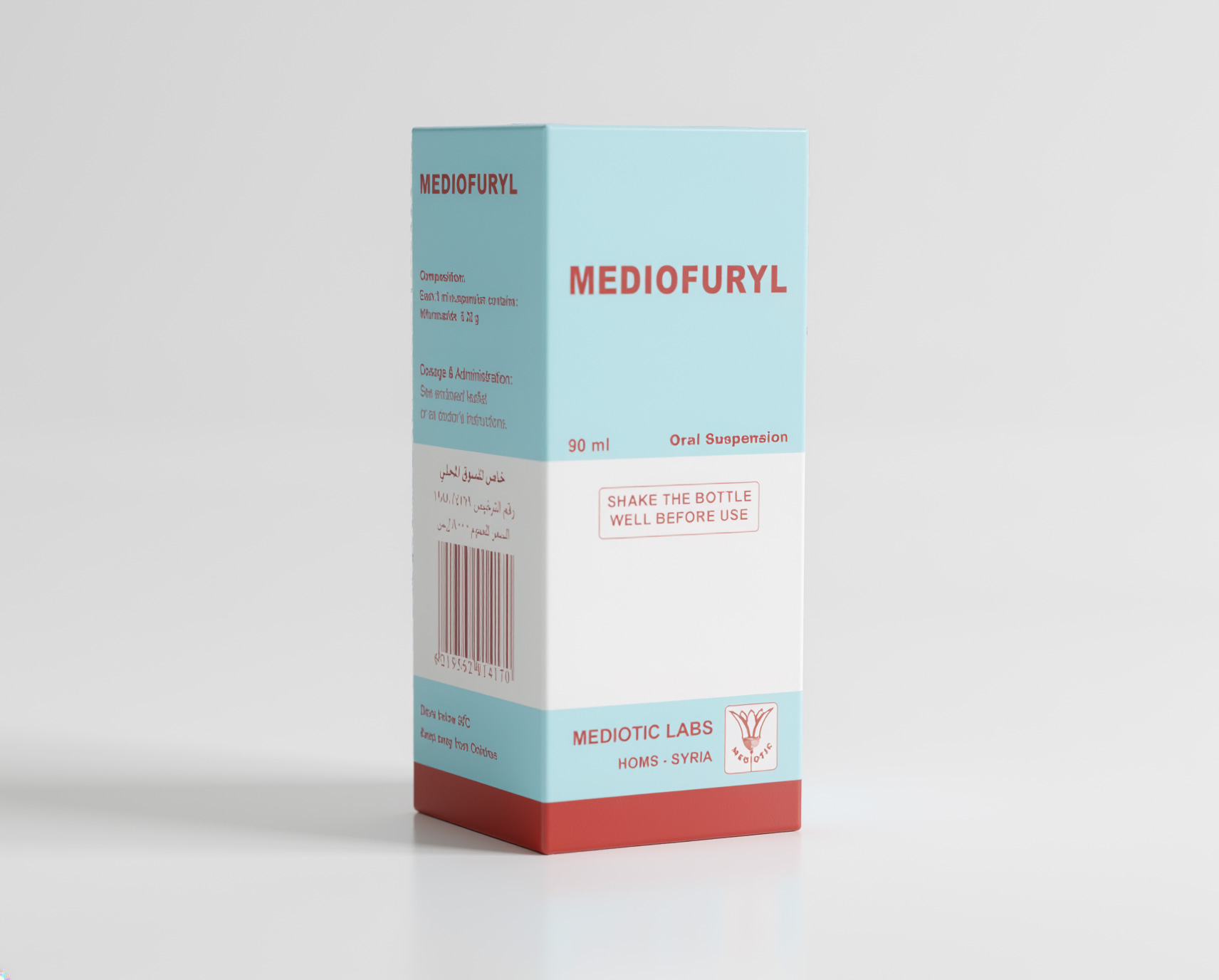
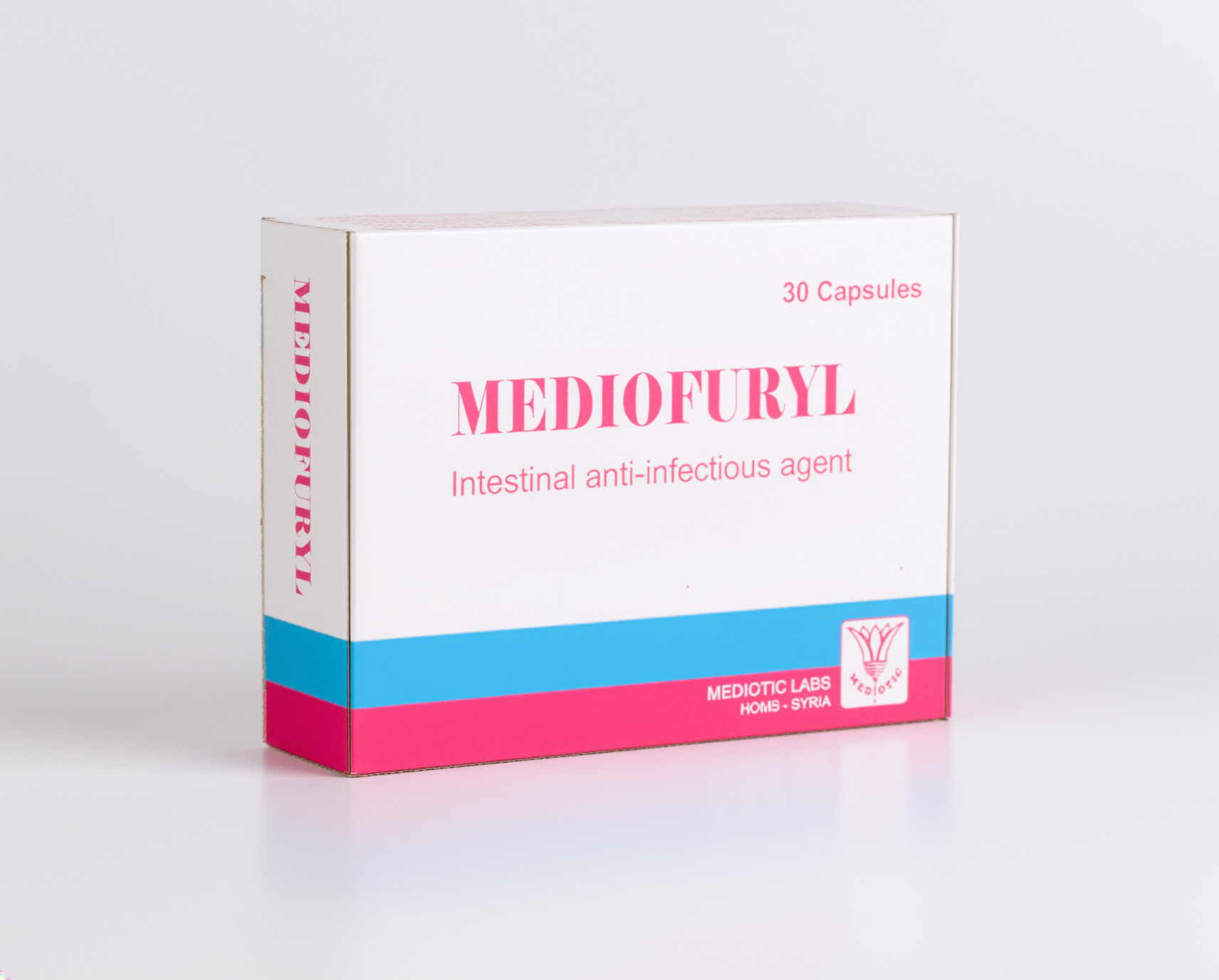
MEDIOFURYL

COMPOSITION:

Each MEDIOFURYL capsule contains: 200 mg Nifuroxazide.

Each 5 mL MEDIOFURYL oral suspension contains: 220 mg Nifuroxazide.

Excipients:

Capsules: Magnesium Stearate, Povidone, Deionized Water.

Oral Suspension: Carboxy Methyl Cellulose, Microcrystalline Cellulose, Citric Acid, Ethyl Alcohol, Antifoaming Emulsion, Banana Flavor, Sucrose, Methyl Paraben Sodium, Propyl Paraben Sodium, Deionized Water. PROPERTIES:

Nifuroxazide, a nitrofurane derivative, is a broad-spectrum intestinal anti-infective agent. Nifuroxazide has been shown to be active against the following pathogens involved in infectious diarrhea:

Escherichia coli,Staphylococcus saprophyticus, Streptococcus, Enterococcus, Bacteroides, Klebsiela, Enterobacter and Serratia.

PHARMACOKINETIC PROPERTIES:

The absorption is extremely low when the intestinal mucosa is not impaired

INDICATIONS:

MEDIOFURYL is indicated in the following conditions:

-Treatment of acute non-invasive diarrhea presumed to be of bacterial origin.

-Treatment and prevention of traveler’s diarrhea.

-Adjunctive therapy for acute inflammatory colitis.

The importance of rehydration by oral rehydration therapy or intravenously should be adjusted according to intensity of the diarrhea, the age and the patients characteristics (associated diseases,…).

CONTRAINDICATIONS:

MEDIOFURYL is contraindicated in:

Hypersensitivity to any of the components or to other nitrofurane derivatives.

Capsule: Children under 15 years of age.

ADVERSE REACTIONS:

This drug is usually well tolerated. However, there is a possibility of allergic reactions to type of rash, urticaria, angioedema or anaphylaxis.

WARNINGS AND PRECAUTIONS:

– Inform your doctor if diarrhea persists more than 2 days or worsens, or if you have fever and/ or blood in the stool. Fluid and electrolyte depletion often occur in patients who have severe diarrhea. In such cases, administration of appropriate fluid and electrolytes is very important. The use of this drug does not preclude the need for appropriate fluid and electrolyte therapy.

Rehydration is the key treatment of acute diarrhea in children under 2 years. Beyond this age, it should be systematically considered.

-If after 3 days of treatment the diarrhea persists. What to do should be reassessed and the need for oral rehydration or intravenous should be considered.

-In case of infective diarrhea with clinical symptoms suggesting an invasive phenomenon, use of antibacterials good to systemic dissemination.

-Due to the presence of sucrose, patients with rare hereditary problems of fructose intolerance, glucose-galactose malabsorption or sucrase-isomaltase insufficiency should not take this medicine.

-In the event of greater than 6 loose stools per day or diarrhea lasting for more than 24 hours or is accompanied by a loss of weight, or in case of presence of blood or mucus in the stool, the patient should consult his doctor

-The patient should be informed to exclude certain inputs, particularly raw vegetables, fruits, green vegetables, spicy dishes, as well as frozen food or beverages, and to focus on grilled meats, rice.

DRUG INTERACTIONS:

This medication cannot be taken with drugs that induce an antabuse reaction and CNS depressants.

Pregnancy and breast-feeding:

As a precaution, it is best not to use nifuroxazide during pregnancy.

Breast-feeding remains possible in case of brief treatment with this drug.

OVERDOSE:

In case of overdose of nifuroxazide, a patient monitoring must be carried out and symptomatic treatment should be implemented.

DOSAGE AND ADMINISTRATION:

MEDIOFURYL is for oral use; swallow the capsule with a glass of water.

-Take MEDIOFURYL as directed by your doctor.

-The duration of treatment is limited to 3 days.

-In case of a missed dose: Take the missed dose as soon as you remember, unless the next dose is near. Do not take a double dose at once.

– don’t give under 18 years.

Capsule:

The usual recommended dose for adults is 1 capsule of 200 mg, 4 times per day. Or 1 capsule of 400 mg 2 times per day. STORAGE CONDITIONS:

Protect from light and moisture.

Store at room temperature, between (15-30)°C.

Keep out of reach of children.

PACKAGING:

3 blisters, each contains 10 capsules/carton box.

Glass bottle of 90 mL oral suspension/carton box, with a metallic screw cap.

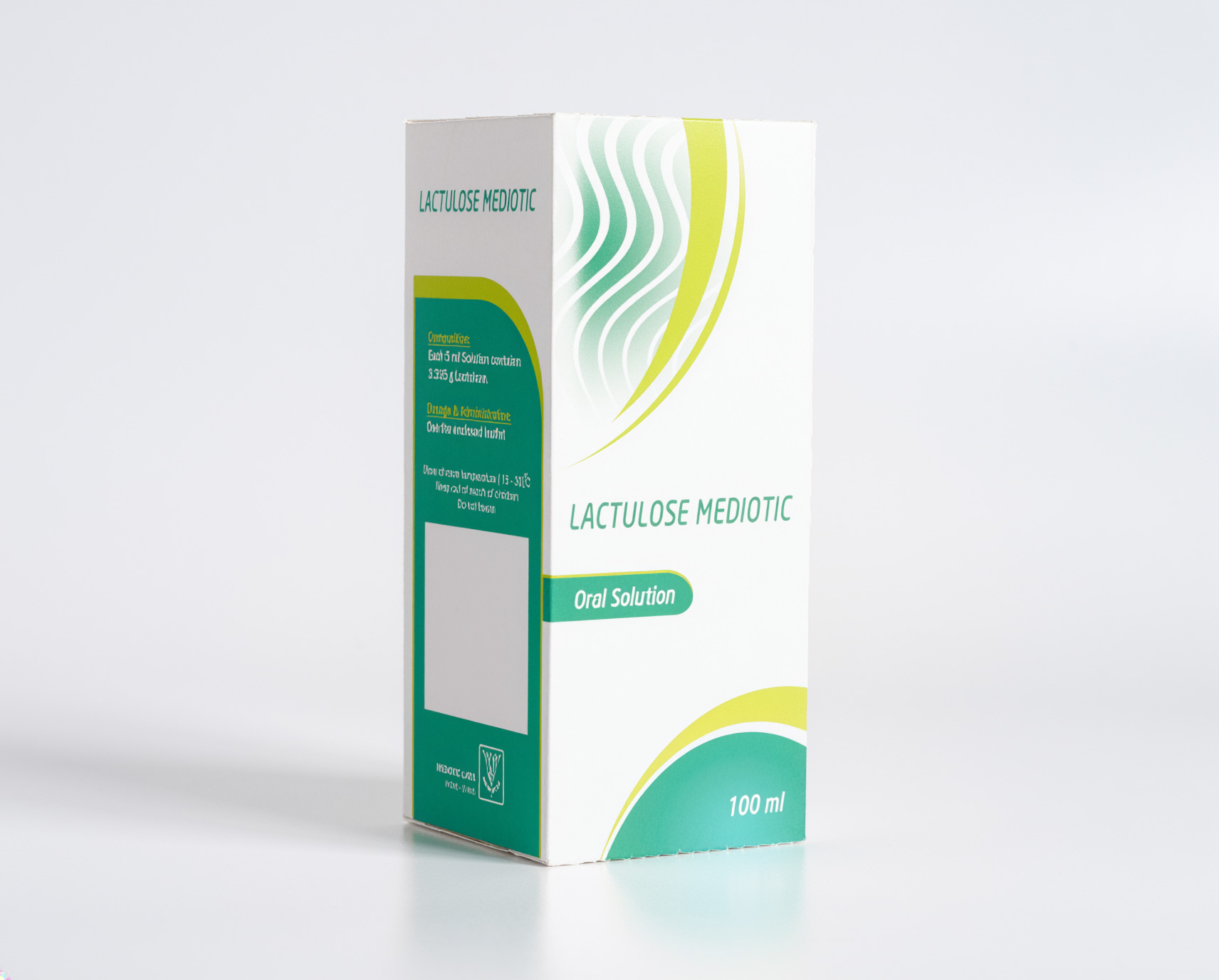
LACTULOSE MEDIOTIC

Chemical Composition: Each 5 ml of solution contains: 3.335g Lactulose. Excipients: Sodium hydroxide, Banana flovour and purified water. Pharmacological Classifications: Gastrointestinal drugs (laxative).

Mechanism of action:

In the colon lactulose is broken down by colonic bacteria into low molecular organic acids. These acids lead to a lowering of pH in the colonic lumen and via an osmotic effect to an increase of the volume of colonic contents. These effects stimulate peristalsis of the colon and return the consistency of the stool. The constipation is cleared and the physiological rhythm of the colon is reinstated.

In hepatic encephalopathy (HE) the effect has been attributed to suppression of proteolytic bacteria by an increase of acidophilic bacteria (e.g. lactobacillus), trapping of ammonia in the ionic form by acidification of the colonic contents, catharsis due to the low pH in the colon as well as an osmotic effect, and alteration of the bacterial nitrogen metabolism by stimulating the bacteria to utilize ammonia for bacterial protein synthesis. Pharmacokinetics:

Lactulose is poorly absorbed after oral administration and it reaches the colon unchanged. There it is metabolised by the colonic bacterial flora. Metabolism is complete at doses up to 25 -50 g or 40-75 ml; at higher dosages, a proportion may be excreted unchanged.

Indications:

  1. For the treatment of constipation.
  2. For the treatment of hepatic encephalopathy (HE); hepatic coma

Contraindications:

Hypersensitivity to the active substance or any of the ingredients.

Galactosaemia.

Gastro-intestinal obstruction, digestive perforation or risk of digestive perforation

Side Effects:

Flatulence may occur during the first few days of treatment. As a rule it disappears after a couple of days.

  • When dosages higher than instructed are used, abdominal pain and diarrhoea may occur. 

Nausea and vomiting

Precautions:

Consultation of a physician is advised in case of:

Painful abdominal symptoms of undetermined cause before the treatment is started.

– Insufficient therapeutic effect after several days.

– Lactulose should be administered with care to patients who are intolerant to lactose.

The dose normally used in constipation should not pose a problem for diabetics.

The dose used in the treatment of HE is usually much higher and may need to be taken into consideration for diabetics.

Chronic use of unadjusted doses and misuse can lead to diarrhoea and disturbance of the electrolyte balance. This product contains lactose, galactose and small amounts of fructose, Patients with rare hereditary problems of galactose intolerance, the Lapp lactase deficiency or glucose-galactose malabsorption should not take this medicine. – Use of laxatives in children should be exceptional and under medical supervision.

Pregnancy: No effects during pregnancy are anticipated, since systemic exposure to lactulose is negligible. Lactulose can be used during pregnancy.

Lactation: Lactulose can be used during breast-feeding.

Drug and Food Interactions: None known.

Dosage and Method of Administration:

The lactulose solution may be administered diluted or undiluted. Each dose may if necessary be taken with water or fruit juices, etc.

Each dose of lactulose should be swallowed in one and should not be kept in the mouth for an extended period of time. The posology should be adjusted according to the individual needs of the patient.

In case of single daily dose, this should be taken at the same time, e.g. during breakfast.

During the therapy with laxatives it is recommended to drink sufficient amounts of fluids (1.5-2 litres, equal to 6-8 glasses) during the day.

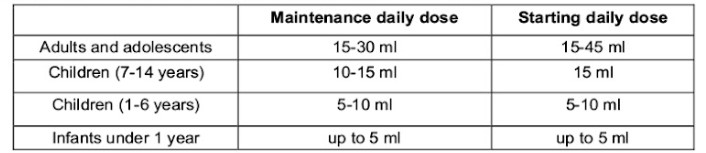
Dosing in constipation: Lactulose may be given as a single daily dose or in two divided doses, the measuring cup may be used. After a few days the starting dosage may be adjusted to the maintenance dose based upon treatment response. Several days (2-3 days) of treatment may be needed before treatment effect occurs.

Maintenance daily dose
Dosing in HE (for adults only): Starting dose: 3 to 4 times daily 30 -45 ml (6-9 x 5 ml spoonfuls). This dose may be adjusted to the maintenance dose to achieve two or three soft stools each day.

Overdosage:

Symptom: diarrhoea and abdominal pain.

Treatment: cessation of treatment or dose reduction. Extensive fluid loss by diarrhoea or vomiting may require correction of electrolyte disturbances.

No specific antidote. Symptomatic treatment should be given.

Storage Conditions:Store at room temperature 15-30 °C.Keep out of reach of children. Don’t freeze.

Packaging: Glass bottle of 100ml Lactulose/carton box, with measured plastic cup.
SPASMO-STOP

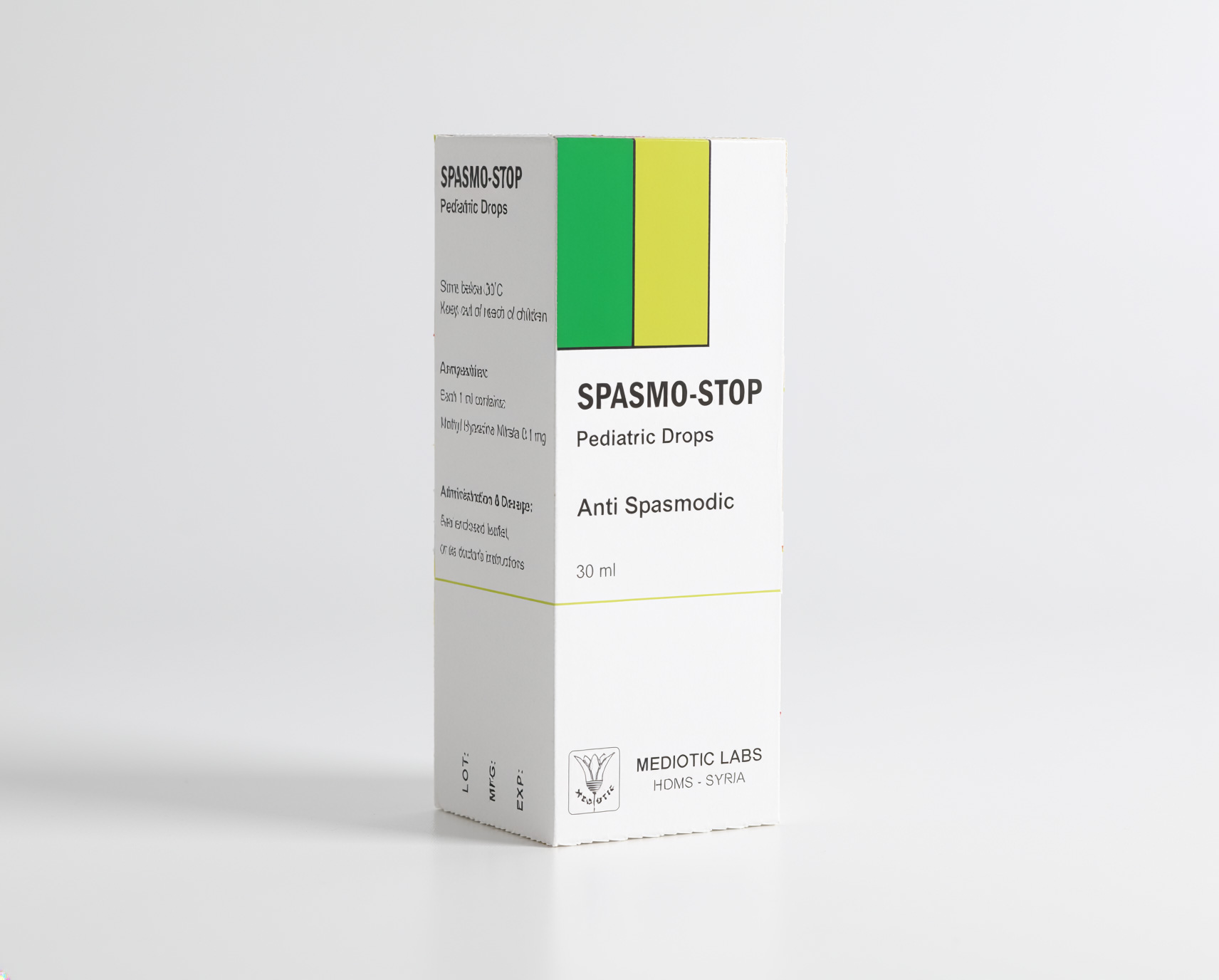
SPASMO-STOP Pediatric Drops

Composition:

Each 1ml of SPASMO-STOP contains: 0.1mg methyl hyoscine nitrate.

Properties:

Antispasmodic: methyl hyoscine nitrate has a powerful and rapid effect, it is more efficient and more quickly than atropine, with the following advantages: Marked anticholinergic activity.

Absence of the central effect of scopolamine as this drug does not penetrate the blood-brain barrier.

More selective antispasmodic effect on the smooth muscles. Minimal side effects (dryness of mouth and mydriasis).

No toxic effect or tachycardia when given at usual doses. Indications:

Spastic conditions of the gastro-intestinal tract such as intestinal colic, and pyloric spasm.

Functional nausea and vomiting.

Selected cases of enuresis.

Cautions:

Give with caution in case of high ambient temperature or in patients with fever as it reduces sweating and increases the risk of provoking hyperpyrexia. Interactions:

The drug effect of SPASMO-STOP drops may be enhanced by concomitant administation of anti-histamine, phenothiazine, tricyclic anti-depressants, and other anti muscarinic drugs.

Side effects:

Dryness of the mouth, thirst, dilatation of the pupils, photophobia, flushing and dryness of the skin, and tachycardia.

Contraindications:

Closed-angle glaucoma, myasthenia gravis, and functional pylorospasm Dosage & administration:

Birth-up to one year: three drops per kg of bodyweight before each feeding (5-6) times daily.

Storage:

– Keep in temperature below 30°C.

– Keep away from Children.

Presentation:

Plastic bottle (with dropper) contains 30 ml SPASMO-STOP solution.

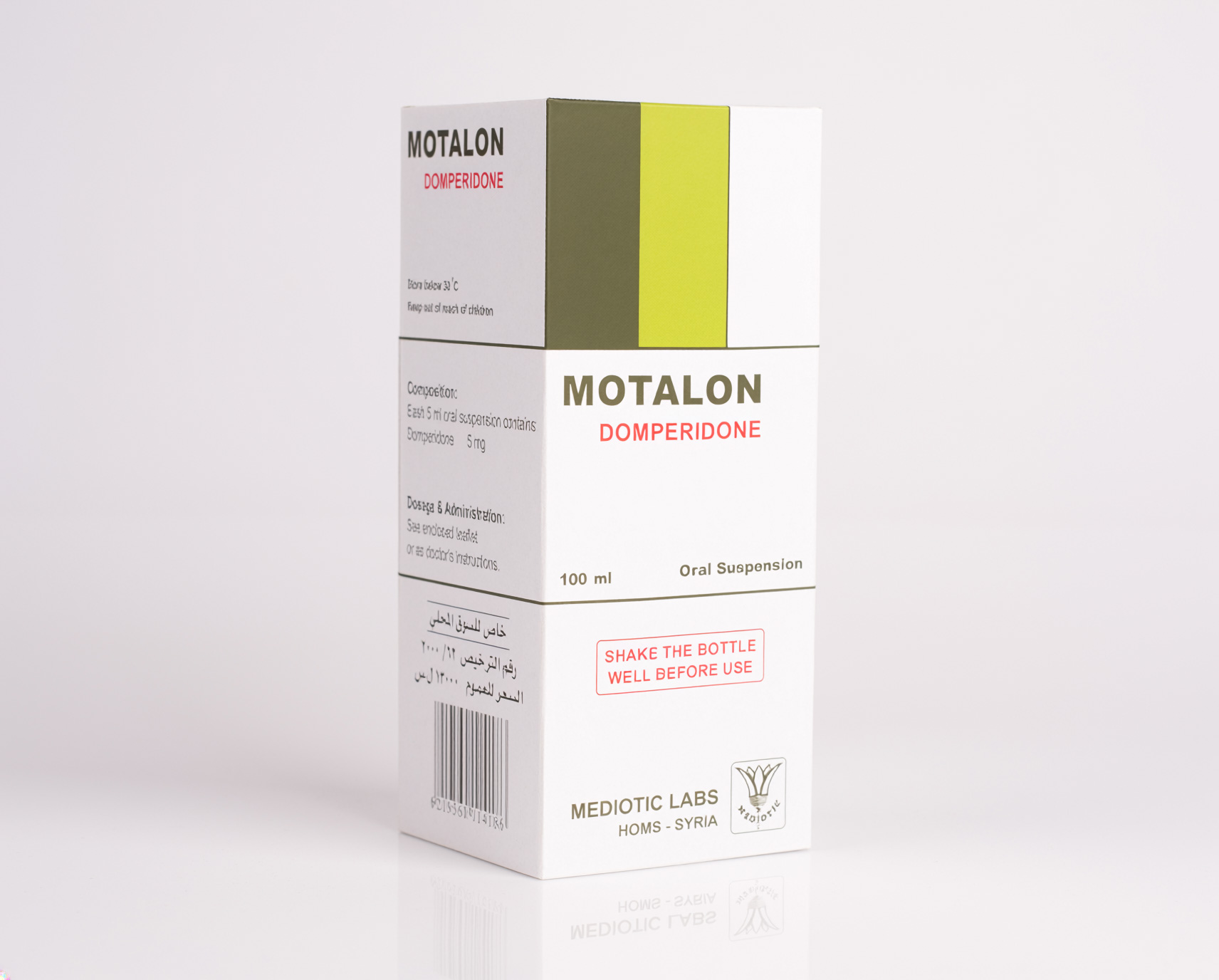
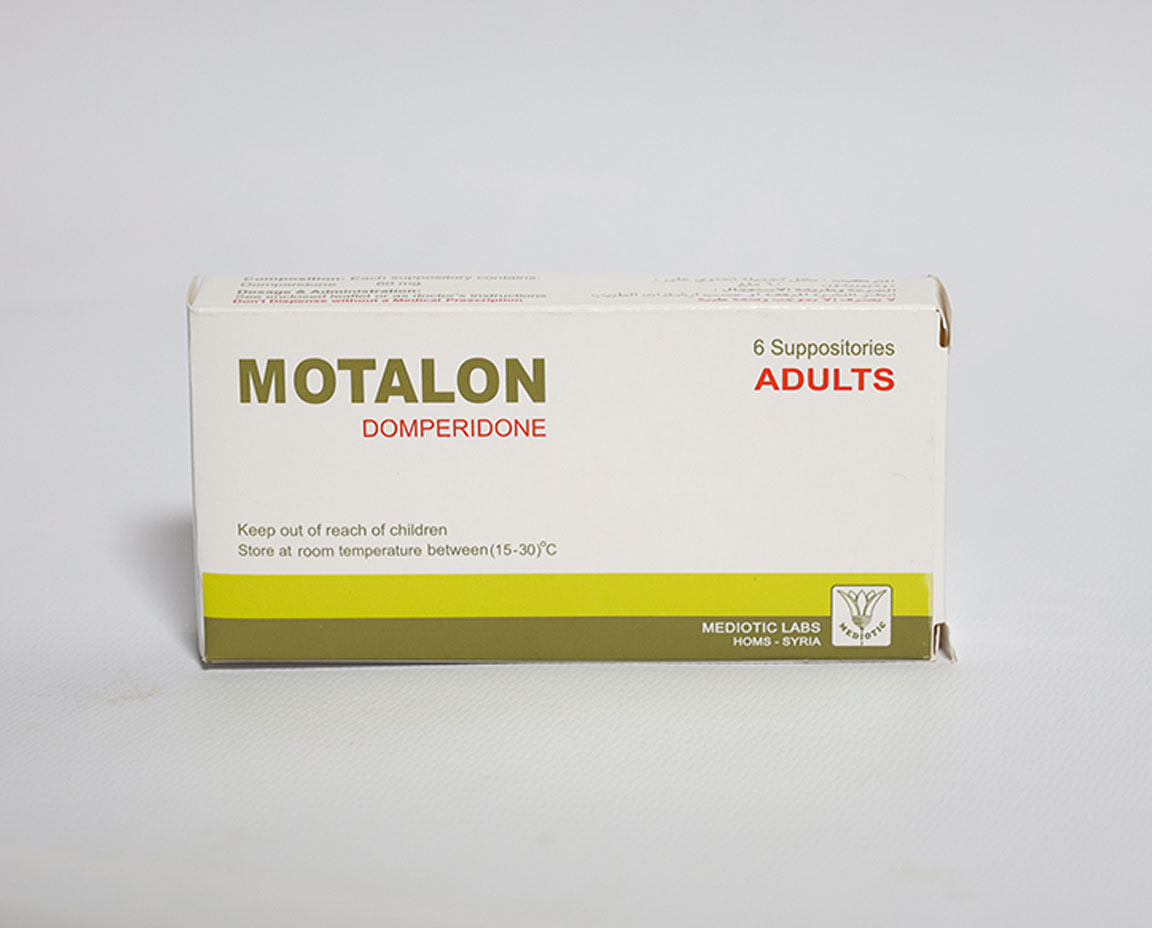
MOTALON

Film coated tablets (10 mg), Oral Suspension (1 mg/ml)

COMPOSITION:

Each film-coated tablets contains: 10 mg Domperidone.

Each 5 mL of oral suspension contains: 5 mg Domperidone. Excipients:

Film-coated tablets:

Core: Lactose Monohydrate, Starch, Talc, Magnesium Stearate, Aerosil, Povidone, Deionized Water. Film: HPMC, Talc, PEG, Ethanol, Titanium Dioxide.

Oral suspension: CMC, Vivapor, Saccharin Sodium, Tween, Banana Flavor, Antifoam Emulsion, Sorbitol, Methyl Paraben Sodium, Propyl Paraben Sodium, Deionized Water.

Pharmacological classification: Antispasmodic drugs and antiemetic.

MECHANISM OF ACTION:

Domperidone is a dopamine antagonist with anti-emetic properties. Its anti-emetic effect may be due to a combination of peripheral effects and antagonism of dopamine receptors in the chemoreceptor trigger zone.


PHARMACOKINETICS:
Absorption: Domperidone is rapidly absorbed after oral administration, with peak plasma concentrations occurring at approximately 1 hr after dosing.

Distribution: Domperidone is 91-93% bound to plasma proteins.
Metabolism: Domperidone is metabolized by liver.
Excretion: 31% of the drug is excreted by urine and 66% is excreted by feces. INDICATIONS:

MOTALON is indicated for the relief of the symptoms of nausea and vomiting.

CONTRAINDICATIONS:
The drug is contraindicated in hypersensitivity to MOTALON or any of the excipients. Prolactin-releasing pituitary tumour. When stimulation of the gastric motility could be harmful e.g in patients with gastro- intestinal haemorrhage, mechanical obstruction or perforation. In patients with moderate or severe hepatic impairment. In patients who have known existing prolongation of cardiac conduction intervals, particularly QTc, patients with significant electrolyte disturbances or underlying cardiac diseases such as congestive heart failure. co-administration with QT-prolonging drugs.co-administration with potent CYP3A4 inhibitors (regardless of their QT prolonging effects).

ADVERSE EFFECTS:
The most common adverse reaction while taking the drug is dry mouth. The uncommon adverse effect: Loss of libido, Anxiety, Somnolence, Headache, Diarrhea, Rash, Pruritus, Galactorrhoea, Breast pain, Asthenia.

DRUG INTERACTIONS:
Concomitant use of the following substances is contraindicated:
QTc prolonging medicinal products such as, anti-arrhythmic class IA (e.g. disopyramide, hydroquinidine, quinidine), anti-arrhythmic class III (e.g. amiodarone, dofetilide, dronedarone, ibutilide, sotalol), certain anti- psychotics (e.g. haloperidol, pimozide, sertindole), certain anti-depressants (e.g. citalopram, escitalopram), certain antibiotics (e.g. erythromycin, levofloxacin, moxifloxacin, spiramycin), certain antifungal agents (e.g. pentamidine), certain antimalarial agents (in particular halofantrine, lumefantrine), certain gastro-intestinal medicines (e.g. cisapride, dolasetron, prucalopride), certain antihistaminics (e.g. mequitazine, mizolastine), certain medicines used in cancer (e.g. toremifene, vandetanib, vincamine), certain other medicines (e.g. bepridil, diphemanil, methadone), Potent CYP3A4 inhibitors i.e. (protease inhibitors, systemic) azole antifungals, some macrolides (erythromycin, clarithromycin, telithromycin).
Concomitant use of the following substances is not recommended: Moderate CYP3A4 inhibitors i.e. diltiazem, verapamil and some macrolides. Concomitant use of the following substances requires caution in use: caution with bradycardia as well as with the following macrolides involved in QT-interval prolongation: azithromycin and roxithromycin (clarithromycin is contra-indicated as it is a potent CYP3A4 inhibitor).

WARNINGS AND PRECAUTIONS:
Cardiovascular effects:
MOTALON has been associated with prolongation of the QT interval on the electrocardiogram. There have been very rare cases of QT prolongation and torsades de pointes in patients taking MOTALON. These reports included patients with confounding risk factors, electrolyte abnormalities and concomitant treatment. MOTALON was associated with an increased risk of serious ventricular arrhythmias or sudden cardiac death, a higher risk was observed in patients older than 60 years, patients taking daily doses greater than


30 mg, and patients concurrently taking QT-prolonging drugs or CYP3A4 inhibitors MOTALON should be used at the lowest effective dose in adults and children.

MOTALON is contraindicated in patients with known existing prolongation of cardiac conduction intervals, particularly QTc, in patients with significant electrolyte disturbances (hypokalemia, hyperkalemia,

hypomagnesaemia), or bradycardia, or in patients with underlying cardiac diseases such as congestive heart failure due to increased risk of ventricular arrhythmia.

Treatment with MOTALON should be stopped if signs or symptoms occur that may be associated with cardiac arrhythmia, and the patients should consult their physician.

Pregnancy and lactation:

MOTALON should only be used during pregnancy when justified by the anticipated therapeutic benefit. In breast-feeding mothers, a decision should be made whether to discontinue breast-feeding or to discontinue MOTALON therapy taking into account the benefit of breast-feeding for the child and the benefit of therapy for the woman. Caution should be exercised in case of QTc prolongation risk factors in breast-fed infants. MOTALON should be used at the lowest effective dose for the shortest duration necessary to control nausea and vomiting.

It is recommended to take oral MOTALON before meals. If taken after meals, absorption of the drug is somewhat delayed.

If a scheduled dose is missed, the missed dose should be omitted and the usual dosing schedule resumed. The dose should not be doubled to make up for a missed dose.

Usually, the maximum treatment duration should not exceed one week.

Adults and adolescents (12 years of age and older and weighing 35 kg or more):

One 10 mg tablet before meal up to three times per day with a maximum dose of 30 mg per day.

10 ml (of oral suspension containing domperidone 1 mg per mL) up to three times per day with a maximum daily dose of 30 ml per day.

*Due to the need for accurate dosing, the drug is unsuitable for use in children and adolescents weighing less than 35 kg.

Neonates, infants, children (less than 12 years of age) and adolescents weighing less than 35 kg:

MOTALON Tablets: the risk of neurological side effects is higher in young children. Overdosing may cause extrapyramidal symptoms in children.

MOTALON Suspention: The dose is 0.25 mg/kg. This should be given up to three times per day with a maximum dose of 0.75 mg/kg per day.

Renal impairment: The elimination half-life of MOTALON is prolonged in severe renal impairment. The dose may also need to be reduced.

Hepatic Impairment: MOTALON is contraindicated in moderate or severe hepatic impairment. Dose modification in mild hepatic impairment is however not needed

OVERDOSAGE:

Overdose has been reported primarily in infants and children. Symptoms of overdosage may include agitation, altered consciousness, convulsions, disorientation, somnolence and extrapyramidal reactions. Treatment: There is no specific antidote to MOTALON, but in the event of overdose, standard symptomatic treatment should be given immediately. Gastric lavage as well as the administration of activated charcoal, may be useful. ECG monitoring should be undertaken, because of the possibility of QT interval prolongation. Close medical supervision and supportive therapy is recommended. Anticholinergic, anti- parkinson drugs may be helpful in controlling the extrapyramidal reactions.

PACKAGING:

Film-coated tablets: 3 blisters, each contains 10 film-coated tablets/carton box.

Oral suspension: Glass bottle of 100 mL oral suspension/carton box, with a metallic screw cap. STORAGE CONDITIONS:

– Protect from light and moisture. – Store below 30°C.

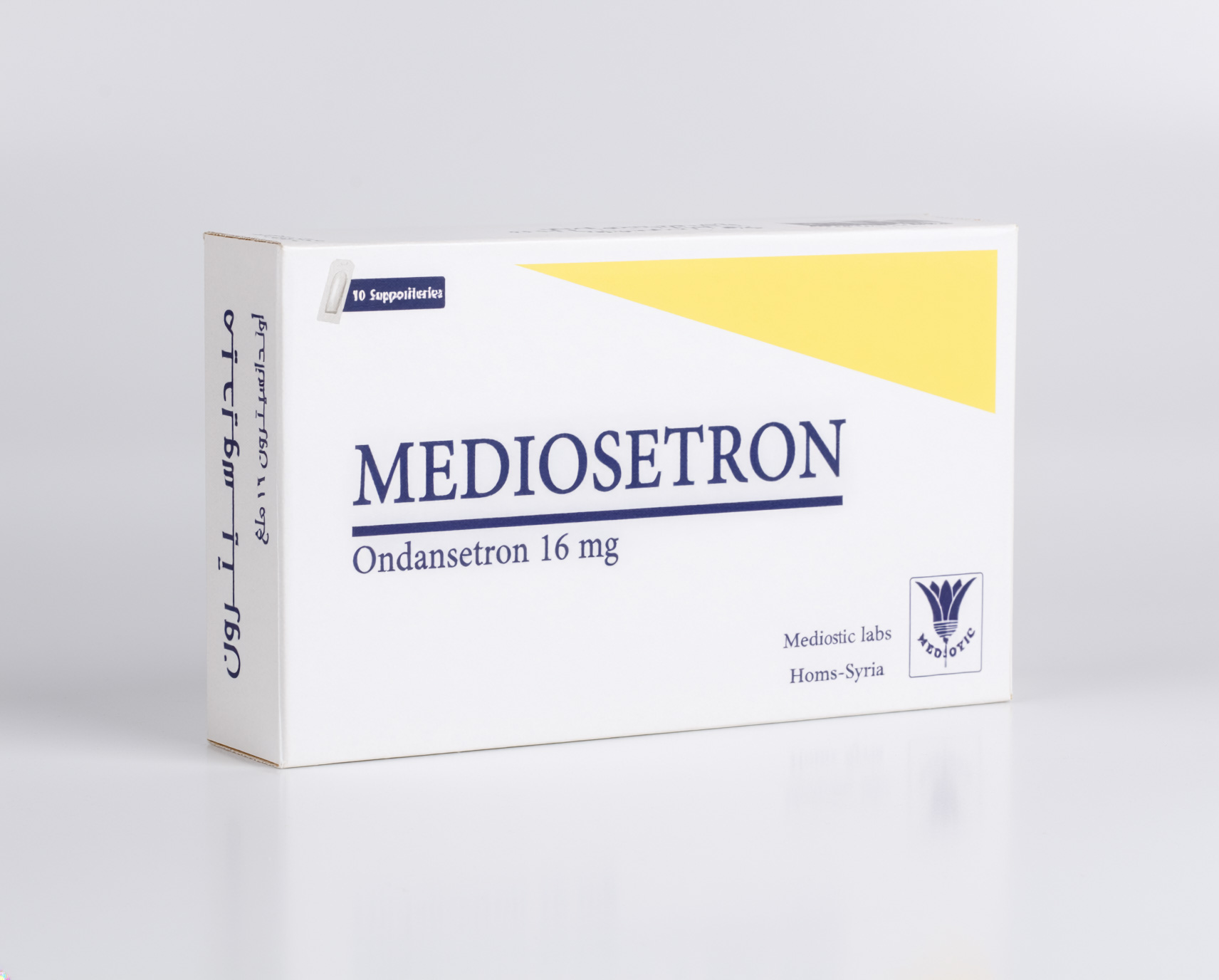
MEDIOSETRON

(Ondansetron 4 mg, 8 mg)

Ondansetron 4 mg: Each film-coated tablet contains: Ondansetron Hydrochloride Dihydrate equivalent to 4 mg Ondansetron. Ondansetron 8 mg: Each film-coated tablet contains: Ondansetron Hydrochloride Dihydrate equivalent to 8 mg Ondansetron Excipients

Core: Microcrystalline cellulose, Lactose monohydrate, Pregelatinised starch, Magnesium stearte

Film: HPMC, HPC, Titanium dioxide, Vanilin, Sorbic acid, Span 80, Propylene glycol, the strength 4 mg contains red iron oxide Pharmacological properties:

Pharmacodynamic properties:

Ondansetron is a potent, highly selective 5HTs receptor-antagonist. Chemotherapeutic agents and radiotherapy may cause release of 5HT in the small intestine initiating a vomoting reflex by activating vagal afferents via 5HTs receptors. Ondansetron blocks the initiation of this reflex. Thus, the effect of ondansetron in the management of the nausea and vomiting induced by cytotoxic chemotherapy and radiotherapy is probably due to antagonism of 5HT3 receptors on neurons located both in the peripheral and central nervous system..

Ondansetron does not alter plasma prolactin concentrations.

Pharmacokinetic properties:

Following oral administration, ondansetron is passively and completely absorbed from the gastrointestinal tract and undergoes first pass metabolism. Peak plasma concentrations of about 30ng/ml are attained approximately 1.5 hours after an 8mg dose. Bioavailability, following oral administration, is slightly enhanced by the presence of food but unaffected by antacids .Studies in healthy elderly volunteers have shown slight, but clinically insignificant, age-related increases in both oral bioavailability (65%) and half-life (five hours) of ondansetron. Gender differences were shown in the disposition of ondansetron, with females having a greater rate and extent of absorption following an oral dose and reduced systemic clearance and volume of distribution. The terminal half life of about three hours and steady state volume of distribution of about 140L.

Ondansetron is not highly protein bound (70-76%). Ondansetron is cleared from the systemic circulation predominantly by hepatic metabolism through multiple enzymatic pathways. Less than 5% of the absorbed dose is excreted unchanged in the urine.

Therapeutic indications:

Ondansetron is indicated for the prevention of nausea and vomiting associated with:

highly emetogenic cancer chemotherapy, including cisplatin greater than or equal to 50 mg/m2

initial and repeat courses of moderately emetogenic cancer chemotherapy

radiotherapy in patients receiving either total body irradiation, single high-dose fraction to the abdomen, or daily fractions to the abdomen.

Ondansetron is also indicated for the prevention of postoperative nausea and/or vomiting. Contraindications:

Hypersensitivity to any component of the preparation.

Undesirable effects:

Nervous system disorders:

Very common:

Uncommon:

Headache.

Seizures, movement disorders (including extrapyramidal reactions such as dystonic reactions, oculogyric crisis and dyskinesia), observed without definitive evidence of persistent clinical sequelae.

Cardiac disorders: Uncommon:

Vascular disorders:

Common:

Arrhythmias, chest pain with or without ST segment depression, bradycardia.

Sensation of warmth or flushing.

Uncommon:

Hypotension.

Respiratory, thoracic and mediastinal disorders:

Uncommon:

Gastrointestinal disorders:

Common:

Hepatobiliary disorders:

Uncommon:

Special warnings and precautions for use:

Hiccups.

Constipation.

Asymptomatic increases in liver function tests. These events were observed commonly in patients receiving chemotherapy with cisplatin.

Hypersensitivity reactions have been reported in patients who have exhibited hypersensitivity to other selective 5HTs receptor antagonists. Respiratory events should be treated symptomatically and clinicians should pay particular attention to them as precursors of hypersensitivity reactions. Rarely, transient ECG changes including QT interval prolongation have been reported in patients receiving ondansetron. In addition, . Ondansetron should be administered with caution to patients who have or may develop prolongation of QTc. These conditions include patients with electrolyte abnormalities, with congenital long QT syndrome, or patients taking other medicinal products that lead to QT prolongation. Therefore, caution should be exercised in patients with cardiac rhythm or conduction disturbances, in patients treated with antiarrhythmic agents or beta-adrenergic blocking agents and in patients with significant electrolyte disturbances.

As ondansetron is known to increase large bowel transit time, patients with signs of subacute intestinal obstruction should be monitored following administration.

In patients with adenotonsillar surgery prevention of nausea and vomiting with ondansetron may mask occult bleeding. Therefore, such patients should be followed carefully after ondansetron.

Patients with rare hereditary problems of galactose intolerance, the Lapp lactase deficiency or glucose-galactose malabsorption should not take this medicin Interaction with other medicinal products and other forms of interaction:.

Phenytoin, Carbamazepine and Rifampicin: In patients treated with potent inducers of CYP3A4 (i.e. phenytoin, carbamazepine, and rifampicin), the oral clearance of ondansetron was increased and ondansetron blood concentrations were decreased.

Tramadol: ondansetron may reduce the analgesic effect of tramadol.

Use of ondansetron with QT prolonging drugs may result in additional QT prolongation. Concomitant use of ondansetron with cardiotoxic drugs (e.g. anthracyclines) may increase the risk of arrhythmias

Pregnancy:

The use of ondansetron in pregnancy is not recommended.

Based on the Society of Obstetricians and Gynaecologists of Canada guideline on nausea and vomiting of pregnancy and the American College of Obstetricians and Gynecologists practice bulletin, the use of ondansetron may be considered in the treatment of severe or refractory nausea and vomiting when preferred agents have failed. Lactation:

It is recommended that mothers receiving ondansetron should not breast-feed their babies.

Posology and method of administration:

The recommended dosage regimens for adult and pediatric patients are described in Table 1 and Table 2, respectively.

Corresponding doses of ondansetron tablets, ondansetron ODT orally disintegrating tablets and ZOFRAN oral solution may be used interchangeably. Indication Dosage Regimen

Emetogenic

Highly

Cancer

Chemotherapy

Moderately

Emetogenic

Cancer

Chemotherapy

Radiotherapy

Postoperative

A single 24-mg dose administered 30 minutes before the start of single-day highly emetogenic chemotherapy, including cisplatin greater than or equal to 50 mg/m

8 mg administered 30 minutes before the start of chemotherapy, with a subsequent 8- mg dose 8 hours after the first dose.

Then administer 8 mg twice a day (every 12 hours) for 1 to 2 days after completion of chemotherapy.

For total body irradiation: 8 mg administered 1 to 2 hours before each fraction of radiotherapy each day.

For single high-dose fraction radiotherapy to the abdomen: 8 mg administered 1 to 2 hours before radiotherapy, with subsequent 8-mg doses every 8 hours after the first dose for 1 to 2 days after completion of radiotherapy.

For daily fractionated radiotherapy to the abdomen: 8 mg administered 1 to 2 hours before radiotherapy, with subsequent 8-mg doses every 8 hours after the first dosefor each day radiotherapy is given

16 mg administered 1 hour before induction of anesthesia.

Pediatric Recommended Dos age Regimen for Prevention of Nausea and Vomiting:

Indication

Moderately Emetogenic

Cancer Chemotherapy

Dosage in Hepatic Impairment

Dosage Regimen

12 to 17 years of age: 8 mg administered 30 minutes before the start of chemotherapy, with a subsequent 8-mg dose 8 hours after the first dose. Then administer 8 mg twice a day (every 12 hours) for 1 to 2 days after completion of chemotherapy.

4 to 11 years of age: 4 mg administered 30 minutes before the start of chemotherapy, with a subsequent 4-mg dose 4 and 8 hours after the first dose.

Then administer 4 mg three times a day for 1 to 2 days after completion of chemotherapy.

In patients with severe hepatic impairment do not exceed a total daily dose of 8 mg . Administration Instructions for ZOFRAN ODT Orally Disintegrating Tablets

Do not attempt to push ondansetron ODT tablets through the foil backing. With dry hands, PEEL BACK the foil backing of 1 blister and GENTLY remove the tablet. IMMEDIATELY place the ondansetron ODT tablet on top of the tongue where it will dissolve in seconds, then swallow with saliva. Administration with liquid is not necessary.

Overdose:

Symptoms and Signs:

Manifestations that have been reported include visual disturbances, severe constipation, hypotension and a vasovagal episode with transient second degree AV block. Treatment:

There is no specific antidote for ondansetron, therefore in all cases of suspected overdose, symptomatic and supportive therapy should be given as appropriate.

The use of ipecacuanha to treat overdose with ondansetron is not recommended, as patients are unlikely to respond due to the anti-emetic action of ondansetron itself.

Packaging: 3 blisters, each contains 10 film-coated tablets/carton

“Storage Conditions: “Store at room temperature, below 30° C

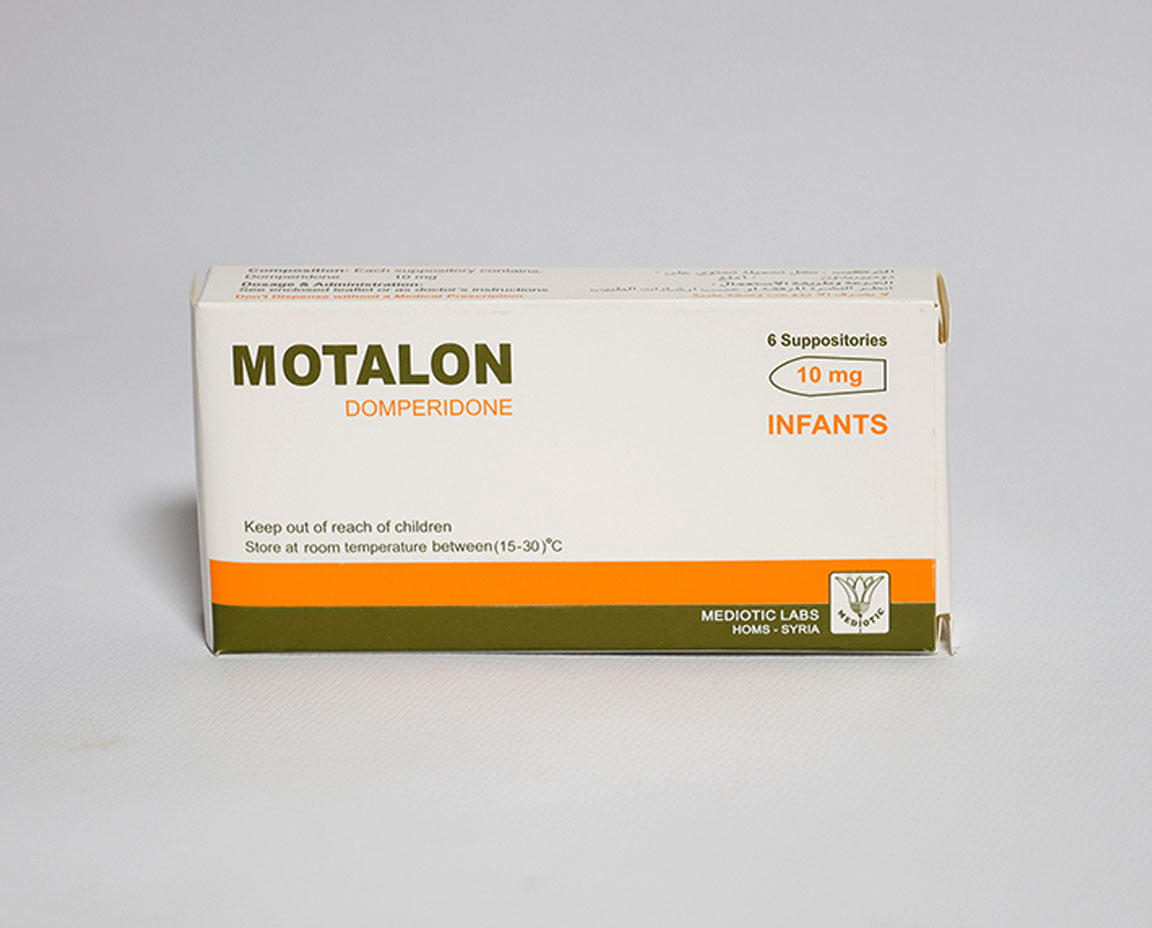
MOTALON 60 mg

Chemical Composition:

Each Suppository contains: Domperidone 10 mg or 30 mg or 60 mg. Excipients: Hydrogenated vegetable oil, Aerosil.

Pharmacological Classification: Antispasmodic Drugs and Antiemetics.

Pharmacodynamic Effect: Domperidone is a dopamine antagonist with anti-emetic properties. Domperidone does not readily cross the blood-brain barrier. In domperidone users, especially in adults, extrapyramidal disorders are very rare, but domperidone promotes the release of prolactin from the pituitary.

Pharmacokinetics:

Absorption: Based on the Cmax resulting from administering multiple twice daily doses of 60 mg suppository, a 30 mg suppository given twice daily is expected to provide peak plasma levels similar to those of a 10 mg oral dose administered four times a day.

Distribution: Domperidone is 91-93% bound to plasma proteins.

Metabolism: Domperidone undergoes rapid and extensive hepatic metabolism by hydroxylation and N-dealkylation by CYP3A4.

Elimination: Urinary and faecal excretions. The proportion of the drug excreted unchanged is small (10% of faecal excretion and approximately 1% of urinary excretion). The plasma half-life is prolonged in patients with severe renal insufficiency. Indications: Domperidone suppositories is indicated for the relief of the symptoms of nausea and vomiting. Contraindications:

known hypersensitivity to domperidone or any of the excipients.

prolactin-releasing pituitary tumour (prolactinoma).

when stimulation of the gastric motility could be harmful, e.g. in patients with gastro-intestinal haemorrhage, mechanical obstruction or perforation.

In patients with moderate or severe hepatic impairment.

 in patients who have known existing prolongation of cardiac conduction intervals, particularly QTc, patients with significant electrolyte disturbances or underlying cardiac diseases such as congestive heart failure.

 co-administration with QT-prolonging drugs.

 co-administration with potent CYP3A4 inhibitors (regardless of their QT-prolonging effects).

Side Effects:

Common: Dry mouth.

Uncommon: Loss of libido, anxiety, agitation, nervousness, somnolence, headache, extrapyramidal disorder, diarrhoea, rash, pruritus, urticaria, galactorrhoea, breast pain, breast tenderness, and asthenia.

Drug Interactions:

Concomitant use of the following substances is contraindicated:

QTc-prolonging medicinal products (risk of torsades de points).

disopyramide, hydroquinidine, quinidine, amiodarone, dofetilide, dronedarone, ibutilide, sotalol, haloperidol, pimozide, sertindole, citalopram, escitalopram, erythromycin, levofloxacin, moxifloxacin, spiramycin, fluconazole, pentamidine, halofantrine, lumefantrine, cisapride, dolasetron, prucalopride, mequitazine, mizolastine, toremifene, vandetanib, vincamine, bepridil, diphemanil, methadone.

Potent CYP3A4 inhibitors (regardless of their QT-prolonging effects):

ritonavir, saquinaver, telaprevir, itraconazole, ketoconazole, posaconazole, voriconazole, clarithromycin, telithromycin. Concomitant use of the following substances is not recommended:

Moderate CYP3A4 inhibitors i.e., diltiazem, verapamil and some macrolides.

Concomitant use of the following substances requires caution with use:

Caution with bradycardia and hypokalaemia-inducing drugs, as well as with the following macrolides involved in QT interval prolongation: azithromycin and roxithromycin (clarithromycin is contraindicated as it is a potent CYP3A4 inhibitor). The above list of substances is representative and not exhaustive.

Warnings and Precautions:

Renal impairment

Since the elimination half-life of domperidone is prolonged in severe renal impairment, on repeated administration, the dosing frequency of Domperidone should be reduced to once or twice daily depending on the severity of the impairment, and the dose may need to be reduced.

Cardiovascular effects

Domperidone has been associated with prolongation of the QT interval on the electrocardiogram. During post-marketing surveillance, there have been very rare cases of QT-prolongation and torsades de pointes in patients taking domperidone. These reports included patients with confounding risk factors, electrolyte abnormalities and concomitant treatment which may have been contributing factors.

Epidemiological studies showed that domperidone was associated with an increased risk of serious ventricular arrhythmias or sudden cardiac death. A higher risk was observed in patients older than 60 years, patients taking daily doses greater than 30 mg, and patients concurrently taking QT-prolonging drugs or CYP3A4 inhibitors.

Domperidone should be used at the lowest effective dose in adults and children.

Domperidone is contraindicated in patients with known existing prolongation of cardiac conduction intervals, particularly QTc, in patients with significant electrolyte disturbances (hypokalaemia, hyperkalaemia, hypomagnesaemia), or bradycardia, or in patients with underlying cardiac diseases such as congestive heart failure due to increased risk of ventricular arrhythmia. 

Electrolyte disturbances (hypokalaemia, hyperkalaemia, hypomagnesaemia) or bradycardia are known to be conditions increasing the proarrythmic risk.

Treatment with domperidone should be stopped if signs or symptoms occur that may be associated with cardiac arrhythmia, and the patients should consult their physician.

Patients should be advised to promptly report any cardiac symptoms.

Paediatric population

Although neurological side effects are rare, the risk of neurological side effects is higher in young children since metabolic functions and the blood-brain barrier are not fully developed in the first months of life. Therefore, it is recommended that the dose be determined accurately and strictly followed in neonates, infants and children.

Overdosing may cause extrapyramidal disorders in children, but other causes should be taken into consideration. Precautions: The suppositories contain butylated hydroxyanisole which can irritate eyes, skin and the lining of the mouth and nose (mucous membranes).

Dosage and Administration:

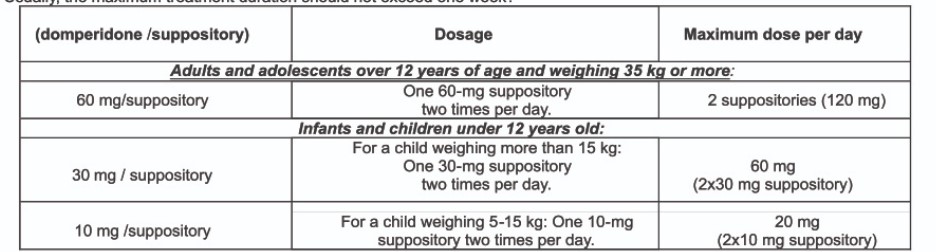
Domperidone should be used at the lowest effective dose for the shortest duration necessary to control nausea and vomiting. Patients should try to take each dose at the scheduled time. If a scheduled dose is missed, the missed dose should be omitted and the usual dosing schedule resumed. The dose should not be doubled to make up for a missed dose. Usually, the maximum treatment duration should not exceed one week.

NOTE: Suppositories are unsuitable for use in children weighing less than 5 kg.

Hepatic Impairment Domperidone is contraindicated in moderate or severe hepatic impairment. Dose modification in mild hepatic impairment is however not needed.

Renal Impairment 

Since the elimination half-life of domperidone is prolonged in severe renal impairment, on repeated administration, the dosing frequency of Domperidone should be reduced to once or twice daily depending on the severity of the impairment, and the dose may need to be reduced.

Pregnancy and lactation

Pregnancy

There are limited post-marketing data on the use of domperidone in pregnant women. Therefore Domperidone should only be used during pregnancy when justified by the anticipated therapeutic benefit.

Breast-feeding

Domperidone is excreted in human milk and breast-fed infants receive less than 0.1% of the maternal weight-adjusted dose. A decision should be made whether to discontinue breast-feeding or to discontinue/abstain from domperidone therapy taking into account the benefit of breast-feeding for the child and the benefit of therapy for the woman. Caution should be exercised in case of QTc-prolongation risk factors in breast-fed infants.

Overdose:

Symptoms:

Overdose has been reported primarily in infants and children. Symptoms of overdose may include agitation, altered consciousness, convulsion, disorientation, somnolence and extrapyramidal reactions.

Treatment:

There is no specific antidote to domperidone. ECG monitoring should be undertaken. Gastric lavage, as well as the administration of activated charcoal, may be useful. Close medical supervision and supportive therapy is recommended. Anticholinergic, anti-parkinson drugs may be helpful in controlling the extrapyramidal disorders.

Storage conditions:     store at room temperature (15-30)°c.

Package:Box contains plastic blisters with 6 suppositories.

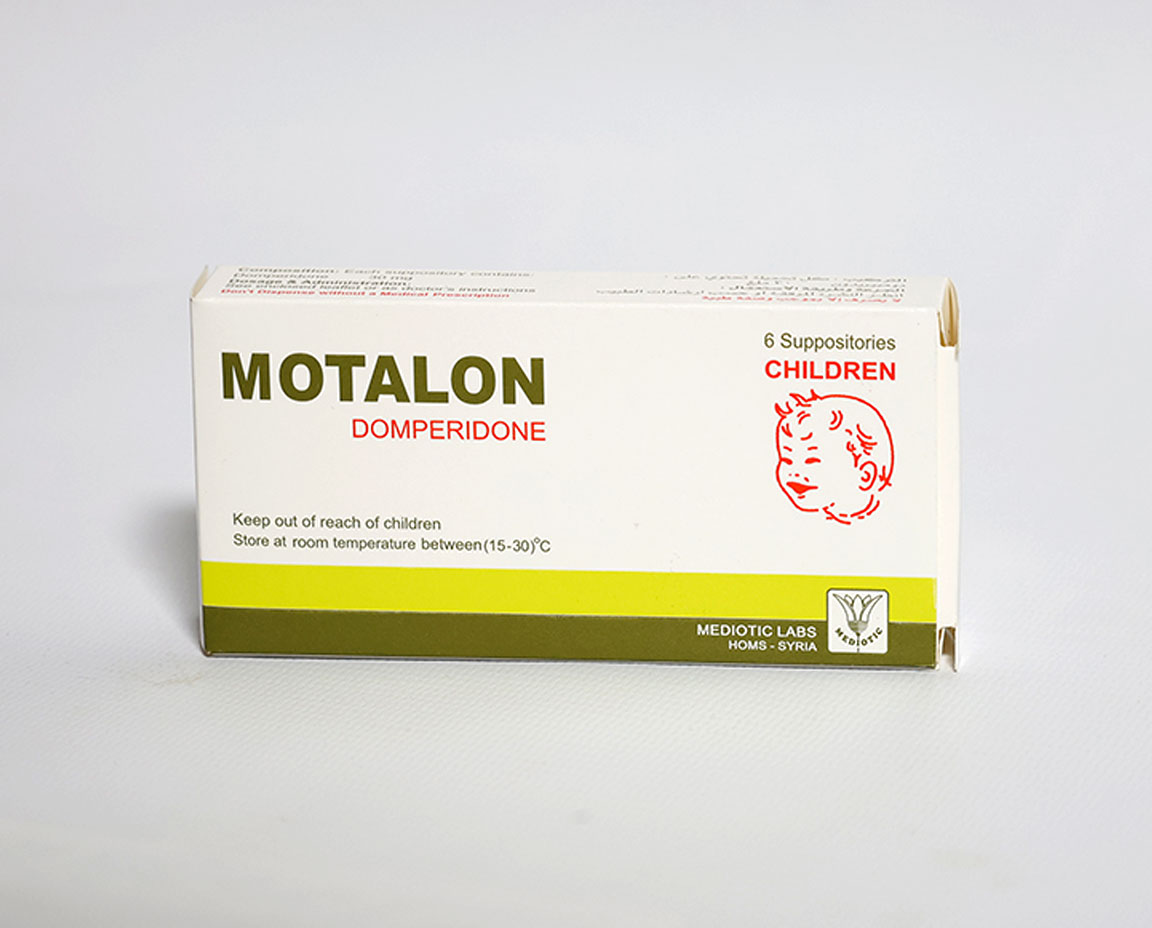
MOTALON 30mg

Chemical Composition:

Each Suppository contains: Domperidone 10 mg or 30 mg or 60 mg. Excipients: Hydrogenated vegetable oil, Aerosil.

Pharmacological Classification: Antispasmodic Drugs and Antiemetics.

Pharmacodynamic Effect: Domperidone is a dopamine antagonist with anti-emetic properties. Domperidone does not readily cross the blood-brain barrier. In domperidone users, especially in adults, extrapyramidal disorders are very rare, but domperidone promotes the release of prolactin from the pituitary.

Pharmacokinetics:

Absorption: Based on the Cmax resulting from administering multiple twice daily doses of 60 mg suppository, a 30 mg suppository given twice daily is expected to provide peak plasma levels similar to those of a 10 mg oral dose administered four times a day.

Distribution: Domperidone is 91-93% bound to plasma proteins.

Metabolism: Domperidone undergoes rapid and extensive hepatic metabolism by hydroxylation and N-dealkylation by CYP3A4.

Elimination: Urinary and faecal excretions. The proportion of the drug excreted unchanged is small (10% of faecal excretion and approximately 1% of urinary excretion). The plasma half-life is prolonged in patients with severe renal insufficiency. Indications: Domperidone suppositories is indicated for the relief of the symptoms of nausea and vomiting. Contraindications:

known hypersensitivity to domperidone or any of the excipients.

prolactin-releasing pituitary tumour (prolactinoma).

when stimulation of the gastric motility could be harmful, e.g. in patients with gastro-intestinal haemorrhage, mechanical obstruction or perforation.

In patients with moderate or severe hepatic impairment.

 in patients who have known existing prolongation of cardiac conduction intervals, particularly QTc, patients with significant electrolyte disturbances or underlying cardiac diseases such as congestive heart failure.

 co-administration with QT-prolonging drugs.

 co-administration with potent CYP3A4 inhibitors (regardless of their QT-prolonging effects).

Side Effects:

Common: Dry mouth.

Uncommon: Loss of libido, anxiety, agitation, nervousness, somnolence, headache, extrapyramidal disorder, diarrhoea, rash, pruritus, urticaria, galactorrhoea, breast pain, breast tenderness, and asthenia.

Drug Interactions:

Concomitant use of the following substances is contraindicated:

QTc-prolonging medicinal products (risk of torsades de points).

disopyramide, hydroquinidine, quinidine, amiodarone, dofetilide, dronedarone, ibutilide, sotalol, haloperidol, pimozide, sertindole, citalopram, escitalopram, erythromycin, levofloxacin, moxifloxacin, spiramycin, fluconazole, pentamidine, halofantrine, lumefantrine, cisapride, dolasetron, prucalopride, mequitazine, mizolastine, toremifene, vandetanib, vincamine, bepridil, diphemanil, methadone.

Potent CYP3A4 inhibitors (regardless of their QT-prolonging effects):

ritonavir, saquinaver, telaprevir, itraconazole, ketoconazole, posaconazole, voriconazole, clarithromycin, telithromycin. Concomitant use of the following substances is not recommended:

Moderate CYP3A4 inhibitors i.e., diltiazem, verapamil and some macrolides.

Concomitant use of the following substances requires caution with use:

Caution with bradycardia and hypokalaemia-inducing drugs, as well as with the following macrolides involved in QT interval prolongation: azithromycin and roxithromycin (clarithromycin is contraindicated as it is a potent CYP3A4 inhibitor). The above list of substances is representative and not exhaustive.

Warnings and Precautions:

Renal impairment

Since the elimination half-life of domperidone is prolonged in severe renal impairment, on repeated administration, the dosing frequency of Domperidone should be reduced to once or twice daily depending on the severity of the impairment, and the dose may need to be reduced.

Cardiovascular effects

Domperidone has been associated with prolongation of the QT interval on the electrocardiogram. During post-marketing surveillance, there have been very rare cases of QT-prolongation and torsades de pointes in patients taking domperidone. These reports included patients with confounding risk factors, electrolyte abnormalities and concomitant treatment which may have been contributing factors.

Epidemiological studies showed that domperidone was associated with an increased risk of serious ventricular arrhythmias or sudden cardiac death. A higher risk was observed in patients older than 60 years, patients taking daily doses greater than 30 mg, and patients concurrently taking QT-prolonging drugs or CYP3A4 inhibitors.

Domperidone should be used at the lowest effective dose in adults and children.

Domperidone is contraindicated in patients with known existing prolongation of cardiac conduction intervals, particularly QTc, in patients with significant electrolyte disturbances (hypokalaemia, hyperkalaemia, hypomagnesaemia), or bradycardia, or in patients with underlying cardiac diseases such as congestive heart failure due to increased risk of ventricular arrhythmia. 

Electrolyte disturbances (hypokalaemia, hyperkalaemia, hypomagnesaemia) or bradycardia are known to be conditions increasing the proarrythmic risk.

Treatment with domperidone should be stopped if signs or symptoms occur that may be associated with cardiac arrhythmia, and the patients should consult their physician.

Patients should be advised to promptly report any cardiac symptoms.

Paediatric population

Although neurological side effects are rare, the risk of neurological side effects is higher in young children since metabolic functions and the blood-brain barrier are not fully developed in the first months of life. Therefore, it is recommended that the dose be determined accurately and strictly followed in neonates, infants and children.

Overdosing may cause extrapyramidal disorders in children, but other causes should be taken into consideration. Precautions: The suppositories contain butylated hydroxyanisole which can irritate eyes, skin and the lining of the mouth and nose (mucous membranes).

Dosage and Administration:

Domperidone should be used at the lowest effective dose for the shortest duration necessary to control nausea and vomiting. Patients should try to take each dose at the scheduled time. If a scheduled dose is missed, the missed dose should be omitted and the usual dosing schedule resumed. The dose should not be doubled to make up for a missed dose. Usually, the maximum treatment duration should not exceed one week.

NOTE: Suppositories are unsuitable for use in children weighing less than 5 kg.

Hepatic Impairment Domperidone is contraindicated in moderate or severe hepatic impairment. Dose modification in mild hepatic impairment is however not needed.

Renal Impairment 

Since the elimination half-life of domperidone is prolonged in severe renal impairment, on repeated administration, the dosing frequency of Domperidone should be reduced to once or twice daily depending on the severity of the impairment, and the dose may need to be reduced.

Pregnancy and lactation

Pregnancy

There are limited post-marketing data on the use of domperidone in pregnant women. Therefore Domperidone should only be used during pregnancy when justified by the anticipated therapeutic benefit.

Breast-feeding

Domperidone is excreted in human milk and breast-fed infants receive less than 0.1% of the maternal weight-adjusted dose. A decision should be made whether to discontinue breast-feeding or to discontinue/abstain from domperidone therapy taking into account the benefit of breast-feeding for the child and the benefit of therapy for the woman. Caution should be exercised in case of QTc-prolongation risk factors in breast-fed infants.

Overdose:

Symptoms:

Overdose has been reported primarily in infants and children. Symptoms of overdose may include agitation, altered consciousness, convulsion, disorientation, somnolence and extrapyramidal reactions.

Treatment:

There is no specific antidote to domperidone. ECG monitoring should be undertaken. Gastric lavage, as well as the administration of activated charcoal, may be useful. Close medical supervision and supportive therapy is recommended. Anticholinergic, anti-parkinson drugs may be helpful in controlling the extrapyramidal disorders.

Storage conditions:     store at room temperature (15-30)°c.

Package:Box contains plastic blisters with 6 suppositories.

MOTALON 10mg

Chemical Composition:

Each Suppository contains: Domperidone 10 mg or 30 mg or 60 mg. Excipients: Hydrogenated vegetable oil, Aerosil.

Pharmacological Classification: Antispasmodic Drugs and Antiemetics.

Pharmacodynamic Effect: Domperidone is a dopamine antagonist with anti-emetic properties. Domperidone does not readily cross the blood-brain barrier. In domperidone users, especially in adults, extrapyramidal disorders are very rare, but domperidone promotes the release of prolactin from the pituitary.

Pharmacokinetics:

Absorption: Based on the Cmax resulting from administering multiple twice daily doses of 60 mg suppository, a 30 mg suppository given twice daily is expected to provide peak plasma levels similar to those of a 10 mg oral dose administered four times a day.

Distribution: Domperidone is 91-93% bound to plasma proteins.

Metabolism: Domperidone undergoes rapid and extensive hepatic metabolism by hydroxylation and N-dealkylation by CYP3A4.

Elimination: Urinary and faecal excretions. The proportion of the drug excreted unchanged is small (10% of faecal excretion and approximately 1% of urinary excretion). The plasma half-life is prolonged in patients with severe renal insufficiency. Indications: Domperidone suppositories is indicated for the relief of the symptoms of nausea and vomiting. Contraindications:

known hypersensitivity to domperidone or any of the excipients.

prolactin-releasing pituitary tumour (prolactinoma).

when stimulation of the gastric motility could be harmful, e.g. in patients with gastro-intestinal haemorrhage, mechanical obstruction or perforation.

In patients with moderate or severe hepatic impairment.

 in patients who have known existing prolongation of cardiac conduction intervals, particularly QTc, patients with significant electrolyte disturbances or underlying cardiac diseases such as congestive heart failure.

 co-administration with QT-prolonging drugs.

 co-administration with potent CYP3A4 inhibitors (regardless of their QT-prolonging effects).

Side Effects:

Common: Dry mouth.

Uncommon: Loss of libido, anxiety, agitation, nervousness, somnolence, headache, extrapyramidal disorder, diarrhoea, rash, pruritus, urticaria, galactorrhoea, breast pain, breast tenderness, and asthenia.

Drug Interactions:

Concomitant use of the following substances is contraindicated:

QTc-prolonging medicinal products (risk of torsades de points).

disopyramide, hydroquinidine, quinidine, amiodarone, dofetilide, dronedarone, ibutilide, sotalol, haloperidol, pimozide, sertindole, citalopram, escitalopram, erythromycin, levofloxacin, moxifloxacin, spiramycin, fluconazole, pentamidine, halofantrine, lumefantrine, cisapride, dolasetron, prucalopride, mequitazine, mizolastine, toremifene, vandetanib, vincamine, bepridil, diphemanil, methadone.

Potent CYP3A4 inhibitors (regardless of their QT-prolonging effects):

ritonavir, saquinaver, telaprevir, itraconazole, ketoconazole, posaconazole, voriconazole, clarithromycin, telithromycin. Concomitant use of the following substances is not recommended:

Moderate CYP3A4 inhibitors i.e., diltiazem, verapamil and some macrolides.

Concomitant use of the following substances requires caution with use:

Caution with bradycardia and hypokalaemia-inducing drugs, as well as with the following macrolides involved in QT interval prolongation: azithromycin and roxithromycin (clarithromycin is contraindicated as it is a potent CYP3A4 inhibitor). The above list of substances is representative and not exhaustive.

Warnings and Precautions:

Renal impairment

Since the elimination half-life of domperidone is prolonged in severe renal impairment, on repeated administration, the dosing frequency of Domperidone should be reduced to once or twice daily depending on the severity of the impairment, and the dose may need to be reduced.

Cardiovascular effects

Domperidone has been associated with prolongation of the QT interval on the electrocardiogram. During post-marketing surveillance, there have been very rare cases of QT-prolongation and torsades de pointes in patients taking domperidone. These reports included patients with confounding risk factors, electrolyte abnormalities and concomitant treatment which may have been contributing factors.

Epidemiological studies showed that domperidone was associated with an increased risk of serious ventricular arrhythmias or sudden cardiac death. A higher risk was observed in patients older than 60 years, patients taking daily doses greater than 30 mg, and patients concurrently taking QT-prolonging drugs or CYP3A4 inhibitors.

Domperidone should be used at the lowest effective dose in adults and children.

Domperidone is contraindicated in patients with known existing prolongation of cardiac conduction intervals, particularly QTc, in patients with significant electrolyte disturbances (hypokalaemia, hyperkalaemia, hypomagnesaemia), or bradycardia, or in patients with underlying cardiac diseases such as congestive heart failure due to increased risk of ventricular arrhythmia. 

Electrolyte disturbances (hypokalaemia, hyperkalaemia, hypomagnesaemia) or bradycardia are known to be conditions increasing the proarrythmic risk.

Treatment with domperidone should be stopped if signs or symptoms occur that may be associated with cardiac arrhythmia, and the patients should consult their physician.

Patients should be advised to promptly report any cardiac symptoms.

Paediatric population

Although neurological side effects are rare, the risk of neurological side effects is higher in young children since metabolic functions and the blood-brain barrier are not fully developed in the first months of life. Therefore, it is recommended that the dose be determined accurately and strictly followed in neonates, infants and children.

Overdosing may cause extrapyramidal disorders in children, but other causes should be taken into consideration. Precautions: The suppositories contain butylated hydroxyanisole which can irritate eyes, skin and the lining of the mouth and nose (mucous membranes).

Dosage and Administration:

Domperidone should be used at the lowest effective dose for the shortest duration necessary to control nausea and vomiting. Patients should try to take each dose at the scheduled time. If a scheduled dose is missed, the missed dose should be omitted and the usual dosing schedule resumed. The dose should not be doubled to make up for a missed dose. Usually, the maximum treatment duration should not exceed one week.

NOTE: Suppositories are unsuitable for use in children weighing less than 5 kg.

Hepatic Impairment Domperidone is contraindicated in moderate or severe hepatic impairment. Dose modification in mild hepatic impairment is however not needed.

Renal Impairment 

Since the elimination half-life of domperidone is prolonged in severe renal impairment, on repeated administration, the dosing frequency of Domperidone should be reduced to once or twice daily depending on the severity of the impairment, and the dose may need to be reduced.

Pregnancy and lactation

Pregnancy

There are limited post-marketing data on the use of domperidone in pregnant women. Therefore Domperidone should only be used during pregnancy when justified by the anticipated therapeutic benefit.

Breast-feeding

Domperidone is excreted in human milk and breast-fed infants receive less than 0.1% of the maternal weight-adjusted dose. A decision should be made whether to discontinue breast-feeding or to discontinue/abstain from domperidone therapy taking into account the benefit of breast-feeding for the child and the benefit of therapy for the woman. Caution should be exercised in case of QTc-prolongation risk factors in breast-fed infants.

Overdose:

Symptoms:

Overdose has been reported primarily in infants and children. Symptoms of overdose may include agitation, altered consciousness, convulsion, disorientation, somnolence and extrapyramidal reactions.

Treatment:

There is no specific antidote to domperidone. ECG monitoring should be undertaken. Gastric lavage, as well as the administration of activated charcoal, may be useful. Close medical supervision and supportive therapy is recommended. Anticholinergic, anti-parkinson drugs may be helpful in controlling the extrapyramidal disorders.

Storage conditions:     store at room temperature (15-30)°c.

Package:Box contains plastic blisters with 6 suppositories.

PROCTOVASINE

Proctovasin exerts dual effect: anti-inflammatory and pain reducer.

Troxerutin: reduces vessel fragility and increases its resistance and normalizes the permeability, so it has anti-inflammatory effect and it reduces venous congestion and edema.

Butoform: a rapidly acting local anaesthetic, known for its pain relief that is caused by congestion or oedema.

Indications:

Symptomatic therapy of internal and external hemorroids, proctitis, anitis, fissures, and pruritis, and also indicated post operatively in anorectal surgical precedures and after incision of thrombosed or sclerosed hemorrhoids.

Hemorrhoids of pregnancy.

Contraindications:

Hypersensitivity to any of the constituents.

Cautions:

Following symptomatic relief, definite diagnosis should be established. Not to be taken orally.

Side effects:

Rare, transient burning.

Dosage and administration:

One suppository at night, in the morning and after each evacuation.

Ointment may be intrarectally applied by using the special applicator provided 2-3 times daily.

Presentations:

Proctovasin Ointment:

Tube contains 20 g and a syringe (special applicator)

Proctovasin Suppositories:

Box contains 10 suppositories

MECOZALEN

Excipients: Carboxymethyl Cellulose Sodium, Starch, Propylene Glycol, Saccharin Sodium, Strawberry Flavor, Tween, Deionized Water.

ACTIONS:

MECOZALEN possesses an antifungal activity against the common dermatophytes and yeasts as well as an antibacterial activity against certain gram-positive bacilli and cocci.

Its activity is based on the inhibition of the ergosterol biosynthesis in fungi and the change in the composition of the lipid components in the membrane, resulting in fungal cell necrosis.

PHARMACOKINETICS:

Absorption:

Oral bioavailability of MECOZALEN is low (25-30) % because of low gastrointestinal absorption.

Miconazole is systemically absorbed after administration as the oral gel. Administration of 60 mg dose of Miconazole Oral Gel results in peak plasma concentrations of 31-49 ng/mL, occurring approximately two hours post-dose. Distribution

Absorbed Miconazole is bound to plasma proteins (88.2%), primarily to serum albumin and red blood cells (10.6%). Metabolism and Elimination

The absorbed portion of Miconazole Oral Gel is largely metabolized; less than 1% of the administered dose is excreted unchanged in the urine. The terminal plasma half-life is 20- 25 hours in most patients. The elimination half-life of Miconazole is similar in any renal impaired patient. Plasma concentrations of Miconazole are moderately reduced (approximately 50%) during hemodialysis.

INDICATIONS:

MECOZALEN oral gel is indicated in the management of fungal infections of the oral cavity and gastro-intestinal tract in adults and pediatric patients 4 months and older.

Miconazole is effective against some gram-positive bacteria in adults and paediatric patients 4 months and older, including Streptococcus pyrogenes, Staphylococcus aureus and Erysipelothrix.

CONTRAINDICATIONS:

MECOZALEN Oral Gel is contraindicated in the following situations:

– In patients with a known hypersensitivity to miconazole or to any of the other ingredients of the gel or other imidazole derivatives.

– In infants less than 6 months of age or in those whose swallowing reflex is not yet sufficiently developed.

-In patients with liver dysfunction.

-Co-administrating of the following drugs that are subject to metabolism by CYP3A4:

  • Substrates known to prolong the QT-interval eg. Astemizole, bepridil, cisapride, dofetilide, halofantrine, mizolastine, pimozide, quinidine, sertindole and terfenadine. Ergot alkaloids.

o HMG-CoA reductase inhibitors such as simvastatin and lovastatin.

o Triazolam and oral midazolam.

WARNINGS AND PRECAUTIONS:

Miconazole is systemically absorbed and is known to inhibit CYP2C9 and CYP3A4 which can lead to prolonged effects of warfarin. Bleeding events, some with fatal outcomes have been reported with concurrent use of miconazole oral gel and warfarin.

If the concomitant use of MECOZALEN oral gel and anticoagulants such as warfarin is envisaged, the anticoagulant effect should be carefully monitored and titrated.

It is advisable to monitor miconazole and phenytoin levels, if they are used concomitantly.

In patients using certain oral hypoglycemic such as sulfonylureas, an enhanced therapeutic effect leading to hypoglycemia may occur during concomitant treatment with miconazole and appropriate measures should be considered.

Patients should be advised that if they experience unexpected bleeding or bruising, nosebleeds, coughing up blood, blood in the urine, black tarry stools or coffee ground vomit, to stop treatment with miconazole and seek medical advice. Severe hypersensitivity reactions, including anaphylaxis and angioedema, have been reported during treatment with miconazole formulations. If a reaction suggesting hypersensitivity or irritation should occur, the treatment should be discontinued.

Serious skin reactions (e.g. Toxic epidermal necrolysis and Stevens-Johnson syndrome) have been reported in patients receiving Miconazole Oral Gel. It is recommended that patients be informed about the signs of serious skin reactions, and that use of Miconazole Oral Gel be discontinued at the first appearance of skin rash.

It is important to take into consideration the variability of the maturation of the swallowing reflex in infants, especially when giving Miconazole Oral gel to infants between the ages of 4-6 months.

The lower age limit should be increased to 5 – 6 months of age for infants who are pre-term, or infants exhibiting slow neuromuscular development

Pregnancy and lactation: Safety in human pregnancy has not been established and the drug should not be used in pregnant women unless considered absolutely essential by the physician. The potential hazards should be balanced against the possible benefits.

It is not known whether Miconazole or its metabolites are excreted in human milk. Caution should be exercised when prescribing Miconazole Oral Gel to nursing mothers

ADVERSE EFFECTS

Increases in INR and bleeding events such as epistaxis, contusion, haematuria, melaena, haematemesis, haematoma and haemorrhages have been reported in patieints treated with oral anticoagulants such as warfarin in association with Miconazole oral gel.

Common: Dry mouth, Nausea, Oral discomfort, Vomiting, Regurgitation, and Product taste abnormal.

Uncommon: Dysgeusia.

Not Known: Anaphylactic reaction, Hypersensitivity, Choking, Diarrhoea, Stomatitis, Tongue discolouration, Hepatitis, Angioedema, Toxic epidermal necrolysis, Stevens-Johnson syndrome, Urticaria, Rash, Acute generalized exanthematous pustulosis, drug reaction with eosinophilia and systemic symptoms.

INTERACTIONS:

When using any concomitant medication, consult the corresponding label for information on the route of metabolism. Miconazole can inhibit the metabolism of drugs metabolised by the CYP3A4 and CYP2C9 enzyme systems. This can result in an increase and/or prolongation of their effects, including adverse effects.

Oral miconazole is contraindicated with the coadministration of the following drugs that are subject to metabolism by CYP3A4 and CYP2C9:

– Substrates known to prolong the QT-interval for example, astemizole, cisapride, dofetilide, mizolastine, pimozide, quinidine, sertindole and terfenadine

– Ergot alkaloids

– HMG-CoA reductase inhibitors such as simvastatin and lovastatin

– Triazolam and oral midazolam.

Co-administration with warfarin is contraindicated except when oral miconazole gel is specifically prescribed and used under medical supervision with close monitoring of INR.

When coadministered with oral Miconazole the following drugs must be used with caution because of a possible increase or prolongation of the therapeutic outcome and/or adverse events. If necessary, reduce their dosage and, where appropriate, monitor plasma levels:

  • Drugs subject to metabolism by CYP2C9.
  • Oral hypoglycaemics such as sulphonylureas
  • Other drugs subject to metabolism by CYP3A4.
  • HIV protease inhibitors such as saquinavir.
  • Phenytoin.
  • Certain antineoplastic agents such as vinca alkaloids, bulsulfan and docetaxel.
  • Certain calcium channel blockers such as dihydropyridines and verapamil
  • Certain immunosuppressive agents: cyclosporin, tacrolimus, sirolimus (rapamycin).
  • Others: carbamazepine, cilostazol, disopyramide, buspirone, alfentanil, sildenafil, alprazolam, brotizolam, midazolam IV, rifabutin, methylprednisolone, trimetrexate, ebastine and reboxetine. DOSE AND ADMINISTRATION:

Oropharyngeal candidosis:

One measuring spoon (provided) is equivalent to 124 mg miconazole per 5 mL gel. For infants (6-24 months):

One quarter (1/4) of a measuring spoon* of gel four times daily after meals. Each dose should be divided into smaller portions and the gel should be applied to the affected area(s) with a clean finger. The gel should not be applied to the back of the throat due to possible choking. The gel should not be swallowed immediately, but kept in the mouth as long as possible.

Adults and Children: (2 years of age and older):

2.5 mL (1/2) a measuring spoon* of gel four times daily. After meals. The gel should not be swallowed immediately, but kept in the mouth as long as possible.

The treatment should be continued for at least a week after the symptoms have disappeared.

For oral candidosis, dental prostheses should be removed at night and brushed with the gel.

Gastrointestinal tract candidosis:

The gel may be used for infants (≥4 months of age), children and adults who have difficulty swallowing tablets. The dosage is 20 mg per kg body weight per day, administered in four individual doses. The daily dose should not exceed 250 mg (10 mL oral gel) four times a day. The treatment should be continued for at least a week after the symptoms have disappeared.

OVERDOSE:

Symptoms: In the event of accidental overdose, vomiting and diarrhea may occur. Treatment: Treatment is symptomatic and supportive. A specific antidote is not available.

STORAGE CONDITIONS:

-Store at temperature below 25 °C. – Keep out of reach of children.

PACKAGING: Aluminum tube contains 50 g MECOZALEN oral gel/carton box, with measured spoonful.

MEDIOPAN PLUS ADULT

10 mg (Hyoscine-N- Butylbromide), 500 mg paracetamol (film-coated tablets) 10 mg (Hyoscine-N- Butylbromide), 800 mg paracetamol (suppositories) 7.5 mg (Hyoscine-N- Butylbromide), 250 mg paracetamol (suppositories)

COMPOSITION & EXCIPIENTS:

Each MEDIOPAN PLUS film-coated tablet contains:

10 mg (Hyoscine-N- Butylbromide), 500 mg Paracetamol.

Each MEDIOPAN PLUS Children suppository (1 g) contains:

7.5 mg Hyoscine Butyl Bromide, 250 mg Paracetamol.

Each MEDIOPAN PLUS Adults suppository (2 g) contains:

10 mg Hyoscine Butyl Bromide, 800 mg Paracetamol. Excipients:

Film coated tablets:

Core: Starch, Magnesium Stearate, Microcrystalline Cellulose.

Film: PEG, Hydroxy Propyl Methyl Cellulose.

Suppositories: Aerosil, Hydrogenated Vegetable Oil.

MECHANISM OF ACTION:

MEDIOTIC

(Hyoscine-N- Butylbromide) acts spasmolytically on the smooth musculature of the gastrointestinal tract, the bile and discharge urinary tract, and the female genital organs. The peripheral anticholinergic effects are due both to the ganglion blockade in the visceral wall and to anti- muscarinic effects.

In addition to a very weak anti-inflammatory effect, paracetamol has analgesic and antipyretic properties. PHARMACOKINETICS PROPERTIES:

(Hyoscine-N- Butylbromide):

Absorption: (Hyoscine-N- Butylbromide) only partly absorbed due to the strong polar properties of this quaternary ammonium compound and the low lipid solubility resulting from after oral (8%) or rectal (3%) administration. Distribution: The plasma protein binding is 4.4%.

Biotransformation and elimination: Butylbromide mainly metabolized by hydrolytic cleavage of the ester bond. Orally applied (Hyoscine-N- Butylbromide) precipitated via faeces and urine. Approximately 90% of the radioactivity was found in the faeces after oral administration; in the urine, up to 5% of the radioactivity was found depending on the type of application. Paracetamol:

Absorption: After oral administration, paracetamol is absorbed rapidly and almost completely in the small intestine. Maximum plasma concentrations are reached 0.5 – 2 hours after administration.

After rectal administration, paracetamol is absorbed with an absolute bioavailability of about 30% to 40%; maximum plasma concentrations are reached after 1.3-3.5 hours.

Distribution: Paracetamol spreads rapidly in all tissues. The plasma protein binding is low (between 5% and 20%).

Biotransformation: Paracetamol is primarily metabolized in the liver.

Elimination: Excretion is predominantly in the urine. The elimination half-life is about two hours.

Renal insufficiency: In severe renal insufficiency (creatinine clearance <10 ml / min) the excretion of paracetamol and its metabolites is delayed.

INDICATIONS:

For patients with convulsive pain in the stomach and intestine disorders, convulsive pain and dysfunction in the area of the bile ducts, the urinary tract and the female genital organs (e.g. dysmenorrhea).

CONTRAINDICATIONS:

  • Hypersensitivity to the active substances or to any of the excipients
  • Mechanical stenosis of the gastrointestinal tract
  • Megacolon
  • Urinary retention in subvesical obstruction (e.g. prostate adenoma)
  • Angular glaucoma
  • Tachycardia and tachyarrhythmia
  • Myasthenia gravis
  • Severe hepatic insufficiency (Child-Pugh C)

WARNINGS AND PRECAUTIONS:

  • A physician should be consulted immediately if severe abdominal pain persists or worsens or occurs together with symptoms such as fever, nausea, vomiting, and changes in intestinal motility, abdominal (pressure) sensitivity, blood pressure drop, fainting, or blood in the stool.
  • In order to avoid the risk of overdosing, it should be ensured that concurrent use of other medicinal products does not contain paracetamol.
  • This drug should be used with caution in the following cases:
    • Hepatocellular insufficiency (Child-Pugh A/B)
    • Hepatic dysfunction (e.g. due to chronic alcohol abuse, hepatitis)
    • Serious renal insufficiency (creatinine clearance <10 ml / min)
    • Gilbert syndrome (Meulengracht disease)
    • glucose-6-phosphate dehydrogenase deficiency
  • In case of high fever, signs of secondary infection, or persisting symptoms for more than 3 days, the doctor must be consulted.
  • The doctor should be consulted if the pain persists or worsens, new symptoms are observed, or redness or swelling occurs, as this may be an indication of serious adverse reactions.
  • Blood count, liver and kidney function should be monitored during prolonged use.
  • Severe acute hypersensitivity reactions, Such as anaphylactic shock, have been observed very rarely. At the first signs of hypersensitivity reaction, treatment with this drug must be discontinued.
  • In the case of prolonged high-dose, inappropriate use of analgesics, headaches may occur which should not be treated by increased doses of the drug.
  • Abrupt discontinuation after prolonged high-dose may cause headache, fatigue, muscle pain, nervousness, and vegetative symptoms. The symptom of withdrawal sounds within a few days. Until then, the recovery of painkillers should be omitted, and re-ingestion should not take place without medical advice.

Pregnancy:

There are no adequate data on the use of this drug in pregnant women. It is not known whether (Hyoscine-N- Butylbromide) passes the placenta, so that pharmacological effects on the fetus are possible. Therefore, the use of this drug during pregnancy is therefore not recommended.


Lactation:

It is not known whether (Hyoscine-N- Butylbromide) passes into the mother’s milk. Muscarine receptor antagonists are known to inhibit the production of milk.

The use of this drug during breastfeeding should only be done after a strict indication.

DRUG INTERACTIONS:

  • The anticholinergic effects of other anticholinergics, amantadine, tri- and tetracyclic antidepressants, antipsychotics, quinidine, antihistamines, disopyramide, as well as the tachycardia effect of B-sympathomimetics can be enhanced by this drug.
  • Concomitant therapy with dopamine antagonists, e.g. metoclopramide, can lead to a mutual attenuation of the effect on the motility of the gastrointestinal tract.
  • Concomitant administration of medicinal products which lead to enzyme induction in the liver, (e.g. phenobarbital, phenytoin, carbamazepine) and rifampicin, can cause liver damage with harmless doses of paracetamol. The same applies to potentially hepatotoxic substances as well as to alcohol abuse.
  • The use of probenecid leads to a reduction in paracetamol clearance. Taking concurrent use of probenecid, paracetamol doses should be reduced.
  • Concomitant use of paracetamol and chloramphenicol may significantly slow the excretion of chloramphenicol and increase its toxicity.
  • Concomitant use of paracetamol and zidovudine (AZT or retrovir) increases the tendency to develop neutropenia. This drug should therefore only be administered according to a doctor’s prescription.
  • Cholestyramine reduces the effectiveness of paracetamol.
  • The simultaneous ingestion of agents that lead to an acceleration of the gastric emptying, For example, metoclopramide, accelerates the uptake and activity of paracetamol.
  • In case of simultaneous administration of agents, which lead to a slowing down of the gastric emptying, e.g. propantheline, the uptake and effect of action of paracetamol can be delayed.
  • Effects on laboratory values: The paracetamol content of this drug can influence the determination of uric acid by means of phosphorus tungstic acid as well as the glucose oxidase peroxidase glucose determination.

SIDE EFFECTS:

Many of the known undesirable effects are due to the anticholinergic properties of (Hyoscine-N- Butylbromide). These anticholinergic effects are generally mild.

Occasionally: Dizziness, fatigue, Mouth dryness (inhibition of salivary secretion), diarrhea, nausea, vomiting, stomach, airways, chest and mediastinum discomfort.

Rare: Blood pressure drop, erythema, Tachycardia, Micturition disorders such as: Dysuria.

Very rare: Severe skin reactions (such as Stevens-Johnson syndrome (SJS), toxic-epidermal necrolysis (TEN) and acute generalized exanthematous pustulitis (AGEP)) have been reported under paracetamol, Accommodation disorders, especially in patients who are hyperopic and not adequately corrected; Glaucoma.

Posology and method of administration:

  1. Adults and adolescents from 12 years of age:
    1. Film coated tablets: 1 – 2 film coated tablets Up to 3 times daily.
    2. Suppository (10/800): 1 suppository Up to 3-4 times a day.
      The maximum dose per day of 6 film coated tablets or 4 suppositories must not be exceeded. The time interval between doses should be at least 6 hours (suppository) or 8 hours (film-coated tablets).
  2. Children from 6 -12 years old:
    Suppository (7.5/250): 1-2 supp daily 3-4 times

The film coated tablets should be swallowed whole with sufficient liquid.

The suppository should be inserted into the empty rectum.

The use of this drug over a period of more than 3 – 4 days is to be weighed by a doctor.

OVERDOSING:

Symptoms:

  • (Hyoscine-N- Butylbromide): If overdose, anticholinergic symptoms such as blurred vision, tachycardia, mouth dryness and skin redness are to be expected. Death occurs through breathing paralysis.
  • Paracetamol: There is a risk of intoxication, especially in elderly people, small children, persons with liver disease, chronic alcohol abuse, chronic deficiency, and at the same time taking medicines that lead to enzyme induction. In these cases, overdosing can lead to death. Symptoms occur within 24 hours: nausea, vomiting, anorexia, pallor, and abdominal pain. Clinical symptoms of liver injury are usually visible after 2 days and reach a maximum after 4 to 6 days. Even if no severe liver damage is present, acute kidney failure with acute tubule necrosis may occur.

Treatment:

  • Already in case of suspicion of intoxication with paracetamol, the intravenous administration, for example, N-acetylcysteine. However, N-acetylcysteine can still provide some protection even after 10 and up to 48 hours. The plasma concentration of paracetamol can be reduced by dialysis. Determination of the plasma concentration of paracetamol is recommended. The further treatment options for the treatment of intoxication with paracetamol depend on the extent, stage and clinical symptoms according to the usual measures in intensive care.
  • For pronounced anticholinergic effects ((Hyoscine-N- Butylbromide)), para-sympathomimetics should be used (neostigmine 0.5 – 2.5 mg i.m. or i.v.). In glaucoma patients, pilocarpine is local; an eye doctor should be consulted immediately. Catheterize during urine retention. Cardiovascular complications are to be treated according to the usual therapy principles.

STORAGE CONDITIONS:

Store at room temperature, below 30 °C.

Keep out of reach of children.

PACKAGING:

Film coated tablets: 2 blisters, each contains 10 film coated tablets/carton box.

Suppositories: 1 plastic blister contains 6 suppositories/carton box.

MEDIOPAN PLUS CHIDREN

10 mg (Hyoscine-N- Butylbromide), 500 mg paracetamol (film-coated tablets) 10 mg (Hyoscine-N- Butylbromide), 800 mg paracetamol (suppositories) 7.5 mg (Hyoscine-N- Butylbromide), 250 mg paracetamol (suppositories)

COMPOSITION & EXCIPIENTS:

Each MEDIOPAN PLUS film-coated tablet contains:

10 mg (Hyoscine-N- Butylbromide), 500 mg Paracetamol.

Each MEDIOPAN PLUS Children suppository (1 g) contains:

7.5 mg Hyoscine Butyl Bromide, 250 mg Paracetamol.

Each MEDIOPAN PLUS Adults suppository (2 g) contains:

10 mg Hyoscine Butyl Bromide, 800 mg Paracetamol. Excipients:

Film coated tablets:

Core: Starch, Magnesium Stearate, Microcrystalline Cellulose.

Film: PEG, Hydroxy Propyl Methyl Cellulose.

Suppositories: Aerosil, Hydrogenated Vegetable Oil.

MECHANISM OF ACTION:

MEDIOTIC

(Hyoscine-N- Butylbromide) acts spasmolytically on the smooth musculature of the gastrointestinal tract, the bile and discharge urinary tract, and the female genital organs. The peripheral anticholinergic effects are due both to the ganglion blockade in the visceral wall and to anti- muscarinic effects.

In addition to a very weak anti-inflammatory effect, paracetamol has analgesic and antipyretic properties. PHARMACOKINETICS PROPERTIES:

(Hyoscine-N- Butylbromide):

Absorption: (Hyoscine-N- Butylbromide) only partly absorbed due to the strong polar properties of this quaternary ammonium compound and the low lipid solubility resulting from after oral (8%) or rectal (3%) administration. Distribution: The plasma protein binding is 4.4%.

Biotransformation and elimination: Butylbromide mainly metabolized by hydrolytic cleavage of the ester bond. Orally applied (Hyoscine-N- Butylbromide) precipitated via faeces and urine. Approximately 90% of the radioactivity was found in the faeces after oral administration; in the urine, up to 5% of the radioactivity was found depending on the type of application. Paracetamol:

Absorption: After oral administration, paracetamol is absorbed rapidly and almost completely in the small intestine. Maximum plasma concentrations are reached 0.5 – 2 hours after administration.

After rectal administration, paracetamol is absorbed with an absolute bioavailability of about 30% to 40%; maximum plasma concentrations are reached after 1.3-3.5 hours.

Distribution: Paracetamol spreads rapidly in all tissues. The plasma protein binding is low (between 5% and 20%).

Biotransformation: Paracetamol is primarily metabolized in the liver.

Elimination: Excretion is predominantly in the urine. The elimination half-life is about two hours.

Renal insufficiency: In severe renal insufficiency (creatinine clearance <10 ml / min) the excretion of paracetamol and its metabolites is delayed.

INDICATIONS:

For patients with convulsive pain in the stomach and intestine disorders, convulsive pain and dysfunction in the area of the bile ducts, the urinary tract and the female genital organs (e.g. dysmenorrhea).

CONTRAINDICATIONS:

  • Hypersensitivity to the active substances or to any of the excipients
  • Mechanical stenosis of the gastrointestinal tract
  • Megacolon
  • Urinary retention in subvesical obstruction (e.g. prostate adenoma)
  • Angular glaucoma
  • Tachycardia and tachyarrhythmia
  • Myasthenia gravis
  • Severe hepatic insufficiency (Child-Pugh C)

WARNINGS AND PRECAUTIONS:

  • A physician should be consulted immediately if severe abdominal pain persists or worsens or occurs together with symptoms such as fever, nausea, vomiting, and changes in intestinal motility, abdominal (pressure) sensitivity, blood pressure drop, fainting, or blood in the stool.
  • In order to avoid the risk of overdosing, it should be ensured that concurrent use of other medicinal products does not contain paracetamol.
  • This drug should be used with caution in the following cases:
    • Hepatocellular insufficiency (Child-Pugh A/B)
    • Hepatic dysfunction (e.g. due to chronic alcohol abuse, hepatitis)
    • Serious renal insufficiency (creatinine clearance <10 ml / min)
    • Gilbert syndrome (Meulengracht disease)
    • glucose-6-phosphate dehydrogenase deficiency
  • In case of high fever, signs of secondary infection, or persisting symptoms for more than 3 days, the doctor must be consulted.
  • The doctor should be consulted if the pain persists or worsens, new symptoms are observed, or redness or swelling occurs, as this may be an indication of serious adverse reactions.
  • Blood count, liver and kidney function should be monitored during prolonged use.
  • Severe acute hypersensitivity reactions, Such as anaphylactic shock, have been observed very rarely. At the first signs of hypersensitivity reaction, treatment with this drug must be discontinued.
  • In the case of prolonged high-dose, inappropriate use of analgesics, headaches may occur which should not be treated by increased doses of the drug.
  • Abrupt discontinuation after prolonged high-dose may cause headache, fatigue, muscle pain, nervousness, and vegetative symptoms. The symptom of withdrawal sounds within a few days. Until then, the recovery of painkillers should be omitted, and re-ingestion should not take place without medical advice.

Pregnancy:

There are no adequate data on the use of this drug in pregnant women. It is not known whether (Hyoscine-N- Butylbromide) passes the placenta, so that pharmacological effects on the fetus are possible. Therefore, the use of this drug during pregnancy is therefore not recommended.


Lactation:

It is not known whether (Hyoscine-N- Butylbromide) passes into the mother’s milk. Muscarine receptor antagonists are known to inhibit the production of milk.

The use of this drug during breastfeeding should only be done after a strict indication.

DRUG INTERACTIONS:

  • The anticholinergic effects of other anticholinergics, amantadine, tri- and tetracyclic antidepressants, antipsychotics, quinidine, antihistamines, disopyramide, as well as the tachycardia effect of B-sympathomimetics can be enhanced by this drug.
  • Concomitant therapy with dopamine antagonists, e.g. metoclopramide, can lead to a mutual attenuation of the effect on the motility of the gastrointestinal tract.
  • Concomitant administration of medicinal products which lead to enzyme induction in the liver, (e.g. phenobarbital, phenytoin, carbamazepine) and rifampicin, can cause liver damage with harmless doses of paracetamol. The same applies to potentially hepatotoxic substances as well as to alcohol abuse.
  • The use of probenecid leads to a reduction in paracetamol clearance. Taking concurrent use of probenecid, paracetamol doses should be reduced.
  • Concomitant use of paracetamol and chloramphenicol may significantly slow the excretion of chloramphenicol and increase its toxicity.
  • Concomitant use of paracetamol and zidovudine (AZT or retrovir) increases the tendency to develop neutropenia. This drug should therefore only be administered according to a doctor’s prescription.
  • Cholestyramine reduces the effectiveness of paracetamol.
  • The simultaneous ingestion of agents that lead to an acceleration of the gastric emptying, For example, metoclopramide, accelerates the uptake and activity of paracetamol.
  • In case of simultaneous administration of agents, which lead to a slowing down of the gastric emptying, e.g. propantheline, the uptake and effect of action of paracetamol can be delayed.
  • Effects on laboratory values: The paracetamol content of this drug can influence the determination of uric acid by means of phosphorus tungstic acid as well as the glucose oxidase peroxidase glucose determination.

SIDE EFFECTS:

Many of the known undesirable effects are due to the anticholinergic properties of (Hyoscine-N- Butylbromide). These anticholinergic effects are generally mild.

Occasionally: Dizziness, fatigue, Mouth dryness (inhibition of salivary secretion), diarrhea, nausea, vomiting, stomach, airways, chest and mediastinum discomfort.

Rare: Blood pressure drop, erythema, Tachycardia, Micturition disorders such as: Dysuria.

Very rare: Severe skin reactions (such as Stevens-Johnson syndrome (SJS), toxic-epidermal necrolysis (TEN) and acute generalized exanthematous pustulitis (AGEP)) have been reported under paracetamol, Accommodation disorders, especially in patients who are hyperopic and not adequately corrected; Glaucoma.

Posology and method of administration:

  1. Adults and adolescents from 12 years of age:
    1. Film coated tablets: 1 – 2 film coated tablets Up to 3 times daily.
    2. Suppository (10/800): 1 suppository Up to 3-4 times a day.
      The maximum dose per day of 6 film coated tablets or 4 suppositories must not be exceeded. The time interval between doses should be at least 6 hours (suppository) or 8 hours (film-coated tablets).
  2. Children from 6 -12 years old:
    Suppository (7.5/250): 1-2 supp daily 3-4 times

The film coated tablets should be swallowed whole with sufficient liquid.

The suppository should be inserted into the empty rectum.

The use of this drug over a period of more than 3 – 4 days is to be weighed by a doctor.

OVERDOSING:

Symptoms:

  • (Hyoscine-N- Butylbromide): If overdose, anticholinergic symptoms such as blurred vision, tachycardia, mouth dryness and skin redness are to be expected. Death occurs through breathing paralysis.
  • Paracetamol: There is a risk of intoxication, especially in elderly people, small children, persons with liver disease, chronic alcohol abuse, chronic deficiency, and at the same time taking medicines that lead to enzyme induction. In these cases, overdosing can lead to death. Symptoms occur within 24 hours: nausea, vomiting, anorexia, pallor, and abdominal pain. Clinical symptoms of liver injury are usually visible after 2 days and reach a maximum after 4 to 6 days. Even if no severe liver damage is present, acute kidney failure with acute tubule necrosis may occur.

Treatment:

  • Already in case of suspicion of intoxication with paracetamol, the intravenous administration, for example, N-acetylcysteine. However, N-acetylcysteine can still provide some protection even after 10 and up to 48 hours. The plasma concentration of paracetamol can be reduced by dialysis. Determination of the plasma concentration of paracetamol is recommended. The further treatment options for the treatment of intoxication with paracetamol depend on the extent, stage and clinical symptoms according to the usual measures in intensive care.
  • For pronounced anticholinergic effects ((Hyoscine-N- Butylbromide)), para-sympathomimetics should be used (neostigmine 0.5 – 2.5 mg i.m. or i.v.). In glaucoma patients, pilocarpine is local; an eye doctor should be consulted immediately. Catheterize during urine retention. Cardiovascular complications are to be treated according to the usual therapy principles.

STORAGE CONDITIONS:

Store at room temperature, below 30 °C.

Keep out of reach of children.

PACKAGING:

Film coated tablets: 2 blisters, each contains 10 film coated tablets/carton box.

Suppositories: 1 plastic blister contains 6 suppositories/carton box.

PROCTOVASINE

Proctovasin exerts dual effect: anti-inflammatory and pain reducer.

Troxerutin: reduces vessel fragility and increases its resistance and normalizes the permeability, so it has anti-inflammatory effect and it reduces venous congestion and edema.

Butoform: a rapidly acting local anaesthetic, known for its pain relief that is caused by congestion or oedema.

Indications:

Symptomatic therapy of internal and external hemorroids, proctitis, anitis, fissures, and pruritis, and also indicated post operatively in anorectal surgical precedures and after incision of thrombosed or sclerosed hemorrhoids.

Hemorrhoids of pregnancy.

Contraindications:

Hypersensitivity to any of the constituents.

Cautions:

Following symptomatic relief, definite diagnosis should be established. Not to be taken orally.

Side effects:

Rare, transient burning.

Dosage and administration:

One suppository at night, in the morning and after each evacuation.

Ointment may be intrarectally applied by using the special applicator provided 2-3 times daily.

Presentations:

Proctovasin Ointment:

Tube contains 20 g and a syringe (special applicator)

Proctovasin Suppositories:

Box contains 10 suppositories

Glycerol MEDIOTIC- ADULTS

Suppository (Adults – Children)

Composition:

Each Suppository of GLYCEROL Mediotic CHILDREN contains 1.3 g of glycerin.

Each Suppository of GlyceRel MedioTic ADULTS contains 2 g of glycerin.

Excipients: Stearic acid – Sodium hydroxide – Deionized water

Mechanism of action:

Glycerin is classified as an osmotic laxative.

Glycerin by the rectal route promotes peristalsis and evacuation of the bowel by virtue of its irritant action and by increasing the amount of fluid, making it easier for stools to pass.

Indications:

For relieves occasional constipation.

Contraindications:

– Hypersensitivity to the active substance or to the excipients.

– If there is intestinal obstruction or blockage.

– If the patient have undiagnosed abdominal pain

Dosage and administrations:

– For rectal use only

– Wash your hands before and after using glycerin suppositories.

– If the suppository is too soft to use, put it in the refrigerator for about 15 minutes or run cold water over it. The suppository need not melt to produce laxative action.

– The suppository should be inserted well into the rectum and retained for 15 minutes.

– It generally produces bowel movement in 1/4 to 1 hour.

For 1.3g:

Children 2 – 6 years of age: 1 suppository daily or as directed by a doctor.

Children under 2: ask a doctor.

For 2g :

Adults and children 6 years and over: 1 suppository per day or as directed by a doctor Children 2-6 years: use Child Suppositories.

PREGNANCY and lactation:

No evidence of harmful effects available. However, all medicines should be avoided if possible during pregnancy and lactation. Use only under a doctor’s instruction in these conditions.

Side effects:

common side effects: Anal irritation; burning sensation; diarrhea; gases; nausea; stomach cramps. Severe side effects: Severe allergic reactions, rectal bleeding.

Warnings:

– Its use should be stopped and ask the doctor if the patient have rectal bleeding or fail to have a bowel movement after using a laxative, this may indicate a serious condition.

Prolonged or excessive use of the product is not recommended as this may cause diarrhea.

– Use of this product may interfere with glucose control in diabetic patients.

– Consult the doctor: If symptoms persist or if the symptoms do not improve after use or if they become worse

– The doctor should be asked before use: if the patient noticed a sudden change in bowel habits that persists over a period of two weeks, if the patient experiencing nausea, vomiting, or abdominal pain Or if the patient is already used a laxative for more than 1 week

– It should not be used for longer than 1 week without checking with the doctor.

Overdose:

If the product is accidentally swallowed it is unlikely to cause effects. Accidental ingestion of a large number of suppositories may cause headache, nausea and vomiting less frequently diarrhea, thirst, dizziness, mental confusion and cardiac arrhythmias can occur. If swallowed, medical help should be sought right away.

Storage Instructions:

Store at temperature between 15-30°C

Keep out of reach of Children.

Presentation:

Carton Box contains plastic blisters with 10 GLYCEROL Mediotic Children suppositories. Carton Box contains plastic blisters with 10 GLYCEROL Mediotic Adults suppositories.

Glycerol MEDIOTIC- CHILDREN

Suppository (Adults – Children)

Composition:

Each Suppository of GLYCEROL Mediotic CHILDREN contains 1.3 g of glycerin.

Each Suppository of GlyceRel MedioTic ADULTS contains 2 g of glycerin.

Excipients: Stearic acid – Sodium hydroxide – Deionized water

Mechanism of action:

Glycerin is classified as an osmotic laxative.

Glycerin by the rectal route promotes peristalsis and evacuation of the bowel by virtue of its irritant action and by increasing the amount of fluid, making it easier for stools to pass.

Indications:

For relieves occasional constipation.

Contraindications:

– Hypersensitivity to the active substance or to the excipients.

– If there is intestinal obstruction or blockage.

– If the patient have undiagnosed abdominal pain

Dosage and administrations:

– For rectal use only

– Wash your hands before and after using glycerin suppositories.

– If the suppository is too soft to use, put it in the refrigerator for about 15 minutes or run cold water over it. The suppository need not melt to produce laxative action.

– The suppository should be inserted well into the rectum and retained for 15 minutes.

– It generally produces bowel movement in 1/4 to 1 hour.

For 1.3g:

Children 2 – 6 years of age: 1 suppository daily or as directed by a doctor.

Children under 2: ask a doctor.

For 2g :

Adults and children 6 years and over: 1 suppository per day or as directed by a doctor Children 2-6 years: use Child Suppositories.

PREGNANCY and lactation:

No evidence of harmful effects available. However, all medicines should be avoided if possible during pregnancy and lactation. Use only under a doctor’s instruction in these conditions.

Side effects:

common side effects: Anal irritation; burning sensation; diarrhea; gases; nausea; stomach cramps. Severe side effects: Severe allergic reactions, rectal bleeding.

Warnings:

– Its use should be stopped and ask the doctor if the patient have rectal bleeding or fail to have a bowel movement after using a laxative, this may indicate a serious condition.

Prolonged or excessive use of the product is not recommended as this may cause diarrhea.

– Use of this product may interfere with glucose control in diabetic patients.

– Consult the doctor: If symptoms persist or if the symptoms do not improve after use or if they become worse

– The doctor should be asked before use: if the patient noticed a sudden change in bowel habits that persists over a period of two weeks, if the patient experiencing nausea, vomiting, or abdominal pain Or if the patient is already used a laxative for more than 1 week

– It should not be used for longer than 1 week without checking with the doctor.

Overdose:

If the product is accidentally swallowed it is unlikely to cause effects. Accidental ingestion of a large number of suppositories may cause headache, nausea and vomiting less frequently diarrhea, thirst, dizziness, mental confusion and cardiac arrhythmias can occur. If swallowed, medical help should be sought right away.

Storage Instructions:

Store at temperature between 15-30°C

Keep out of reach of Children.

Presentation:

Carton Box contains plastic blisters with 10 GLYCEROL Mediotic Children suppositories. Carton Box contains plastic blisters with 10 GLYCEROL Mediotic Adults suppositories.

SODAMED

INDICATIONS:

SODAMED capsules are used to treat:

-Indigestion

-Acidosis (a condition where the body fluids and tissues are usually acid).

WARNINGS:

Please talk to your doctor if your symptoms remain the same after taking this medicine.

Keep out of reach of children

CONTRAINDICATIONS:

Don’t take sodium bicarbonate capsules if you are allergic to sodium bicarbonate or any of the other ingredients of this medicine. Take special care with sodium bicarbonate if:

-you have had problems with your liver or kidneys.

-you suffer from high blood pressure or have suffered from heart problems.

-you are on a salt (sodium) restricted diet.

-you are elderly.

DRUG INTERACTIONS:

Tell your doctor or pharmacist if you are taking any of the following medicines: -Antibiotics or antifungals (e.g. rifampicin, ketoconazole, tetracycline)

-Phenothiazines (to treat anxiety or depression).

-Corticosteroids (to treat swelling and inflammation or for allergic reactions). -Lithium (for mental illness)

-Aspirin

-Methotrexate (for certain types of tumors, psoriasis or rheumatoid arthritis).

-Quinidine (to treat heart rhythm disorders)

-Ephedrine (to treat breathing problems).

-Phenytoin (for epilepsy)

-Chloroquine (to prevent or treat malaria).

-Penicillamine (for rheumatism).

-Dipyridamole (to prevent blood clots associated with heart problems)

MEDIOTIC

Please tell your doctor or pharmacist if you are taking or have recently taken any other medicines, including medicines obtains without a prescription. Pregnancy and lactation:

If you currently are pregnant or breast-feeding or are planning to become pregnant or to start breast-feeding, speak to your doctor or pharmacist before taking this medicine.

Driving and using machines:

Sodium bicarbonate is not known to affect your ability to drive or operate machinery.

UNDESIRABLE EFFECTS:

Like all medicines, sodium bicarbonate capsules can cause undesirable effect, although not everybody gets them.

If the following happens, stop taking your medicine and tell your doctor immediately or go to the casually department at your nearest hospital: -you have an allergic reaction (swelling of the lips, face or neck leading to severe difficulty in breathing, skin rash or hives).

This is very serious but rare side effect. You may need urgent medical attention or hospitalization.

Tell your doctor if you suffer from any of the following for more than a few days:

Stomach pains, Feeling bloated, belching, wind

The following effects may also occur:

-if you use sodium bicarbonate for a long time, your body tissues and fluids may become too alkaline. This is called alkalosis and you may notice muscle weakness and cramps

-sodium bicarbonate capsules contains a lot of sodium, which could make your blood pressure go up or cause fluid accumulation in your body and lungs.

If you already have a low level of potassium in your blood (hypokalemia), sodium bicarbonate capsules may make this worse.

If you experience these effects or if you are worried about them, you should contact your doctor or pharmacist.

DOSAGE AND ADMINISTRATION:

Adult: Indigestion: 1g to 5g (2 to 10 capsules) taken when required.

Metabolic acidosis: as directed by your doctor.

Elderly:

If you are elderly you should consult your doctor before taking this medicine, and must be particularly careful to follow your doctor’s instructions. Children: not recommended.

Don’t take more than prescribed dose.

Don’t take the capsules for too long without seeing your doctor.

The capsules should be swallowed whole with a drink of water.

If you have been prescribed regular doses of this medicine, and you forget to take your dose at the correct time, take your dose as soon as you remember, unless it is nearly time to take the next one. Don’t take a double dose to make up for a forgotten dose.

OVER DOSE:

In case of overdose, consult your doctor immediately.

A sever overdose is likely to cause shortness of breath, muscle weakness, uncontrolled shaking of body and prolonged unconsciousness. PACKAGING:

2 blisters, each contains 10 capsules/carton box.

STORAGE CONDITION:

Store at room temperature, (15-30) oC.

MEDIOFURYL

COMPOSITION:

Each MEDIOFURYL capsule contains: 200 mg Nifuroxazide.

Each 5 mL MEDIOFURYL oral suspension contains: 220 mg Nifuroxazide.

Excipients:

Capsules: Magnesium Stearate, Povidone, Deionized Water.

Oral Suspension: Carboxy Methyl Cellulose, Microcrystalline Cellulose, Citric Acid, Ethyl Alcohol, Antifoaming Emulsion, Banana Flavor, Sucrose, Methyl Paraben Sodium, Propyl Paraben Sodium, Deionized Water. PROPERTIES:

Nifuroxazide, a nitrofurane derivative, is a broad-spectrum intestinal anti-infective agent. Nifuroxazide has been shown to be active against the following pathogens involved in infectious diarrhea:

Escherichia coli,Staphylococcus saprophyticus, Streptococcus, Enterococcus, Bacteroides, Klebsiela, Enterobacter and Serratia.

PHARMACOKINETIC PROPERTIES:

The absorption is extremely low when the intestinal mucosa is not impaired

INDICATIONS:

MEDIOFURYL is indicated in the following conditions:

-Treatment of acute non-invasive diarrhea presumed to be of bacterial origin.

-Treatment and prevention of traveler’s diarrhea.

-Adjunctive therapy for acute inflammatory colitis.

The importance of rehydration by oral rehydration therapy or intravenously should be adjusted according to intensity of the diarrhea, the age and the patients characteristics (associated diseases,…).

CONTRAINDICATIONS:

MEDIOFURYL is contraindicated in:

Hypersensitivity to any of the components or to other nitrofurane derivatives.

Capsule: Children under 15 years of age.

ADVERSE REACTIONS:

This drug is usually well tolerated. However, there is a possibility of allergic reactions to type of rash, urticaria, angioedema or anaphylaxis.

WARNINGS AND PRECAUTIONS:

– Inform your doctor if diarrhea persists more than 2 days or worsens, or if you have fever and/ or blood in the stool. Fluid and electrolyte depletion often occur in patients who have severe diarrhea. In such cases, administration of appropriate fluid and electrolytes is very important. The use of this drug does not preclude the need for appropriate fluid and electrolyte therapy.

– Rehydration is the key treatment of acute diarrhea in children under 2 years. Beyond this age, it should be systematically considered.

-If after 3 days of treatment the diarrhea persists. What to do should be reassessed and the need for oral rehydration or intravenous should be considered.

– In case of infective diarrhea with clinical symptoms suggesting an invasive phenomenon, use of antibacterials good to systemic dissemination.

– Due to the presence of sucrose, patients with rare hereditary problems of fructose intolerance, glucose-galactose malabsorption or sucrase-isomaltase insufficiency should not take this medicine.

– In the event of greater than 6 loose stools per day or diarrhea lasting for more than 24 hours or is accompanied by a loss of weight, or in case of presence of blood or mucus in the stool, the patient should consult his doctor

– The patient should be informed to exclude certain inputs, particularly raw vegetables, fruits, green vegetables, spicy dishes, as well as frozen food or beverages, and to focus on grilled meats, rice.

DRUG INTERACTIONS:

This medication cannot be taken with drugs that induce an antabuse reaction and CNS depressants.

Pregnancy and breast-feeding:

As a precaution, it is best not to use nifuroxazide during pregnancy.

Breast-feeding remains possible in case of brief treatment with this drug.

OVERDOSE:

In case of overdose of nifuroxazide, a patient monitoring must be carried out and symptomatic treatment should be implemented.

DOSAGE AND ADMINISTRATION:

MEDIOFURYL is for oral use; swallow the capsule with a glass of water.

-Take MEDIOFURYL as directed by your doctor.

-The duration of treatment is limited to 3 days.

-In case of a missed dose: Take the missed dose as soon as you remember, unless the next dose is near. Do not take a double dose at once.

– don’t give under 18 years.

Capsule:

The usual recommended dose for adults is 1 capsule of 200 mg, 4 times per day. Or 1 capsule of 400 mg 2 times per day. STORAGE CONDITIONS:

Protect from light and moisture.

Store at room temperature, between (15-30)°C.

Keep out of reach of children.

PACKAGING:

3 blisters, each contains 10 capsules/carton box.

Glass bottle of 90 mL oral suspension/carton box, with a metallic screw cap.

IMOCINE

WARNING: TORSADES DE POINTES AND SUDDEN DEATH

  • Cases of Torsades de Pointes, cardiac arrest, and death have been reported with the use of a higher than recommended dosage of Imocine capsules.
  • Imocine are contraindicated in pediatric patients less than 4 years of age.
  • Avoid imocine capsules dosages higher than recommended in adults and pediatric patients.

4 years of age and older due to the risk of serious cardiac adverse reactions.

MECHANISM OF ACTION:

In vitro and animal studies show that Loperamide act by slowing intestinal motility and by affecting water and electrolyte movement through the bowel. Loperamide prolongs the transit time of the intestinal contents. It reduces the daily fecal volume, increases the viscosity and bulk density, and diminishes the loss of fluid and electrolytes. PHARMACOKINETICS:

Plasma levels of unchanged drug remain below 2 nanograms per mL after the intake of a 2 mg Loperamide capsule .Plasma Loperamide concentrations are highest approximately 5 hours after administration of the capsule. The peak plasma concentrations of Loperamide were similar for both formulations. The apparent elimination half-life Loperamide in man is about 11 hours with a range of (9-14) hours. The plasma protein binding of Loperamide is about 95%.Elimination of Loperamide mainly occurs by oxidative N-demethylation. Imocine is metabolized mainly by cytochrome P450 (CYP450) isoenzymes. Excretion of the unchanged Loperamide and its metabolites mainly occurs through the feces.

INDICATIONS:

Imocine are indicated for the control and symptomatic relief of acute nonspecific diarrhea in patients 4 years of age and older and of chronic diarrhea in adults associated with inflammatory bowel disease. Imocine are also indicated for reducing the volume of discharge from ileostomies.

CONTRAINDICATIONS:

Pediatric patients less than 4 years of age.

Patients with a known hypersensitivity to Imocine or to any of the excipients.

Patients with abdominal pain in the absence of diarrhea.

Patients with acute dysentery, which is characterized by blood in stools and high fever.

Patients with acute ulcerative colitis.

Patients with bacterial enterocolitis caused by invasive organisms including Salmonella, Shigella, and Campylobacter.

Patients with pseudomembranous colitis (e.g. Clostridium difficle) associated with the use of broad-spectrum antibiotics.

WARNINGS & PRECAUTIONS:

  • The use of Imocine does not preclude the need for appropriate fluid and electrolyte therapy in patients who have diarrhea especially young children.
  • Imocine must be discontinued promptly when constipation, abdominal distention or ileus develop.
  • Treatment of diarrhea with Imocine is only symptomatic. Whenever an underlying etiology can be determined, specific treatment should be given when appropriate (or when indicated).
  • Imocine should be used with special caution in young children because of the greater variability of response in this age group. Dehydration, particularly in younger children, may further influence the variability of response to imocine.
  • Extremely rare allergic reactions including anaphylaxis and anaphylactic shock have been reported.
  • In acute diarrhea, if clinical improvement is not observed in 48 hours, the administration of Imocine should be discontinued and patients should be advised to consult their physician.
  • Patients with AIDS treated with Imocine capsules for diarrhea should have therapy stopped at the earliest signs of abdominal distention. There have been isolated reports of toxic megacolon in AIDS patients with infectious colitis from both viral and bacterial pathogens treated with Imocine.
  • Cardiac events including QT prolongation and torsades de pointes have been reported in association with overdose.
  •  Imocine should not be used when inhibition of peristalsis is to be avoided due to the possible risk of significant sequelae including ileus, megacolon and toxic megacolon. Imocine must be discontinued promptly when constipation, abdominal distention or ileus develop.

Hepatic Impairment: Imocine should be used with caution in patients with hepatic impairment, because of reduced first pass metabolism.

Renal Impairment: dosage adjustments in patients with renal impairment are not required

Pregnancy (Category C):

Imocineshould be used during pregnancy only if the potential benefit justifies the potential risk to the fetus. It is not advisable to administer IMOCINE in pregnancy, especially during the first trimester.

Nursing Mothers Small amounts of imocine may appear in human breast milk. Therefore, Imocine is not recommended during breast-feeding.

Effects on ability to drive and use machines:

Loss of consciousness, depressed level of consciousness, tiredness, dizziness, or drowsiness may occur when diarrhea is treated with Loperamide. Therefore, it is advisable to use caution when driving a car or operating machinery.

DRUG INTERACTIONS:

Concomitant use of Imocine capsules with inhibitors of CYP3A4 (e.g., itraconazole) or CYP2C8 (e.g., gemfibrozil) or inhibitors of P-glycoprotein (e.g., quinidine, ritonavir) can increase exposure to Loperamide. The increased systemic exposure to Imocinemay increase a risk for cardiac adverse reactions especially in patients who are taking multiple CYP enzyme inhibitors, or in patients with underlying cardiac conditions. Monitor patients for cardiac adverse

reactions.

When imocine capsules are given with saquinavir, the therapeutic efficacy of saquinavir should be closely monitored. Combination with others drugs or herbal products that are known to prolong the QT interval, including:

Class 1A (e.g., quinidine, procainamide) or Class III (e.g., amiodarone, sotalol)

Antiarrhythmic, antipsychotics (e.g., chlorpromazine, haloperidol, thioridazine, ziprasidone),

Antibiotics (e.g., moxifloxacin), or any other drug known to prolong the QT interval (e.g., pentamidine, levomethadyl acetate, methadone) should be avoided.

SIDE EFFECTS:

The most common side effects: Headache, Dizziness, Constipation, Nausea, Flatulence.

Uncommon: Somnolence, Abdominal pain, abdominal discomfort, Dry mouth, Abdominal pain upper, Vomiting, Dyspepsia, rash.

DOSAGE & ADMINISTRATION:

Patients should receive appropriate fluid and electrolyte replacement as needed.

  1. Acute Diarrhea:

Adults: The recommended initial dose is 4 mg (two capsules) followed by 2 mg (one capsule) after each unformed stool. Daily dosage should not exceed 16 mg (eight capsules). Clinical improvement is usually observed within 48 hours.

Children: For children 4 to 12 years of age, the following schedule for capsules will usually fulfill initial dosage requirements.

Recommended First Day Dosage Schedule:

4 to five years (15 to 20 kg): 1 mg t.i.d. (3 mg daily dose).

Six to eight years (20 to 30 kg): 2 mg b.i.d. (4 mg daily dose).

Eight to twelve years (greater than 30 kg): 2 mg t.i.d. (6 mg daily dose).

Recommended Subsequent Daily Dosage:

Following the first treatment day, it is recommended that subsequent Imocine doses (1 mg/10 kg body weight) be administered only after a loose stool. Total daily dosage should not exceed recommended dosages for the first day. Children under 4 Years: The use of Imocine in children under 4 years is not recommended.

  1. Chronic Diarrhea:

Adults: The recommended initial dose is 4 mg (two capsules) followed by 2 mg (one capsule) after each unformed stool until diarrhea is controlled, after which the dosage of Imocine capsules should be reduced to meet individual requirements. When the optimal daily dosage has been established, this amount may then be administered as a single dose or in divided doses

Children Under 4 Years: The use of Imocine in children under 4 years is not recommended. OVERDOSE:

Symptoms: In cases of overdose, (including relative overdose due to hepatic dysfunction), urinary retention, paralytic ileus and CNS depression may occur. Children may be more sensitive to CNS effects than adults.

In individuals who have ingested overdoses of Imocine HCI, cardiac events such as QT interval prolongation, torsades de pointes, other serious ventricular arrhythmias, cardiac arrest and syncope have been observed .Fatal cases have also been reported.

Treatment: If symptoms of overdose occur, naloxone can be given as an antidote. Since the duration of action of imocineis longer than that of naloxone (1 to 3 hours), repeated treatment with naloxone might be indicated. Therefore, the patient should be monitored closely for at least 48 hours in order to detect possible CNS depression.

PACKAGING:

1 blister contains 10 Imocine capsules/carton box.

STORAGE CONDITIONS:

Store in cool and dry place below 25 °C. – Keep out of reach of children.