

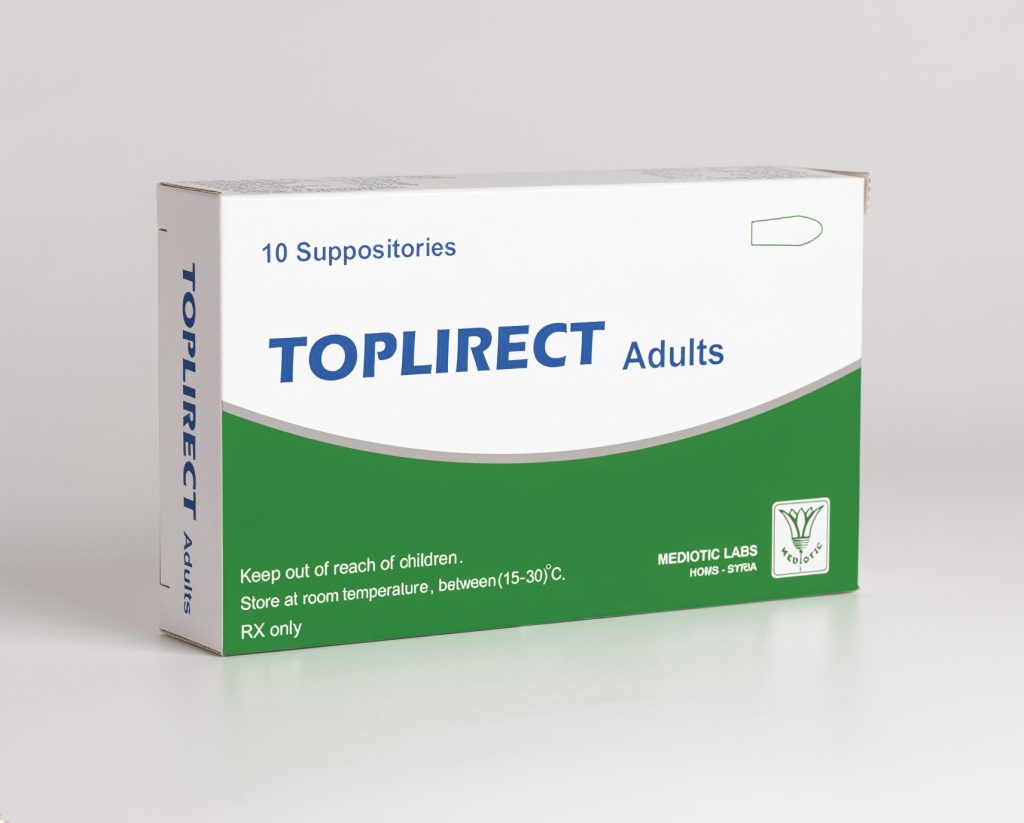
Toplirect Adult
Composition : Oxomemazine 6.6 mg +Guaifenesin133.2.6mg +Sodium Benzoate133.2mg +paracetamol 133.2mg
Pharmaceutical Forms : Suppositories & Ovules
Usage : Antipyretic, decongestant, expectorant
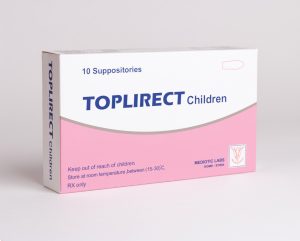
TOPLIRECT(Children-Adults)
oxomemazine, guaifenesin, paracetamol, Sodium benzoate
suppositories
KI KP Adults Toplirect suppository contains: Oxomemazine 6.6 mg, Paracetamol 133.2 mg, Guaifenesin 133.2 mg, Sodium benzoate 133.2 mg. KI KP Children Toplirect suppository contains: Oxomemazine 3.3 mg, Paracetamol 66.6 mg, Guaifenesin 66.6 mg, Sodium benzoate 66.6 mg. Excipients: Hydrogenated vegetable oil.
Pharmacologic properties:
this drug is a combination of four substances: oxomemazine, synthetic antihistamine, with antitussive and sedative properties; guaifenesin, antiseptic of the airways, fluidifying bronchial secretions and expectorant, paracetamol, analgesic and antipyretic properties, and of sodium benzoate; causing less ammonia to be produced by the body. therefore it is used in the treatment of cough of inflammatory, allergic or even infectious origin and may be associated with antibiotics or anti-inflammatories, depending on the origin of the cough. INDICATION:
Symptomatic treatment of cough (irritative, non-productive, spasmodic, dry) associated with various respiratory conditions.
CONTRAINDICATIONS:
- Children under 2 years of age.
- It should not be given with other product containing paracetamol.
- It should not be given to patients allergic to the any of the components.
- Linked to oxomemazine: respiratory insufficiency, which ever be the degree.
- Linked to paracetamol: hepatocellular insufficiency.
- Tell the doctor if the patients have respiratory problems, liver problems or diabetic.
- Breast feeding.
- Allergic reaction.
PRECAUTIONS AND WARNINGS:
- Prior to the initiation of antitussive treatment, it is appropriate to investigate causes of cough to identify those that require etiological treatment itself, mainly asthma, cancer, endobronchial affections, among others.
- if cough persists after administration of antitussive in usual doses, it is not advisable to increase the dosage, but to make a review of the clinical status.
- The doctor should be informed about the pre-existing diseases, allergies and current health conditions.
- Caution should be exercised when administering this drug to vehicle drivers or potentially dangerous machinery due to the risk of drowsiness.
Pregnancy:
The safety of this drug during pregnancy has not been established. Therefore, it is recommended that its use only be made after evaluation of the risk-benefit ratio.
Use in elderly:
There are no special warnings and recommendations on the proper use of this drug in elderly patients DRUG INTERACTIONS:
- Linked to oxomemazine: alcoholic beverages should be avoided during treatment.
- Tell the doctor about any medicines that the patients are taking, before starting, or during treatment.
- This drug may potentiate CNS depressants as well as central atropines, when in combination with other anticholinergic substances (other antihistamines, imipramine, phenothiazine, antiparkinsonians, anticholinergics, atropine antispasmodics and disopyramide). This drug may interact with the following drugs: lomitapide, mipomersen, Ketoconazole, Leflunomide, Prilocaine, Probenecid, Teriflunomide.
This drug may Interfere with certain laboratory tests.
Adverse Reactions:
- In general, the body has a high tolerance to this drug.
- The most commonly observed adverse effect is drowsiness. more rarely, constipation and urinary retention, mental confusion, dry mouth, gastrointestinal effects(in particular digestive intolerance), tardive dyskinesias, leucopenia and agranulocytosis may be observed. • If any unpleasant reaction occurs during treatment, tell the doctor immediately.
- Consult the doctor if the patient observes any of the following side-effects: Stomach pain, Loose motions, Vomiting, Itchy skin rash, Rash, Feeling of sickness, Skin reddening, Shortness of breath, Swollen facial features, Nausea, Abnormalities of blood cells, Less white blood cells, Acute renal tubular necrosis, Blood dyscrasias, Changes in skin color, Cold hands and feet, Confusion, Dry mouth, Fever or chills, Dry skin, Increased hunger, Increased thirst.
Dosage and administration:
- For the suppository 6.6 mg/ 133.2 mg/ 133.2 mg/ 133.2 mg:
Adults: 1 suppository in the morning and evening.
- For the suppository 3.3 mg/ 66.6 mg/ 66.6 mg/ 66.6 mg:
Children 2 to 12 years of age: 1 suppository three times daily.
always respecting the schedules, the doses and the duration of the treatment.
- Discontinuation of treatment: the treatment should not be discontinued without the knowledge of the doctor.
- In case of missing a dose, it should be used as soon as noticing. If it is close to the time of the next dose, skip the missed dose and resume the dosing schedule. extra dose should not be used to make up for a missed dose.
OVERDOSE:
Linked to oxomemazine: the clinical picture may be characterized by depression and coma. Treatment is symptomatic and
may be necessary. artificial respiration and anticonvulsants.
Linked to paracetamol: a solid dosage causes hepatic cytolysis, with susceptibility to complete and irreversible necrosis. The clinical signs manifest usually within the first 24 hours. Treatment should be performed in specialized unit.
Storage conditions:” store at room temperature, between (15-30°C).
“Keep out of reach of children”.
How supplied: 2 plastic blister contain 10 Toplirect children /cartoon.
2 plastic blister contain 10 Toplirect Adults /cartoon.
Related Products.
- New
MOTALON 60 mg
- New
MEDIOPAN PLUS ADULT
- New
MOTALON 10mg
- New
MEDIOSETRON
- New
Glycerol MEDIOTIC- CHILDREN
- New