

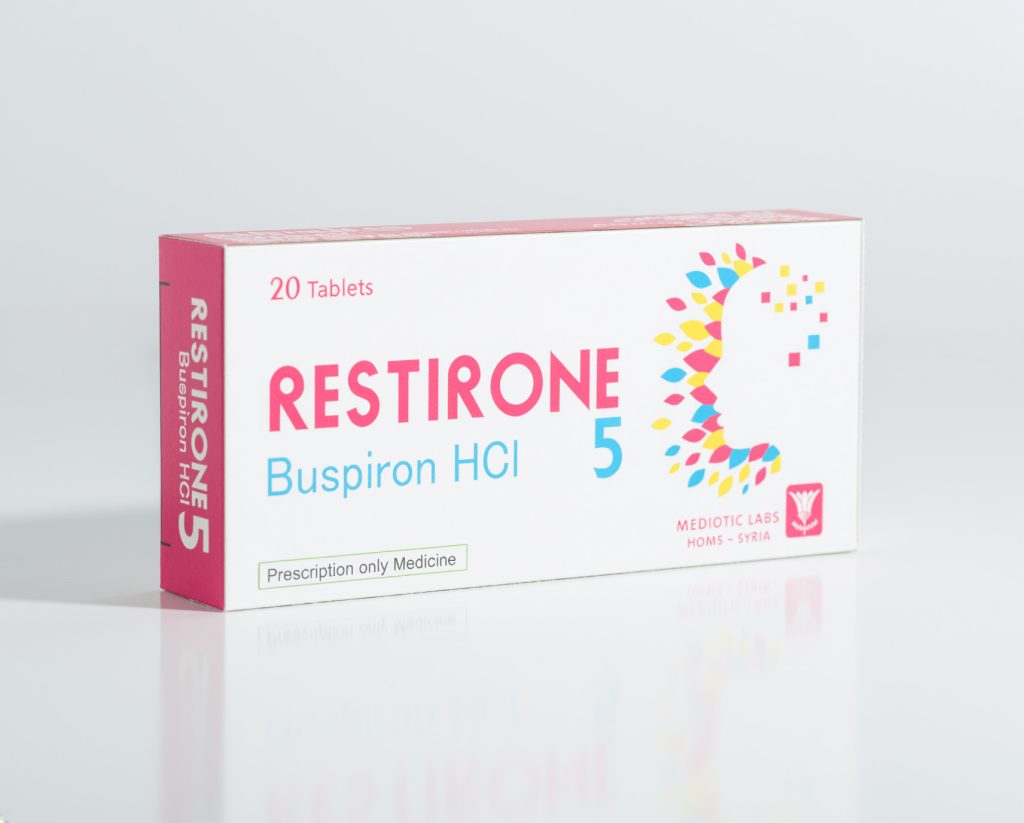
RESTERON 5
Composition : Buspirone hcl 5 mg
Pharmaceutical Forms : Tablets
Usage : Anti-anxiety
juice (200 mL double-strength t.i.d. for 2 days) increased plasma buspirone concentrations (4.3 fold increase in C ; 9.2 fold increase in AUC). Patients receiving buspirone should be advised to avoid drinking such large amounts of grapefruit juice. Itraconazole:
coadministration of buspirone (10 mg as a single dose) with
itraconazole (200 mg/day for 4 days) increased plasma buspirone concentrations (13 fold increase in C and 19 fold increase in AUC). These pharmacokinetic interactions were accompanied by an increased incidence of side effects attributable to buspirone. If the two drugs are to be used in combination, a low dose of buspirone (e.g., 2.5 mg q.d.) is recommended. Subsequent dose adjustment of either drug should be based on clinical assessment.
Nefazodone:
coadministration of buspirone (2.5 or 5 mg b.i.d.) with nefazodone (250 mg b.i.d.) resulted in marked increases in plasma buspirone concentrations (increases up to 20 fold in C and up to 50 fold in AUC) and statistically significant decreases (about 50%) in plasma concentrations of the buspirone metabolite.
Rifampin:
coadministration of buspirone (30 mg as a single dose) with rifampin
(600 mg/day for 5 days) decreased the plasma concentrations (83.7% decrease in C ; 89.6% decrease in AUC) and pharmacodynamic effects of buspirone. If the two drugs are to be used in combination, the dosage of buspirone may need adjusting to maintain anxiolytic effect.
Other inhibitors and inducers of CYP3A4:
Substances that inhibit CYP3A4, such as ketoconazole or ritonavir, may inhibit buspirone metabolism and increase plasma concentrations of buspirone while substances that induce CYP3A4, such as dexamethasone or certain anticonvulsants (phenytoin, phenobarbital, carbamazepine), may increase the rate of buspirone metabolism. If a patient has been titrated to a stable dosage on buspirone, a dose increased AUC and C of buspirone 3.4 fold while diltiazem increased AUC and C 5.5 fold and 4 fold,
respectively.
Cimetidine:
Coadministration of buspirone with cimetidine was found to increase C (40%) and T (2 fold), but had minimal effects on the AUC of buspirone.
Protein Binding:
In vitro, buspirone does not displace tightly bound drugs like phenytoin, propranolol, and warfarin from serum proteins. However, there has been one report of prolonged prothrombin time when buspirone was added to the regimen of a patient treated with warfarin. The patient was also chronically receiving phenytoin, phenobarbital, digoxin, and levothyroxine sodium. In vitro, buspirone may displace less firmly bound drugs like digoxin. The clinical significance of this property is unknown.
Therapeutic levels of aspirin, desipramine, diazepam, flurazepam, ibuprofen, propranolol, thioridazine, and tolbutamide had only a limited effect on the extent of binding of buspirone to plasma proteins.
Pregnancy:Pregnancy Category B
adequate and well-controlled studies during pregnancy have not been performed.
Because animal reproduction studies are not always predictive of human response, this drug should be used during pregnancy only if clearly needed.
Nursing Mothers:
The extent of the excretion in human milk of buspirone or its metabolites is not known. Buspirone hydrochloride tablets administration to nursing women should be avoided if clinically possible.
Use in Patients With Impaired Hepatic or Renal Function:
Buspirone is metabolized by the liver and excreted by the kidneys. A pharmacokinetic study in patients with impaired hepatic or renal function demonstrated increased plasma levels and a lengthened half-life
of buspirone. Therefore the administration of buspirone hydrochloride tablets to patients with severe hepatic or renal impairment cannot be recommended. DOSAGE AND ADMINISTRATION:
The recommended initial dose is 15 mg daily (7.5 mg b.i.d.). To achieve an optimal therapeutic response, at intervals of 2 to 3 days the dosage may be increased 5 mg per day, as needed. The maximum daily dosage should not exceed 60 mg per day. In clinical trials allowing dose titration, divided doses of 20 to 30 mg per day were commonly employed.
The bioavailability of buspirone is increased when given with food as compared to the fasted state.
Consequently, patients should take buspirone in a consistent manner with regard to the timing of dosing; either always with or always without food.
When buspirone is to be given with a potent inhibitor of CYP3A4 the dosage
recommendations described in the Drug Interactions section should be followed. Packaging:2 blisters in carton box, each one contains (10) tablets.
Storage conditions:store at room temperature, between(20-25)°C, away from moisture and light.
Related Products.
- New
PREVERSIL PLUS8/5

- New
MEDIOPAN
- New
GILOBA
- New
INDELOL 80
- New
NOROVIT
- New