

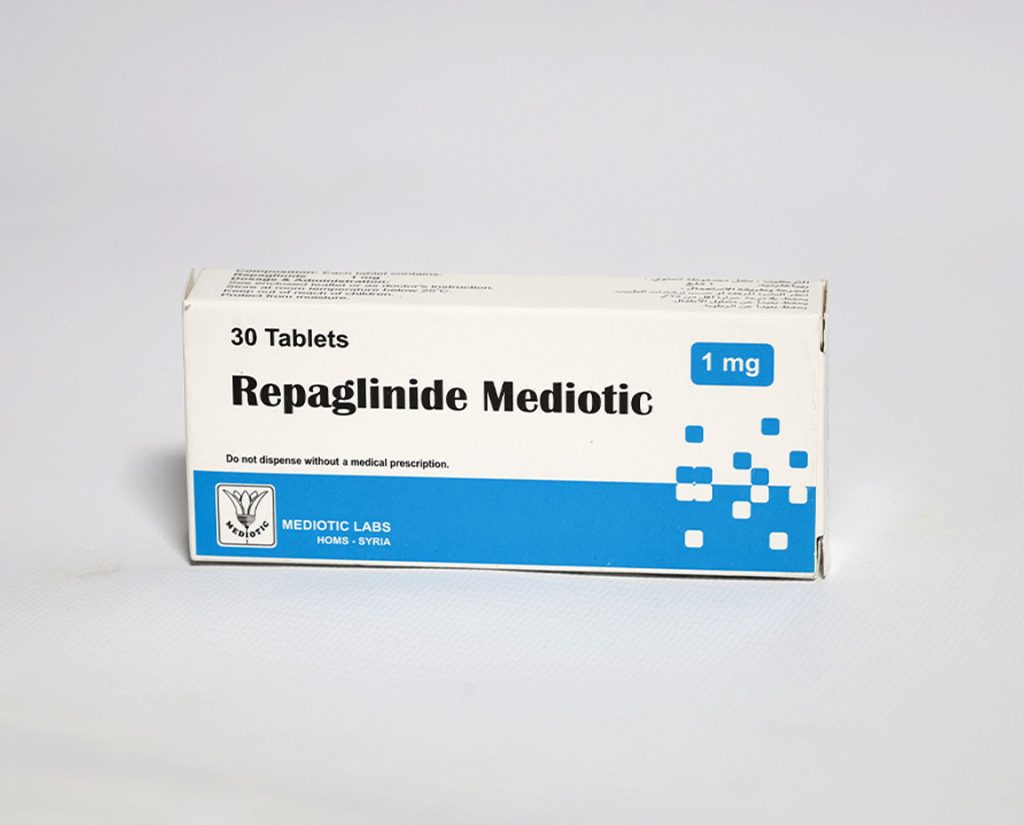
Repaglinide mediotic 1mg
Composition : Repaglinide 1mg
Pharmaceutical Forms : Tablets
Usage : Treatment of High blood sugar
Composition: Repaglinide Mediotic tablets contain 0.5 mg, 1 mg, or 2 mg of repaglinide.
Excipients: microcrystalline cellulose, Starch, Cross povidone, cross-carmellose sodium, magnesium strearate.red & yellow iron oxide. Description: Repaglinide Mediotic (repaglinide) is an oral blood glucose-lowering drug of the meglitinide class used in the management of type 2 diabetes mellitus (also known as non-insulin dependent diabetes mellitus or NIDDM). Repaglinide is chemically unrelated to the oral sulfonylurea insulin secretagogues.
Mechanism of Action: Repaglinide lowers blood glucose by stimulating the release of insulin from the pancreas. This action is dependent upon functioning beta (B) cells in the pancreatic islets. Insulin release is glucose concentration. Repaglinide closes ATP-dependent potassium channels in the B-cell membrane by binding at characterizable sites. This potassium channel blockade depolarizes the B-cell, which leads to an opening of calcium channels. The resulting increased calcium influx induces insulin secretion. The ion channel mechanism is highly tissue selective with low affinity for heart skeletal muscle.
Pharmacokinetics:
Absorption: After oral administration, repaglinide is rapidly and completely absorbed from the gastrointestinal tract. After single and multiple oral doses in healthy subjects or in patients, peak plasma drug levels (Cmax) occur within I hour (Tmax). Repaglinide is rapidly eliminated eliminated from the blood stream with a half-life of approximately 1 hour. The mean absolute bioavailability is 56 %. When repaglinide was given with food, the mean Tmax was not change, but the mean Cmax and AUC (area under the time/plasma concentration curve) were decreased 20% and 12.4 %, respectively. Protein binding and binding to human serum albumin is greater than 98 %.
Metabolism: Repaglinide is completely metabolized by oxidative biotransformation and direct conjugation with glucuronic acid after on oral dose. Metabolites are not contributed to the glucose-lowering effect of Repaglinide. Repaglinide appears to be a substrate for active hepatic uptake transporter (organic anion transporting protein OAP1B1).
Excretion: Within 96 hours after dosing with repaglinide as a single, oral dose, approximately 90% of the dose is recovered in the feces and approximately 8% in the urine. Only 0.1% of the dose is cleared in the urine as parent compound. Less than 2% of parent drugs was recovered in feces.
Repaglinide did not accumulate in serum. Clearance of oral Repaglinide did not change over the 0.54 mg dose range, indicating a linear relationship between dose and plasma drug levels.
Indications: Repaglinide Mediotic is indicated as an adjunct to diet and exercise to lower the blood glucose in patients with type 2 diabetes mellitus (NIDDM) whose hyperglycemia cannot be controlled satisfactorily by diet and exercise alone.
Contraindications: Repaglinide Mediotic is contraindicated in the following cases:
– Diabetic ketoacidosis, with or without coma (this condition should be treated with insulin).
– Type 1 diabetes.
– Co-administration of gemfibrozil.
– Known hypersensitivity to the drug or its inactive ingredients.
Side Effects:
Hypoglycemia: Over one year, 13% of repaglinide patients were discontinued due to adverse events.
The most common adverse events leading to withdrawal were hypoglycemia, and related symptoms. Mild or moderate hypoglycemia occurred in 16% of patients treated with Repaglinide in clinical trials. The most commonly reported side effects associated with Repaglinide include:
Respiratory: URL (upper respiratory infection), sinusitis, rhinitis, bronchitis.
Gastrointestinal: nausea, diarrhea, constipation, vomiting, dysepepsia.
Musculoskeletal: arthralgia, back pain.
Others: headache chest pain, urinary tract infection, tooth disorders, allergy.
Cardiovascular events: the incidence of angina during one-year clinical trials was (1.8%), with an incidence of chest pain of 1.8%. this incidence of total serious cardiovascular adverse events, including ischemia, was (4%).
Less common adverse clinical or laboratory events observed in clinical trials included elevated liver enzymes, thrombocytopenia, leukopenia, and anaphylactoid reactions.
Combination therapy with Thiazolidinediones: Hypoglycemia (blood glucose < 50 mg/dl) occurred in 7 % of combination therapy (repaglinide – rosiglitazone or repaglinide – pioglitazone) patients in comparison to 7% for repaglinide monotherapy, and 2% for thiazolidinedione monotherapy. Peripheral edema was reported in 12 out of 250 repaglinide-thiazolidinedione combination therapy patients and 3 out of 124 thiazolidinedione monotherapy patients, with no cases reported in these trials for repaglinide monotherapy.
Precautions & Warnings:
Hypoglycemia: All oral blood glucose-lowering drugs are capable of producing hypoglycemia. Proper patient selection, dosage, and instructions to the patients are important to avoid hypoglycemic episodes. Hepatic insufficiency may cause elevated repaglinide blood levels and may diminish gluconeogenic capacity, both of which increase the risk of serious hypoglycemia. Elderly, debilitated, or malnourished patients, and those with adrenal, pituitary, hepatic, or severe renal insufficiency, may be particularly susceptible to the hypoglycemic action of glucose-lowering drugs. Hypoglycemia may be difficult to recognize in the elderly and in people taking beta-adrenergic blocking drugs. Hypoglycemia is more likely to occur when caloric intake is deficient, after severe or prolonged exercise, when alcohol is ingested, or when more than one glucose-lowering drug is used. REPAGLINIDE MEDIOTIC should be administered with meals to lessen the risk of hypoglycemia.
Loss of control of blood glucose: When a patient stabilized on any diabetic regimen is exposed to stress such as fever, trauma, infection, or surgery, a loss of glycemic control may occur. At such times, it may be necessary to discontinue REPAGLINIDE MEDIOTIC and administer insulin.
The effectiveness of any hypoglycemic drug in lowering blood glucose to a desired level decreases in many patients over a period of time, which may be due to progression of the severity of diabetes or to diminished responsiveness to the drug this phenomenon is known as secondary failure, to distinguish it from primary failure in which the drug is individual patient when the drug is first given. Adequate adjustment of dose and adherence to diet should be assessed before classifying a patient as a secondary failure.
Pregnancy category C:
Teratogenic Effects: Safety in pregnant women has not been established. Repaglinide was not teratogenic in animal studies throughout pregnancy. Because animal reproduction studies are not always predictive of human response, REPAGLINIDE MEDIOTIC (repaglinide) should be used during pregnancy only if it is clearly needed. Because recent information suggests that abnormal blood glucose levels during pregnancy are associated with a higher incidence of congenital abnormalities, many experts recommend that insulin be used during pregnancy to maintain blood glucose levels as close to normal as possible.
Nonteratogenic Effects: offspring of rat dams exposed to repaglinide at 15 times clinical exposure on a mg/m2 basis during days 17 to 22 of gestation and during lactation developed nonteratogenic skeletal deformities consisting of shortening, thickening, and bending of the humerus during the postnatal period. This effect was not seen at doses up to 2.5 times clinical exposure (on a mg/m2 basis) on days 1 to 22 of pregnancy or at higher doses given during days 1 to 16 of pregnancy. Relevant human exposure has not occurred to date and therefore the safety of Repaglinide Mediotic (repaglinide) administration throughout pregnancy or lactation cannot be established. Physician must weigh the potential benefits and the risks of this medication when considering its use in pregnant women.
Nursing Mothers: Because the potential for hypoglycemia in nursing infants may exist, a decision should be made as to whether REPAGLINIDE MEDIOTIC should be discontinued in nursing mothers, or if mothers should discontinue nursing. If REPAGLINIDE MEDIOTIC is discontinued and if diet alone is inadequate for controlling blood glucose, insulin therapy should be considered.
Pediatric Use: No studies have been performed in pediatric patients.
Drug-Drug Interactions:
CYP2C8 and CYP3A4 Inhibitor/Inducers:
Gemfibrozil and Itraconazole: Co-administration of both gemfibrozil and itraconazole with Repaglinide resulted in a significant increase in repaglinide blood levels.
Gemfibrozil and traconazole had a synergistic metabolic inhibitory effect on REPAGLINIDE MEDIOTIC.
Patients taking REPAGLINIDE MEDIOTIC should not start taking gemfibrozil; patients taking gemfibrozil should not start taking REPAGLINIDE MEDIOTIC.
Ketoconazole, Micoconazole, and Erythromycin: In vitro data indicate that repaglinide metabolism may be inhibited by antifungal agents like ketoconazole, miconazole, and antibacterial agents like erythromycin (cytochrome P-450 enzyme system 3A4 inhibitors). Clarithromycin: In vivo data from a study that evaluated the co-administration of a cytochrome P450 enzyme inhibitor, clarithromycin, with repaglinide resulted in a clinically significant increase in repaglinide plasma levels may necessitate a repaglinide dose adjustment. Cyclosporine: Co-administration of cyclosporine with repaglinide increased the repaglinide max 1.8-fold and the AUC 2.5-fold in an interaction study with healthy volunteers.
Trimethoprim: Co-administration of 160 mg trimethoprim and a single dose of 0.25 mg repaglinide resulted in a 61% and 41% increase in repaglinide AUC and Cmax, respectively.
Levonorgestrel & Ethinyl Estradiol: Co-administration of a combination tablet of 0.15 mg levonorgestrel and 0.03 mg ethinyl estradiol administered once daily for 21 days with 2 mg repaglinide administered three times daily (days 1-4) and single dose on Day 5 resulted in 20% increases in repaglinide, levonorgestrel, and ethinyl estradiol Cmax.
CYP2C8 and CYP3A4 Inducers: Drugs that induce the cytochrome P450 enzyme 3A4 may increase repaglinide metabolism, such drugs include rifampin, barbiturates, and carbamezapine.
Protein bound drugs: Such as NSAIDS, Salicylates, sulfonamides, propenecid, MAO inhibitors, beta adrenergic blocking agents may potentiate hypoglycemic effects of repaglinide.
Renal Insufficiency: Initial dose adjustment does not appear to be necessary for patients with mild to moderate renal dysfunction. However, patients with type 2 diabetes who have severe renal function impairment should initiate REPAGLINIDE MEDIOTIC (repaglinide) therapy with the 0.5 mg dose – subsequently, patients should be carefully titrated. Studies were not conducted in patients with creatinine clearances below 20 ml/min or patients with renal failure requiring hemodialysis Hepatic insufficiency. REPAGLINIDE MEDIOTIC should be used cautiously in patients with impaired liver function. Longer intervals between dose adjustments should be utilized to allow full assessment of response.
DOSAGE AND ADMINISTRATION:
There is no fixed dosage regimen for the management of type 2 diabetes with PRALINIDE. The patient’s blood glucose should be monitored periodically to determine the minimum effective dose for the patient; to detect primary failure, i.e., inadequate lowering of blood glucose at the maximum recommended dose of medication; and to detect secondary failure, i.e., loss of an adequate blood glucose-lowering response after an initial period off effectiveness. Glycosylated hemoglobin levels are of value in monitoring the patient’s longer term response to therapy. Short-term administration of REPAGLINIDE MEDIOTIC may be sufficient during periods of transient loss of control in patients usually well controlled on diet. REPAGLINIDE MEDIOTIC doses are usually taken within 15 minutes of the meal but time may vary from immediately preceding the meal to as long as 30 minutes before the meal
Starting Dose: For patients not previously treated or whose HbA, is < 8%, the starting dose should be 0.5 mg with each meal. For patients previously treated with blood glucose-lowering drugs and be whose HbA,, is 8%, the initial dose is 1 or 2 mg with each meal preprandially. Starting Dose: For patients not previously treated or whose HbA,, is 8%, the starting dose should be 0.5 mg with each meal. For patients previously treated with blood glucose-lowering drugs and whose HbA,, is > 8%, the initial dose is 1 mg 2 mg with each meal preprandially. Dose Adjustment: Dosing adjustments should be determined by blood glucose response, usually fasting blood glucose. Postprandial glucose levels testing may be clinically helpful in patients whose premeal blood glucose levels are satisfactory but whose overall glycemic control (HbA1c) inadequate. The preprandial dose should be doubled up to 4 mg with each meal until satisfactory blood glucose response is achieved. At least one week should elapse to assess response after each dose adjustment. The recommended dose range is 0.5 mg to 4 mg taken with meals. REPAGLINIDE MEDIOTIC may be dosed preprandially 2, 3, or 4 times a day in response to changes in the patient’s meal pattern. The maximum recommended daily dose is 16 mg.
Patient Management: Long-term efficacy should be monitored by measurement of HbA,, levels approximately every 3 months. Failure to follow an appropriate dosage regimen may precipitate or hyperglycemia. Patients who do not adhere to their prescribed dietary and drug regimen are more prone to exhibit unsatisfactory response to therapy including hypoglycemia. When hypoglycemia occurs in patients taking a combination of REPAGLINIDE MEDIOTIC (repaglinide) and thiazolidinedione or REPAGLINIDE MEDIOTIC (repaglinide) and metformin, the dose of REPAGLINIDE MEDIOTIC (repaglinide) should be reduced.
patients Receiving other oral Hypoglycemic Agents: When REPAGLINIDE MEDIOTIC is used to replace therapy with other oral hypoglycemic a REPAGLINIDE MEDIOTIC may be started on the day after the final dose is given. Patients should then be observed carefully for hypoglycemia due to potential
started to overlapping of drug effects. When transferred from longer half-life sulfonylurea agents (e.g., chlorpropamide) to repaglinide, close monitoring may be indicated for up to one week or longer.
Combination Therapy: If REPAGLINIDE MEDIOTIC monotherapy does not result in adequate glycemic control, metformin or a thiazolidinedione may be added. If metformin or thiazolidinedione monotherapy does not provide adequate control, REPAGLINIDE MEDIOTIC may be added. The starting dose and dose adjustments for REPAGLINIDE MEDIOTIC combination therapy is the same as for REPAGLINIDE MEDIOTIC monotherapy. The dose of each drug should be carefully adjusted to determine the minimal dose required to achieve the desired pharmacologic effect. Failure to do so could result in an increase in the incidence of hypoglycemic episodes. Appropriate monitoring of FPG and HbA1c measurements should be used to ensure that the patient is not subjected to excessive drug exposure or increased probability of secondary drug failure.
OVERDOSE:
Hypoglycemic symptoms without loss consciousness or neurologic findings should be treated aggressively with oral glucose and adjustments in drug dosage and/or meal patterns. Severe hypoglycemic reactions with coma, seizure, or other neurological impairment occur infrequently, but constitute medical emergencies requiring immediate hospitalization. If coma is diagnosed or suspected, the patient should be given a rapid intravenous injection of concentrated (50%) glucose solution. This should be followed by a continuous infusion of more dilute (10%) glucose solution at a rate that will maintain the blood glucose at a level above 100 mg/dl.
Presentation:
3 Blisters, each one contains 10 white tablets of Repaglinide Mediotic 0.5 mg.
3 Blisters, each one contains 10 yellow tablets of Repaglinide Mediotic 1 mg.
3 Blisters, each one contains 10 orange tablets of Repaglinide Mediotic 2 mg.
Related Products.
- New
INDELOL 10
- New
PREVERSIL EXTRA 5/10/1.25
- New
MIGRAMAT
- New
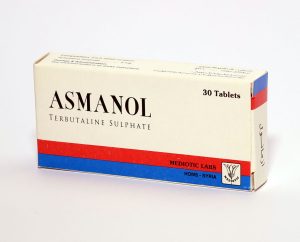
ASMANOL 5
- New
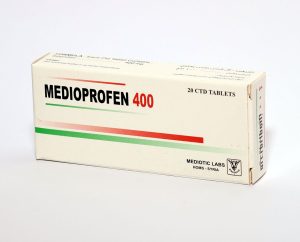
MEDIOPROFEN 400
- New