

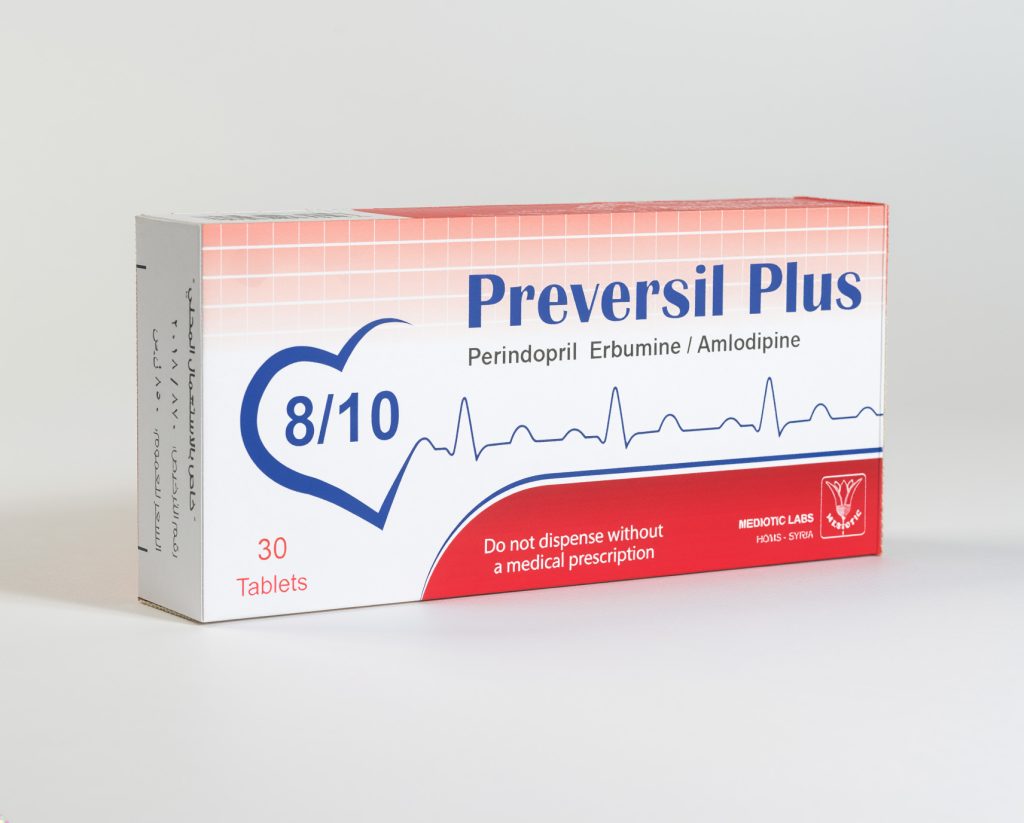
PREVERSIL PLUS 8/10
Composition : Perindopril Erbumine 8 mg Amlodipnine (As Besylate)10mg
Pharmaceutical Forms : Tablets
Usage : Treatment of high blood pressure
Preversil Plus (Tablets)
Warning: The use of ACE inhibitors is not recommended during the first trimester of pregnancy. The use of ACE inhibitors is contraindicated during the second and third trimester of pregnancy.
Composition:.
Preversil plusTablets contain perindopril Erbumine and Amlodipine:
4mg perindopril Erbumine and 5mg Amlodipine (as besylate).
4mg perindopril Erbumine and 10mg Amlodipine(as besylate).
8mg perindopril Erbumine and 5mg Amlodipine(as besylate).
8mg perindopril Erbumine and 10 mg Amlodipine(as besylate).
Excepients:
Sodium hydrogen carbonate, microcrystalline Cellulose, pregelatinised Maize starch, Sodium starch glycolate, colloidal anhydrous Silica, Magnesium stearate, Yellow and Red ferric oxide.
Properties:
Perindopril: Is an inhibitor of the enzyme that converts angiotensin I into angiotensin II which leads to increased plasma renin activity and reduced secretion of aldosterone.
Amlodipine: Is a calcium antagonist and inhibits the influx of calcium ions into cardiac and vascular smooth muscle. Pharmacokinetics:
The rate and extent of absorption of perindopril and amlodipine from perindopril/amlodipine are not significantly different, respectively, from the rate and extent of absorption of perindopril and amlodipine from individual tablet formulations. Perindopril: Twenty seven percent of the administered perindopril dose reaches the bloodstream as the active metabolite perindoprilat, Perindoprilat is eliminated in the urine and the terminal half–life of the unbound fraction is approximately 17 hours. Amlodipine: Approximately 97.5% of circulating amlodipine is bound to plasma proteins. Amlodipine is extensively metabolized by the liver to inactive metabolites; about 60% of the administered dose is excreted in the urine, 10% as unchanged amlodipine. The terminal plasma elimination half–life is about 35-50 hours.
Indications: Perindopril/Amlodipine is indicated for treatment of:
- Essential hypertension.
- Stable coronary artery disease.
Contraindications:
- Hypersensitivity to any component of the drug.
History of angioedema associated with previous ACE inhibitor therapy.
- Hereditary or idiopathic angioedema.
- Second and third trimesters of pregnancy.
- Severe hypotension.
- Shock, including cardiogenic shock.
- Obstruction of the outflow–tract of the left ventricle (high grade aortic stenosis).
- Haemodynamically unstable heart failure after acute myocardial infarction.
The concomitant use of Perindopril/Amlodipine with aliskiren–containing products is contraindicated in patients with diabetes mellitus or renal impairment (GFR< 60 ml/min/1.73 m2). Adverse effect:
Somnolence, Dizziness, Headache, paresthaesia, Vertigo, visual disturbances, Tinnitus, palpitations, flushing, Hypotension, dyspnoea, cough, abdominal pain, nausea, vomiting, dyspepsia, diarrhea, constipation, pruritus, rash, muscle cramps, asthenia. Weight gain, Weight decrease, Insomnia, Mood changes, Tremor, Hypoesthaesia, Paresthaesia, Syncope, Rhinitis, Bronchospasm, Altered bowel habits, Dry mouth, Dysgeusia, Taste perversion, Angioedema of face, extremities, lips, mucous membranes, tongue, glottis and/or larynx, Alopecia, Purpura, Skin discoloration, Increased sweating, Arthralgia, myalgia, Impotence, Gynaecomastia, peripheral oedema, Fatigue, Chest pain, Asthenia, Pain, Malaise. Warning and Precautions:
- Angioedema has been reported rarely in patients treated with ACE inhibitors, including perindopril.
- Intestinal angioedema should be included in the differential diagnosis of patients on ACE inhibitors presenting with abdominal pain.
- Rarely, patients receiving ACE inhibitors during low–density lipoprotein (LDL) apheresis with dextran sulphate have experienced life–threatening anaphylactoid reactions.
- Patients receiving ACE inhibitors during desensitisation treatment (e.g. hymenoptera venom) have experienced anaphylactoid reactions.
- There is evidence that the concomitant use of ACE–inhibitors, angiotensin II receptor blockers or aliskiren increases the risk of hypotension, hyperkalaemia and decreased renal function (including acute renal failure).
- Neutropenia/agranulocytosis, thrombocytopenia and anemia have been reported in patients receiving ACE inhibitors.
- Cough has been reported with the use of ACE inhibitors.
- ACE inhibitors should be not be initiated during pregnancy.
- ACE inhibitors may cause a fall in blood pressure.
- In patients undergoing major surgery or during anaesthesia with agents that produce hypotension, the treatment should be discontinued one day prior to the surgery.
- Elevation in serum potassium have been observed in some patients treated with ACE inhibitors, including perindopril.
- Routine monitoring of potassium and creatinine for patients with renal impairment.
- In diabetic patients treated with oral antidiabetic agents or insulin, glycemic control should be closely monitored during the first month of treatment with ACE inhibitor.
- The drug should therefore be administered with caution in patients with impaired hepatic function and with a close monitoring of the hepatic enzymes.
- Patients with cardiac failure should be treated with caution.
⚫ perindopril should be given with caution to patients with mitral valve stenosis and obstruction in the outflow of the left
ventricle such as aortic stenosis or hypertrophic cardiomyopathy.
- Pregnancy and lactation:
- Perindopril/amlodipine is not recommended during the first trimester of pregnancy.
- Perindopril/amlodipine is contraindication during the second and third trimesters of pregnancy.
- Perindopril/amlodipine is not recommended during lactation.
- Drug interactions:
- Potassium sparing diuretics, potassium supplements or potassium–containing salt substitutes: The combination of perindopril with these agents is not recommended.
- Lithium: Reversible increases in serum lithium concentrations and toxicity have been reported during concurrent use of ACE inhibitors. The combination of perindopril with lithium is not recommended.
- Non–steroidal anti–inflammatory drugs (NSAIDS) including acetylsalicylic acid>3 g/day: The combination should be administered with caution.
- CYP3A4 inhibitors such: Ketoconazole, itraconazole, ritonavir Amlodipine should be used with caution together with CYP3A4 inhibitors, however, no adverse events attributable to such interaction have been reported.
- CYP3A4 inducers such as: Rifampicin, phenobarbital: Amlodipine should be used with caution together with CYP3A4 inducers and posology of amlodipine could be adapted if needed.
- Antidiabetic agents: The use of angiotensin converting enzyme inhibitors may increase the hypoglycaemic effect in diabetics receiving with insulin or with hypoglycaemicsulphonamides.
- Baclofen: potentiation of antihypertensive effect.
- Antihypertensive agents (such as beta–blockers) and vasodilators: Concomitant use of these agents may increase the hypotensive effects of perindopril and amlodipine. Concomitant use with nitroglycerin and other nitrates or other vasodilators, may further reduce blood pressure and therefore should be considered with caution.
- Crticosteroids, tetracosactide: reduction in antihypertensive effect (salt and water retension due to corticosteroids).
- Alpha blockers: Increased antihypertensive effect and increased risk of orthostatic hypotension.
⚫ Amifostine: May potentiate the antihypertensive effect of amlodipine.
- Tricyclic antidepressants/antipshycotics/anaesthetics: Increased antihypertensive effect and increased risk of orthostatic hypotension.
Dosage and administration:
The fixed dose combination is not suitable for initial therapy.
- One tablet per day as a single dose. Preferably to be taken in the morning and before a meal.
- Patients with renal impairment: Perindopril/ amlodipine can be administered in patients with Clcr> 60 ml/min, and is not suitable for patients with Clcr< 60 ml/min.
- Patients with hepatic impairment: Perindopril/amlodipine should be administered with caution.
- Paediatric population: Perindopril/amlodipine should not be used in children.
Overdosage:
amlodipine: Intravenous calcium gluconate may be beneficial in reversing the effects of calcium channel blockade. perindopril: Symptoms associated with the overdose of ACE inhibitors may include hypotension, circulatory shock, electrolyte disturbance, renal failure, hyperventilation, tachycardia, palpitations, bradycardia, dizziness, anxiety, and cough. The recommended treatment of overdose is intravenous infusion of normal saline solution. Perindopril can be removed from the systemic circulation be haemodialysis.
Packaging: Preversil Plus 4/5 mg: Abox contains 20 or 30 white tablets.
Preversil Plus 410/ mg: Abox contains 20 or 30 yellow tablets. Preversil Plus8 /5 mg: Abox contains 20or 30 orange tablets.. Preversil Plus 8/10 mg: Abox contains 20 or 30 dark red tablets.
Storage Conditions: store at room temperature between (15-25)°C, away from moisture and light.
* THIS IS A MEDICAMENT *
– Keep out of reach of children.
-A medicament is a product which affects your health, and its consumption
contrary to instructions is dangerous for you.
– Follow strictly doctor’s prescriptions, the method of use and instructions of the pharmacist who sold the medicament.
– The doctor and pharmacist are experts in medicine, its benefits and risks.
– Do not by yourself interrupt the period of treatment prescribed for you.
– Do not repeat the same prescription without consulting your doctor.
- In diabetic patients treated with oral antidiabetic agents or insulin, glycemic control should be closely monitored during the first month of treatment with ACE inhibitor.
- The drug should therefore be administered with caution in patients with impaired hepatic function and with a close monitoring of the hepatic enzymes.
- Patients with cardiac failure should be treated with caution.
- perindopril should be given with caution to patients with mitral valve stenosis and obstruction in the outflow of the left ventricle such as aortic stenosis or hypertrophic cardiomyopathy.
- Pregnancy and lactation:
- Perindopril/amlodipine is not recommended during the first trimester of pregnancy.
- Perindopril/amlodipine is contraindication during the second and third trimesters of pregnancy.
- Perindopril/amlodipine is not recommended during lactation.
- Drug interactions:
- Potassium sparing diuretics, potassium supplements or potassium-containing salt substitutes: The combination of perindopril with these agents is not recommended.
- Lithium: Reversible increases in serum lithium concentrations and toxicity have been reported during concurrent use of ACE inhibitors. The combination of perindopril with lithium is not recommended.
- Non-steroidal anti-inflammatory drugs (NSAIDS) including acetylsalicylic acid>3 g/day: The combination should be administered with caution.
- CYP3A4 inhibitors such: Ketoconazole, itraconazole, ritonavir : Amlodipine should be used with caution together with CYP3A4 inhibitors, however, no adverse events attributable to such interaction have been reported.
- CYP3A4 inducers such as: Rifampicin, phenobarbital: Amlodipine should be used with caution together with CYP3A4 inducers and posology of amlodipine could be adapted if needed.
- Antidiabetic agents: The use of angiotensin converting enzyme inhibitors may increase the hypoglycaemic effect in diabetics receiving with insulin or with hypoglycaemicsulphonamides.
- Baclofen: potentiation of antihypertensive effect.
- Antihypertensive agents (such as beta-blockers) and vasodilators: Concomitant use of these agents may increase the hypotensive effects of perindopril and amlodipine. Concomitant use with nitroglycerin and other nitrates or other vasodilators, may further reduce blood pressure and therefore should be considered with caution.
- Crticosteroids, tetracosactide: reduction in antihypertensive effect (salt and water retension due to corticosteroids).
- Alpha blockers: Increased antihypertensive effect and increased risk of orthostatic hypotension.
⚫ Amifostine: May potentiate the antihypertensive effect of amlodipine.
- Tricyclic antidepressants/antipshycotics/anaesthetics: Increased antihypertensive effect and increased risk of orthostatic hypotension.
Dosage and administration:
The fixed dose combination is not suitable for initial therapy.
- One tablet per day as a single dose. Preferably to be taken in the morning and before a meal.
- Patients with renal impairment: Perindopril/ amlodipine can be administered in patients with Clcr> 60 ml/min, and is not suitable for patients with Clcr< 60 ml/min.
- Patients with hepatic impairment: Perindopril/amlodipine should be administered with caution.
- Paediatric population: Perindopril/amlodipine should not be used in children.
Overdosage:
amlodipine: Intravenous calcium gluconate may be beneficial in reversing the effects of calcium channel blockade. perindopril: Symptoms associated with the overdose of ACE inhibitors may include hypotension, circulatory shock, electrolyte disturbance, renal failure, hyperventilation, tachycardia, palpitations, bradycardia, dizziness, anxiety, and cough. The recommended treatment of overdose is intravenous infusion of normal saline solution. Perindopril can be removed from the systemic circulation be haemodialysis.
Packaging: Preversil Plus 4/5 mg: Abox contains 20 or 30 white tablets.
Preversil Plus 410/ mg: Abox contains 20 or 30 yellow tablets.
Preversil Plus8 /5 mg:
Preversil Plus 8/10 mg:
Abox contains 20or 30 orange tablets..
Abox contains 20 or 30 dark red tablets.
Related Products.

- New
TOPIMATE 25

- New
GLYCOMINE
- New
EXOZIDE 160/25
- New
NOROVIT

- New
PREVERSIL EXTRA 10/5/2.5

- New