

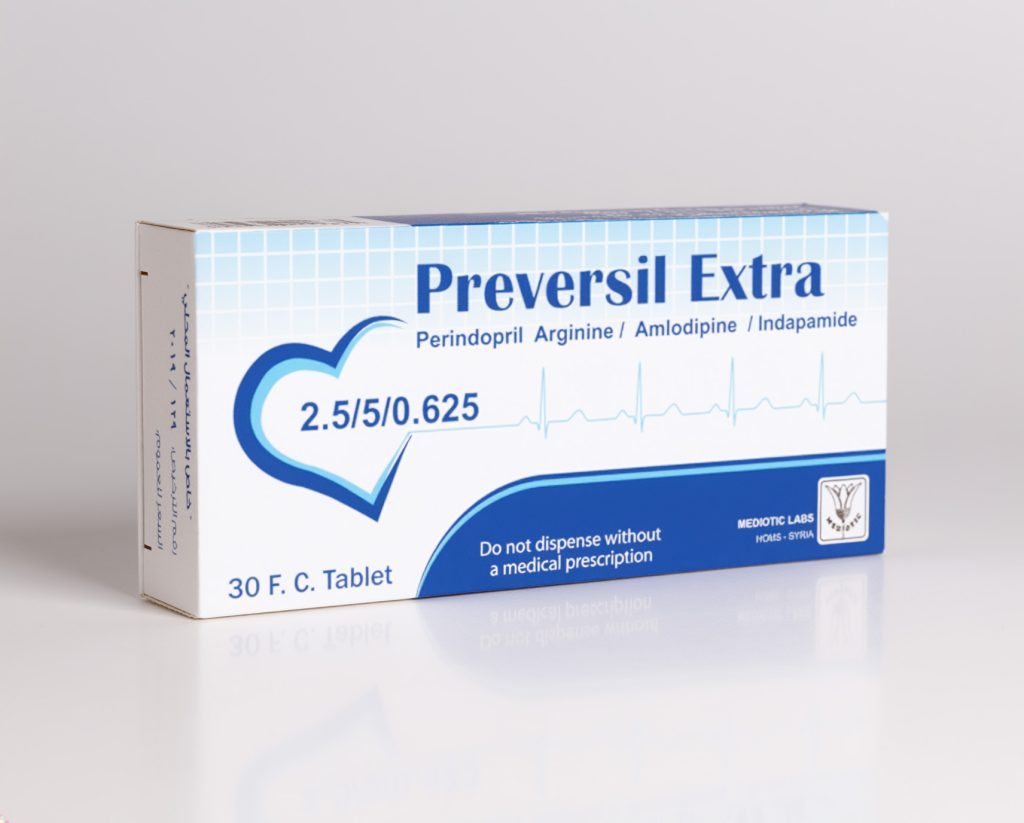
PREVERSIL EXTRA 2.5/5/0.625
Composition : Perindopril Arginine 2.5mg+Amlodipine(As Besylate) 5mg+Indapamide 0.625 mg
Pharmaceutical Forms : Tablets
Usage : Treatment of high blood pressure
PREVERSIL EXTRA
film-coated tablet
The use of ACE inhibitors is not recommended during the first trimester of pregnancy.
The use of ACE inhibitors is contra-indicated during the second and third trimesters of pregnancy.
Composition: PREVERSILI EXTRA Tablets contain perindopril Arginine, Amlodipine, and Indapamide:
2,5 mg Perindopril Arginine /5mg Amolodipine (as Besylate) / 0,625 mg Indapamide.
5 mg Perindopril Arginine 15 mg Amolodipine (as Besylate)/1,25 mg Indapamide.
5 mg Perindopril Arginine /10 mg Amolodipine (as Besylate)/1,25 mg Indapamide.
10 mg Perindopril Arginine / 5 mg Amolodipine (asBesylate) /2,5 mg Indapamide.
10 mg Perindopril Arginine /10 mg Amolodipine (as Besylate)/2,5 mg Indapamide. Excipients:
Core: Calcium carbonate starch compound: Calcium carbonate 90%, Pregelatinised maize starch 10%, Cellulose microcrystalline, Croscarmellose sodium, Magnesium stearate, Colloidal anhydrous silica, Pregelatinised starch.
Film-coating: Glycerol, Hypromellose, Macrogol 4000, Magnesium stearate, Titanium dioxide.
Perindopril:
Perindopril is an inhibitor of the angiotensin converting enzyme (ACE inhibitor). a vasoconstricting substance; in addition the enzyme stimulates the secretion of aldosterone by the adrenal cortex and stimulates the degradation of bradykinin, a vasodilatory substance, into inactive heptapeptides.
Indapamide:
Indapamide is a sulphonamide derivative with an indole ring, pharmacologically related to the thiazide group of diuretics. Amlodipine:
Amlodipine is a calcium ion influx inhibitor of the dihydropyridine group (slow channel blocker or calcium ion antagonist) and inhibits the transmembrane influx of calcium ions into cardiac and vascular smooth muscle.
Pharmacokinetic:
-Perindopril:
Absorption and bioavailability:
After oral administration, the absorption of perindopril is rapid and the peak concentration is achieved within 1 hour (perindopril is a prodrug and perindoprilat the active metabolite). The plasma half-life of perindopril is equal to 1 hour. As ingestion of food decreases conversion to perindoprilat, hence bioavailability, perindopril arginine should be administered orally in a single daily dose in the morning before a meal.
Distribution:
The volume of distribution is approximately 0.2 L/kg for unbound perindoprilat. Protein binding of perindoprilat to plasma proteins is 20. Biotransformation:
Perindopril is a prodrug. Twenty seven percent of the administered perindopril dose reaches the bloodstream as the active metabolite perindoprilat. In addition to active perindoprilat, perindopril yields five metabolites, all inactive. The peak plasma concentration of perindoprilat is achieved within 3 to 4 hours.
Elimination:
Perindoprilat is eliminated in the urine and the terminal half-life of the unbound fraction is approximately 17 hours, resulting in steady-state within 4 days.
– Indapamide:
Absorption:
Indapamide is rapidly and completely absorbed from the digestive tract.
The peak plasma level is reached in humans approximately one hour after oral administration of the product.
Distribution:
Plasma protein binding is 79 %.
Metabolism and Elimination:
The elimination half-life is between 14 and 24 hours (average 18 hours). Repeated administration does not produce accumulation. Elimination is mainly in the urine (70 % of the dose) and faeces (22%) in the form of inactive metabolites.
Amlodipine:
Absorption and Bioavailability:
After oral administration of therapeutic doses, amlodipine is well absorbed with peak blood levels between 6-12 hours post dose. Absolute bioavailability has been estimated to be between 64 and 80%.
The bioavailability of amlodipine is not affected by food intake.
Distribution:
The volume of distribution is approximately 21 L/kg. In vitro studies have shown that approximately 97.5% of circulating amlodipine is bound to plasma proteins.
Metabolism:
Amlodipine is extensively metabolised by the liver to inactive metabolites with 10% of the parent compound and 60% of metabolites excreted in the urine.
Elimination:
The terminal plasma elimination half-life is about 35-50 hours and is consistent with once daily dosing. Indications:
Indicated as substitution therapy for treatment of essential hypertension, in patients already controlled with perindopril/indapamide fixed dose combination and amlodipine, taken at the same dose level.
Contraindications:
Dialysis patients.
– Patients with untreated decompensated heart failure.
– Severe renal impairment (creatinine clearance below 30 mL/min).
– Moderate renal impairment (creatinine clearance below 60 mL/min) for Coverdine doses containing 10mg/2.5mg of
perindopril/indapamide combination (i.e., Coverdine 10mg/2.5mg/5mg and 10mg/2.5mg/10mg).
– Hypersensitivity to the active substances, to other sulphonamides, to dihydropyridine derivatives, any other ACE inhibitor or to any of the excipients.
– History of angioedema (Quincke’s oedema) associated with previous ACE inhibitor therapy.
– Hereditary/idiopathic angioedema.
– Second and third trimesters of pregnancy.
– Lactation.
– Hepatic encephalopathy.
– Severe hepatic impairment.
– Hypokalaemia.
– Severe hypotension.
– Shock, including cardiogenic shock.
– Obstruction of the outflow-tract of the left ventricle (e.g. high grade aortic stenosis).
– Haemodynamically unstable heart failure after acute myocardial infarction.
– Concomitant use of Coverdine with aliskiren-containing products in patients with diabetes mellitus or renal impairment
(GFR< 60mL/min/1.73m2).
warnings and precautions:
Lithium:
The combination of lithium and the combination of perindopril/indapamide is usually not recommended.
Dual blockade of the renin-angiotensin-aldosterone system (RAAS):
There is evidence that the concomitant use of ACE-inhibitors, angiotensin II receptor blockers or aliskiren increases the risk of hypotension, hyperkalaemia and decreased renal function (including acute renal failure). Dual blockade of RAAS through the combined use of ACE-inhibitors, angiotensin II receptor blockers or aliskiren is therefore not recommended.
If dual blockade therapy is considered absolutely necessary, this should only occur under specialist supervision and subject to frequent close monitoring of renal function, electrolytes and blood pressure.
ACE-inhibitors and angiotensin II receptor blockers should not be used concomitantly in patients with diabetic nephropathy. Potassium-sparing drugs, potassium supplements or potassium-containing salt substitutes:
The combination of perindopril and potassium-sparing drugs, potassium supplements or potassium-containing salt substitutes is usually not recommended.
Neutropenia/agranulocytosis/thrombocytopenia/anaemia:
Neutropenia/agranulocytosis, thrombocytopenia and anaemia have been reported in patients receiving ACE inhibitors. In patients with normal renal function and no other complicating factors, neutropenia occurs rarely. Perindopril should be used with extreme caution in patients with collagen vascular disease, immunosuppressant therapy, treatment with allopurinol or procainamide, or a combination of these complicating factors, especially if there is pre-existing impaired renal function.
If perindopril is used in such patients, periodical monitoring of white blood cell counts is advised and patients should be instructed to report any sign of infection (e.g. sore throat, fever).
Hypersensitivity/angioedema:
Angioedema of the face, extremities, lips, tongue, glottis and/or larynx has been reported rarely in patients treated with angiotensin converting enzyme inhibitors, including perindopril. This may occur at any time during treatment. In such
cases perindopril should be discontinued promptly and appropriate monitoring should be instituted to ensure complete resolution of symptoms prior to dismissing the patient.
Angioedema associated with laryngeal oedema may be fatal. Where there is involvement of the tongue, glottis or larynx, likely to cause airway obstruction, appropriate therapy, which may include subcutaneous epinephrine solution 1:1000Black patients receiving ACE inhibitors have been reported to have a higher incidence of angioedema compared to nonblacks.
Intestinal angioedema has been reported rarely in patients treated with ACE inhibitors. These patients presented with abdominal pain (with or without nausea or vomiting); in some cases there was no prior facial angioedema and C-1 esterase levels were normal. Concomitant use of mTOR inhibitors (e.g. sirolimus, everolimus, temsirolimus):
Patients taking concomitant mTOR inhibitors (e.g. sirolimus, everolimus, temsirolimus) therapy may be at increased risk for angioedema (e.g. swelling of the airways or tongue, with or without respiratory impairment).
Anaphylactoid reactions during desensitization:
There have been isolated reports of patients experiencing sustained, life-threatening anaphylactoid reactions while receiving ACE inhibitors during desensitisation treatment with hymenoptera (bees, wasps) venom.
Anaphylactoid reactions during LDL apheresis:
Rarely, patients receiving ACE inhibitors during low density lipoprotein (LDL)-apheresis with dextran sulphate have experienced life- threatening anaphylactoid reactions. These reactions were avoided by temporarily withholding ACE inhibitor therapy prior to each apheresis.
Haemodialysis patients:
Anaphylactoid reactions have been reported in patients dialyzed with high-flux membranes (e.g., AN 69R) and treated concomitantly with an ACE inhibitor. In these patients consideration should be given to using a different type of dialysis membrane or a different class of antihypertensive agent.
Pregnancy:
ACE inhibitors should not be initiated during pregnancy. Unless continued ACE inhibitor therapy is considered essential, patients planning pregnancy should be changed to alternative anti-hypertensive treatments which have an established safety profile for use in pregnancy. When pregnancy is diagnosed, treatment with ACE inhibitors should be stopped immediately, and, if appropriate, alternative therapy should be started.
Hepatic encephalopathy:
When liver function is impaired, thiazide diuretics and thiazide-related diuretics may cause hepatic encephalopathy. Administration of the diuretic should be stopped immediately if this occurs.
Photosensitivity:
Cases of photosensitivity reactions have been reported with thiazides and related thiazides diuretics. Renal function:
In cases of severe renal impairment (creatinine clearance < 30 mL/min), treatment is contraindicated.
For patients with a moderate renal impairment (creatinine clearance < 60 mL/min), treatment is contraindicated with Coverdine doses containing 10mg/2.5mg of perindopril /indapamide combination (i.e., Coverdine 10mg/2.5mg/5mg and 10mg/2.5mg/10mg).
In certain hypertensive patients without pre-existing apparent renal lesions and for whom renal blood tests show functional renal
insufficiency, treatment should be stopped and possibly restarted either at a low dose or with one constituent only.
The drug is usually not recommended in case of bilateral renal artery stenosis or a single functioning kidney.
In the elderly the value of plasma creatinine levels should be adjusted in relation to age, weight and gender.
Hypovolaemia, secondary to the loss of water and sodium caused by the diuretic at the start of treatment, causes a reduction in glomerular filtration. It may result in an increase in blood urea and creatinine levels.
Amlodipine may be used at normal doses in patients with renal failure. Changes in amlodipine plasma concentrations are not correlated with degree of renal impairment. Hypotension and water and sodium depletion.
There is a risk of sudden hypotension in the presence of pre-existing sodium depletion (in particular in individuals with renal artery stenosis).
Marked hypotension may require the implementation of an intravenous infusion of isotonic saline.
Transient hypotension is not a contraindication to continuation of treatment.
Reduction in sodium levels can be initially asymptomatic and regular testing is therefore essential. Testing should be more frequent in elderly and cirrhotic patients.
Any diuretic treatment may cause hyponatraemia, sometimes with very serious consequences.
Hyponatraemia with hypovolaemia may be responsible of dehydration and orthostatic hypotension. Concomitant loss of chloride ions may lead to secondary compensatory metabolic alkalosis: the incidence and degree of this effect are slight.
Potassium levels:
The combination of indapamide with perindopril and amlodipine does not prevent the onset of hypokalaemia particularly in diabetic patients or in patients with renal failure. As with any antihypertensive agent in combination with a diuretic, regular monitoring of plasma potassium levels should be carried out.
Elevations in serum potassium have been observed in some patients treated with ACE inhibitors, including perindopril. Potassium depletion with hypokalaemia is a major risk with thiazide diuretics and thiazide-related diuretics. The risk of onset of lowered potassium levels (< 3.4 mmol/l) should be prevented in some high risk populations such as elderly and/or malnourished subjects, whether or not they are taking multiple medications, cirrhotic patients with oedema and ascites, coronary patients and patients with heart failure. hypokalaemia increases the cardiac toxicity of cardiac glycosides and the risk of rhythm disorders. If low potassium levels are detected, correction is required.
Calcium levels:
Thiazide diuretics and thiazide-related diuretics may reduce urinary excretion of calcium and cause a mild and transient increase in plasma calcium levels.
Renovascular hypertension:
The treatment for renovascular hypertension is revascularisation. Nonetheless, angiotensin converting enzyme inhibitors can be beneficial in patients presenting with renovascular hypertension who are awaiting corrective surgery or when such a surgery is not possible. If Coverdine is prescribed to patients with known or suspected renal artery stenosis, treatment should be started in a hospital setting at a low dose and renal function and potassium levels should be monitored, since some patients have developed a functional renal insufficiency which was reversed when treatment was stopped.
Cough:
A dry cough has been reported with the use of angiotensin converting enzyme inhibitors. It is characterised by its persistence and by its disappearance when treatment is withdrawn.
Atherosclerosis:
The risk of hypotension exists in all patients but particular care should be taken in patients with ischaemic heart disease or cerebral circulatory insufficiency, with treatment being started at a low dose.
Hypertensive crisis:
The safety and efficacy of amlodipine in hypertensive crisis has not been established.
Cardiac failure/severe cardiac insufficiency:
Patients with heart failure should be treated with caution.
Aortic or mitral valve stenosis / hypertrophic cardiomyopathy: ACE inhibitors should be used with caution in patient with an obstruction in the outflow tract of the left ventricle.
Diabetic patients:
In patients with insulin dependent diabetes mellitus (spontaneous tendency to increased levels of potassium), treatment should be started under medical supervision with a reduced initial dose.
Monitoring of blood glucose is important in diabetic patients, particularly when potassium levels are low.
Ethnic differences:
As with other angiotensin converting enzyme inhibitors, perindopril is apparently less effective in lowering blood pressure in black people than in non-blacks, possibly because of a higher prevalence of low-renin states in the black hypertensive population. Surgery / anaesthesia:
Angiotensin converting enzyme inhibitors can cause hypotension in cases of anaesthesia, especially when the anaesthetic administered is an agent with hypotensive potential.
Hepatic impairment:
Rarely, ACE inhibitors have been associated with a syndrome that starts with cholestatic jaundice and progresses to fulminant hepatic necrosis and (sometimes) death.
Uric acid:
Tendency to gout attacks may be increased in hyperuricaemic patients.
Elderly:
Renal function and potassium levels should be tested before the start of treatment. The initial dose is subsequently adjusted according to blood pressure response, especially in cases of water and electrolyte depletion, in order to avoidsudden onset of hypotension. Drugs interaction:
Concomitant use contraindicated:
Aliskiren: In diabetic or impaired renal patients, risk of hyperkalaemia, worsening of renal function and cardiovascular morbidity and mortality increase.Concomitant use not recommended:
perindopril /indapamide:
Lithium: Reversible increases in serum lithium concentrations and toxicity have been reported during concomitant administration of lithium with ACE inhibitors.
Perindopril:
Aliskiren: In patients other than diabetic or impaired renal patients, risk ofhyperkalaemia, worsening of renal function and cardiovascular morbidityand mortality increase.
Concomitant therapy with ACE inhibitor and angiotensin-receptor blocker: Associated with a higher frequency of hypotension, syncope, hyperkalaemia, and worsening renal function.
Estramustine: Risk of increased adverse effects such as angioneurotic oedema (angioedema).
Potassium-sparing drugs(e.g: triamterene,amiloride,…).potassium (salts): Hyperkalaemia (potentially lethal), especially in conjunction with renal impairment (additive hyperkalaemic effects).
Racecadotril: ACE inhibitors (e.g. perindopril) are known to cause angioedema. This risk may be elevated when used concomitantly with racecadotril (a drug used against acute diarrhea).
mTOR inhibitors (e.g. sirolimus, everolimus, temsirolimus): Patients taking concomitant mTOR inhibitors therapy may be at increased risk for angioedema.
– Amlodipine:
Dantrolene (infusion): risk of hyperkalemia.
Grapefruit or grapefruit juice: The bioavailability may be increased in some patients resulting in increased blood pressure lowering effects. Concomitant use which requires special care:
-perindopril /indapamide /:
Non-steroidal anti-inflammatory medicinal products (included acetylsalicylic acid at high doses), Antidiabetic agents (insulin, oral hypoglycaemic agents), Non-potassium sparing diuretics, Potassium-sparing diuretics (eplerenone, spironolactone). -indapamide :
Torsades de pointes inducing drugs:
class IA antiarrhythmic agents (quinidine, hydroquinidine, disopyramide); class III antiarrhythmic agents (amiodarone, dofetilide, ibutilide, bretylium,sotalol); some neuroleptics (chlorpromazine, cyamemazine, levomepromazine, thioridazine, trifluoperazine), benzamides (amisulpride, sulpiride, sultopride, tiapride), butyrophenones (droperidol, haloperidol), other neuroleptics (pimozide); other substances such as bepridil, cisapride, diphemanil, IV erythromycin,halofantrine, mizolastine, moxifloxacin, pentamidine, sparfloxacin, IVvincamine, methadone, astemizole, terfenadine.), Amphotericin B (IV route), glucocorticoids and mineralocorticoids (systemic route), tetracosactide ,stimulant laxatives, Cardiac glycosides, Allopurinol.
-Amlodipine:
CYP3A4 inducers, CYP3A4 inhibitors.
Concomitant use to be taken into consideration:
-perindopril /indapamide /amlodipine:
Antidepressants (tricyclics), neuroleptics, other Antihypertensive agents, Corticosteroids, Tetracosactide, Antihypertensive agents and vasodilators, Allopurinol, cytostatic or immunosuppressive agents, systemic corticosteroids or procainamide, Anaesthetic drugs, Diuretics (thiazide or loop diuretics), Gliptins (linagliptine, saxagliptine, sitagliptine, vildagliptine), Sympathomimetics, Gold. -Indapamide:
Metformin, lodinated contrast media, Calcium (salts), Ciclosporine.
-Amlodipine:
Atorvastatin, digoxinor warfarin, Tacrolimus, Ciclosporine, Simvastatin.
Pregnancy:
The use of ACE inhibitors is not recommended during the first trimester of pregnancy.
The use of ACE inhibitors is contra-indicated during the second and third trimesters of pregnancy.
Breastfeeding:
Coverdine is contraindicated during lactation.
Undesirable effects:
Uncommon: Eosinophilia, Hypersensitivity, Rhinitis, Hypoglycaemia, Hyperkalaemia reversible on discontinuation, Hyponatraemia, Mood altered (including anxiety), Depression, Sleep disorder, Dizziness, Syncope, Vasculitis, Bronchospasm, Dry mouth, Urticaria, Angioedema, Alopecia, Purpura, Skin discolouration, Hyperhidrosis, Exanthema, Photosensitivity reaction.
Common: Abdominal pain, Constipation, Diarrhoea, Dyspepsia, Nausea, Vomiting, Change of bowel habit, Pruritus, Rash, Rash maculo- papular, Muscle spasms, Ankle swelling, Asthenia, Fatigue, Oedema, Fall.
Dosage and administration:
One film-coated tablet per day as a single dose, preferably to be taken in the morning and before a meal.
The fixed dose combination is not suitable for initial therapy.
Renal impairment:
In severe renal impairment (creatinine clearance below 30 mL/min), treatment is contraindicated.
In patients with moderate renal impairment (creatinine clearance 30-60 mL/min), Coverdine at the doses 10mg/2.5mg/5mg and 10mg/2.5mg/10mg is contraindicated. It is recommended to start treatment with the adequate dosage of the free combination. Usual medical follow-up will include frequent monitoring of creatinine and potassium.
Concomitant use of perindopril with aliskiren is contraindicated in patients with renal impairment (GFR< 60 ml/min/1.73 m2). Hepatic impairment:
In severe hepatic impairment, Coverdine is contraindicated.
In patients with mild to moderate hepatic impairment, Coverdine should be administrated with caution, as dosage recommendations for amlodipine in these patients have not been established.
Elderly:
Elimination of perindoprilat is decreased in the elderly.
Elderly can be treated with Coverdine according to renal function.
Paediatric population:
-The safety and efficacy of Coverdine in children and adolescents have not been established.
Overdose:
There is no information on overdosage with Coverdine in humans.
-For perindopril/indapamide combination:
Symptoms:
The most likely adverse reaction in cases of overdose is hypotension, sometimes associated with nausea, vomiting, cramps, dizziness, sleepiness, mental confusion, oliguria which may progress to anuria (due to hypovolaemia). Salt and water disturbances (low sodium levels, low potassium levels) may occur.
Management:
The first measures to be taken consist of rapidly eliminating the product(s) ingested by gastric lavage and/or administration of activated charcoal, then restoring fluid and electrolyte balance in a specialised centre until they return to normal.
If marked hypotension occurs, this can be treated by placing the patient in a supine position with the head lowered. If necessary an intravenous infusion of isotonic saline may be given, or any other method of volaemic expansion may be used.
-Perindoprilat, the active form of perindopril, can be dialyzed.
– For amlodipine:
Experience with intentional overdose in humans is limited.
Symptoms:
Available data suggest that gross overdosage could result in excessive peripheral vasodilatation and possibly reflex tachycardia. Marked and probably prolonged systemic hypotension up to and including shock with fatal outcome have been reported. Management:
Clinically significant hypotension due to amlodipine overdosage calls for active cardiovascular support including frequent monitoring of cardiac and respiratory function, elevation of extremities and attention to circulating fluid volume and urine output.
A vasoconstrictor may be helpful in restoring vascular tone and blood pressure, provided that there is no contraindication to its use. Intravenous calcium gluconate may be beneficial in reversing the effects of calcium channel blockade.
Gastric lavage may be worthwhile in some cases. In healthy volunteers the use of charcoal up to 2 hours after administration of amlodipine 10 mg has been shown to reduce the absorption rate of amlodipine.
Since amlodipine is highly protein-bound, dialysis is not likely to be of benefit.
Storage conditions: “Store at room temperature, (15-25)°C, away from moisture and light”
“Keep out of reach of children”
Packaging:3 blisters, each contains 10 tablets/carton box.
Related Products.
- New
Repaglinide mediotic 1mg
- New
HYDRAMINE
- New
PREVERSIL EXTRA 5/5/1.25
- New
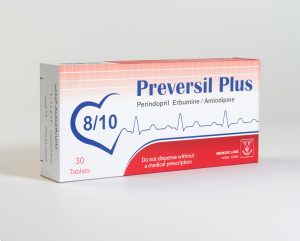
PREVERSIL PLUS 8/10
- New
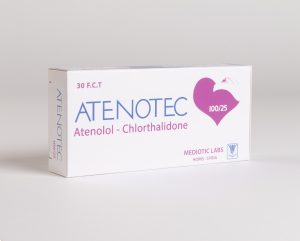
ATENOTEC 100/25
- New