

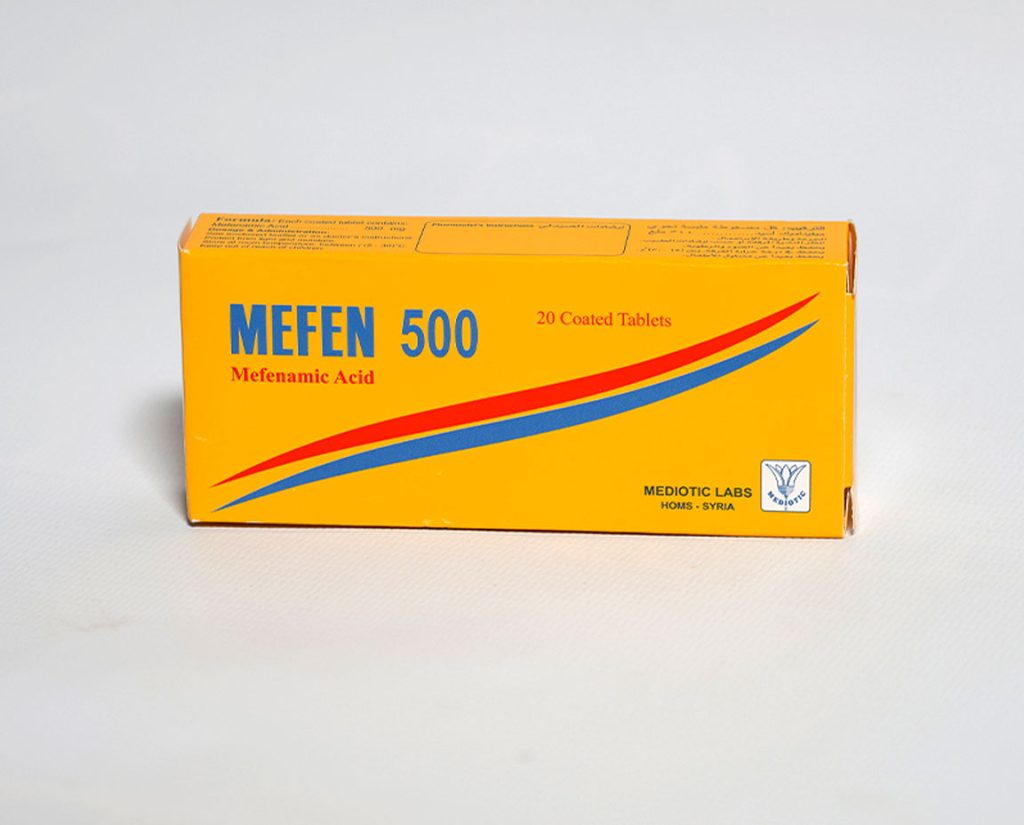
MEFEN
Composition : Mefenamic Acid 500mg
Pharmaceutical Forms : Tablets
Usage : Analgesic and nonsteroidal anti-inflammatory
Properties:
Capsules 250mg/ Cap.
Coated Tablets
500mg/ C. T.
Oral Suspension 50mg/5ml
– Mefenamic acid is a Non Steroidal Anti Inflammatory drug (NSAID).
– Mefenamic acid inhibits prostaglandin synthesis.
– Mefenamic acid is used as an analgesic, with an anti inflammatory and demonstrable anti pyretic effects. Indications:
Mefen is indicated for the relief of mild to moderate pain including muscular, traumatic and dental pain, headache of most aetiology, post-operative and post-partum pain.
Mefen is indicated for the relief of mild to moderate pain in rheumatoid arthritis (including still’s Disease) and osteoarthrosis. Mefen is indicated for primary dysmenorrhoea.
Contraindications:
Mefen is contra-indicated in patients with known hypersensitivity to Mefenamic acid or any of the other NSAIDs.
Mefen is contra-indicated in inflammatory bowel disease and in patients suffering from peptic and/or intestinal ulceration. Mefen is contra-indicated in patients with severe renal impairment.
Side effects:
The most common side effects are gastro-intestinal disturbances including: abdominal pain, nausea, vomiting, diarrhea which may occur soon after starting treatment, or after several months of continuous use.The diarrhoea has been more observed in patients suffering from proctocolitis.
If server diarrhoea does develop, the drug should be stopped immediately and this patient should not receive it again.
– Skin rashes have been observed in some patients following the administration of Mefen and that case requirs the immediate withdrawn of the drug. – Hypotension.
– Central nervous disturbances such as: headache, blurred vision, fatigue, and dizziness.
Warnings:
– Peptic ulceration and mild gastro-intestinal bleeding have also been reported in some cases, so Mefen must be used with caution in those with a prior history of ulcer disease.
– In rare cases an impairment of hematopoiesis has occured: temporary lowering of the white blood cells count has been reported, in few cases a reversible haemolytic anemia has occurred. Blood studies should therefore be carried out during long term treatment.
– Caution must be taken in those showing hypersensitivity reactions to Aspirin and other NSAIDs such as bronchospasm (in asthma patients).
– Caution must be taken in patients with: fluid retention, edema, heart failure, hypertension, and renal or hepatic dysfunctions. Precautions:
– In dysmenorrhoea lack of response the physician should be alert to investigate other causes.
–Pregnancy: Safety in pregnancy has not been assured yet. It must be avoided particularly in the last trimester of pregnancy (class C). Nursing mothers: Trace amounts of Mefen may be present in breast milk and transmitted to the nursing infant. Because of the
potential for serious adverse reactions in nursing infants from Mefen, a decision should be made whethere to discontinue nursing or to discontinue the drug, taking into account the importance of the drug to the mother.
Children: It was not assured yet the effectiveness and safety of this drug in children.
Drug-Interactions:
Using Mefen may increase the effect of anticoagulants (danger of bleeding), the dose of the anticoagulant may need to be reduced. When given concomitantly with diuretics (Furosemide-Thiazides) patient should be observed closely for renal failure.
Mefen has produced an elevation of plasma lithium levels.
Overdosage:
Mefen overdose has a toxic effect on the Central Nervous System CSN which appears as drowsiness, somnolence, epigastric pain, and gastro-intestinal bleeding, it even may lead to a coma.
Gastric lavage in conscious patient and intensive supportive therapy are necessary.
Activated charcoal has been shown to be a powerful adsorbent for Mefenamic acid and its metabolites.
Dosage:
–Mefen should be taken during or after meals to avoid gastric irritation.
– This medication should not be used more than one week.

Presentation:
Mefen Capsules: Mefen Coated Tablets: Mefen Oral Suspension:
Box contains 20 Capsules.
Box contains 20 Coated Tablets.
Bottle contains 100 ml oral suspension.
Related Products.
- New
SOTAL 120
- New
PREVERSIL PLUS8/5
- New
PREVERSIL PLUS 4/5
- New
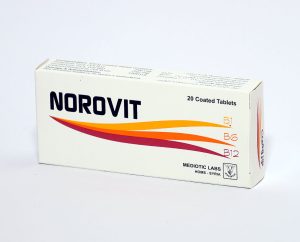
NOROVIT

- New
EZEMIB
- New