
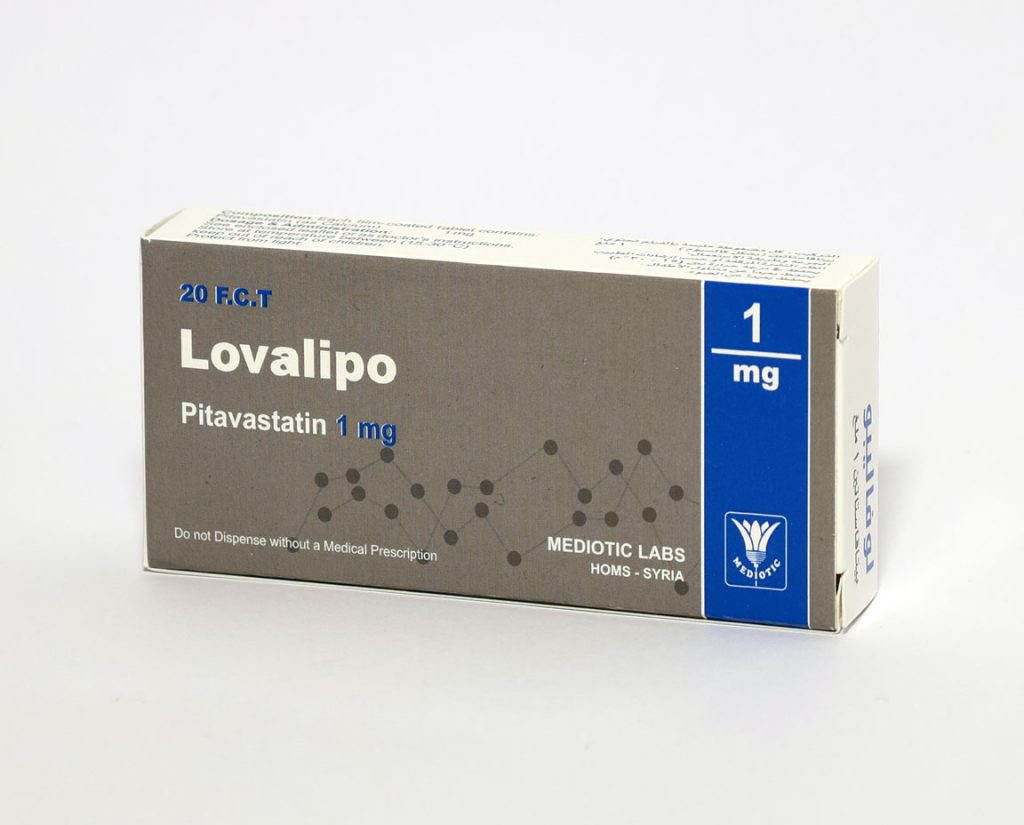
LOVALIPO 1
Composition : Pitavastatin 1mg
Pharmaceutical Forms : Tablets
Usage : Treatment of high cholesterol and triglycerides
LOVALIPO (film – Coated Tablets)
(Pitavastatin 1, 2, & 4 mg)
Composition:Each film-coated tablet of LOVALIPO contains 1.045 mg, 2.09 mg, or 4.18 mg of pitavastatin calcium, which is equivalent to 1 mg, 2 mg, or 4 mg respectively of free base.
Excipients :Lactose monohydrate, Hydroxypropylcellulose, Magnesium stearate, Hydroxy propyl methyl cellulose,titanium dioxide, PEG,coloidal silicon dioxide, Magnesium aluminum metasilicate, yellow and red ferric oxide
Pharmacodynamics: pitavastatin competitively inhibits HMG-CoA reductase, which is a rate-determining enzyme involved with biosynthesis of cholesterol. As a result, the plasma TC decreases, Further, the sustained inhibition of cholesterol synthesis the liver decreases levels of very low density lipoproteins.
Pharmacokinetics: pitavastatin peak plasma concentrations are achieved about one hour after oral administration. The absolute bioavailability of pitavastatin oral solution is 51 %. Administration of LOVALIPO with a high fat meal (50 % fat content) decreases pitavastatin Cmax by 43% but does not significantly reduce pitavastatin AUC. The Cmax and AUC of pitavastatin did not differ following evening or morning drug administration. Pitavastatin is more than 99% protein bound in human plasma. Pitavastatin appears to be a substrate of CYP2C9, and not CYP3A4 (which is a common source of interactions in other statins. The major metabolite of pitavastatin in human plasma is the lactone. The mean plasma elimination half-life is approximately 12 hours. Indications:LOVALIPOis indicated for the treatment of patients with primary hyperlipidemia and mixed dyslipidemia as an adjunctive therapy to diet reduce elevated total cholesterol (TC), low-density lipoprotein cholesterol (LDL-C), apolipoprotein B (Apo B), triglycerides (TG), and to increase high-density lipoprotein cholesterol (HDL-C). Known hypersensitivity to product components.
Acute liver disease, which may include unexplained persistent elevations in hepatic transaminase levels. Pregnancy and lactation.
Co-administration with cyclosporine.
Side Effects: The most frequent adverse reactions include myalgia, back pain, diarrhea, constipation and pain in extremity. Other adverse reactions reported from clinical studies were arthralgia, headache, influenza, and nasopharyngitis. The following laboratory abnormalities have also been reported: elevated creatinine phosphokinase, transaminase, alkaline phosphatase, bilirubin, and glucose. Hypersensitivity reactions including rash, pruritus, and urticarial have been reported with pitavastatin.
Precautions & Warnings:
Skeletal muscle effects (e.g., myopathy and rhabdomyolysis): Risks increase in a dose-dependent, with advanced age (>65), renal impairment, inadequately treated hypothyroidism, and combination use with fibrates. Advise patients to promptly report unexplained muscle pain, tenderness, or weakness, and discontinue LOVALIPO if signs or symptoms appear. LOVALIPO therapy should be discontinued if markedly elevated creatine kinase (CK) levels occur or myopathy is diagnosed or suspected. Liver enzymes abnormalities and monitoring: Persistent elevations in hepatic transaminase can occur. Monitor liver enzymes before and during treatment. Should in increase ALT or AST of > 3 times upper limit of normal persist, reduction of dose or withdrawal of LOVALIPO is recommended.
As with other HMG-CoA reductase inhibitors, LOVALIPOshould be used with caution in patients who consume substantial quantities of alcohol.
Pregnancy teratogenic effects: pregnancy category X LOVALIPO is contraindicated in women who are or may become pregnant.
Nursing Mothers: It is not known whether pitavastatin is excreted in human milk, however, it has been shown that a small amount of another drug in this class passes into human milk. Therefore, women who require LOVALIPO treatment should be advised not to nurse their infants or to discontinue LOVALIPO.
Drug Interactions:
Lopinavir/Ritonavir:This combination may significantly increase pitavastatin exposure. Therefore, LOVALIPO should not be used with this combination of protease inhibitors.
Erythromycin:Combination increases pitavastatin exposure. Limit LOVALIPO to 1 mg once daily.
Rifampin: Combination increases pitavastatin exposure. Limit LOVALIPO to 2 mg once daily. Fibrates:Use with fibrate products may increase the risk of adverse skeletal muscle effects.Niacin: the risk of skeletal muscle effects may be enhanced when LOVALIPO is used in combination with niacin, a reduction in LOVALIPO dosage should be considered in this setting.
Dosage & Administration: the dose rang for LOVALIPO is 1 to 4 mg orally once daily at any time of the day with or without food. The recommended starting dose is 2 mg and the maximum dose is 4 mg.
The starting dose and maintenance dose of LOVALIPO should be individualized according to patient characteristics, such as goal therapy and response. After initiation of LOVALIPO, lipid levels should be analyzed after 4 weeks and dosage adjusted accordingly.
Moderate renal impairment (glomerular filtration rate 30 < 60 ml/min/1.73m2) and end-stage renal disease on hemodialysis: Starting dose of 1 mg once daily and maximum dose of 2 mg once daily.
Overdosage & Treatment: There is no known specific treatment in the event of overdose of pitavastatin. In the event of overdose, the patient should be treared symptomatically and supportive measures insitituted as required. Hemodialysis is unlikely to be of benefit due to high protein binding ratio of pitavastatin.
Presentation: LOVALIPO 1 mg: A box contains 20 white coated tablets in two blisters.
LOVALIPO 2 mg: A box contains 20 yellow coated tablets in two blisters. LOVALIPO 4 mg: A box contains 20 oranges coated tablets in two blisters.
Storage: “store at 15°- 30° C, “Protect from light”