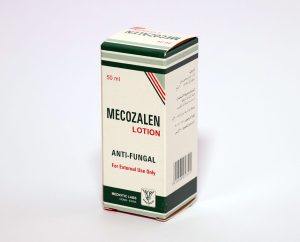

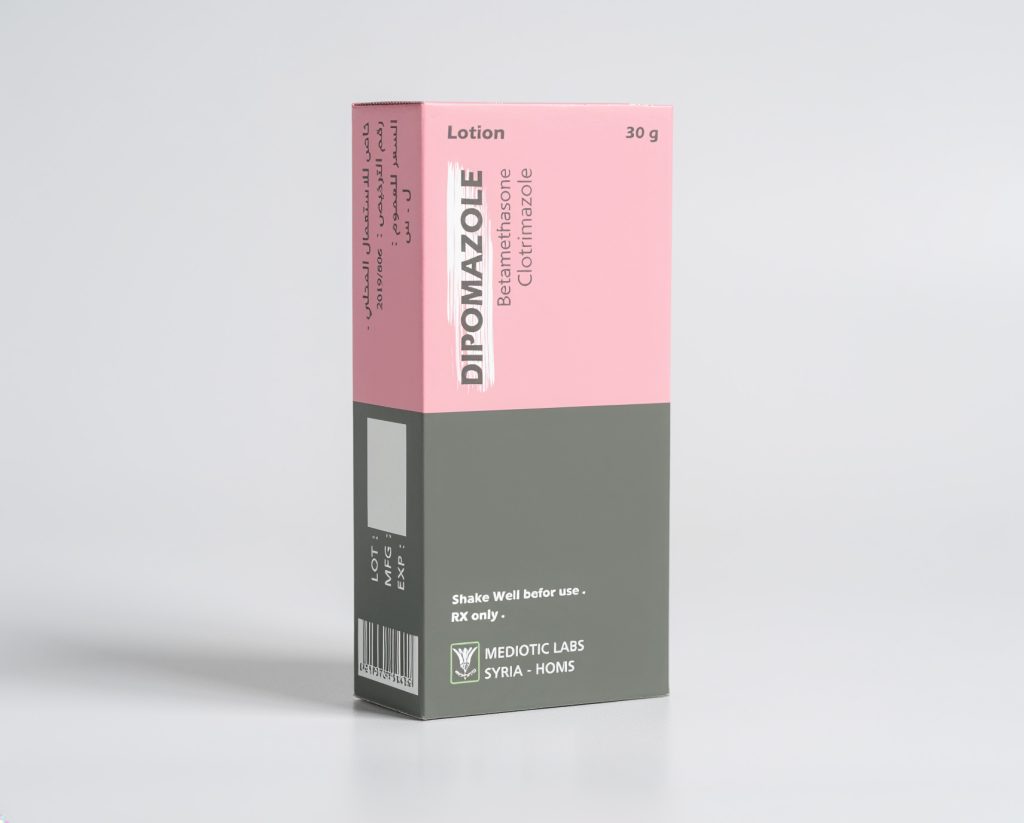
Dipomazole
Composition : Clotrimazole 10mg +Betamethasone 0.05%
Pharmaceutical Forms : Lotion
Usage : Antifungal + nonsteroidal anti-inflammatory
MECHANISM OF ACTION:
Clotrimazole is an azole antifungal. Betamethasone dipropionate is a corticosteroid. Corticosteroids play a role in cellular signaling, immune function, inflammation, and protein regulation; however, the precise mechanism of action for the treatment of tinea pedis, tinea cruris and tinea corporis is unknown.
PHARMACOKINETICS:
Skin penetration and systemic absorption of clotrimazole and betamethasone dipropionate following topical application of lotion has not been studied. The extent of percutaneous absorption of topical corticosteroids is determined by many factors, including the vehicle, the integrity of the epidermal barrier, and the use of occlusive dressings. Topical corticosteroids can be absorbed from normal intact skin. Inflammation and/or other disease processes in the skin may increase percutaneous absorption of topical corticosteroids. Occlusive dressings substantially increase the percutaneous absorption of topical corticosteroids INDICATIONS:
lotion is indicated for the topical treatment of symptomatic inflammatory tinea pedis, tinea cruris, and tinea corporis due to Epidermophyton floccosum, Trichophyton mentagrophytes, and Trichophyton rubrum in patients 17 years and older. CONTRAINDICATIONS:
Hypersensitivity to Clotrimazole or to Betamethasone or to any of the excipients.
SIDE EFFECTS:
paresthesia rash, edema, and secondary infection.
The following local adverse reactions have been reported with topical corticosteroids: itching, irritation, dryness, folliculitis, hypertrichosis, acneiform eruptions, hypopigmentation, perioral dermatitis, allergic contact dermatitis, maceration of the skin, skin atrophy, striae, miliaria, capillary fragility (ecchymoses), telangiectasia, and sensitization.
Adverse reactions reported with the use of clotrimazole are: erythema, stinging, blistering, peeling, edema, pruritus, urticaria, and general irritation of the skin.
WARNINGSAND PRECAUTIONS:
Effects on Endocrine System:
lotion can cause reversible hypothalamic-pituitary-adrenal (HPA) axis suppression with the potential for glucocorticosteroid insufficiency. This may occur during treatment or after withdrawal of treatment. Cushing’s syndrome and hyperglycemia may also occur due to the systemic effect of corticosteroids while on treatment. Factors that predispose a patient to HPA axis suppression include the use of high-potency steroids, large treatment surface areas, prolonged use, use of occlusive dressing, altered skin barrier, liver failure, and young age.
If HPA axis suppression is documented, gradually withdraw the drug, reduce the frequency of application, or substitute with a less potent corticosteroid.
Diaper Dermatitis:
The use of lotion in the treatment of diaper dermatitis is not recommended.
PREGNANCY AND LACTATION:
PREGNANCY: Pregnancy Category C.
There are no adequate and well-controlled studies with lotion in pregnant women. Therefore,
lotion should be used during pregnancy only if the potential benefit justifies the potential risk to the fetus. LACTATION:
Because many drugs are excreted in human milk, caution should be exercised when lotion is administered to a nursing woman.
PEDIATRIC USE:
The use of lotion in patients under 17 years of age is not recommended.
GERIATRIC USE:
Caution should be exercised with the use of these corticosteroid-containing topical products on thinning skin. POSOLOGY AND METHOD OF ADMINISTRATION:
Treatment of tinea corporis or tinea cruris:
Apply a thin film of lotion into the affected skin areas twice a day for one week.
Do not use more than 45 grams per week. Do not use with occlusive dressings.
If a patient shows no clinical improvement after 1 week of treatment with lotion, the diagnosis should be reviewed. Do not use longer than 2 weeks.
Treatment of tinea pedis:
Gently massage a sufficient amount of lotion into the affected skin areas twice a day for two weeks.
Do not use more than 45 grams per week. Do not use with occlusive dressings.
If a patient shows no clinical improvement after 2 weeks of treatment with lotion, the diagnosis should be reviewed. Do not use longer than 4 weeks.
lotion is for topical use only. It is not for oral, ophthalmic, or intravaginal use.
STORAGE CONDITIONS: Store in the up right position, at room temperature, between (15-30)°C,
“RX ONLY”.
PACKAGING: Aplastic bottle of 30 g with aplastic Cap/carton box.