

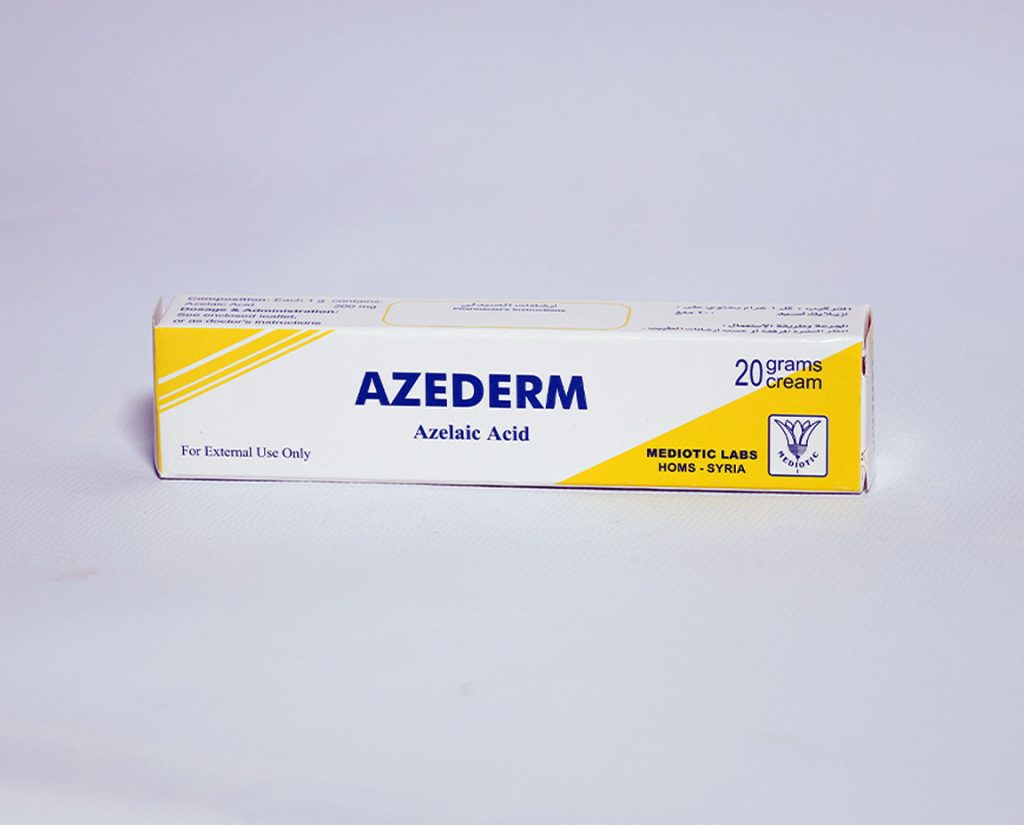
AZEDERM
Composition : Azelaic Acid 20%
Pharmaceutical Forms : Cream, Ointment & Gel
Usage : Treatment of Acne
Clinical pharmacology:
Azelaic acid demonstrated a reduction in the thickness of the stratum comeum, a reduction in number and size of keratohyaline granules.
Indications and usage:
Indicated for the topical treatment of mild-to-moderate inflammatory acne vulgaris.
Contraindications:
–Contraindicated in individuals who have shown hypersensitivity to any of its components.
Warnings:
–Azederm is indicated for dermatological use only and not for ophthalmic use. Use Azederm for the full-prescribed treatment period.
Avoid the use of occlusive dressings or wrappings.
Keep away from the mouth, eyes, and other mucous membranes. If Azederm comes into contact with the eyes, wash the eyes with large amounts of water and consult a physician if eye irritation persists.
–This drug should be used during pregnancy only if clearly needed. Caution should be exercised when it is administered to a nursing mother.
Safety and effectiveness in pediatric patients less than 12 years of age have not been established.
Side effects:
–Pruritus, burning, stinging, tingling, and peeling were rarely reported.
Dosage and administration:
–After the skin is thoroughly washed and patted dry, a thin film of Azederm should be gently but thoroughly massaged into the effected areas twice daily, in the morning and evening.
Hands should be washed following application.
The duration of use can vary from person to person and depends on the severity of the acne.
Improvement of the condition occurs in the majority of patients with inflammatory lesions within four weeks.
Storage Conditions:
– Don’t freeze.
Store at temperature between (15-30)°C.
Packaging:
Aluminum tube containing 20 g of Azederm Cream.
Related Products.
- New
MECOZALEN CORT
- New
MAFENOL
- New
DIPOERM
- New
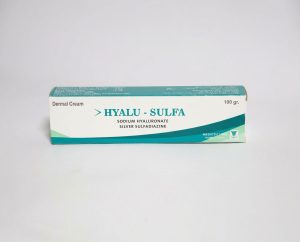
Hyalu sulfa
- New
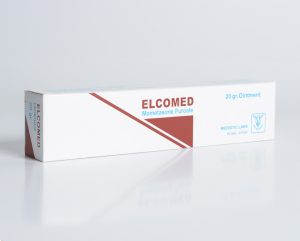
ELCOMED
- New