

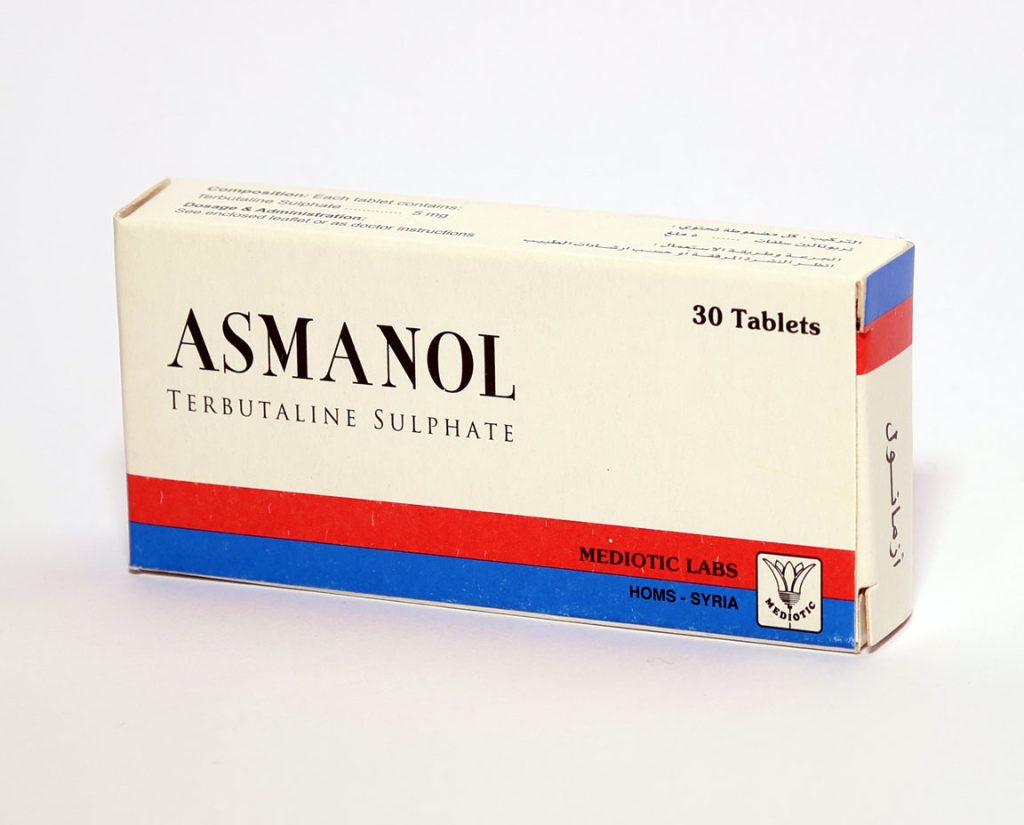
ASMANOL 5
Composition : Terbutalin Sulphate 5 mg
Pharmaceutical Forms : Tablets
Usage : Bronchodilator
WARNING: TOCOLYSIS
Oral terbutaline sulfate has not been approved and should not be used for acute or maintenance tocolysis. In particular, terbutaline sulfate should not be used for maintenance tocolysis in the outpatient or home setting. Serious adverse reactions, including death, have been reported after administration of terbutaline sulfate to pregnant women. In the mother, these adverse reactions include increased heart rate, transient hyperglycemia, hypokalemia, cardiac arrhythmias, pulmonary edema and myocardial ischemia. Increased fetal heart rate and neonatal hypoglycemia may occur as a result of maternal administration.
COMPOSITION and EXCIPIENTS:
Tablets: Each tablet contains: Terbutaline sulfate 2.5 mg, 5 mg
Syrup: Each 5 ml oral syrup contains:
Terbutaline sulfate 1.5 mg
Excipients:
Tablets: Lactose Monohydrate, Starch, Talc, Magnesium Stearate, Aerosil, Microcrystalline Cellulose, Povidone, Deionized Water.
Syrup: Glycerin, Sodium Citrate, Citric Acid, Saccharin Sodium, Methyl Paraben Sodium, Propyl Paraben Sodium, Sodium Meta-Bisulfate, Deionized Water.
INDICATIONS:
AZMANOL is indicated for the prevention and reversal of bronchospasm in patients 12 years of age and older with asthma and reversible bronchospasm associated with bronchitis and emphysema.
CONTRAINDICATIONS:
1.Tocolysis: Oral AZMANOL has not been approved and should not be used for acute or maintenance tocolysis.
- Hypersensitivity: AZMANOL is contraindicated in patients known to be hypersensitive to sympathomimetic amines or any components of this drug product.
WARNINGS:
-Immediate hypersensitivity reactions and exacerbation of bronchospasm have been reported after AZMANOL administration.
-Asthma may deteriorate acutely. If the patient needs more doses of AZMANOL more than usual.
– AZMANOL, like all other beta-adrenergic agonists, can produce a clinically significant cardiovascular effect in some patients as measured by pulse rate, blood pressure. Although such effects are uncommon at recommended doses, if they occur, the drug may need to be discontinued.
-Terbutaline, as with all sympathomimetic amines, should be used with caution in patients with cardiovascular disorders, including ischemic heart disease, hypertension, and cardiac arrhythmias; hyperthyroidism; diabetes mellitus; hypersensitivity to sympathomimetic amines; and convulsive disorders. Significant changes in systolic and diastolic blood pressure have been seen in some patients.
-It may produce significant hypokalemia in some patients, which has the potential to produce adverse cardiovascular effects.
-If your symptoms become worse, you should seek medical attention immediately.
DRUG INTERACTIONS:
-The concomitant use of terbutaline sulfate with other sympathomimetic agents is not recommended, since the combined effect on the cardiovascular system may be deleterious to the patient.
-Terbutaline sulfate should be administered with extreme caution to patients being treated with monoamine oxidase inhibitors or tricyclic antidepressants, or within 2 weeks of discontinuation of such agents.
-Beta-adrenergic receptor blocking agents block the pulmonary effect of beta-agonists, such as terbutaline sulfate, and may produce severe bronchospasm in asthmatic patients.
-caution is advised in the co-administration of Terbutaline sulfate with non-potassium sparing diuretics, because it causes hypokalemia.
Pregnancy and lactation: Pregnancy Category C
-Serious adverse reactions, including death, have been reported after administration of terbutaline sulfate to pregnant women. In the mother, these adverse reactions include increased heart rate, transient hyperglycemia, hypokalemia, cardiac arrhythmias, pulmonary edema and myocardial ischemia. Increased fetal heart rate and neonatal hypoglycemia may occur as a result of maternal administration.
-Terbutaline sulfte should be used during pregnancy or nursing only if the potential benefit justifies the possible risk to the fetus or newborn.
SIDE EFFECTS:
– Nervous system: nervousness, tremor, somnolence, dizziness, anxiety and insomnia. – Cardiovascular: palpitations, tachycardia, and vasodilation.
– On the body as a whole: headache, asthenia, nausea, dry mouth and sweating. -The following side effects each occurred in less than 1% of patients: hallucinations, rash, paresthesia, hypertonia, muscle cramps, vomiting. Elevations in liver enzymes and vasculitis.
–All of these reactions are generally transient in nature and usually do not require treatment. The frequency of these side effects appears to diminish with continued therapy.
Dosage & Administration:
Adults: 2.5-5mg (2-3) times a day.
– Children (7 – 15) years: 2.5mg twice a day.
(3-6) years: 1.5mg twice a day.
Under 3 years: 0.75mg twice a day.
-In patient being unusually sensitive to sympathomimetic amines, it’s advisable to initiate treatment with 2.5mg (2-3) times a day and increase gradually as
required, and as patient response.
-Optimum single dose is 5 mg.
-If you forget to take a dose, take it as soon as you remember. However, if it is almost time for the next dose, wait until then and take the next dose as normal. Do not take a double dose to make up for a forgotten dose.
OVER DOSE:
-The expected symptoms with overdosage are angina, hypertension or hypotension, tachycardia with rates up to 200 beats per minute, arrhythmias, nervousness, headache, tremor, dry mouth, palpitation, nausea, dizziness, fatigue, malaise, and insomnia. Hypokalemia may also occur.
-There is no specific antidote. Treatment consists of discontinuation of AZMANOL together with appropriate symptomatic therapy.
-In the alert patient who has taken excessive oral medication, the stomach should be emptied by induced emesis followed by lavage .In the unconscious patient, the airway should be secured with a cuffed endotracheal tube before lavage, and emesis should not be induced. Instillation of activated charcoal slurry may help reduce absorption of terbutaline. PACKAGING:
Tablets: 3 blisters, each one contains 10 tablets/carton box 5mg.
Tablets: 3 blisters, each one contains 10 tablets/carton box 2.5mg.
Syrup: Glass bottle of 100 mL/carton box, with a metallic screw cap. STORAGE CONDITION:
Store at room temperature, (15-25)°C.
Keep out of reach of children.
Related Products.
- New
ATAX
- New
MEDIOPAN
- New
GLYCOMINE
- New
PREVERSIL 8
- New
PREVERSIL EXTRA 10/10/2.5
- New