
MENU

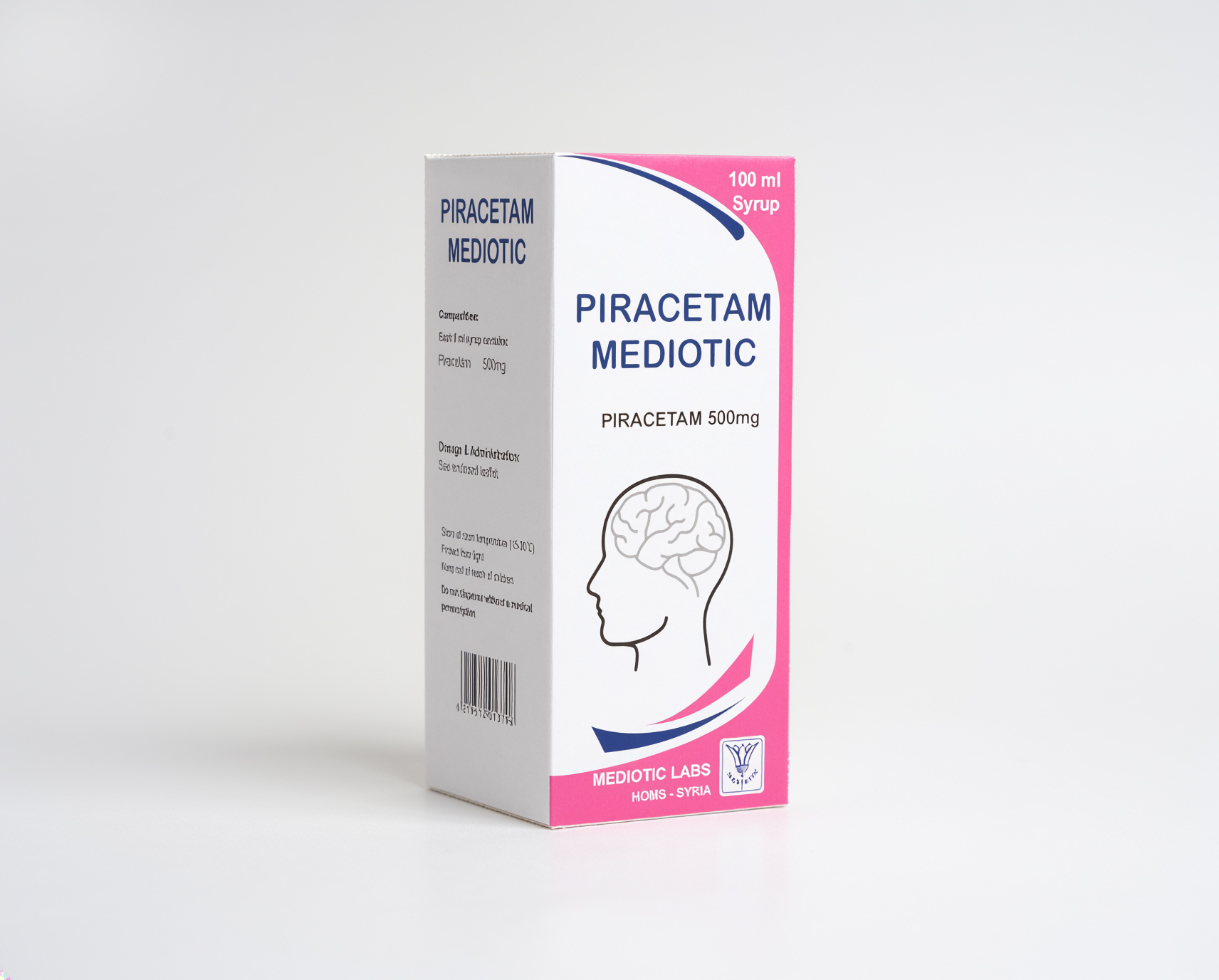
PIRACETAM Mediotec

Mechanism of Action:

Piracetam improves membrane stability, allowing the membrane and transmembrane proteins to maintain or recover the three-dimensional structure to exert their function. Piracetam has neuronal and vascular effects. Pharmacokinetics:

Absorption:

Piracetam is rapidly and extensively absorbed following oral administration. In fasted subjects, the peak plasma concentrations are achieved 1 hour after dosing. The absolute bioavailability of piracetam oral formulations is close to 100%. Food does not affect the extent of absorption of piracetam.

Distribution:

Piracetam is not bound to plasma proteins and its volume of distribution is approximately 0.6 l/kg. Piracetam crosses the blood brain barrier as it has been measured in cerebrospinal fluid following intravenous administration. Metabolism:

Piracetam is not known to be metabolised in the human body. This lack of metabolism is supported by the lengthy plasma half-life in anuric patients and the high recovery of parent compound in urine.

Elimination:

The plasma half-life of piracetam in adults is about 5 hours following either intravenous or oral administration.

The apparent total body clearance is 80-90 ml/min. The major route of excretion is via urine, accounting for 80 to 100% of the dose. Piracetam is excreted by glomerular filtration.

Indications:

Studies carried out in the elderly suffering from loss of memory, vertigo, a lack of concentration or of alertness, changes of mood, a deterioration in behaviour and personal negligence, demonstrate an improvement in symptoms.

These symptoms can also provide an early warning of the onset of pathological ageing such as Alzheimer’s Disease, an Alzheimer type of senile dementia, or the dementia produced by multiple cerebral infarcts. Piracetam is advocated in the treatment of sickle-cell vaso-occlusive crises.

Studies have shown some improvement in children with learning difficulties associated with the written word, particularly with textual understanding which cannot be explained by intellectual backwardness, inadequate education or by the family environment. The administration of Piracetam does not replace other measures also well adapted to correct these learning difficulties, such as remedial teaching.

Contraindications:

Piracetam is contraindicated in:

Hypersensitivity to piracetam, other pyrrolidone derivatives or any of the excipients.

  • Patients with end-stage renal disease (renal creatinine clearance of less than 20 ml per minute).
  • Patients with cerebral haemorrhage.
  • Patients suffering from Huntington’s Chorea.

Warning:

Effects on platelet aggregation:

Due to the effect of piracetam on platelet aggregation, caution is recommended in patients with severe haemorrhage, patients at risk of bleeding such as gastrointestinal ulcer, patients with underlying disorders of haemostasis, patients with history of haemorrhagic

CVA (cerebral vascular accident), patients undergoing major surgery including dental surgery, and patients using anticoagulants or platelet anti – aggregant drugs including low dose aspirin.

Renal insufficiency:

Piracetam is eliminated via the kidneys and care should thus be taken in cases of renal insufficiency. Elderly:

For long-term treatment in the elderly, regular evaluation of the creatinine clearance is required to allow dosage adaptation if needed.

Discontinuation:

Abrupt discontinuation of treatment should be avoided as this may induce myoclonic or generalised seizures in some myoclonic patients.

Sickle-cell vaso-occlusive crises:

For sickle-cell indication, a dose lower than 160 mg/kg/day or irregular intake may result in relapse of crises.

Warnings related to the excipients:

– Piracetam, oral solution:

This product contains about 3.5 mmol (or about 80.5 mg) sodium per 24 g piracetam. This should be taken into consideration by patients on a controlled sodium diet.

This medicinal product contains methyl parahydroxybenzoate and propylparahydroxybenzoate which may cause allergic reactions (possibly delayed).

This medicinal product contains glycerol which may cause headache, stomach upset and diarrhea.

SYSTEM CERTIFICATION 

1006 OSI 

900

SGS 

Piracetam Mediotic 

oral solution(500mg/5ml) 

Chemical Composition: Eash 5ml of solution contains: 500mg piracetam. Excipients: Glycerol, methyl para hydroxybenzoate, propyl para hydroxyl benzoate, sodium acetate, aceticacid, and purified water

Mechanism of Action

Piracetam improves membrane stability, allowing the membrane and transmembrane proteins to maintain or recover the threedimensional structure to exert their function. Piracetam has neuronal and vascular effects. Pharmacokinetics

Absorption: 

Piracetam is rapidly and extensively absorbed following oral administration. In fasted subjects, the peak plasma concentrations are achieved 1 hour after dosing. The absolute bioavailability of piracetam oral formulations is close to 100%. Food does not affect the extent of absorption of piracetam

Distribution

Piracetam is not bound to plasma proteins and its volume of distribution is approximately 0.6 l/kg. Piracetam crosses the blood brain barrier as it has been measured in cerebrospinal fluid following intravenous administration

Metabolism: 

Piracetam is not known to be metabolised in the human body. This lack of metabolism is supported by the lengthy plasma halflife in anuric patients and the high recovery of parent compound in urine

Elimination: 

The plasma halflife of piracetam in adults is about 5 hours following either intravenous or oral administration

The apparent total body clearance is 80-90 ml/min. The major route of excretion is via urine, accounting for 80 to 100% of the dose. Piracetam is excreted by glomerular filtration

Indications

Studies carried out in the elderly suffering from loss of memory, vertigo, a lack of concentration or of alertness, changes of mood, a deterioration in behaviour and personal negligence, demonstrate an improvement in symptoms

These symptoms can also provide an early warning of the onset of pathological ageing such as Alzheimer’s Disease, an Alzheimer type of senile dementia, or the dementia produced by multiple cerebral infarcts. Piracetam is advocated in the treatment of sicklecell vasoocclusive crises

Studies have shown some improvement in children with learning difficulties associated with the written word, particularly with textual understanding which cannot be explained by intellectual backwardness, inadequate education or by the family environment. The administration of Piracetam does not replace other measures also well adapted to correct these learning difficulties, such as remedial teaching

Contraindications

Piracetam is contraindicated in

Hypersensitivity to piracetam, other pyrrolidone derivatives or any of the excipients

  • Patients with endstage renal disease (renal creatinine clearance of less than 20 ml per minute)
  • Patients with cerebral haemorrhage
  • Patients suffering from Huntington’s Chorea

Warning

Effects on platelet aggregation

Due to the effect of piracetam on platelet aggregation, caution is recommended in patients with severe haemorrhage, patients at risk of bleeding such as gastrointestinal ulcer, patients with underlying disorders of haemostasis, patients with history of haemorrhagic CVA (cerebral vascular accident), patients undergoing major surgery including dental surgery, and patients using anticoagulants or platelet antiaggregant drugs including low dose aspirin

Renal insufficiency

Piracetam is eliminated via the kidneys and care should thus be taken in cases of renal insufficiency. Elderly

For longterm treatment in the elderly, regular evaluation of the creatinine clearance is required to allow dosage adaptation if needed

Discontinuation

Abrupt discontinuation of treatment should be avoided as this may induce myoclonic or generalised seizures in some myoclonic patients

Sicklecell vasoocclusive crises

For sicklecell indication, a dose lower than 160 mg/kg/day or irregular intake may result in relapse of crises

Warnings related to the excipients

Piracetam, oral solution

This product contains about 3.5 mmol (or about 80.5 mg) sodium per 24 g piracetam. This should be taken into consideration by patients on a controlled sodium diet

This medicinal product contains methyl parahydroxybenzoate and propylparahydroxybenzoate which may cause allergic reactions (possibly delayed)

This medicinal product contains glycerol which may cause headache, stomach upset and diarrhea

Interactions

Pharmacokinetic interactions : 

The drug interaction potential resulting in changes of piracetam pharmacokinetics is expected to be low because approximately 90% of the dose of piracetam is excreted in the urine as unchanged drug. Metabolic interaction of piracetam with other drugs is unlikely. Thyroid hormones

Confusion, irritability and sleep disorder have been reported during concomitant treatment with thyroid extract (T3 + T4)

The addition of piracetam 9.6 g/d significantly decreased platelet aggregation, Bthromboglobulin release, levels of fibrinogen and von Willebrand’s factors (VIII: C; VIII: vW: Ag; VIII: vW: RCO) and whole blood and plasma viscosity

Pregnancy and lactation

Piracetam should not be used during pregnancy unless clearly necessary, when benefit exceeds the risks and the clinical condition of the pregnant mother requires treatment with piracetam

Piracetam crosses the placental barrier. Drug levels in the newborn are approximately 70% to 90% of maternal levels. Side effects: 

Common: nervousness, hyperkinesias, weight increased

Uncommon: depression, somnolence, asthenia

Not known: haemorrhagic disorder, anaphylactoid reaction, hypersensitivity, agitation, anxiety, confusion, hallucination, ataxia, balance impaired, epilepsy aggravated, headache, insomnia, vertigo, abdominal pain, abdominal pain upper, diarrhoea, nausea, vomiting, angioneurotic oedema, dermatitis, pruritus, urticaria

DOSAGE AND ADMINISTRATION: 

The total daily dose can range from 30 to 160 mg/kg/day depending on the indication. This is administered twice daily, but may also 

be given in three or four separate doses

When treating severe symptoms, 12 g daily may need to be administered as an intravenous infusion

piracetam, as a longterm therapy for psychoorganic syndrome in the elderly is given in doses ranging from 1.2 to 2.4 g daily, according to the severity of the symptoms. The loading dose can be as high as 4.8 g/day during the initial weeks of treatment. – When treating sicklecell vasoocclusive crises, the dose administered is 160 mg/kg/day divided in four equal doses

In the treatment of 8 to 13 yearold children with learning difficulties NOOTROPIL is given at a total dose of 3.3 g daily. This is administered either as 8 ml of a 20% solution or 5 ml of a 33% solution twice a day i.e. before breakfast and before the evening meal. The medication may be more easily accepted if given in fruit juice, or in some other drink. Treatment should be continued throughout the school year. The efficacy of a longer period of treatment has not yet been investigated. Elderly

Adjustment of the dose is recommended in elderly patients with compromised renal function .For long term treatment in the elderly, regular evaluation of the creatinine clearance is required to allow dosage adaptation if needed.

Renal impairment

Piracetam is contraindicated in severe renal impairment (renal creatinine clearance of less than 20 ml per minute). The daily dose must be individualized according to renal function, an estimate of the patient’s creatinine clearance (CL) in ml/min is needed 

Creatinine Clearance (ml/min

Posology and frequency 

usual daily dose, 2 to 4 divided doses 

2/3 usual daily dose, 2 or 3 divided doses 

Normal  Mild 

Moderate  Severe 

Endstage renal disease  Overdosage

> 80 

50-79 

30-49 

1/3 usual daily dose, 2 divided doses 

< 30 

1/6 usual daily dose, 1 single intake  Contraindicated  

No additional adverse events specifically related to overdose have been reported with piracetam

The highest reported overdose with piracetam was oral intake of 75 g where in bloody diarrhoea with abdominal pain, was most probably related to the extreme high dose of sorbitol contained in the used formulation. Treatment 

In acute, significant overdosage, the stomach may be emptied by gastric lavage or by induction of emesis. There is no specific antidote for overdose with piracetam. Treatment for an overdose will be symptomatic treatment and may include haemodialysis. The extraction efficiency of the dialyses is 50 to 60% for piracetam

Storage condition:store at room temperature, 15°-30°C, away from lightKeep out of reach of children

Packaging: Glass bottle of 100 ml/carton box with Measuring plastic Cup

* THIS IS A MEDICAMENT

Keep out of reach of children

A medicament is a product which affects your health, and its consumption 

contrary to instructions is dangerous for you

Follow strictly doctor’s prescriptions, the method of use and instructions of 

the pharmacist who sold the medicament

The doctor and pharmacist are experts in medicine, its benefits and risks

Do not by yourself interrupt the period of treatment prescribed for you. -Do not repeat the same prescription without consulting your doctor

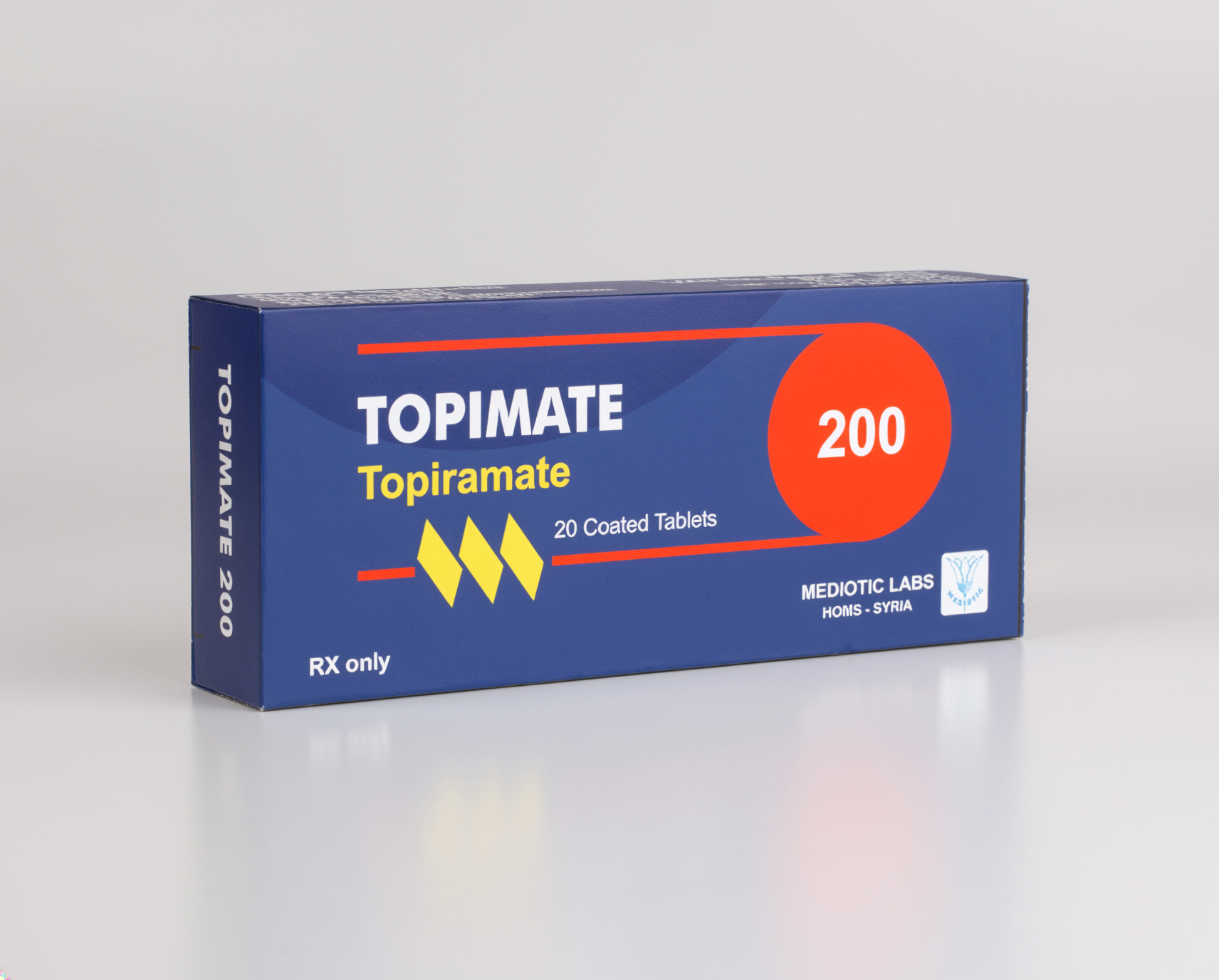
TOPIMATE 200

Mechanism of action and pharmacodynamics:

The precise mechanism by which topiramate exerts its antiseizure effect is unknown, however, electrophysiological and biochemical studies of the effects of topiramate on cultured neurons have revealed three properties that may contribute to topiramate’s antiepileptic efficacy.

First, sodium channel blocking action.

Second, Topiramate increases the frequency at which y-aminobutyrate (GABA) activates GABA A receptors, and enhances the ability of GABA to induce a flux of chloride ions into neurons, suggesting that topiramate potentiates the activity of this inhibitory neurotransmitter.

Third, topiramate antagonizes the ability of kainate to activate the: kainate/ AMPA a-amino-3-hydroxy-5-methylisoxazole-4-propionic acid non-NMDA subtype of excitatory amino acid (glutamate) receptor. These effects of topiramate are concentration-dependent within the range of 1 μM to 200 μM.

Pharmacokinetics:

Absorption of topiramate is rapid, with peak plasma

concentrations occurring at approximately 2 hours following a 400 mg oral dose.

The relative bioavailability of topiramate from the tablet formulation is about (80%) compared to a solution.

The mean plasma elimination half-life is 21 hours after single or multiple doses.

Steady state is reached in about 4 days in patients with normal renal function.

Topiramate is not extensively metabolized and is primarily eliminated unchanged in urine.

Indications:

TOPIMAT is indicated as adjunctive therapy for the treatment of adults with partial onset seizures.

Contraindications:

TOPIMAT is contraindicated in patients with a history of hypersensitivity to any component of this product.

Warnings:

Patients should be warned about the potential for somnolence, dizziness, confusion, and difficulty concentrating and advised not to drive or operate heavy machinery.

Antiepileptic drugs, including TOPIMAT,should be withdrawn gradually to minimize the potential of increased seizure frequency.

The elderly, people with diabetes, and those with impaired heart, liver or kidney function should be under close medical supervision while taking TOPIMAT and dosag e adjustment may be required for them.

An explanation for the association of TOPIMAT and kidney stones may lie in the fact that topiramate is a weak carbonic anhydrase inhibitor. Carbonic anhydrase inhibitors promote stone formation by reducing urinary citrate excretion and by increasing urinary pH, this can be avoided by increased fluid intake which increases the urinary output, lowering the concentration of substances involved in stone formation. TOPIMAT should be used during pregnancy only if the potential benefit outweighs the potential risk to the fetus.

Since many drugs are excreted in human milk and because the potential for serious adverse reactions in nursing infants to TOPIMAT are unknown, the potential benefit to the mother should be weighed against the potential risk to the infant.

Drug & food Interactions:

In a single-dose study, serum digoxin AUC was decreased by 12% in concomitant administration.

Because of the potential of topiramate to cause CNS

depression, as well as other cognitive and neuropsychiatric adverse events, topiramate should be used with extreme caution if used in combination with alcohol and other CNS depressants.

Concomitant use of topiramate, a weak carbonic anhydrase inhibitor, with other carbonic anhydrase inhibitors such as acetazolamide or dichlorphenamide may create a physiological environment that increases the risk of renal stone formation and should therefore be avoided.

Topiramate may decrease the effectiveness of oral

contraceptives, therefore, additional birth control measures may be needed to decrease the risk of pregnancy.

Carbamazepine and phenytoin may decrease the blood levels of topiramate, therefore, dose adjustment of either or both medicines may be needed.

Blood levels of topiramate and/or valproic acid may be

decreased, if used in concomitance. Dose adjustment of either or both medicines may be needed.

Side Effects:

The most commonly observed adverse events associated with the use of topiramate at dosages of 200 to 400 mg/ day, and did not appear to be dose-related, include:

somnolence, dizziness, ataxia, speech disorders, psychomotor slowing, nystagmus, headache, nausea, constipation, vomiting, skin rashes, and paresthesia.

The most common dose-related adverse events at dosages of 200 to 1000 mg/day include: fatigue, nervousness, difficulty with concentration or attention, confusion, depression, anorexia, language problems, anxiety, mood problems, cognitive problems, weight decrease, and tremor.

Dosage & Administration:

Suggested therapy begins with 50 mg daily, gradually increasing to 200-400 mg / daily.

Maximum recommended daily dose is 800 mg.

Adults: At first, 50 mg in two divided doses (two tablets of TOPIMAT 25 mg) a day is taken for the first week. The dose may be increased gradually every week if needed and

tolerated, but the usual dose is not greater than 400 mg a day in two divided doses.

Children (age 2 to16 years): At fist, 25 mg (one tablet of TOPIMAT 25 mg) nightly is taken for the first week. The dose may be increased gradually every 1 or 2 weeks about (1 – 3 mg/ kg) of body weight daily to be taken in two divided doses.

Overdosage & treatment :

In acute TOPIMAT (Topiramate) overdose, if the ig estion is recent, the stomach should be emptied immediately by lavage or by induction of emesis.

Treatment should be appropriately supportive.

Hemodialysis is an effective mean of removing topiramate from the body.

Storage:

Keep in a dry place below 30°C

– Keep out of reach of Children.

Presentation:

Carton box contains 2 blisters, each one contains 10 white coated tablets of TOPIMAT 25. Carton box contains 2 blisters, each one contains 10 yellow coated tablets of TOPIMAT 100. Carton box contains 2 blisters, each one contains 10 pink coated tablets of TOPIMAT 200.

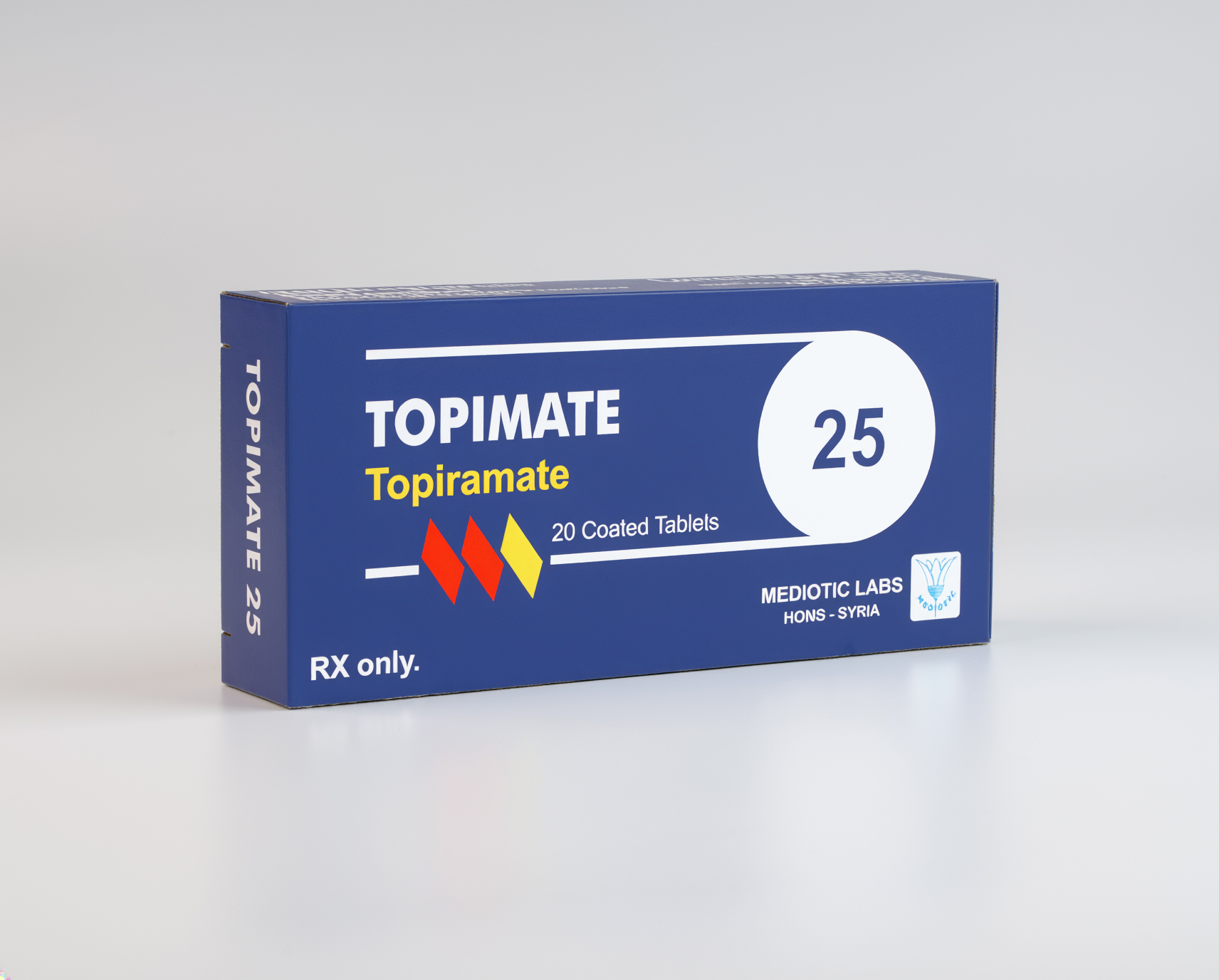
TOPIMATE 25

Mechanism of action and pharmacodynamics:

The precise mechanism by which topiramate exerts its antiseizure effect is unknown, however, electrophysiological and biochemical studies of the effects of topiramate on cultured neurons have revealed three properties that may contribute to topiramate’s antiepileptic efficacy.

First, sodium channel blocking action.

Second, Topiramate increases the frequency at which y-aminobutyrate (GABA) activates GABA A receptors, and enhances the ability of GABA to induce a flux of chloride ions into neurons, suggesting that topiramate potentiates the activity of this inhibitory neurotransmitter.

Third, topiramate antagonizes the ability of kainate to activate the: kainate/ AMPA a-amino-3-hydroxy-5-methylisoxazole-4-propionic acid non-NMDA subtype of excitatory amino acid (glutamate) receptor. These effects of topiramate are concentration-dependent within the range of 1 μM to 200 μM.

Pharmacokinetics:

Absorption of topiramate is rapid, with peak plasma

concentrations occurring at approximately 2 hours following a 400 mg oral dose.

The relative bioavailability of topiramate from the tablet formulation is about (80%) compared to a solution.

The mean plasma elimination half-life is 21 hours after single or multiple doses.

Steady state is reached in about 4 days in patients with normal renal function.

Topiramate is not extensively metabolized and is primarily eliminated unchanged in urine.

Indications:

TOPIMAT is indicated as adjunctive therapy for the treatment of adults with partial onset seizures.

Contraindications:

TOPIMAT is contraindicated in patients with a history of hypersensitivity to any component of this product.

Warnings:

Patients should be warned about the potential for somnolence, dizziness, confusion, and difficulty concentrating and advised not to drive or operate heavy machinery.

Antiepileptic drugs, including TOPIMAT,should be withdrawn gradually to minimize the potential of increased seizure frequency.

The elderly, people with diabetes, and those with impaired heart, liver or kidney function should be under close medical supervision while taking TOPIMAT and dosag e adjustment may be required for them.

An explanation for the association of TOPIMAT and kidney stones may lie in the fact that topiramate is a weak carbonic anhydrase inhibitor. Carbonic anhydrase inhibitors promote stone formation by reducing urinary citrate excretion and by increasing urinary pH, this can be avoided by increased fluid intake which increases the urinary output, lowering the concentration of substances involved in stone formation. TOPIMAT should be used during pregnancy only if the potential benefit outweighs the potential risk to the fetus.

Since many drugs are excreted in human milk and because the potential for serious adverse reactions in nursing infants to TOPIMAT are unknown, the potential benefit to the mother should be weighed against the potential risk to the infant.

Drug & food Interactions:

In a single-dose study, serum digoxin AUC was decreased by 12% in concomitant administration.

Because of the potential of topiramate to cause CNS

depression, as well as other cognitive and neuropsychiatric adverse events, topiramate should be used with extreme caution if used in combination with alcohol and other CNS depressants.

Concomitant use of topiramate, a weak carbonic anhydrase inhibitor, with other carbonic anhydrase inhibitors such as acetazolamide or dichlorphenamide may create a physiological environment that increases the risk of renal stone formation and should therefore be avoided.

Topiramate may decrease the effectiveness of oral

contraceptives, therefore, additional birth control measures may be needed to decrease the risk of pregnancy.

Carbamazepine and phenytoin may decrease the blood levels of topiramate, therefore, dose adjustment of either or both medicines may be needed.

Blood levels of topiramate and/or valproic acid may be

decreased, if used in concomitance. Dose adjustment of either or both medicines may be needed.

Side Effects:

The most commonly observed adverse events associated with the use of topiramate at dosages of 200 to 400 mg/ day, and did not appear to be dose-related, include:

somnolence, dizziness, ataxia, speech disorders, psychomotor slowing, nystagmus, headache, nausea, constipation, vomiting, skin rashes, and paresthesia.

The most common dose-related adverse events at dosages of 200 to 1000 mg/day include: fatigue, nervousness, difficulty with concentration or attention, confusion, depression, anorexia, language problems, anxiety, mood problems, cognitive problems, weight decrease, and tremor.

Dosage & Administration:

Suggested therapy begins with 50 mg daily, gradually increasing to 200-400 mg / daily.

Maximum recommended daily dose is 800 mg.

Adults: At first, 50 mg in two divided doses (two tablets of TOPIMAT 25 mg) a day is taken for the first week. The dose may be increased gradually every week if needed and

tolerated, but the usual dose is not greater than 400 mg a day in two divided doses.

Children (age 2 to16 years): At fist, 25 mg (one tablet of TOPIMAT 25 mg) nightly is taken for the first week. The dose may be increased gradually every 1 or 2 weeks about (1 – 3 mg/ kg) of body weight daily to be taken in two divided doses.

Overdosage & treatment :

In acute TOPIMAT (Topiramate) overdose, if the ig estion is recent, the stomach should be emptied immediately by lavage or by induction of emesis.

Treatment should be appropriately supportive.

Hemodialysis is an effective mean of removing topiramate from the body.

Storage:

Keep in a dry place below 30°C

– Keep out of reach of Children.

Presentation:

Carton box contains 2 blisters, each one contains 10 white coated tablets of TOPIMAT 25. Carton box contains 2 blisters, each one contains 10 yellow coated tablets of TOPIMAT 100. Carton box contains 2 blisters, each one contains 10 pink coated tablets of TOPIMAT 200.

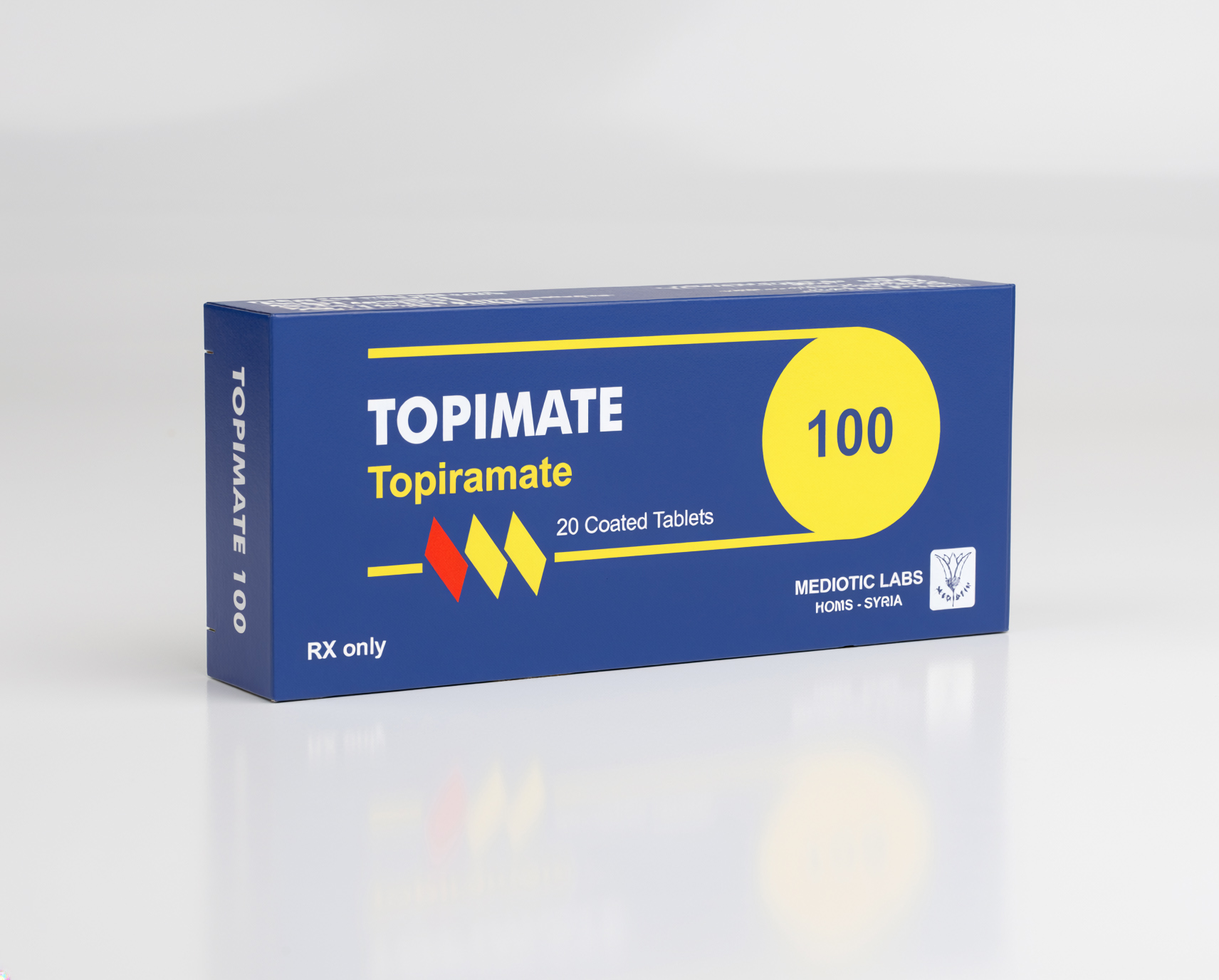
TOPIMATE 100

Mechanism of action and pharmacodynamics:

The precise mechanism by which topiramate exerts its antiseizure effect is unknown, however, electrophysiological and biochemical studies of the effects of topiramate on cultured neurons have revealed three properties that may contribute to topiramate’s antiepileptic efficacy.

First, sodium channel blocking action.

Second, Topiramate increases the frequency at which y-aminobutyrate (GABA) activates GABA A receptors, and enhances the ability of GABA to induce a flux of chloride ions into neurons, suggesting that topiramate potentiates the activity of this inhibitory neurotransmitter.

Third, topiramate antagonizes the ability of kainate to activate the: kainate/ AMPA a-amino-3-hydroxy-5-methylisoxazole-4-propionic acid non-NMDA subtype of excitatory amino acid (glutamate) receptor. These effects of topiramate are concentration-dependent within the range of 1 μM to 200 μM.

Pharmacokinetics:

Absorption of topiramate is rapid, with peak plasma

concentrations occurring at approximately 2 hours following a 400 mg oral dose.

The relative bioavailability of topiramate from the tablet formulation is about (80%) compared to a solution.

The mean plasma elimination half-life is 21 hours after single or multiple doses.

Steady state is reached in about 4 days in patients with normal renal function.

Topiramate is not extensively metabolized and is primarily eliminated unchanged in urine.

Indications:

TOPIMAT is indicated as adjunctive therapy for the treatment of adults with partial onset seizures.

Contraindications:

TOPIMAT is contraindicated in patients with a history of hypersensitivity to any component of this product.

Warnings:

Patients should be warned about the potential for somnolence, dizziness, confusion, and difficulty concentrating and advised not to drive or operate heavy machinery.

Antiepileptic drugs, including TOPIMAT,should be withdrawn gradually to minimize the potential of increased seizure frequency.

The elderly, people with diabetes, and those with impaired heart, liver or kidney function should be under close medical supervision while taking TOPIMAT and dosag e adjustment may be required for them.

An explanation for the association of TOPIMAT and kidney stones may lie in the fact that topiramate is a weak carbonic anhydrase inhibitor. Carbonic anhydrase inhibitors promote stone formation by reducing urinary citrate excretion and by increasing urinary pH, this can be avoided by increased fluid intake which increases the urinary output, lowering the concentration of substances involved in stone formation. TOPIMAT should be used during pregnancy only if the potential benefit outweighs the potential risk to the fetus.

Since many drugs are excreted in human milk and because the potential for serious adverse reactions in nursing infants to TOPIMAT are unknown, the potential benefit to the mother should be weighed against the potential risk to the infant.

Drug & food Interactions:

In a single-dose study, serum digoxin AUC was decreased by 12% in concomitant administration.

Because of the potential of topiramate to cause CNS

depression, as well as other cognitive and neuropsychiatric adverse events, topiramate should be used with extreme caution if used in combination with alcohol and other CNS depressants.

Concomitant use of topiramate, a weak carbonic anhydrase inhibitor, with other carbonic anhydrase inhibitors such as acetazolamide or dichlorphenamide may create a physiological environment that increases the risk of renal stone formation and should therefore be avoided.

Topiramate may decrease the effectiveness of oral

contraceptives, therefore, additional birth control measures may be needed to decrease the risk of pregnancy.

Carbamazepine and phenytoin may decrease the blood levels of topiramate, therefore, dose adjustment of either or both medicines may be needed.

Blood levels of topiramate and/or valproic acid may be

decreased, if used in concomitance. Dose adjustment of either or both medicines may be needed.

Side Effects:

The most commonly observed adverse events associated with the use of topiramate at dosages of 200 to 400 mg/ day, and did not appear to be dose-related, include:

somnolence, dizziness, ataxia, speech disorders, psychomotor slowing, nystagmus, headache, nausea, constipation, vomiting, skin rashes, and paresthesia.

The most common dose-related adverse events at dosages of 200 to 1000 mg/day include: fatigue, nervousness, difficulty with concentration or attention, confusion, depression, anorexia, language problems, anxiety, mood problems, cognitive problems, weight decrease, and tremor.

Dosage & Administration:

Suggested therapy begins with 50 mg daily, gradually increasing to 200-400 mg / daily.

Maximum recommended daily dose is 800 mg.

Adults: At first, 50 mg in two divided doses (two tablets of TOPIMAT 25 mg) a day is taken for the first week. The dose may be increased gradually every week if needed and

tolerated, but the usual dose is not greater than 400 mg a day in two divided doses.

Children (age 2 to16 years): At fist, 25 mg (one tablet of TOPIMAT 25 mg) nightly is taken for the first week. The dose may be increased gradually every 1 or 2 weeks about (1 – 3 mg/ kg) of body weight daily to be taken in two divided doses.

Overdosage & treatment :

In acute TOPIMAT (Topiramate) overdose, if the ig estion is recent, the stomach should be emptied immediately by lavage or by induction of emesis.

Treatment should be appropriately supportive.

Hemodialysis is an effective mean of removing topiramate from the body.

Storage:

Keep in a dry place below 30°C

– Keep out of reach of Children.

Presentation:

Carton box contains 2 blisters, each one contains 10 white coated tablets of TOPIMAT 25. Carton box contains 2 blisters, each one contains 10 yellow coated tablets of TOPIMAT 100. Carton box contains 2 blisters, each one contains 10 pink coated tablets of TOPIMAT 200

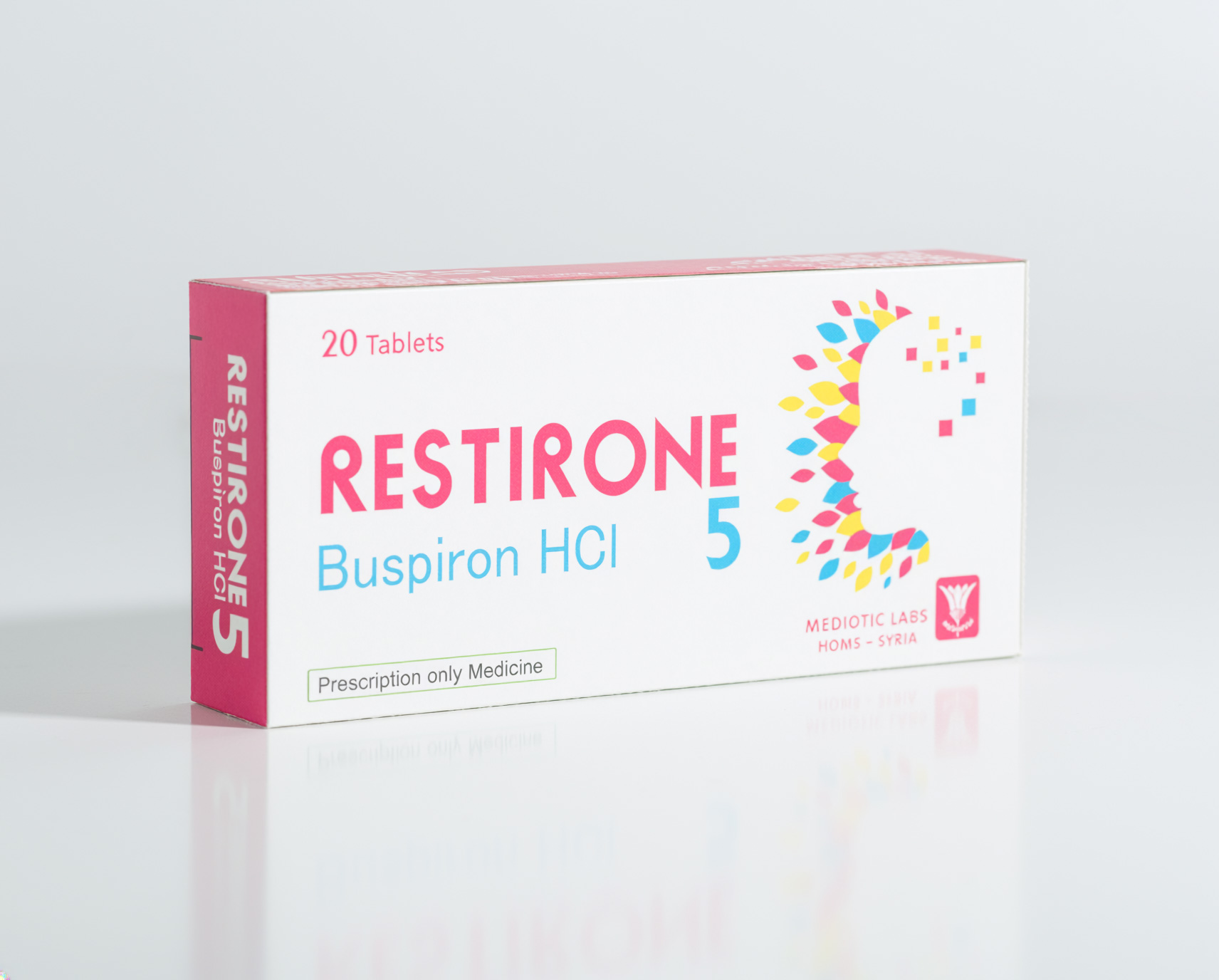
RESTERON 5

juice (200 mL double-strength t.i.d. for 2 days) increased plasma buspirone concentrations (4.3 fold increase in C ; 9.2 fold increase in AUC). Patients receiving buspirone should be advised to avoid drinking such large amounts of grapefruit juice. Itraconazole:

coadministration of buspirone (10 mg as a single dose) with

itraconazole (200 mg/day for 4 days) increased plasma buspirone concentrations (13 fold increase in C and 19 fold increase in AUC). These pharmacokinetic interactions were accompanied by an increased incidence of side effects attributable to buspirone. If the two drugs are to be used in combination, a low dose of buspirone (e.g., 2.5 mg q.d.) is recommended. Subsequent dose adjustment of either drug should be based on clinical assessment.

Nefazodone:

coadministration of buspirone (2.5 or 5 mg b.i.d.) with nefazodone (250 mg b.i.d.) resulted in marked increases in plasma buspirone concentrations (increases up to 20 fold in C and up to 50 fold in AUC) and statistically significant decreases (about 50%) in plasma concentrations of the buspirone metabolite.

Rifampin:

coadministration of buspirone (30 mg as a single dose) with rifampin

(600 mg/day for 5 days) decreased the plasma concentrations (83.7% decrease in C ; 89.6% decrease in AUC) and pharmacodynamic effects of buspirone. If the two drugs are to be used in combination, the dosage of buspirone may need adjusting to maintain anxiolytic effect.

Other inhibitors and inducers of CYP3A4:

Substances that inhibit CYP3A4, such as ketoconazole or ritonavir, may inhibit buspirone metabolism and increase plasma concentrations of buspirone while substances that induce CYP3A4, such as dexamethasone or certain anticonvulsants (phenytoin, phenobarbital, carbamazepine), may increase the rate of buspirone metabolism. If a patient has been titrated to a stable dosage on buspirone, a dose increased AUC and C of buspirone 3.4 fold while diltiazem increased AUC and C 5.5 fold and 4 fold,

respectively.

Cimetidine:

Coadministration of buspirone with cimetidine was found to increase C (40%) and T (2 fold), but had minimal effects on the AUC of buspirone.

Protein Binding:

In vitro, buspirone does not displace tightly bound drugs like phenytoin, propranolol, and warfarin from serum proteins. However, there has been one report of prolonged prothrombin time when buspirone was added to the regimen of a patient treated with warfarin. The patient was also chronically receiving phenytoin, phenobarbital, digoxin, and levothyroxine sodium. In vitro, buspirone may displace less firmly bound drugs like digoxin. The clinical significance of this property is unknown.

Therapeutic levels of aspirin, desipramine, diazepam, flurazepam, ibuprofen, propranolol, thioridazine, and tolbutamide had only a limited effect on the extent of binding of buspirone to plasma proteins.

Pregnancy:Pregnancy Category B

adequate and well-controlled studies during pregnancy have not been performed.

Because animal reproduction studies are not always predictive of human response, this drug should be used during pregnancy only if clearly needed.

Nursing Mothers:

The extent of the excretion in human milk of buspirone or its metabolites is not known. Buspirone hydrochloride tablets administration to nursing women should be avoided if clinically possible.

Use in Patients With Impaired Hepatic or Renal Function:

Buspirone is metabolized by the liver and excreted by the kidneys. A pharmacokinetic study in patients with impaired hepatic or renal function demonstrated increased plasma levels and a lengthened half-life

of buspirone. Therefore the administration of buspirone hydrochloride tablets to patients with severe hepatic or renal impairment cannot be recommended. DOSAGE AND ADMINISTRATION:

The recommended initial dose is 15 mg daily (7.5 mg b.i.d.). To achieve an optimal therapeutic response, at intervals of 2 to 3 days the dosage may be increased 5 mg per day, as needed. The maximum daily dosage should not exceed 60 mg per day. In clinical trials allowing dose titration, divided doses of 20 to 30 mg per day were commonly employed.

The bioavailability of buspirone is increased when given with food as compared to the fasted state.

Consequently, patients should take buspirone in a consistent manner with regard to the timing of dosing; either always with or always without food.

When buspirone is to be given with a potent inhibitor of CYP3A4 the dosage

recommendations described in the Drug Interactions section should be followed. Packaging:2 blisters in carton box, each one contains (10) tablets.

Storage conditions:store at room temperature, between(20-25)°C, away from moisture and light.

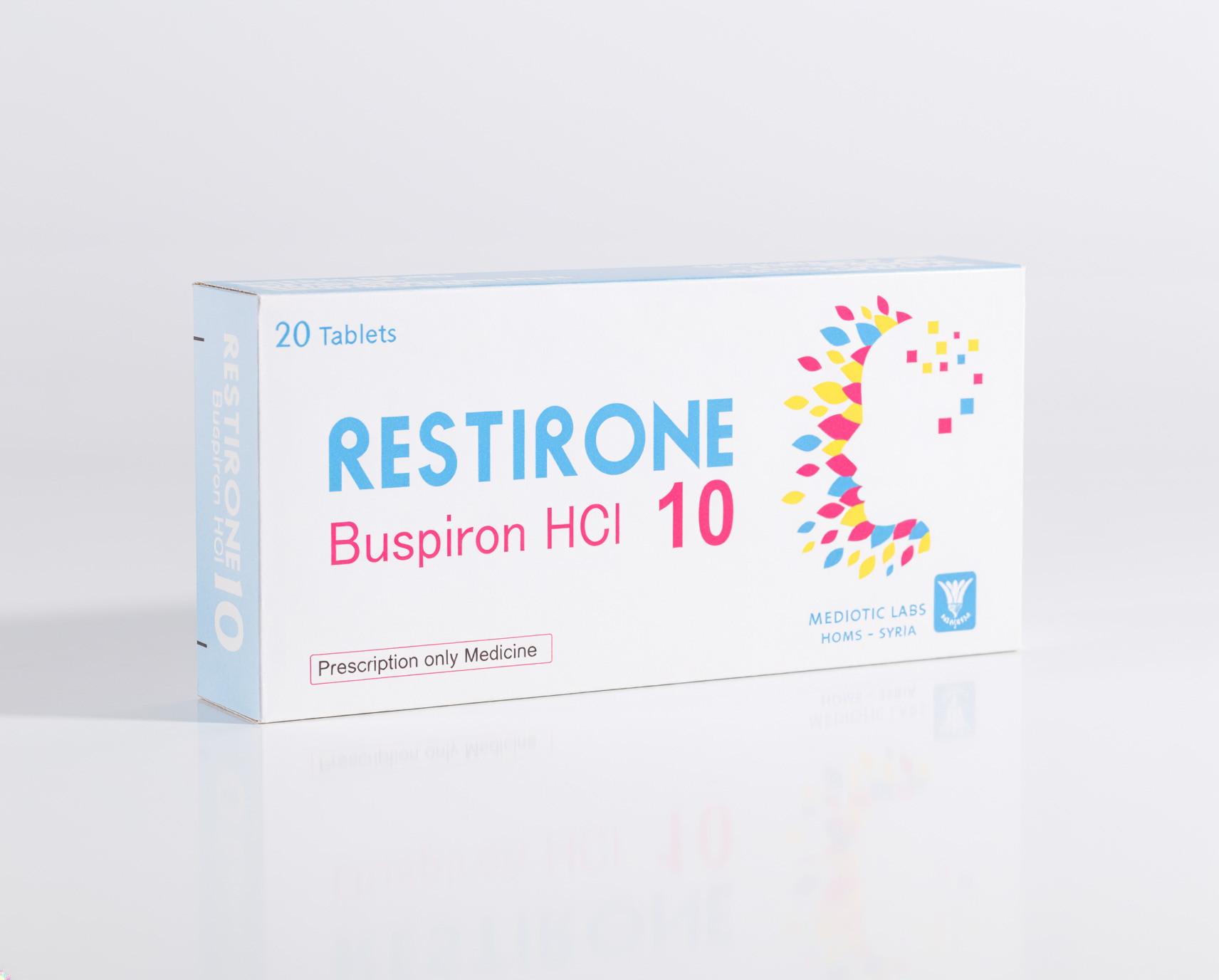
RESTERON 10

Mechanism of action:

The mechanism of action of buspirone is unknown. Buspirone differs from typical benzodiazepine anxiolytics in that it does not exert anticonvulsant or muscle relaxant effects.

In vitro preclinical studies have shown that buspirone has a high affinity for serotonin (5- HT) receptors. Buspirone has no significant affinity for benzodiazepine receptors and does not affect GABA binding.

Buspirone has moderate affinity for brain D2-dopamine receptors.

Pharmacokinetics:

Buspirone is rapidly absorbed in man and undergoes extensive first-pass metabolism. Following oral administration, plasma concentrations of unchanged buspirone are very low and variable between subjects. Peak plasma levels of 1 to 6 ng/mL have been observed 40 to 90 minutes after single oral doses of 20 mg.

The effects of food upon the bioavailability of buspirone have been studied in eight subjects. Buspirone is metabolized primarily by oxidation, which in vitro has been shown to be mediated by cytochrome P450 3A4 (CYP3A4).

INDICATIONS:

Buspirone hydrochloride tablets are indicated for the management of anxiety disorders or the short-term relief of the symptoms of anxiety. Anxiety or tension associated with the stress of everyday life usually

does not require treatment with an anxiolytic.

The efficacy of buspirone has been demonstrated in controlled clinical trials of outpatients whose diagnosis roughly corresponds to Generalized Anxiety Disorder (GAD).

CONTRAINDICATIONS:

Buspirone tablets are contraindicated in patients hypersensitive to buspirone

hydrochloride.

WARNINGS:

The administration of buspirone to a patient taking a monoamine oxidase inhibitor (MAOI) may pose a hazard. There have been reports of the occurrence of elevated blood pressure when buspirone has been added to a regimen including an MAOI. Therefore, it is recommended that buspirone not be used concomitantly with an MAOI. Because buspirone has no established antipsychotic activity, it should not be employed in lieu of appropriate antipsychotic treatment.

PRECAUTIONS:

General:

Interference with Cognitive and Motor Performance:

Studies indicate that buspirone is less sedating than other anxiolytics and that it does not produce significant functional impairment. However, its CNS effects in any individual patient may not be predictable. Therefore, patients should be cautioned about operating an automobile or using complex machinery until they are reasonably certain that buspirone treatment does not affect them adversely.

Potential for Withdrawal Reactions in Sedative/Hypnotic/Anxiolytic Drug-Dependent Patients Because buspirone does not exhibit cross-tolerance with benzodiazepines and other common sedative/hypnotic drugs, it will not block the withdrawal syndrome often seen with cessation of therapy with these drugs.

Therefore, before starting therapy with buspirone, it is advisable to withdraw patients gradually, especially patients who have been using a CNS-depressant drug chronically, from their prior treatment.

Rebound or withdrawal symptoms may occur over varying time periods, depending in part on the type of drug, and its effective half-life of elimination.

The syndrome of withdrawal from sedative/hypnotic/anxiolytic drugs can appear as any combination of irritability, anxiety, agitation, insomnia, tremor, abdominal cramps, muscle cramps, vomiting, sweating, flu-like symptoms without fever, and occasionally even as seizures.

Clinical experience in controlled trials has failed to identify any significant neuroleptic-like activity; however, a syndrome of restlessness, appearing shortly after initiation of treatment, has been reported in some small fraction of buspirone-treated patients. The syndrome may be explained in several ways. For example, buspirone may increase central noradrenergic activity; alternatively, the effect may be attributable to dopaminergic effects (i.e., represent akathisia).

ADVERSE REACTIONS:

Commonly Observed:

The more commonly observed untoward events associated with the use of buspirone not seen at an equivalent incidence among placebo-treated patients include dizziness, nausea, headache, nervousness, lightheadedness, and excitement.

Associated With Discontinuation of Treatment:

The more common events causing discontinuation included: central nervous system disturbances (3.4%), primarily dizziness, insomnia, nervousness, drowsiness, and lightheaded feeling; gastrointestinal disturbances (1.2%), primarily nausea; and miscellaneous disturbances (1.1%), primarily headache and fatigue. In addition, 3.4% of patients had multiple complaints, none of which could be characterized as primary. Cardiovascular Frequent was nonspecific chest pain; infrequent were syncope, hypotension, and hypertension.

Central Nervous System Frequent were dream disturbances; infrequent were depersonalization, dysphoria, noise intolerance, euphoria, akathisia, fearfulness, loss of 

interest, dissociative reaction, hallucinations, involuntary movements, slowed reaction time, suicidal ideation, and seizures.

Frequent were tinnitus, sore throat, and nasal congestion; infrequent were redness and itching of the eyes, altered taste, altered smell, and conjunctivitis.

Gastrointestinal Infrequent were flatulence, anorexia, increased appetite, salivation, irritable colon, and rectal bleeding; rare was burning of the tongue.

Genitourinary Infrequent were urinary frequency, urinary hesitancy, menstrual irregularity and spotting, and dysuria.

Musculoskeletal Infrequent were muscle cramps, muscle spasms, rigid/stiff muscles, and arthralgias;

Respiratory Infrequent were hyperventilation, shortness of breath, and chest congestion. Sexual Function Infrequent were decreased or increased libido.

Skin Infrequent were edema, pruritus, flushing, easy bruising, hair loss, dry skin, facial edema, and blisters.

Clinical Laboratory Infrequent were increases in hepatic aminotransferases (SGOT, SGPT.

Miscellaneous Infrequent were weight gain, fever, roaring sensation in the head, weight loss, and malaise.

OVERDOSAGE Signs and Symptoms:

In clinical pharmacology trials, doses as high as 375 mg/day were administered to healthy male volunteers. As this dose was approached, the following symptoms were observed: nausea, vomiting, dizziness, drowsiness, miosis, and gastric distress. A few cases of overdosage have been reported, with complete recovery as the usual outcome. No deaths have been reported following overdosage with buspirone alone. Rare cases of intentional overdosage with a fatal outcome were invariably associated with ingestion of multiple drugs and/or alcohol, and a casual relationship of buspirone could not be determined.

Recommended Overdose Treatment:

General symptomatic and supportive measures should be used along with immediate gastric lavage.

Respiration, pulse, and blood pressure should be monitored as in all cases of drug

overdosage. No specific antidote is known to buspirone, and dialyzability of buspirone has not been determined.

Drug Interactions

MAO inhibitors:

It is recommended that buspirone hydrochloride tablets not be used concomitantly with MAO inhibitors.

Amitriptyline:

After addition of buspirone to the amitriptyline dose regimen, no statistically significant differences in

the steady-state pharmacokinetic parameters (C, AUC, and Cmax) of amitriptyline or its metabolite

nortriptyline were observed.

Diazepam:

After addition of buspirone to the diazepam dose regimen, no statistically significant differences in the

steady-state pharmacokinetic parameters (C, AUC, and C) were observed for diazepam,

but increases of about 15% were seen for nordiazepam, and minor adverse clinical effects (dizziness,

headache, and nausea) were observed.

Haloperidol:

In a study in normal volunteers, concomitant administration of buspirone and haloperidol resulted in increased serum haloperidol concentrations. The clinical significance of this finding is not clear.

Trazodone:

There is one report suggesting that the concomitant use of trazodone hydrochloride and buspirone may

have caused 3 to 6 fold elevations on SGPT (ALT) in a few patients.

Triazolam/flurazepam:

Coadministration of buspirone with either triazolam or flurazepam did not appear to prolong or intensify

the sedative effects of either benzodiazepine.

Other psychotropics:

Because the effects of concomitant administration of buspirone with most other psychotropic drugs

have not been studied, the concomitant use of buspirone with other CNS-active drugs should be approached with caution.

Inhibitors and Inducers of Cytochrome P450 3A4 (CYP3A4):

Buspirone has been shown in vitro to be metabolized by CYP3A4. This finding is consistent with the in vivo interactions observed between buspirone and the following: Diltiazem and verapamil:

coadministration of buspirone (10 mg as a single dose) with verapamil (80 mg t.i.d.) or diltiazem (60 mg t.i.d.) increased plasma buspirone concentrations (verapamil increased AUC and C of buspirone 3.4 fold while diltiazem increased AUC and C 5.5 fold and 4 fold, respectively). Adverse events attributable to buspirone may be more likely during concomitant administration with either diltiazem or verapamil. Subsequent dose adjustment may be necessary and should be based on clinical assessment. Erythromycin:

coadministration of buspirone (10 mg as a single dose) with erythromycin (1.5 g/day for 4 days) increased plasma uspirone concentrations (5 fold increase in C and 6 fold increase in AUC). These pharmacokinetic interactions were accompanied by an increased incidence of side effects attributable to buspirone. If the two drugs are to be used in combination, a low dose of buspirone (e.g., 2.5 mg b.i.d.) is recommended. Subsequent dose adjustment of either drug should be based on clinical assessment.

Grapefruit juice:

coadministration of buspirone (10 mg as a single dose) with grapefruit 

juice (200 mL double-strength t.i.d. for 2 days) increased plasma buspirone concentrations (4.3 fold increase in C ; 9.2 fold increase in AUC). Patients receiving buspirone should be advised to avoid drinking such large amounts of grapefruit juice. Itraconazole:

coadministration of buspirone (10 mg as a single dose) with

itraconazole (200 mg/day for 4 days) increased plasma buspirone concentrations (13 fold increase in C and 19 fold increase in AUC). These pharmacokinetic interactions were accompanied by an increased incidence of side effects attributable to buspirone. If the two drugs are to be used in combination, a low dose of buspirone (e.g., 2.5 mg q.d.) is recommended. Subsequent dose adjustment of either drug should be based on clinical assessment.

Nefazodone:

coadministration of buspirone (2.5 or 5 mg b.i.d.) with nefazodone (250 mg b.i.d.) resulted in marked increases in plasma buspirone concentrations (increases up to 20 fold in C and up to 50 fold in AUC) and statistically significant decreases (about 50%) in plasma concentrations of the buspirone metabolite.

Rifampin:

coadministration of buspirone (30 mg as a single dose) with rifampin

(600 mg/day for 5 days) decreased the plasma concentrations (83.7% decrease in C ; 89.6% decrease in AUC) and pharmacodynamic effects of buspirone. If the two drugs are to be used in combination, the dosage of buspirone may need adjusting to maintain anxiolytic effect.

Other inhibitors and inducers of CYP3A4:

Substances that inhibit CYP3A4, such as ketoconazole or ritonavir, may inhibit buspirone metabolism and increase plasma concentrations of buspirone while substances that induce CYP3A4, such as dexamethasone or certain anticonvulsants (phenytoin, phenobarbital, carbamazepine), may increase the rate of buspirone metabolism. If a patient has been titrated to a stable dosage on buspirone, a dose increased AUC and C of buspirone 3.4 fold while diltiazem increased AUC and C 5.5 fold and 4 fold,

respectively.

Cimetidine:

Coadministration of buspirone with cimetidine was found to increase C (40%) and T (2 fold), but had minimal effects on the AUC of buspirone.

Protein Binding:

In vitro, buspirone does not displace tightly bound drugs like phenytoin, propranolol, and warfarin from serum proteins. However, there has been one report of prolonged prothrombin time when buspirone was added to the regimen of a patient treated with warfarin. The patient was also chronically receiving phenytoin, phenobarbital, digoxin, and levothyroxine sodium. In vitro, buspirone may displace less firmly bound drugs like digoxin. The clinical significance of this property is unknown.

Therapeutic levels of aspirin, desipramine, diazepam, flurazepam, ibuprofen, propranolol, thioridazine, and tolbutamide had only a limited effect on the extent of binding of buspirone to plasma proteins.

Pregnancy:Pregnancy Category B

adequate and well-controlled studies during pregnancy have not been performed.

Because animal reproduction studies are not always predictive of human response, this drug should be used during pregnancy only if clearly needed.

Nursing Mothers:

The extent of the excretion in human milk of buspirone or its metabolites is not known. Buspirone hydrochloride tablets administration to nursing women should be avoided if clinically possible.

Use in Patients With Impaired Hepatic or Renal Function:

Buspirone is metabolized by the liver and excreted by the kidneys. A pharmacokinetic study in patients with impaired hepatic or renal function demonstrated increased plasma levels and a lengthened half-life

of buspirone. Therefore the administration of buspirone hydrochloride tablets to patients with severe hepatic or renal impairment cannot be recommended. DOSAGE AND ADMINISTRATION:

The recommended initial dose is 15 mg daily (7.5 mg b.i.d.). To achieve an optimal therapeutic response, at intervals of 2 to 3 days the dosage may be increased 5 mg per day, as needed. The maximum daily dosage should not exceed 60 mg per day. In clinical trials allowing dose titration, divided doses of 20 to 30 mg per day were commonly employed.

The bioavailability of buspirone is increased when given with food as compared to the fasted state.

Consequently, patients should take buspirone in a consistent manner with regard to the timing of dosing; either always with or always without food.

When buspirone is to be given with a potent inhibitor of CYP3A4 the dosage

recommendations described in the Drug Interactions section should be followed. Packaging:2 blisters in carton box, each one contains (10) tablets.

Storage conditions:store at room temperature, between(20-25)°C, away from moisture and light.

RESTERON 15

Mechanism of action:

The mechanism of action of buspirone is unknown. Buspirone differs from typical benzodiazepine anxiolytics in that it does not exert anticonvulsant or muscle relaxant effects.

In vitro preclinical studies have shown that buspirone has a high affinity for serotonin (5- HT) receptors. Buspirone has no significant affinity for benzodiazepine receptors and does not affect GABA binding.

Buspirone has moderate affinity for brain D2-dopamine receptors.

Pharmacokinetics:

Buspirone is rapidly absorbed in man and undergoes extensive first-pass metabolism. Following oral administration, plasma concentrations of unchanged buspirone are very low and variable between subjects. Peak plasma levels of 1 to 6 ng/mL have been observed 40 to 90 minutes after single oral doses of 20 mg.

The effects of food upon the bioavailability of buspirone have been studied in eight subjects. Buspirone is metabolized primarily by oxidation, which in vitro has been shown to be mediated by cytochrome P450 3A4 (CYP3A4).

INDICATIONS:

Buspirone hydrochloride tablets are indicated for the management of anxiety disorders or the short-term relief of the symptoms of anxiety. Anxiety or tension associated with the stress of everyday life usually

does not require treatment with an anxiolytic.

The efficacy of buspirone has been demonstrated in controlled clinical trials of outpatients whose diagnosis roughly corresponds to Generalized Anxiety Disorder (GAD).

CONTRAINDICATIONS:

Buspirone tablets are contraindicated in patients hypersensitive to buspirone

hydrochloride.

WARNINGS:

The administration of buspirone to a patient taking a monoamine oxidase inhibitor (MAOI) may pose a hazard. There have been reports of the occurrence of elevated blood pressure when buspirone has been added to a regimen including an MAOI. Therefore, it is recommended that buspirone not be used concomitantly with an MAOI. Because buspirone has no established antipsychotic activity, it should not be employed in lieu of appropriate antipsychotic treatment.

PRECAUTIONS:

General:

Interference with Cognitive and Motor Performance:

Studies indicate that buspirone is less sedating than other anxiolytics and that it does not produce significant functional impairment. However, its CNS effects in any individual patient may not be predictable. Therefore, patients should be cautioned about operating an automobile or using complex machinery until they are reasonably certain that buspirone treatment does not affect them adversely.

Potential for Withdrawal Reactions in Sedative/Hypnotic/Anxiolytic Drug-Dependent Patients Because buspirone does not exhibit cross-tolerance with benzodiazepines and other common sedative/hypnotic drugs, it will not block the withdrawal syndrome often seen with cessation of therapy with these drugs.

Therefore, before starting therapy with buspirone, it is advisable to withdraw patients gradually, especially patients who have been using a CNS-depressant drug chronically, from their prior treatment.

Rebound or withdrawal symptoms may occur over varying time periods, depending in part on the type of drug, and its effective half-life of elimination.

The syndrome of withdrawal from sedative/hypnotic/anxiolytic drugs can appear as any combination of irritability, anxiety, agitation, insomnia, tremor, abdominal cramps, muscle cramps, vomiting, sweating, flu-like symptoms without fever, and occasionally even as seizures.

Clinical experience in controlled trials has failed to identify any significant neuroleptic-like activity; however, a syndrome of restlessness, appearing shortly after initiation of treatment, has been reported in some small fraction of buspirone-treated patients. The syndrome may be explained in several ways. For example, buspirone may increase central noradrenergic activity; alternatively, the effect may be attributable to dopaminergic effects (i.e., represent akathisia).

ADVERSE REACTIONS:

Commonly Observed:

The more commonly observed untoward events associated with the use of buspirone not seen at an equivalent incidence among placebo-treated patients include dizziness, nausea, headache, nervousness, lightheadedness, and excitement.

Associated With Discontinuation of Treatment:

The more common events causing discontinuation included: central nervous system disturbances (3.4%), primarily dizziness, insomnia, nervousness, drowsiness, and lightheaded feeling; gastrointestinal disturbances (1.2%), primarily nausea; and miscellaneous disturbances (1.1%), primarily headache and fatigue. In addition, 3.4% of patients had multiple complaints, none of which could be characterized as primary. Cardiovascular Frequent was nonspecific chest pain; infrequent were syncope, hypotension, and hypertension.

Central Nervous System Frequent were dream disturbances; infrequent were depersonalization, dysphoria, noise intolerance, euphoria, akathisia, fearfulness, loss of 

interest, dissociative reaction, hallucinations, involuntary movements, slowed reaction time, suicidal ideation, and seizures.

Frequent were tinnitus, sore throat, and nasal congestion; infrequent were redness and itching of the eyes, altered taste, altered smell, and conjunctivitis.

Gastrointestinal Infrequent were flatulence, anorexia, increased appetite, salivation, irritable colon, and rectal bleeding; rare was burning of the tongue.

Genitourinary Infrequent were urinary frequency, urinary hesitancy, menstrual irregularity and spotting, and dysuria.

Musculoskeletal Infrequent were muscle cramps, muscle spasms, rigid/stiff muscles, and arthralgias;

Respiratory Infrequent were hyperventilation, shortness of breath, and chest congestion. Sexual Function Infrequent were decreased or increased libido.

Skin Infrequent were edema, pruritus, flushing, easy bruising, hair loss, dry skin, facial edema, and blisters.

Clinical Laboratory Infrequent were increases in hepatic aminotransferases (SGOT, SGPT.

Miscellaneous Infrequent were weight gain, fever, roaring sensation in the head, weight loss, and malaise.

OVERDOSAGE Signs and Symptoms:

In clinical pharmacology trials, doses as high as 375 mg/day were administered to healthy male volunteers. As this dose was approached, the following symptoms were observed: nausea, vomiting, dizziness, drowsiness, miosis, and gastric distress. A few cases of overdosage have been reported, with complete recovery as the usual outcome. No deaths have been reported following overdosage with buspirone alone. Rare cases of intentional overdosage with a fatal outcome were invariably associated with ingestion of multiple drugs and/or alcohol, and a casual relationship of buspirone could not be determined.

Recommended Overdose Treatment:

General symptomatic and supportive measures should be used along with immediate gastric lavage.

Respiration, pulse, and blood pressure should be monitored as in all cases of drug

overdosage. No specific antidote is known to buspirone, and dialyzability of buspirone has not been determined.

Drug Interactions

MAO inhibitors:

It is recommended that buspirone hydrochloride tablets not be used concomitantly with MAO inhibitors.

Amitriptyline:

After addition of buspirone to the amitriptyline dose regimen, no statistically significant differences in

the steady-state pharmacokinetic parameters (C, AUC, and Cmax) of amitriptyline or its metabolite

nortriptyline were observed.

Diazepam:

After addition of buspirone to the diazepam dose regimen, no statistically significant differences in the

steady-state pharmacokinetic parameters (C, AUC, and C) were observed for diazepam,

but increases of about 15% were seen for nordiazepam, and minor adverse clinical effects (dizziness,

headache, and nausea) were observed.

Haloperidol:

In a study in normal volunteers, concomitant administration of buspirone and haloperidol resulted in increased serum haloperidol concentrations. The clinical significance of this finding is not clear.

Trazodone:

There is one report suggesting that the concomitant use of trazodone hydrochloride and buspirone may

have caused 3 to 6 fold elevations on SGPT (ALT) in a few patients.

Triazolam/flurazepam:

Coadministration of buspirone with either triazolam or flurazepam did not appear to prolong or intensify

the sedative effects of either benzodiazepine.

Other psychotropics:

Because the effects of concomitant administration of buspirone with most other psychotropic drugs

have not been studied, the concomitant use of buspirone with other CNS-active drugs should be approached with caution.

Inhibitors and Inducers of Cytochrome P450 3A4 (CYP3A4):

Buspirone has been shown in vitro to be metabolized by CYP3A4. This finding is consistent with the in vivo interactions observed between buspirone and the following: Diltiazem and verapamil:

coadministration of buspirone (10 mg as a single dose) with verapamil (80 mg t.i.d.) or diltiazem (60 mg t.i.d.) increased plasma buspirone concentrations (verapamil increased AUC and C of buspirone 3.4 fold while diltiazem increased AUC and C 5.5 fold and 4 fold, respectively). Adverse events attributable to buspirone may be more likely during concomitant administration with either diltiazem or verapamil. Subsequent dose adjustment may be necessary and should be based on clinical assessment. Erythromycin:

coadministration of buspirone (10 mg as a single dose) with erythromycin (1.5 g/day for 4 days) increased plasma uspirone concentrations (5 fold increase in C and 6 fold increase in AUC). These pharmacokinetic interactions were accompanied by an increased incidence of side effects attributable to buspirone. If the two drugs are to be used in combination, a low dose of buspirone (e.g., 2.5 mg b.i.d.) is recommended. Subsequent dose adjustment of either drug should be based on clinical assessment.

Grapefruit juice:

coadministration of buspirone (10 mg as a single dose) with grapefruit 

juice (200 mL double-strength t.i.d. for 2 days) increased plasma buspirone concentrations (4.3 fold increase in C ; 9.2 fold increase in AUC). Patients receiving buspirone should be advised to avoid drinking such large amounts of grapefruit juice. Itraconazole:

coadministration of buspirone (10 mg as a single dose) with

itraconazole (200 mg/day for 4 days) increased plasma buspirone concentrations (13 fold increase in C and 19 fold increase in AUC). These pharmacokinetic interactions were accompanied by an increased incidence of side effects attributable to buspirone. If the two drugs are to be used in combination, a low dose of buspirone (e.g., 2.5 mg q.d.) is recommended. Subsequent dose adjustment of either drug should be based on clinical assessment.

Nefazodone:

coadministration of buspirone (2.5 or 5 mg b.i.d.) with nefazodone (250 mg b.i.d.) resulted in marked increases in plasma buspirone concentrations (increases up to 20 fold in C and up to 50 fold in AUC) and statistically significant decreases (about 50%) in plasma concentrations of the buspirone metabolite.

Rifampin:

coadministration of buspirone (30 mg as a single dose) with rifampin

(600 mg/day for 5 days) decreased the plasma concentrations (83.7% decrease in C ; 89.6% decrease in AUC) and pharmacodynamic effects of buspirone. If the two drugs are to be used in combination, the dosage of buspirone may need adjusting to maintain anxiolytic effect.

Other inhibitors and inducers of CYP3A4:

Substances that inhibit CYP3A4, such as ketoconazole or ritonavir, may inhibit buspirone metabolism and increase plasma concentrations of buspirone while substances that induce CYP3A4, such as dexamethasone or certain anticonvulsants (phenytoin, phenobarbital, carbamazepine), may increase the rate of buspirone metabolism. If a patient has been titrated to a stable dosage on buspirone, a dose increased AUC and C of buspirone 3.4 fold while diltiazem increased AUC and C 5.5 fold and 4 fold,

respectively.

Cimetidine:

Coadministration of buspirone with cimetidine was found to increase C (40%) and T (2 fold), but had minimal effects on the AUC of buspirone.

Protein Binding:

In vitro, buspirone does not displace tightly bound drugs like phenytoin, propranolol, and warfarin from serum proteins. However, there has been one report of prolonged prothrombin time when buspirone was added to the regimen of a patient treated with warfarin. The patient was also chronically receiving phenytoin, phenobarbital, digoxin, and levothyroxine sodium. In vitro, buspirone may displace less firmly bound drugs like digoxin. The clinical significance of this property is unknown.

Therapeutic levels of aspirin, desipramine, diazepam, flurazepam, ibuprofen, propranolol, thioridazine, and tolbutamide had only a limited effect on the extent of binding of buspirone to plasma proteins.

Pregnancy:Pregnancy Category B

adequate and well-controlled studies during pregnancy have not been performed.

Because animal reproduction studies are not always predictive of human response, this drug should be used during pregnancy only if clearly needed.

Nursing Mothers:

The extent of the excretion in human milk of buspirone or its metabolites is not known. Buspirone hydrochloride tablets administration to nursing women should be avoided if clinically possible.

Use in Patients With Impaired Hepatic or Renal Function:

Buspirone is metabolized by the liver and excreted by the kidneys. A pharmacokinetic study in patients with impaired hepatic or renal function demonstrated increased plasma levels and a lengthened half-life

of buspirone. Therefore the administration of buspirone hydrochloride tablets to patients with severe hepatic or renal impairment cannot be recommended. DOSAGE AND ADMINISTRATION:

The recommended initial dose is 15 mg daily (7.5 mg b.i.d.). To achieve an optimal therapeutic response, at intervals of 2 to 3 days the dosage may be increased 5 mg per day, as needed. The maximum daily dosage should not exceed 60 mg per day. In clinical trials allowing dose titration, divided doses of 20 to 30 mg per day were commonly employed.

The bioavailability of buspirone is increased when given with food as compared to the fasted state.

Consequently, patients should take buspirone in a consistent manner with regard to the timing of dosing; either always with or always without food.

When buspirone is to be given with a potent inhibitor of CYP3A4 the dosage

recommendations described in the Drug Interactions section should be followed. Packaging:2 blisters in carton box, each one contains (10) tablets.

Storage conditions:store at room temperature, between(20-25)°C, away from moisture and light.

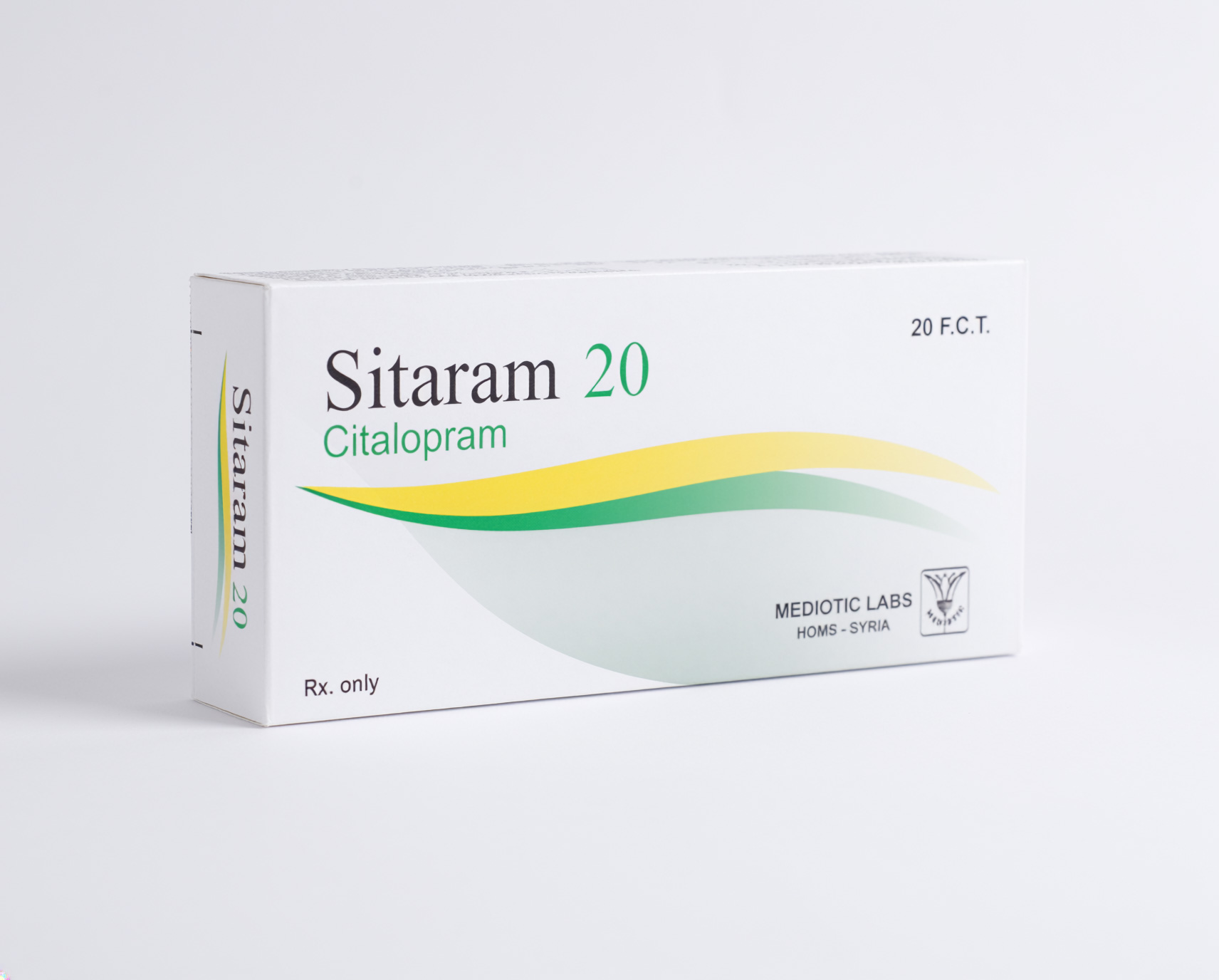
SITARAM 20

Sitaram (Citalopram HBr) is an orally administered selective serotonin re-uptake inhibitor (SSRI) with a chemical structure unrelated to that of other (SSRI’s) or other available antidepressant agents.

Clinical Pharmacology:

The mechanism of action of Sitaram as an antidepressant is presumed to be linked to potentiation of serotonergic activity in the central nervous system resulting from its inhibition of CNS neuronal reuptake of serotonin (5-HT).

Citalopram has very low affinity for 5-HT, A, 5-HT2 A, dopamine D1 and D2, a1, a2 and ẞ adrenergic, histamine H1, gamma amino butyric acid (GABA), muscarinic, cholinergic and benzodiazepine receptors.

Indications and Usage:

Sitaram is indicated for the treatment of depression. The efficacy of product in the treatment of depression was established in 4 to 6 weeks.

A major depressive episode implies a prominent and relatively persistent (nearly every day for at least 2 weeks) depressed or dysphoric mood that usually interferes with daily functioning, and includes at least 5 of the following 9 symptoms: Depressed mood, loss of interest in usual activities, significant change in weight and/ or appetite, insomnia or hypersomnia, psychomotor agitation or retardation, increased fatigue, feelings of guilt or worthlessness, slowed thinking or impaired concentration, and a suicide attempt or suicidal ideation.

Contraindications:

Sitaram is contraindicated in patients with a hypersensitivity to citalopram or any of the inactive ingredients in Sitaram.

Sitaram is contraindicated in patients taking monoamine oxidase inhibitors.

Similarly, at least 14 days should be allowed after stopping Sitaram before starting an (MAOI).

Precautions:

Several cases of hyponatremia have been reported in association with Sitaram treatment. All patients with these events have recovered with discontinuation of Sitaram.

Sitaram should be used cautiously in patients with a history of mania, history of seizure disorders.

Patients should be cautioned about operating machinery, including automobiles.

Caution is advisable in using Sitaram in patients with diseases or conditions that produce

altered metabolism or hemodynamic responses.

The use of Sitaram in hepatically impaired patients or in patients with a heart disease should

be approached with caution and a lower maximum dosage is recommended.

Sitaram should be used with caution in patients with severe renal impairment.

The concomitant use of Sitaram and alcohol in depressed patients is not advised.

The possibility of a suicide attempt is inherent in depression.

Patients should be advised to notify their physician if they become pregnant, or if they are breast-feeding an infant during therapy.

While patients may notice improvement with Sitaram therapy in 1 to 4 weeks, they should be advised to continue therapy as directed.

Drug Interactions:

Caution should be taken when Sitaram is taken in combination with other centrally acting drugs, with cimetidine, lithium, carbamazepine, ketoconazole, fluconazole, itraconazole, erythromycin, tricyclic antidepressants like imipramine.  

Adverse Reactions:

Cardiovascular disorders: tachycardia and hypotension.

Central and peripheral nervous system disorders: migraine, paresthesia.

Gastrointestinal disorders: Saliva increased, flatulence.

Metabolic and Nutritional disorders: Decreased weight, or increased weight.

Psychiatric disorders: impaired concentration, amnesia, apathy, increased appetite, and confusion. Coughing, rash, pruritis, abnormal accommodation and polyuria.

Pharmacokinetics:

Biotransformation of Citalopram is mainly hepatic, with a mean terminal half-life of about 35 hours. With once daily dosing, steady state plasma concentrations are achieved within approximately one week.

At steady state, the extent of accumulation of citalopram in plasma, based on the half-life, is expected to be 2.5 times the plasma concentrations observed after a single dose.

Following a single oral dose of citalopram, peak blood levels occur at about 4 hours. The absolute bioavailability of citalopram was about 80% relative to an intravenous dose, and absorption is not affected by food.

The volume of distribution is about 12 L/Kg, and the binding to human plasma proteins is about 80%.

Citalopram is metabolized to demethylcitalopram (DCT), didemethylcitalopram (DDCT), Citalopram-N-oxide, and a deaminated propionic acid derivative.

In human, unchanged Citalopram is the predominant compound in plasma.

Dosage and administration:

Sitaram should be administered at an initial dose of 20 mg once daily, generally with an increase to a dose of 40 mg/day.

Dose increases should usually occur in increments of 20 mg at intervals of no less than one week. Doses above 40 mg are not ordinarily recommended.

The physician could increase the daily dose to 60mg in some special cases.

Sitaram should be administered once daily, in the morning or evening, with or without food.

20 mg/day is the recommended dose for most elderly patients and patients with hepatic impairment.

The efficacy of Sitaram in maintaining an antidepressant response for up to 24 weeks following 6 to 8 weeks of acute treatment was demonstrated. Nevertheless the physician who elects to use Sitaram for extended periods should periodically re-evaluate the long-term use fullness of the drug for the individual patient.

Over Dosage:

Establish and maintain an airway to ensure adequate ventilation and oxygenation.

Gastric evacuation by lavage and use of activated charcoal should be considered.

Careful observation and cardiac and vital sign monitoring are recommended. Presentation:

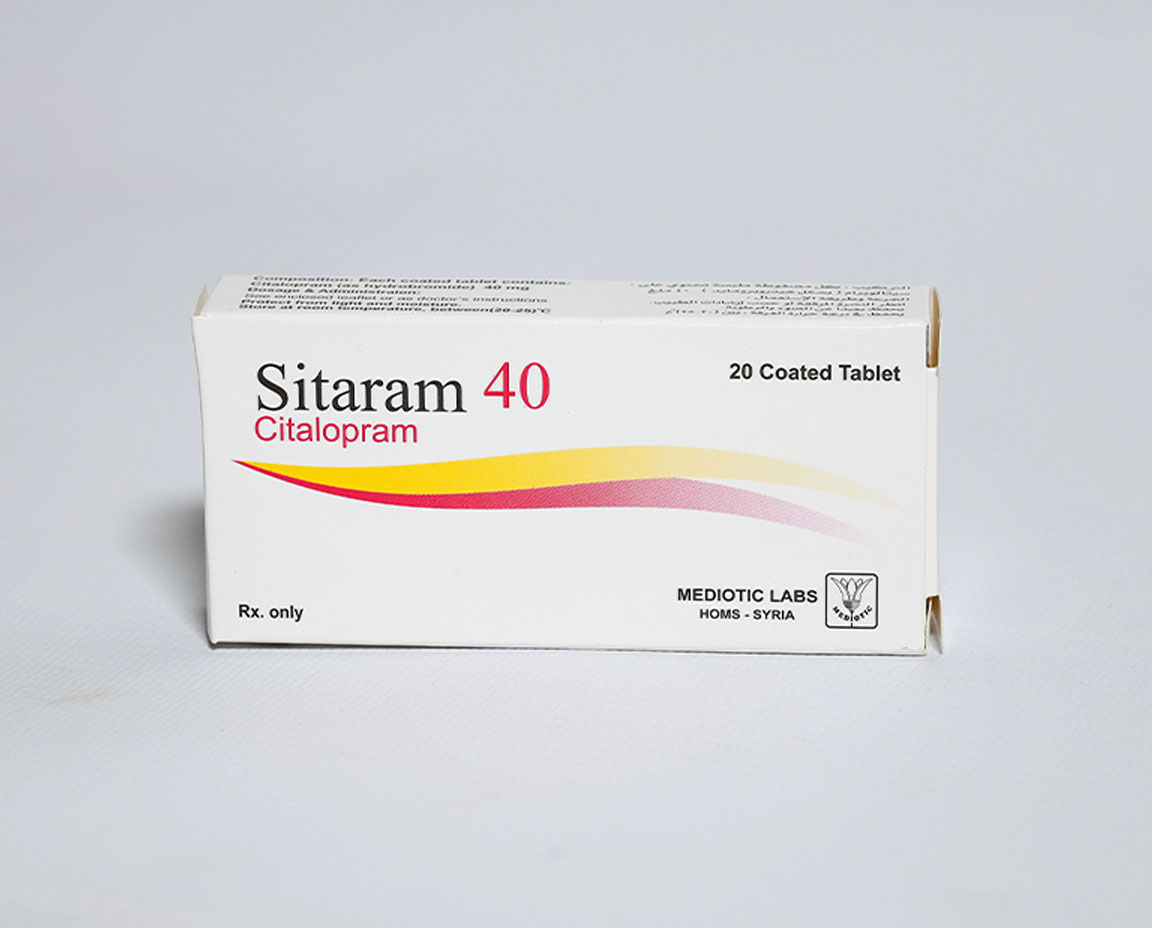
Each box of Sitaram 20 contains 20 pink film-coated tablets.

Each box of Sitaram 40 contains 20 white film-coated tablets.

SITARAM 40

Adverse Reactions

Cardiovascular disorders: tachycardia and hypotension.

Central and peripheral nervous system disorders: migraine, paresthesia.

Gastrointestinal disorders: Saliva increased, flatulence.

Metabolic and Nutritional disorders: Decreased weight, or increased weight.

Psychiatric disorders: impaired concentration, amnesia, apathy, increased appetite, and confusion. Coughing, rash, pruritis, abnormal accommodation and polyuria.

Pharmacokinetics:

Biotransformation of Citalopram is mainly hepatic, with a mean terminal half-life of about 35 hours. With once daily dosing, steady state plasma concentrations are achieved within approximately one week.

At steady state, the extent of accumulation of citalopram in plasma, based on the half-life, is expected to be 2.5 times the plasma concentrations observed after a single dose.

Following a single oral dose of citalopram, peak blood levels occur at about 4 hours. The absolute bioavailability of citalopram was about 80% relative to an intravenous dose, and absorption is not affected by food.

The volume of distribution is about 12 L/Kg, and the binding to human plasma proteins is about 80%.

Citalopram is metabolized to demethylcitalopram (DCT), didemethylcitalopram (DDCT), Citalopram-N-oxide, and a deaminated propionic acid derivative.

In human, unchanged Citalopram is the predominant compound in plasma.

Dosage and administration:

Sitaram should be administered at an initial dose of 20 mg once daily, generally with an increase to a dose of 40 mg/day.

Dose increases should usually occur in increments of 20 mg at intervals of no less than one week. Doses above 40 mg are not ordinarily recommended.

The physician could increase the daily dose to 60mg in some special cases.

Sitaram should be administered once daily, in the morning or evening, with or without food.

20 mg/day is the recommended dose for most elderly patients and patients with hepatic impairment.

The efficacy of Sitaram in maintaining an antidepressant response for up to 24 weeks following 6 to 8 weeks of acute treatment was demonstrated. Nevertheless the physician who elects to use Sitaram for extended periods should periodically re-evaluate the long-term use fullness of the drug for the individual patient.

Over Dosage:

Establish and maintain an airway to ensure adequate ventilation and oxygenation.

Gastric evacuation by lavage and use of activated charcoal should be considered.

Careful observation and cardiac and vital sign monitoring are recommended. Presentation:

Each box of Sitaram 20 contains 20 pink film-coated tablets.

Each box of Sitaram 40 contains 20 white film-coated tablets.

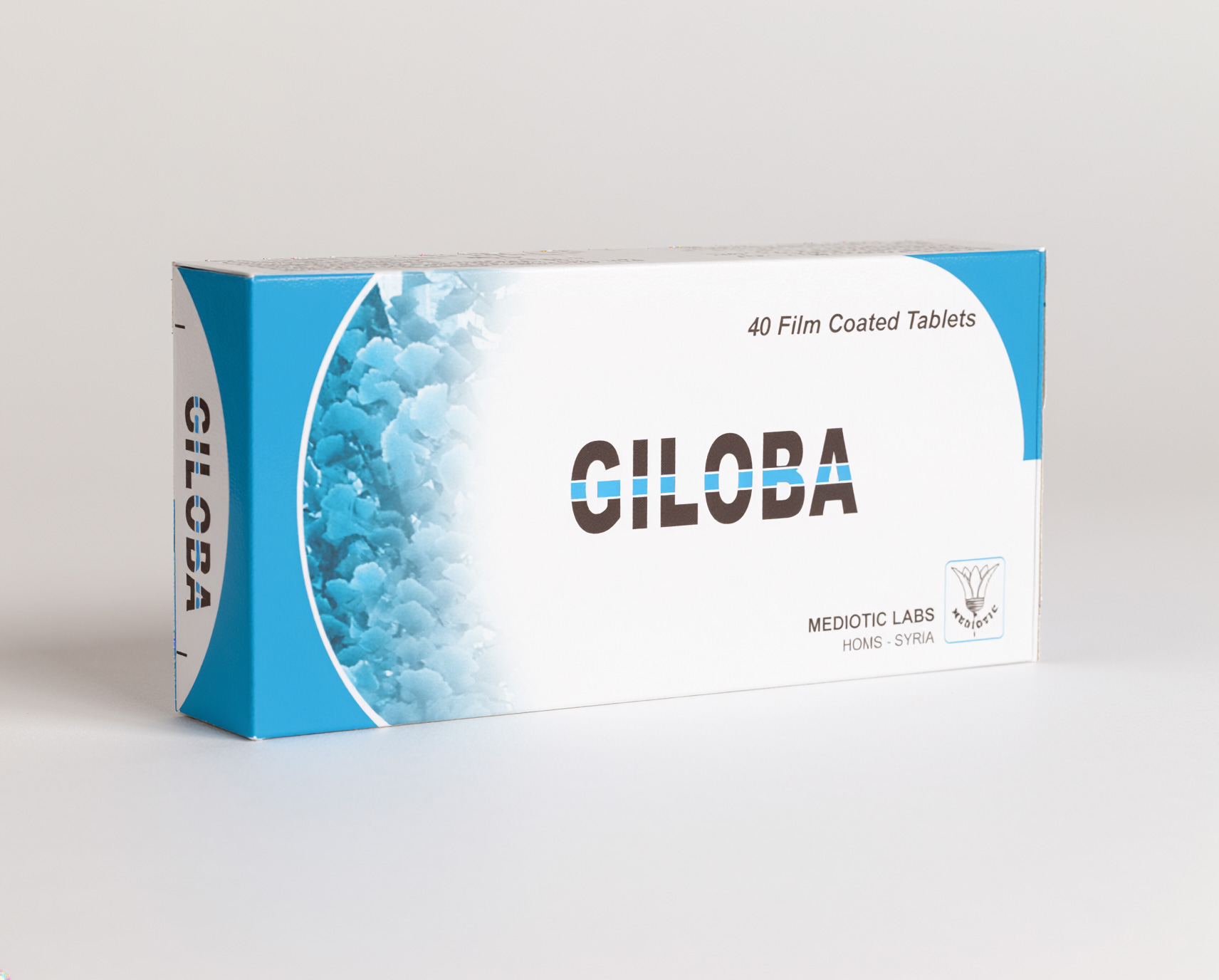
GILOBA

Description and Properties:

– GILOBA is an all-natural, standard extract of the leaves of the tree ginkgobiloba, used to improve blood circulation to the brain and extremities, without a borrowing effects on adjacent areas of normal flow, and helps to maintain normal blood circulation in the body. It promotes efficient circulation by helping to maintain the elasticity of arteries and capillaries. This makes it easier for blood and oxygen to reach the brain and extremities or other places characterized by fine capillaries like the eyes and ears.

– GILOBA improves cognitive functions: it increases the rate at which information is transmitted between nerve cells by increasing blood flow to the brain and the central nervous system (CNS). Also, by inhibiting platelet activating factor (PAF)- induced platelet aggregation and reducing the resulting viscosity of the blood. Several controlled clinical trials tested the effectiveness of product in mitigating symptoms such as: difficulties of concentration and memory, absent mindedness, confusion, lack of energy, tiredness and decreased physical performance.

– GILOBA promotes eye health: the macular area of the retina is responsible for fine reading, and is particularly sensitive to damage by lipid free radicals.

– GILOBA may promote eye health in the elderly through its protective antioxidant properties, it protects the body from oxidative cellular damage caused by free radicals. Indications:

– GILOBA increases brain function, including memory, concentration and enhances cognitive function. This is why product is beneficial and effective in the treament of dementia symptoms and Alzheimer’s diseases.

– GILOBA promotes circulation to the brain and extremities (arms, legs, eyes, inner ear, etc).

– GILOBA as a natural antioxidant, may help support the antioxidant defense system in fighting free radicals that may alter cells.

Adverse Reactions:

GILOBA appears to be well tolerated at prescribed doses. Adverse reaction include mild gastrointestinal discomfort, and rare reports of allergic skin reactions. Some people may experience a mild, transient headache for the first two or three days of use.

Warning:

– GILOBA has not been evaluated in children and should only be used by adults. Pregnant or breast feeding mothers should consult physician prior to use.

– Consult a physician if using concurrently with anticoagulant or NSAID medications. Dosage:

1 tablet (60 mg) twice daily: allow from 2 weeks up to 12 weeks for optimum benefits. Presentation:

4 blisters, each one contains 10 Film Coated Tablets / Carton Box.

Storage Conditions:

Store away from light & moisture

Store at room temperature between (15-30 °C.

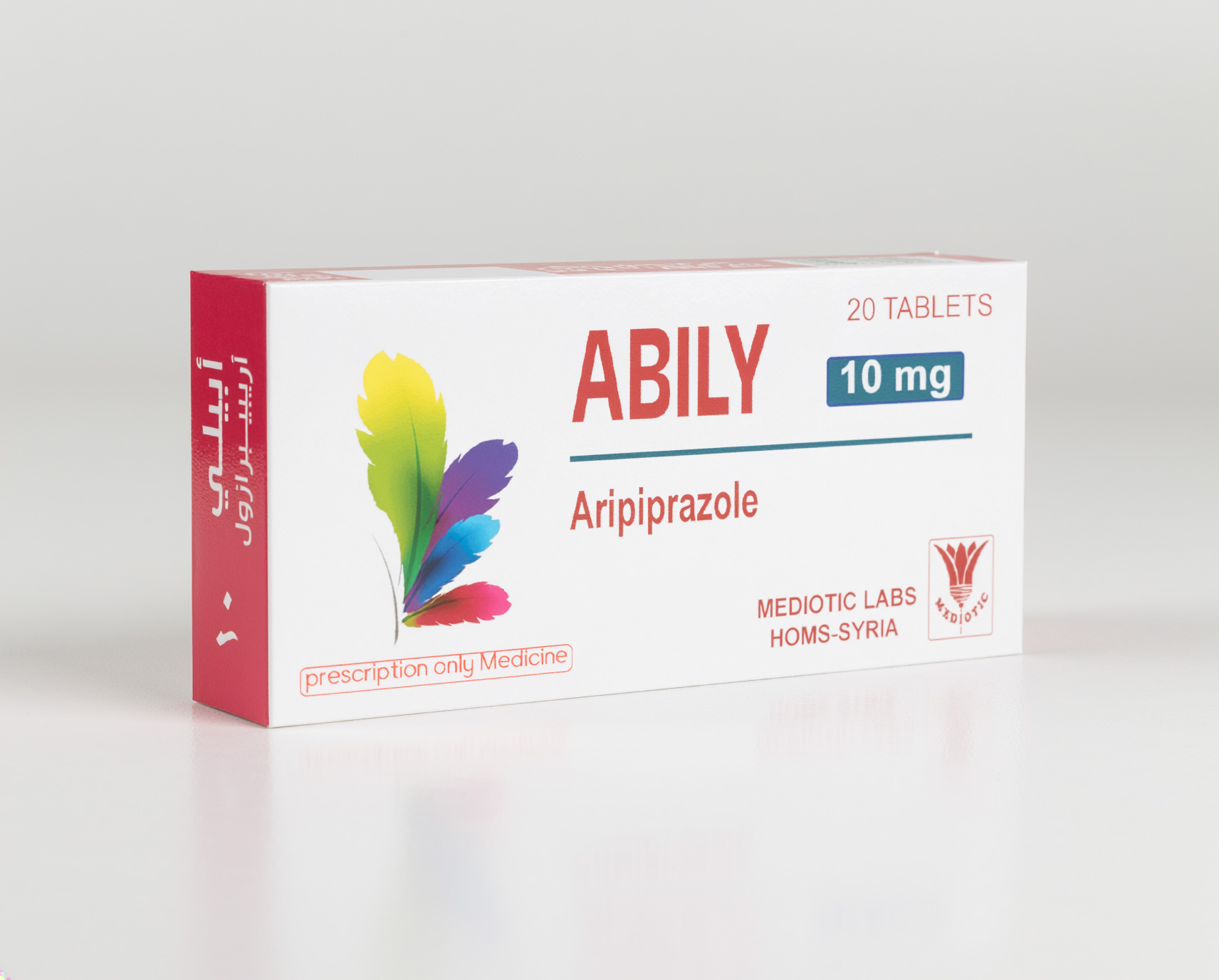
ABILY 5

WARNING

INCREASED MORTALITY IN ELDERLY PATIENTS WITH DEMENTIA-RELATED PSYCHOSIS and SUICIDAL THOUGHTS AND BEHAVIORS WITH ANTIDEPRESSANT DRUGS: Elderly patients with dementia-related psychosis treated with antipsychotic drugs are at an increased risk of death. ABILY is not approved for the treatment of patients with dementia-related psychosis.

Antidepressants increased the risk of suicidal thoughts and behavior in children, adolescents, and young adults in short-term studies. These studies did not show an increase in the risk of suicidal thoughts and behavior with antidepressant use in patients over age 24; there was a reduction in risk with antidepressant use in patients aged 65 and older.

In patients of all ages who are started on antidepressant therapy, monitor closely for worsening, and for emergence of suicidal thoughts and behaviors. Advise families and caregivers of the need for close observation and communication with the prescriber.

COMPOSITION AND EXCIPIENTS:

Each ABILY tablet contains: (5, 10, 15, 30) mg Aripiprazole.

Excipients: lactose monohydrate, cellulose, microcrystalline, maize starch, hydroxypropyl cellulose, magnesium stearate, red iron oxide, yellow iron oxide.

MECHANISM OF ACTION:

The mechanism of action of Aripiprazole in schizophrenia or bipolar mania, is unknown. However, the efficacy of Aripiprazole could be mediated through a combination of partial agonist activity at D2 and 5-HT1A receptors and antagonist activity at 5-HT2A receptors. Aripiprazole exhibits high affinity for dopamine D2 and D3, serotonin 5-HT1A and 5-HT2A receptors.

PHARMACOKINETICS:

Absorption: Aripiprazole is well absorbed after administration of the tablet, with peak plasma concentrations occurring within 3 hours to 5 hours; the absolute oral bioavailability of the tablet formulation is 87%. Aripiprazole can be administered with or without food. Administration of a 15 mg Aripiprazole tablet with a standard high-fat meal did not significantly affect the Cmax or AUC of Aripiprazole or its active metabolite.

Distribution: Aripiprazole and its major metabolite are greater than 99% bound to serum proteins, primarily to albumin.

Metabolism and Elimination: Following a single oral dose of [14C]-labeled Aripiprazole, approximately 25% and 55% of the administered dose was recovered in the urine and feces, respectively. Less than 1% of unchanged aripiprazole was excreted in the urine and approximately 18% of the oral dose was recovered unchanged in the feces.

INDICATIONS:

ABILY is indicated for the treatment of:

  • Schizophrenia
  • Acute Treatment of Manic and Mixed Episodes associated with Bipolar I Disorder.
  • Adjunctive Treatment of Major Depressive Disorder.
  • Irritability Associated with Autistic Disorder.
  • Treatment of Tourette’s Disorder.

CONTRAINDICATIONS:

Aripiprazole is contraindicated in patients with a history of a hypersensitivity reaction to aripiprazole. Reactions have ranged from pruritus/urticaria to anaphylaxis.

DOSE AND ADMINISTRATION:

Schizophrenia:

-Adults: The recommended starting and target dose for Aripiprazole is 10 or 15 mg/day administered on a once-a-day schedule without regard to meals. Aripiprazole has been systematically evaluated and shown to be effective in a dose range of 10 to 30 mg/day, when administered as the tablet formulation; however, doses higher than 10 or 15 mg/day were not more effective than 10 or 15 mg/day. Dosage increases should generally not be made before 2 weeks, the time needed to achieve steady-state.

Maintenance Treatment: Maintenance of efficacy in schizophrenia was demonstrated in a trial involving patients with schizophrenia who had been symptomatically stable on other antipsychotic medications for periods of 3 months or longer. These patients were discontinued from those medications and randomized to either Aripiprazole 15 mg/day or placebo, and observed for relapse. Patients should be periodically reassessed to determine the continued need for maintenance treatment.

-Adolescents: The recommended target dose of Aripiprazole is 10 mg/day. Aripiprazole was studied in adolescent patients 13 to 17 years of age with schizophrenia at daily doses of 10 mg and 30 mg. The starting daily dose of the tablet formulation in these patients was 2 mg, which was titrated to 5 mg after 2 days and to the target dose of 10 mg after 2 additional days. Subsequent dose increases should be administered in 5 mg increments. The 30 mg/day dose was not shown to be more efficacious than the 10 mg/day dose. Aripiprazole can be administered without regard to meals Patients should be periodically reassessed to determine the need for maintenance treatment.

Switching From Other Antipsychotics: There are no systematically collected data to specifically address switching patients with schizophrenia from other antipsychotics to Aripiprazole or concerning concomitant administration with other antipsychotics. While immediate discontinuation of the previous antipsychotic treatment may be acceptable for some patients with schizophrenia, more gradual discontinuation may be most appropriate for others. In all cases, the period of overlapping antipsychotic administration should be minimized. Bipolar I Disorder:

Acute Treatment Of Manic And Mixed Episodes:

Adults: The recommended starting dose in adults is 15 mg given once daily as monotherapy and 10 mg to 15 mg given once daily as adjunctive therapy with lithium or valproate. Aripiprazole can be given without regard to meals. The dose may be increased to 30 mg/day based on clinical response. The safety of doses above 30 mg/day has not been evaluated in clinical trials.

Pediatrics: The recommended starting dose in pediatric patients (10 to 17 years) as monotherapy is 2 mg/day, with titration to 5 mg/day after 2 days, and a target dose of 10 mg/day after 2 additional days. Recommended dosing as adjunctive therapy to lithium or valproate is the same. Subsequent dose increases, if needed, should be administered in 5 mg/day increments. ARIPIPRAZOLE can be given without regard to meals

Adjunctive Treatment of Major Depressive Disorder:

Adults: The recommended starting dose for Aripiprazole as adjunctive treatment for patients already taking an antidepressant is 2 to 5 mg/day. The recommended dosage range is 2 to 15 mg/day. Dosage adjustments of up to 5 mg/day should occur gradually, at intervals of no less than 1 week. Patients should be periodically reassessed to determine the continued need for maintenance treatment. Irritability Associated with Autistic Disorder:

Pediatric Patients (6 to 17 years):

The recommended dosage range for the treatment of pediatric patients with irritability associated with autistic disorder is 5 to 15 mg/day. Dosing should be initiated at 2 mg/day. The dose should be increased to 5 mg/day, with subsequent increases to 10 or 15 mg/day if needed. Dose adjustments of up to 5 mg/day should occur gradually, at intervals of no less than 1 week. Patients should be periodically reassessed to determine the continued need for maintenance treatment.

Tourette’s Disorder:

Pediatric Patients (6 to 18 years): The recommended dosage range for Tourette’s Disorder is 5 to 20 mg/day.

For patients weighing less than 50 kg, dosing should be initiated at 2 mg/day with a target dose of 5 mg/day after 2 days. The dose can be increased to 10 mg/day in patients who do not achieve optimal control of tics. Dosage adjustments should occur gradually at intervals of no less than 1 week.

For patients weighing 50 kg or more, dosing should be initiated at 2 mg/day for 2 days, and then increased to 5 mg/day for 5 days, with a target dose of 10 mg/day on day 8. The dose can be increased up to 20 mg/day for patients who do not achieve optimal control of tics. Dosage adjustments should occur gradually in increments of 5 mg/day at intervals of no less than 1 week. Patients should be periodically reassessed to determine the continued need for maintenance treatment.

SIDE EFFECTS:

nausea, vomiting, constipation, headache, dizziness, akathisia, anxiety, insomnia, and restlessness, somnolence, extrapyramidal disorder, fatigue, increased appetite, nasopharyngitis, and weight increased, Sedation, Tremor, Blurred Vision, Abdominal Discomfort, Gastrointestinal Disorders, Salivary Hypersecretion, Pyrexia, Irritability, Extrapyramidal Disorder, Dystonia, Rash, Arthralgia, Myalgia, Tachycardia.

DRUG INTERACTIONS:

Strong CYP3A4 Inhibitors (e.g., itraconazole, clarithromycin) or strong CYP2D6 inhibitors (e.g., quinidine, fluoxetine, paroxetine): Increased the exposure of aripiprazole compared to the use of Aripiprazole alone. Reduce the Aripiprazole dosage.

Strong CYP3A4 Inducers (e.g., carbamazepine, rifampin):

Decreased the exposure of Aripiprazole compared to the use of Aripiprazole alone. Increasing the Aripiprazole dosage. Antihypertensive Drugs:

Aripiprazole has the potential to enhance the effect of certain antihypertensive agents. Monitor blood pressure and adjust dose accordingly.

Benzodiazepines (e.g., lorazepam):

The intensity of sedation was greater with the combination of oral aripiprazole and lorazepam as compared to that observed with Aripiprazole alone. The orthostatic hypotension observed was greater with the combination as compared to that observed with lorazepam alone. Monitor sedation and blood pressure. Adjust dose accordingly.

No dosage adjustment is necessary for substrates of CYP2D6 (e.g., dextromethorphan, fluoxetine, paroxetine, or venlafaxine), CYP2C9 (e.g., warfarin), CYP2C19 (e.g., omeprazole, warfarin, escitalopram), or CYP3A4 (e.g., dextromethorphan) when co-administered with Aripiprazole. Additionally, no dosage adjustment is necessary for valproate, lithium, lamotrigine, lorazepam, or sertraline when co- administered with Aripiprazole.

PRECAUTIONS:

Increased Mortality In Elderly Patients With Dementia-Related Psychosis: Elderly patients with dementia-related psychosis treated with antipsychotic drugs are at an increased risk of death. Aripiprazole is not approved for the treatment of patients with dementia-related psychosis

The safety and efficacy of Aripiprazole in the treatment of patients with psychosis associated with dementia have not been established. If the prescriber elects to treat such patients with Aripiprazole, assess for the emergence of difficulty swallowing or excessive somnolence, which could predispose to accidental injury or aspiration.

Cerebrovascular Adverse Events, Including Stroke: There was an increased incidence of cerebrovascular adverse events (e.g., stroke, transient ischemic attack), including fatalities, in Aripiprazole -treated patients.

Suicidal Thoughts and Behaviors In Children, Adolescents, And Young Adults: Patients with major depressive disorder (MDD), both adult and pediatric, may experience worsening of their depression and/or the emergence of suicidal ideation and behavior (suicidality) or unusual changes in behavior, whether or not they are taking antidepressant medications, and this risk may persist until significant remission occurs.

All patients being treated with antidepressants for any indication should be monitored appropriately and observed closely for clinical worsening, suicidality, and unusual changes in behavior, especially during the initial few months of a course of drug therapy, or at times of dose changes, either increases or decreases.

The following symptoms, anxiety, agitation, panic attacks, insomnia, irritability, hostility, aggressiveness, impulsivity, akathisia (psychomotor restlessness), hypomania, and mania, have been reported in adult and pediatric patients being treated with antidepressants for MDD as well as for other indications, both psychiatric and nonpsychiatric.

Screening Patients for Bipolar Disorder: A major depressive episode may be the initial presentation of bipolar disorder. It is generally believed (though not established in controlled trials) that treating such an episode with an antidepressant alone may increase the likelihood of precipitation of a mixed/manic episode in patients at risk for bipolar disorder.

Neuroleptic Malignant Syndrome (NMS): A potentially fatal symptom complex sometimes referred to as Neuroleptic Malignant Syndrome (NMS) may occur with administration of antipsychotic drugs, including Aripiprazole.

Tardive Dyskinesia: A syndrome of potentially irreversible, involuntary, dyskinetic movements may develop in patients treated with antipsychotic drugs. Although the prevalence of the syndrome appears to be highest among the elderly, especially elderly women, it is impossible to rely upon prevalence estimates to predict, at the inception of antipsychotic treatment, which patients are likely to develop the syndrome. Whether antipsychotic drug products differ in their potential to cause tardive dyskinesia is unknown.

Metabolic Changes: Atypical antipsychotic drugs have been associated with metabolic changes that include hyperglycemia/diabetes mellitus, dyslipidemia, and body weight gain. While all drugs in the class have been shown to produce some metabolic changes, each drug has its own specific risk profile.

Hyperglycemia/Diabetes Mellitus: Hyperglycemia, in some cases extreme and associated with ketoacidosis or coma or death, has been reported in patients treated with atypical antipsychotics. There have been reports of hyperglycemia in patients treated with Aripiprazole. Orthostatic Hypotension: Aripiprazole may cause orthostatic hypotension, perhaps due to its a1-adrenergic receptor antagonism. Aripiprazole should be used with caution in patients with known cardiovascular disease (history of myocardial infarction or ischemic heart disease, heart failure or conduction abnormalities), cerebrovascular disease, or conditions which would predispose patients to hypotension (dehydration, hypovolemia, and treatment with antihypertensive medications).

Leukopenia, Neutropenia, and Agranulocytosis: In clinical trials and/or postmarketing expérience, events of leukopenia and neutropenia have been reported temporally related to antipsychotic agents, including Aripiprazole. Agranulocytosis has also been reported. Seizures/Convulsions: As with other antipsychotic drugs, Aripiprazole should be used cautiously in patients with a history of seizures or with conditions that lower the seizure threshold. Conditions that lower the seizure threshold may be more prevalent in a population of 65 years or older.

Potential for Cognitive and Motor Impairment: Aripiprazole, like other antipsychotics, may have the potential to impair judgment, thinking, or motor skills. For example, in short-term, somnolence (including sedation) was reported.

Body Temperature Regulation: Disruption of the body’s ability to reduce core body temperature has been attributed to antipsychotic agents. Appropriate care is advised when prescribing Aripiprazole for patients who will be experiencing conditions which may contribute to an elevation in core body temperature, (e.g., exercising strenuously, exposure to extreme heat, receiving concomitant medication with anticholinergic activity, or being subject to dehydration).

Suicide: The possibility of a suicide attempt is inherent in psychotic illnesses, bipolar disorder, and major depressive disorder, and close supervision of high-risk patients should accompany drug therapy. Prescriptions for Aripiprazole should be written for the smallest quantity consistent with good patient management in order to reduce the risk of overdose.

Dysphagia: Esophageal dysmotility and aspiration have been associated with antipsychotic drug use, including Aripiprazole. Aspiration pneumonia is a common cause of morbidity and mortality in elderly patients, in particular those with advanced Alzheimer’s dementia. Aripiprazole and other antipsychotic drugs should be used cautiously in patients at risk for aspiration pneumonia.

Pregnancy: Pregnancy Category C

Administer Aripiprazole during pregnancy only if the potential benefit justifies the potential risk to the fetus.

Nursing Mothers: Aripiprazole is present in human breast milk. Because of the potential for serious adverse reactions in nursing infants from Aripiprazole, a decision should be made whether to discontinue nursing or to discontinue the drug, taking into account the importance of the drug to the mother.

Pediatric Use: Safety and effectiveness in pediatric patients with major depressive disorder or agitation associated with schizophrenia or bipolar mania have not been established.

Geriatric Use: No dosage adjustment is recommended for elderly patients.

Hepatic And Renal Impairment: No dosage adjustment for Aripiprazole is required on the basis of a patient’s hepatic function (mild to severe hepatic impairment), or renal function (mild to severe renal impairment, glomerular filtration rate between 15 and 90 mL/minute). OVERDOSE:

Common adverse reactions (reported in at least 5% of all overdose cases) reported with oral Aripiprazole overdose (alone or in combination with other substances) include vomiting, somnolence, and tremor. Other clinically important signs and symptoms observed in one or more patients with Aripiprazole overdoses (alone or with other substances) include acidosis, aggression, aspartate aminotransferase increased, atrial fibrillation, bradycardia, coma, confusional state, convulsion, blood creatine phosphokinase increased, depressed level of consciousness, hypertension, hypokalemia, hypotension, lethargy, loss of consciousness, QRS complex prolonged, QT prolonged, pneumonia aspiration, respiratory arrest, status epilepticus, and tachycardia. Management of Overdose:

No specific information is available on the treatment of overdose with Aripiprazole. An electrocardiogram should be obtained in case of overdosage and if QT interval prolongation is present, cardiac monitoring should be instituted. Otherwise, management of overdose should concentrate on supportive therapy, maintaining an adequate airway, oxygenation and ventilation, and management of symptoms. Close medical supervision and monitoring should continue until the patient recovers.

STORAGE CONDITIONS:

Store at room temperature, between (15-30) °C, away from moisture.

PACKAGING:

2 blisters (Aluminum/PVC), each contains 10 tablets/carton box.

ABILY 10

WARNING

INCREASED MORTALITY IN ELDERLY PATIENTS WITH DEMENTIA-RELATED PSYCHOSIS and SUICIDAL THOUGHTS AND BEHAVIORS WITH ANTIDEPRESSANT DRUGS: Elderly patients with dementia-related psychosis treated with antipsychotic drugs are at an increased risk of death. ABILY is not approved for the treatment of patients with dementia-related psychosis.

Antidepressants increased the risk of suicidal thoughts and behavior in children, adolescents, and young adults in short-term studies. These studies did not show an increase in the risk of suicidal thoughts and behavior with antidepressant use in patients over age 24; there was a reduction in risk with antidepressant use in patients aged 65 and older.

In patients of all ages who are started on antidepressant therapy, monitor closely for worsening, and for emergence of suicidal thoughts and behaviors. Advise families and caregivers of the need for close observation and communication with the prescriber.

COMPOSITION AND EXCIPIENTS:

Each ABILY tablet contains: (5, 10, 15, 30) mg Aripiprazole.

Excipients: lactose monohydrate, cellulose, microcrystalline, maize starch, hydroxypropyl cellulose, magnesium stearate, red iron oxide, yellow iron oxide.

MECHANISM OF ACTION:

The mechanism of action of Aripiprazole in schizophrenia or bipolar mania, is unknown. However, the efficacy of Aripiprazole could be mediated through a combination of partial agonist activity at D2 and 5-HT1A receptors and antagonist activity at 5-HT2A receptors. Aripiprazole exhibits high affinity for dopamine D2 and D3, serotonin 5-HT1A and 5-HT2A receptors.

PHARMACOKINETICS:

Absorption: Aripiprazole is well absorbed after administration of the tablet, with peak plasma concentrations occurring within 3 hours to 5 hours; the absolute oral bioavailability of the tablet formulation is 87%. Aripiprazole can be administered with or without food. Administration of a 15 mg Aripiprazole tablet with a standard high-fat meal did not significantly affect the Cmax or AUC of Aripiprazole or its active metabolite.

Distribution: Aripiprazole and its major metabolite are greater than 99% bound to serum proteins, primarily to albumin.

Metabolism and Elimination: Following a single oral dose of [14C]-labeled Aripiprazole, approximately 25% and 55% of the administered dose was recovered in the urine and feces, respectively. Less than 1% of unchanged aripiprazole was excreted in the urine and approximately 18% of the oral dose was recovered unchanged in the feces.

INDICATIONS:

ABILY is indicated for the treatment of:

  • Schizophrenia
  • Acute Treatment of Manic and Mixed Episodes associated with Bipolar I Disorder.
  • Adjunctive Treatment of Major Depressive Disorder.
  • Irritability Associated with Autistic Disorder.
  • Treatment of Tourette’s Disorder.

CONTRAINDICATIONS:

Aripiprazole is contraindicated in patients with a history of a hypersensitivity reaction to aripiprazole. Reactions have ranged from pruritus/urticaria to anaphylaxis.

DOSE AND ADMINISTRATION:

Schizophrenia:

-Adults: The recommended starting and target dose for Aripiprazole is 10 or 15 mg/day administered on a once-a-day schedule without regard to meals. Aripiprazole has been systematically evaluated and shown to be effective in a dose range of 10 to 30 mg/day, when administered as the tablet formulation; however, doses higher than 10 or 15 mg/day were not more effective than 10 or 15 mg/day. Dosage increases should generally not be made before 2 weeks, the time needed to achieve steady-state.

Maintenance Treatment: Maintenance of efficacy in schizophrenia was demonstrated in a trial involving patients with schizophrenia who had been symptomatically stable on other antipsychotic medications for periods of 3 months or longer. These patients were discontinued from those medications and randomized to either Aripiprazole 15 mg/day or placebo, and observed for relapse. Patients should be periodically reassessed to determine the continued need for maintenance treatment.

-Adolescents: The recommended target dose of Aripiprazole is 10 mg/day. Aripiprazole was studied in adolescent patients 13 to 17 years of age with schizophrenia at daily doses of 10 mg and 30 mg. The starting daily dose of the tablet formulation in these patients was 2 mg, which was titrated to 5 mg after 2 days and to the target dose of 10 mg after 2 additional days. Subsequent dose increases should be administered in 5 mg increments. The 30 mg/day dose was not shown to be more efficacious than the 10 mg/day dose. Aripiprazole can be administered without regard to meals Patients should be periodically reassessed to determine the need for maintenance treatment.

Switching From Other Antipsychotics: There are no systematically collected data to specifically address switching patients with schizophrenia from other antipsychotics to Aripiprazole or concerning concomitant administration with other antipsychotics. While immediate discontinuation of the previous antipsychotic treatment may be acceptable for some patients with schizophrenia, more gradual discontinuation may be most appropriate for others. In all cases, the period of overlapping antipsychotic administration should be minimized. Bipolar I Disorder:

Acute Treatment Of Manic And Mixed Episodes:

Adults: The recommended starting dose in adults is 15 mg given once daily as monotherapy and 10 mg to 15 mg given once daily as adjunctive therapy with lithium or valproate. Aripiprazole can be given without regard to meals. The dose may be increased to 30 mg/day based on clinical response. The safety of doses above 30 mg/day has not been evaluated in clinical trials.

Pediatrics: The recommended starting dose in pediatric patients (10 to 17 years) as monotherapy is 2 mg/day, with titration to 5 mg/day after 2 days, and a target dose of 10 mg/day after 2 additional days. Recommended dosing as adjunctive therapy to lithium or valproate is the same. Subsequent dose increases, if needed, should be administered in 5 mg/day increments. ARIPIPRAZOLE can be given without regard to meals

Adjunctive Treatment of Major Depressive Disorder:

Adults: The recommended starting dose for Aripiprazole as adjunctive treatment for patients already taking an antidepressant is 2 to 5 mg/day. The recommended dosage range is 2 to 15 mg/day. Dosage adjustments of up to 5 mg/day should occur gradually, at intervals of no less than 1 week. Patients should be periodically reassessed to determine the continued need for maintenance treatment. Irritability Associated with Autistic Disorder:

Pediatric Patients (6 to 17 years):

The recommended dosage range for the treatment of pediatric patients with irritability associated with autistic disorder is 5 to 15 mg/day. Dosing should be initiated at 2 mg/day. The dose should be increased to 5 mg/day, with subsequent increases to 10 or 15 mg/day if needed. Dose adjustments of up to 5 mg/day should occur gradually, at intervals of no less than 1 week. Patients should be periodically reassessed to determine the continued need for maintenance treatment.

Tourette’s Disorder:

Pediatric Patients (6 to 18 years): The recommended dosage range for Tourette’s Disorder is 5 to 20 mg/day.

For patients weighing less than 50 kg, dosing should be initiated at 2 mg/day with a target dose of 5 mg/day after 2 days. The dose can be increased to 10 mg/day in patients who do not achieve optimal control of tics. Dosage adjustments should occur gradually at intervals of no less than 1 week.

For patients weighing 50 kg or more, dosing should be initiated at 2 mg/day for 2 days, and then increased to 5 mg/day for 5 days, with a target dose of 10 mg/day on day 8. The dose can be increased up to 20 mg/day for patients who do not achieve optimal control of tics. Dosage adjustments should occur gradually in increments of 5 mg/day at intervals of no less than 1 week. Patients should be periodically reassessed to determine the continued need for maintenance treatment.

SIDE EFFECTS:

nausea, vomiting, constipation, headache, dizziness, akathisia, anxiety, insomnia, and restlessness, somnolence, extrapyramidal disorder, fatigue, increased appetite, nasopharyngitis, and weight increased, Sedation, Tremor, Blurred Vision, Abdominal Discomfort, Gastrointestinal Disorders, Salivary Hypersecretion, Pyrexia, Irritability, Extrapyramidal Disorder, Dystonia, Rash, Arthralgia, Myalgia, Tachycardia.

DRUG INTERACTIONS:

Strong CYP3A4 Inhibitors (e.g., itraconazole, clarithromycin) or strong CYP2D6 inhibitors (e.g., quinidine, fluoxetine, paroxetine): Increased the exposure of aripiprazole compared to the use of Aripiprazole alone. Reduce the Aripiprazole dosage.

Strong CYP3A4 Inducers (e.g., carbamazepine, rifampin):

Decreased the exposure of Aripiprazole compared to the use of Aripiprazole alone. Increasing the Aripiprazole dosage. Antihypertensive Drugs:

Aripiprazole has the potential to enhance the effect of certain antihypertensive agents. Monitor blood pressure and adjust dose accordingly.

Benzodiazepines (e.g., lorazepam):

The intensity of sedation was greater with the combination of oral aripiprazole and lorazepam as compared to that observed with Aripiprazole alone. The orthostatic hypotension observed was greater with the combination as compared to that observed with lorazepam alone. Monitor sedation and blood pressure. Adjust dose accordingly.

No dosage adjustment is necessary for substrates of CYP2D6 (e.g., dextromethorphan, fluoxetine, paroxetine, or venlafaxine), CYP2C9 (e.g., warfarin), CYP2C19 (e.g., omeprazole, warfarin, escitalopram), or CYP3A4 (e.g., dextromethorphan) when co-administered with Aripiprazole. Additionally, no dosage adjustment is necessary for valproate, lithium, lamotrigine, lorazepam, or sertraline when co- administered with Aripiprazole.

PRECAUTIONS:

Increased Mortality In Elderly Patients With Dementia-Related Psychosis: Elderly patients with dementia-related psychosis treated with antipsychotic drugs are at an increased risk of death. Aripiprazole is not approved for the treatment of patients with dementia-related psychosis

The safety and efficacy of Aripiprazole in the treatment of patients with psychosis associated with dementia have not been established. If the prescriber elects to treat such patients with Aripiprazole, assess for the emergence of difficulty swallowing or excessive somnolence, which could predispose to accidental injury or aspiration.

Cerebrovascular Adverse Events, Including Stroke: There was an increased incidence of cerebrovascular adverse events (e.g., stroke, transient ischemic attack), including fatalities, in Aripiprazole -treated patients.

Suicidal Thoughts and Behaviors In Children, Adolescents, And Young Adults: Patients with major depressive disorder (MDD), both adult and pediatric, may experience worsening of their depression and/or the emergence of suicidal ideation and behavior (suicidality) or unusual changes in behavior, whether or not they are taking antidepressant medications, and this risk may persist until significant remission occurs.

All patients being treated with antidepressants for any indication should be monitored appropriately and observed closely for clinical worsening, suicidality, and unusual changes in behavior, especially during the initial few months of a course of drug therapy, or at times of dose changes, either increases or decreases.

The following symptoms, anxiety, agitation, panic attacks, insomnia, irritability, hostility, aggressiveness, impulsivity, akathisia (psychomotor restlessness), hypomania, and mania, have been reported in adult and pediatric patients being treated with antidepressants for MDD as well as for other indications, both psychiatric and nonpsychiatric.

Screening Patients for Bipolar Disorder: A major depressive episode may be the initial presentation of bipolar disorder. It is generally believed (though not established in controlled trials) that treating such an episode with an antidepressant alone may increase the likelihood of precipitation of a mixed/manic episode in patients at risk for bipolar disorder.

Neuroleptic Malignant Syndrome (NMS): A potentially fatal symptom complex sometimes referred to as Neuroleptic Malignant Syndrome (NMS) may occur with administration of antipsychotic drugs, including Aripiprazole.

Tardive Dyskinesia: A syndrome of potentially irreversible, involuntary, dyskinetic movements may develop in patients treated with antipsychotic drugs. Although the prevalence of the syndrome appears to be highest among the elderly, especially elderly women, it is impossible to rely upon prevalence estimates to predict, at the inception of antipsychotic treatment, which patients are likely to develop the syndrome. Whether antipsychotic drug products differ in their potential to cause tardive dyskinesia is unknown.

Metabolic Changes: Atypical antipsychotic drugs have been associated with metabolic changes that include hyperglycemia/diabetes mellitus, dyslipidemia, and body weight gain. While all drugs in the class have been shown to produce some metabolic changes, each drug has its own specific risk profile.

Hyperglycemia/Diabetes Mellitus: Hyperglycemia, in some cases extreme and associated with ketoacidosis or coma or death, has been reported in patients treated with atypical antipsychotics. There have been reports of hyperglycemia in patients treated with Aripiprazole. Orthostatic Hypotension: Aripiprazole may cause orthostatic hypotension, perhaps due to its a1-adrenergic receptor antagonism. Aripiprazole should be used with caution in patients with known cardiovascular disease (history of myocardial infarction or ischemic heart disease, heart failure or conduction abnormalities), cerebrovascular disease, or conditions which would predispose patients to hypotension (dehydration, hypovolemia, and treatment with antihypertensive medications).

Leukopenia, Neutropenia, and Agranulocytosis: In clinical trials and/or postmarketing expérience, events of leukopenia and neutropenia have been reported temporally related to antipsychotic agents, including Aripiprazole. Agranulocytosis has also been reported. Seizures/Convulsions: As with other antipsychotic drugs, Aripiprazole should be used cautiously in patients with a history of seizures or with conditions that lower the seizure threshold. Conditions that lower the seizure threshold may be more prevalent in a population of 65 years or older.

Potential for Cognitive and Motor Impairment: Aripiprazole, like other antipsychotics, may have the potential to impair judgment, thinking, or motor skills. For example, in short-term, somnolence (including sedation) was reported.

Body Temperature Regulation: Disruption of the body’s ability to reduce core body temperature has been attributed to antipsychotic agents. Appropriate care is advised when prescribing Aripiprazole for patients who will be experiencing conditions which may contribute to an elevation in core body temperature, (e.g., exercising strenuously, exposure to extreme heat, receiving concomitant medication with anticholinergic activity, or being subject to dehydration).

Suicide: The possibility of a suicide attempt is inherent in psychotic illnesses, bipolar disorder, and major depressive disorder, and close supervision of high-risk patients should accompany drug therapy. Prescriptions for Aripiprazole should be written for the smallest quantity consistent with good patient management in order to reduce the risk of overdose.

Dysphagia: Esophageal dysmotility and aspiration have been associated with antipsychotic drug use, including Aripiprazole. Aspiration pneumonia is a common cause of morbidity and mortality in elderly patients, in particular those with advanced Alzheimer’s dementia. Aripiprazole and other antipsychotic drugs should be used cautiously in patients at risk for aspiration pneumonia.

Pregnancy: Pregnancy Category C

Administer Aripiprazole during pregnancy only if the potential benefit justifies the potential risk to the fetus.

Nursing Mothers: Aripiprazole is present in human breast milk. Because of the potential for serious adverse reactions in nursing infants from Aripiprazole, a decision should be made whether to discontinue nursing or to discontinue the drug, taking into account the importance of the drug to the mother.

Pediatric Use: Safety and effectiveness in pediatric patients with major depressive disorder or agitation associated with schizophrenia or bipolar mania have not been established.

Geriatric Use: No dosage adjustment is recommended for elderly patients.

Hepatic And Renal Impairment: No dosage adjustment for Aripiprazole is required on the basis of a patient’s hepatic function (mild to severe hepatic impairment), or renal function (mild to severe renal impairment, glomerular filtration rate between 15 and 90 mL/minute). OVERDOSE:

Common adverse reactions (reported in at least 5% of all overdose cases) reported with oral Aripiprazole overdose (alone or in combination with other substances) include vomiting, somnolence, and tremor. Other clinically important signs and symptoms observed in one or more patients with Aripiprazole overdoses (alone or with other substances) include acidosis, aggression, aspartate aminotransferase increased, atrial fibrillation, bradycardia, coma, confusional state, convulsion, blood creatine phosphokinase increased, depressed level of consciousness, hypertension, hypokalemia, hypotension, lethargy, loss of consciousness, QRS complex prolonged, QT prolonged, pneumonia aspiration, respiratory arrest, status epilepticus, and tachycardia. Management of Overdose:

No specific information is available on the treatment of overdose with Aripiprazole. An electrocardiogram should be obtained in case of overdosage and if QT interval prolongation is present, cardiac monitoring should be instituted. Otherwise, management of overdose should concentrate on supportive therapy, maintaining an adequate airway, oxygenation and ventilation, and management of symptoms. Close medical supervision and monitoring should continue until the patient recovers.

STORAGE CONDITIONS:

Store at room temperature, between (15-30) °C, away from moisture.

PACKAGING:

2 blisters (Aluminum/PVC), each contains 10 tablets/carton box.

ABILY 15

WARNING

INCREASED MORTALITY IN ELDERLY PATIENTS WITH DEMENTIA-RELATED PSYCHOSIS and SUICIDAL THOUGHTS AND BEHAVIORS WITH ANTIDEPRESSANT DRUGS: Elderly patients with dementia-related psychosis treated with antipsychotic drugs are at an increased risk of death. ABILY is not approved for the treatment of patients with dementia-related psychosis.

Antidepressants increased the risk of suicidal thoughts and behavior in children, adolescents, and young adults in short-term studies. These studies did not show an increase in the risk of suicidal thoughts and behavior with antidepressant use in patients over age 24; there was a reduction in risk with antidepressant use in patients aged 65 and older.

In patients of all ages who are started on antidepressant therapy, monitor closely for worsening, and for emergence of suicidal thoughts and behaviors. Advise families and caregivers of the need for close observation and communication with the prescriber.

COMPOSITION AND EXCIPIENTS:

Each ABILY tablet contains: (5, 10, 15, 30) mg Aripiprazole.

Excipients: lactose monohydrate, cellulose, microcrystalline, maize starch, hydroxypropyl cellulose, magnesium stearate, red iron oxide, yellow iron oxide.

MECHANISM OF ACTION:

The mechanism of action of Aripiprazole in schizophrenia or bipolar mania, is unknown. However, the efficacy of Aripiprazole could be mediated through a combination of partial agonist activity at D2 and 5-HT1A receptors and antagonist activity at 5-HT2A receptors. Aripiprazole exhibits high affinity for dopamine D2 and D3, serotonin 5-HT1A and 5-HT2A receptors.

PHARMACOKINETICS:

Absorption: Aripiprazole is well absorbed after administration of the tablet, with peak plasma concentrations occurring within 3 hours to 5 hours; the absolute oral bioavailability of the tablet formulation is 87%. Aripiprazole can be administered with or without food. Administration of a 15 mg Aripiprazole tablet with a standard high-fat meal did not significantly affect the Cmax or AUC of Aripiprazole or its active metabolite.

Distribution: Aripiprazole and its major metabolite are greater than 99% bound to serum proteins, primarily to albumin.

Metabolism and Elimination: Following a single oral dose of [14C]-labeled Aripiprazole, approximately 25% and 55% of the administered dose was recovered in the urine and feces, respectively. Less than 1% of unchanged aripiprazole was excreted in the urine and approximately 18% of the oral dose was recovered unchanged in the feces.

INDICATIONS:

ABILY is indicated for the treatment of:

  • Schizophrenia
  • Acute Treatment of Manic and Mixed Episodes associated with Bipolar I Disorder.
  • Adjunctive Treatment of Major Depressive Disorder.
  • Irritability Associated with Autistic Disorder.
  • Treatment of Tourette’s Disorder.

CONTRAINDICATIONS:

Aripiprazole is contraindicated in patients with a history of a hypersensitivity reaction to aripiprazole. Reactions have ranged from pruritus/urticaria to anaphylaxis.

DOSE AND ADMINISTRATION:

Schizophrenia:

-Adults: The recommended starting and target dose for Aripiprazole is 10 or 15 mg/day administered on a once-a-day schedule without regard to meals. Aripiprazole has been systematically evaluated and shown to be effective in a dose range of 10 to 30 mg/day, when administered as the tablet formulation; however, doses higher than 10 or 15 mg/day were not more effective than 10 or 15 mg/day. Dosage increases should generally not be made before 2 weeks, the time needed to achieve steady-state.

Maintenance Treatment: Maintenance of efficacy in schizophrenia was demonstrated in a trial involving patients with schizophrenia who had been symptomatically stable on other antipsychotic medications for periods of 3 months or longer. These patients were discontinued from those medications and randomized to either Aripiprazole 15 mg/day or placebo, and observed for relapse. Patients should be periodically reassessed to determine the continued need for maintenance treatment.

-Adolescents: The recommended target dose of Aripiprazole is 10 mg/day. Aripiprazole was studied in adolescent patients 13 to 17 years of age with schizophrenia at daily doses of 10 mg and 30 mg. The starting daily dose of the tablet formulation in these patients was 2 mg, which was titrated to 5 mg after 2 days and to the target dose of 10 mg after 2 additional days. Subsequent dose increases should be administered in 5 mg increments. The 30 mg/day dose was not shown to be more efficacious than the 10 mg/day dose. Aripiprazole can be administered without regard to meals Patients should be periodically reassessed to determine the need for maintenance treatment.

Switching From Other Antipsychotics: There are no systematically collected data to specifically address switching patients with schizophrenia from other antipsychotics to Aripiprazole or concerning concomitant administration with other antipsychotics. While immediate discontinuation of the previous antipsychotic treatment may be acceptable for some patients with schizophrenia, more gradual discontinuation may be most appropriate for others. In all cases, the period of overlapping antipsychotic administration should be minimized. Bipolar I Disorder:

Acute Treatment Of Manic And Mixed Episodes:

Adults: The recommended starting dose in adults is 15 mg given once daily as monotherapy and 10 mg to 15 mg given once daily as adjunctive therapy with lithium or valproate. Aripiprazole can be given without regard to meals. The dose may be increased to 30 mg/day based on clinical response. The safety of doses above 30 mg/day has not been evaluated in clinical trials.

Pediatrics: The recommended starting dose in pediatric patients (10 to 17 years) as monotherapy is 2 mg/day, with titration to 5 mg/day after 2 days, and a target dose of 10 mg/day after 2 additional days. Recommended dosing as adjunctive therapy to lithium or valproate is the same. Subsequent dose increases, if needed, should be administered in 5 mg/day increments. ARIPIPRAZOLE can be given without regard to meals

Adjunctive Treatment of Major Depressive Disorder:

Adults: The recommended starting dose for Aripiprazole as adjunctive treatment for patients already taking an antidepressant is 2 to 5 mg/day. The recommended dosage range is 2 to 15 mg/day. Dosage adjustments of up to 5 mg/day should occur gradually, at intervals of no less than 1 week. Patients should be periodically reassessed to determine the continued need for maintenance treatment. Irritability Associated with Autistic Disorder:

Pediatric Patients (6 to 17 years):

The recommended dosage range for the treatment of pediatric patients with irritability associated with autistic disorder is 5 to 15 mg/day. Dosing should be initiated at 2 mg/day. The dose should be increased to 5 mg/day, with subsequent increases to 10 or 15 mg/day if needed. Dose adjustments of up to 5 mg/day should occur gradually, at intervals of no less than 1 week. Patients should be periodically reassessed to determine the continued need for maintenance treatment.

Tourette’s Disorder:

Pediatric Patients (6 to 18 years): The recommended dosage range for Tourette’s Disorder is 5 to 20 mg/day.

For patients weighing less than 50 kg, dosing should be initiated at 2 mg/day with a target dose of 5 mg/day after 2 days. The dose can be increased to 10 mg/day in patients who do not achieve optimal control of tics. Dosage adjustments should occur gradually at intervals of no less than 1 week.

For patients weighing 50 kg or more, dosing should be initiated at 2 mg/day for 2 days, and then increased to 5 mg/day for 5 days, with a target dose of 10 mg/day on day 8. The dose can be increased up to 20 mg/day for patients who do not achieve optimal control of tics. Dosage adjustments should occur gradually in increments of 5 mg/day at intervals of no less than 1 week. Patients should be periodically reassessed to determine the continued need for maintenance treatment.

SIDE EFFECTS:

nausea, vomiting, constipation, headache, dizziness, akathisia, anxiety, insomnia, and restlessness, somnolence, extrapyramidal disorder, fatigue, increased appetite, nasopharyngitis, and weight increased, Sedation, Tremor, Blurred Vision, Abdominal Discomfort, Gastrointestinal Disorders, Salivary Hypersecretion, Pyrexia, Irritability, Extrapyramidal Disorder, Dystonia, Rash, Arthralgia, Myalgia, Tachycardia.

DRUG INTERACTIONS:

Strong CYP3A4 Inhibitors (e.g., itraconazole, clarithromycin) or strong CYP2D6 inhibitors (e.g., quinidine, fluoxetine, paroxetine): Increased the exposure of aripiprazole compared to the use of Aripiprazole alone. Reduce the Aripiprazole dosage.

Strong CYP3A4 Inducers (e.g., carbamazepine, rifampin):

Decreased the exposure of Aripiprazole compared to the use of Aripiprazole alone. Increasing the Aripiprazole dosage. Antihypertensive Drugs:

Aripiprazole has the potential to enhance the effect of certain antihypertensive agents. Monitor blood pressure and adjust dose accordingly.

Benzodiazepines (e.g., lorazepam):

The intensity of sedation was greater with the combination of oral aripiprazole and lorazepam as compared to that observed with Aripiprazole alone. The orthostatic hypotension observed was greater with the combination as compared to that observed with lorazepam alone. Monitor sedation and blood pressure. Adjust dose accordingly.

No dosage adjustment is necessary for substrates of CYP2D6 (e.g., dextromethorphan, fluoxetine, paroxetine, or venlafaxine), CYP2C9 (e.g., warfarin), CYP2C19 (e.g., omeprazole, warfarin, escitalopram), or CYP3A4 (e.g., dextromethorphan) when co-administered with Aripiprazole. Additionally, no dosage adjustment is necessary for valproate, lithium, lamotrigine, lorazepam, or sertraline when co- administered with Aripiprazole.

PRECAUTIONS:

Increased Mortality In Elderly Patients With Dementia-Related Psychosis: Elderly patients with dementia-related psychosis treated with antipsychotic drugs are at an increased risk of death. Aripiprazole is not approved for the treatment of patients with dementia-related psychosis

The safety and efficacy of Aripiprazole in the treatment of patients with psychosis associated with dementia have not been established. If the prescriber elects to treat such patients with Aripiprazole, assess for the emergence of difficulty swallowing or excessive somnolence, which could predispose to accidental injury or aspiration.

Cerebrovascular Adverse Events, Including Stroke: There was an increased incidence of cerebrovascular adverse events (e.g., stroke, transient ischemic attack), including fatalities, in Aripiprazole -treated patients.

Suicidal Thoughts and Behaviors In Children, Adolescents, And Young Adults: Patients with major depressive disorder (MDD), both adult and pediatric, may experience worsening of their depression and/or the emergence of suicidal ideation and behavior (suicidality) or unusual changes in behavior, whether or not they are taking antidepressant medications, and this risk may persist until significant remission occurs.

All patients being treated with antidepressants for any indication should be monitored appropriately and observed closely for clinical worsening, suicidality, and unusual changes in behavior, especially during the initial few months of a course of drug therapy, or at times of dose changes, either increases or decreases.

The following symptoms, anxiety, agitation, panic attacks, insomnia, irritability, hostility, aggressiveness, impulsivity, akathisia (psychomotor restlessness), hypomania, and mania, have been reported in adult and pediatric patients being treated with antidepressants for MDD as well as for other indications, both psychiatric and nonpsychiatric.

Screening Patients for Bipolar Disorder: A major depressive episode may be the initial presentation of bipolar disorder. It is generally believed (though not established in controlled trials) that treating such an episode with an antidepressant alone may increase the likelihood of precipitation of a mixed/manic episode in patients at risk for bipolar disorder.

Neuroleptic Malignant Syndrome (NMS): A potentially fatal symptom complex sometimes referred to as Neuroleptic Malignant Syndrome (NMS) may occur with administration of antipsychotic drugs, including Aripiprazole.

Tardive Dyskinesia: A syndrome of potentially irreversible, involuntary, dyskinetic movements may develop in patients treated with antipsychotic drugs. Although the prevalence of the syndrome appears to be highest among the elderly, especially elderly women, it is impossible to rely upon prevalence estimates to predict, at the inception of antipsychotic treatment, which patients are likely to develop the syndrome. Whether antipsychotic drug products differ in their potential to cause tardive dyskinesia is unknown.

Metabolic Changes: Atypical antipsychotic drugs have been associated with metabolic changes that include hyperglycemia/diabetes mellitus, dyslipidemia, and body weight gain. While all drugs in the class have been shown to produce some metabolic changes, each drug has its own specific risk profile.

Hyperglycemia/Diabetes Mellitus: Hyperglycemia, in some cases extreme and associated with ketoacidosis or coma or death, has been reported in patients treated with atypical antipsychotics. There have been reports of hyperglycemia in patients treated with Aripiprazole. Orthostatic Hypotension: Aripiprazole may cause orthostatic hypotension, perhaps due to its a1-adrenergic receptor antagonism. Aripiprazole should be used with caution in patients with known cardiovascular disease (history of myocardial infarction or ischemic heart disease, heart failure or conduction abnormalities), cerebrovascular disease, or conditions which would predispose patients to hypotension (dehydration, hypovolemia, and treatment with antihypertensive medications).

Leukopenia, Neutropenia, and Agranulocytosis: In clinical trials and/or postmarketing expérience, events of leukopenia and neutropenia have been reported temporally related to antipsychotic agents, including Aripiprazole. Agranulocytosis has also been reported. Seizures/Convulsions: As with other antipsychotic drugs, Aripiprazole should be used cautiously in patients with a history of seizures or with conditions that lower the seizure threshold. Conditions that lower the seizure threshold may be more prevalent in a population of 65 years or older.

Potential for Cognitive and Motor Impairment: Aripiprazole, like other antipsychotics, may have the potential to impair judgment, thinking, or motor skills. For example, in short-term, somnolence (including sedation) was reported.

Body Temperature Regulation: Disruption of the body’s ability to reduce core body temperature has been attributed to antipsychotic agents. Appropriate care is advised when prescribing Aripiprazole for patients who will be experiencing conditions which may contribute to an elevation in core body temperature, (e.g., exercising strenuously, exposure to extreme heat, receiving concomitant medication with anticholinergic activity, or being subject to dehydration).

Suicide: The possibility of a suicide attempt is inherent in psychotic illnesses, bipolar disorder, and major depressive disorder, and close supervision of high-risk patients should accompany drug therapy. Prescriptions for Aripiprazole should be written for the smallest quantity consistent with good patient management in order to reduce the risk of overdose.

Dysphagia: Esophageal dysmotility and aspiration have been associated with antipsychotic drug use, including Aripiprazole. Aspiration pneumonia is a common cause of morbidity and mortality in elderly patients, in particular those with advanced Alzheimer’s dementia. Aripiprazole and other antipsychotic drugs should be used cautiously in patients at risk for aspiration pneumonia.

Pregnancy: Pregnancy Category C

Administer Aripiprazole during pregnancy only if the potential benefit justifies the potential risk to the fetus.

Nursing Mothers: Aripiprazole is present in human breast milk. Because of the potential for serious adverse reactions in nursing infants from Aripiprazole, a decision should be made whether to discontinue nursing or to discontinue the drug, taking into account the importance of the drug to the mother.

Pediatric Use: Safety and effectiveness in pediatric patients with major depressive disorder or agitation associated with schizophrenia or bipolar mania have not been established.

Geriatric Use: No dosage adjustment is recommended for elderly patients.

Hepatic And Renal Impairment: No dosage adjustment for Aripiprazole is required on the basis of a patient’s hepatic function (mild to severe hepatic impairment), or renal function (mild to severe renal impairment, glomerular filtration rate between 15 and 90 mL/minute). OVERDOSE:

Common adverse reactions (reported in at least 5% of all overdose cases) reported with oral Aripiprazole overdose (alone or in combination with other substances) include vomiting, somnolence, and tremor. Other clinically important signs and symptoms observed in one or more patients with Aripiprazole overdoses (alone or with other substances) include acidosis, aggression, aspartate aminotransferase increased, atrial fibrillation, bradycardia, coma, confusional state, convulsion, blood creatine phosphokinase increased, depressed level of consciousness, hypertension, hypokalemia, hypotension, lethargy, loss of consciousness, QRS complex prolonged, QT prolonged, pneumonia aspiration, respiratory arrest, status epilepticus, and tachycardia. Management of Overdose:

No specific information is available on the treatment of overdose with Aripiprazole. An electrocardiogram should be obtained in case of overdosage and if QT interval prolongation is present, cardiac monitoring should be instituted. Otherwise, management of overdose should concentrate on supportive therapy, maintaining an adequate airway, oxygenation and ventilation, and management of symptoms. Close medical supervision and monitoring should continue until the patient recovers.

STORAGE CONDITIONS:

Store at room temperature, between (15-30) °C, away from moisture.

PACKAGING:

2 blisters (Aluminum/PVC), each contains 10 tablets/carton box.

ABILY 30

WARNING

INCREASED MORTALITY IN ELDERLY PATIENTS WITH DEMENTIA-RELATED PSYCHOSIS and SUICIDAL THOUGHTS AND BEHAVIORS WITH ANTIDEPRESSANT DRUGS: Elderly patients with dementia-related psychosis treated with antipsychotic drugs are at an increased risk of death. ABILY is not approved for the treatment of patients with dementia-related psychosis.

Antidepressants increased the risk of suicidal thoughts and behavior in children, adolescents, and young adults in short-term studies. These studies did not show an increase in the risk of suicidal thoughts and behavior with antidepressant use in patients over age 24; there was a reduction in risk with antidepressant use in patients aged 65 and older.

In patients of all ages who are started on antidepressant therapy, monitor closely for worsening, and for emergence of suicidal thoughts and behaviors. Advise families and caregivers of the need for close observation and communication with the prescriber.

COMPOSITION AND EXCIPIENTS:

Each ABILY tablet contains: (5, 10, 15, 30) mg Aripiprazole.

Excipients: lactose monohydrate, cellulose, microcrystalline, maize starch, hydroxypropyl cellulose, magnesium stearate, red iron oxide, yellow iron oxide.

MECHANISM OF ACTION:

The mechanism of action of Aripiprazole in schizophrenia or bipolar mania, is unknown. However, the efficacy of Aripiprazole could be mediated through a combination of partial agonist activity at D2 and 5-HT1A receptors and antagonist activity at 5-HT2A receptors. Aripiprazole exhibits high affinity for dopamine D2 and D3, serotonin 5-HT1A and 5-HT2A receptors.

PHARMACOKINETICS:

Absorption: Aripiprazole is well absorbed after administration of the tablet, with peak plasma concentrations occurring within 3 hours to 5 hours; the absolute oral bioavailability of the tablet formulation is 87%. Aripiprazole can be administered with or without food. Administration of a 15 mg Aripiprazole tablet with a standard high-fat meal did not significantly affect the Cmax or AUC of Aripiprazole or its active metabolite.

Distribution: Aripiprazole and its major metabolite are greater than 99% bound to serum proteins, primarily to albumin.

Metabolism and Elimination: Following a single oral dose of [14C]-labeled Aripiprazole, approximately 25% and 55% of the administered dose was recovered in the urine and feces, respectively. Less than 1% of unchanged aripiprazole was excreted in the urine and approximately 18% of the oral dose was recovered unchanged in the feces.

INDICATIONS:

ABILY is indicated for the treatment of:

  • Schizophrenia
  • Acute Treatment of Manic and Mixed Episodes associated with Bipolar I Disorder.
  • Adjunctive Treatment of Major Depressive Disorder.
  • Irritability Associated with Autistic Disorder.
  • Treatment of Tourette’s Disorder.

CONTRAINDICATIONS:

Aripiprazole is contraindicated in patients with a history of a hypersensitivity reaction to aripiprazole. Reactions have ranged from pruritus/urticaria to anaphylaxis.

DOSE AND ADMINISTRATION:

Schizophrenia:

-Adults: The recommended starting and target dose for Aripiprazole is 10 or 15 mg/day administered on a once-a-day schedule without regard to meals. Aripiprazole has been systematically evaluated and shown to be effective in a dose range of 10 to 30 mg/day, when administered as the tablet formulation; however, doses higher than 10 or 15 mg/day were not more effective than 10 or 15 mg/day. Dosage increases should generally not be made before 2 weeks, the time needed to achieve steady-state.

Maintenance Treatment: Maintenance of efficacy in schizophrenia was demonstrated in a trial involving patients with schizophrenia who had been symptomatically stable on other antipsychotic medications for periods of 3 months or longer. These patients were discontinued from those medications and randomized to either Aripiprazole 15 mg/day or placebo, and observed for relapse. Patients should be periodically reassessed to determine the continued need for maintenance treatment.

-Adolescents: The recommended target dose of Aripiprazole is 10 mg/day. Aripiprazole was studied in adolescent patients 13 to 17 years of age with schizophrenia at daily doses of 10 mg and 30 mg. The starting daily dose of the tablet formulation in these patients was 2 mg, which was titrated to 5 mg after 2 days and to the target dose of 10 mg after 2 additional days. Subsequent dose increases should be administered in 5 mg increments. The 30 mg/day dose was not shown to be more efficacious than the 10 mg/day dose. Aripiprazole can be administered without regard to meals Patients should be periodically reassessed to determine the need for maintenance treatment.

Switching From Other Antipsychotics: There are no systematically collected data to specifically address switching patients with schizophrenia from other antipsychotics to Aripiprazole or concerning concomitant administration with other antipsychotics. While immediate discontinuation of the previous antipsychotic treatment may be acceptable for some patients with schizophrenia, more gradual discontinuation may be most appropriate for others. In all cases, the period of overlapping antipsychotic administration should be minimized. Bipolar I Disorder:

Acute Treatment Of Manic And Mixed Episodes:

Adults: The recommended starting dose in adults is 15 mg given once daily as monotherapy and 10 mg to 15 mg given once daily as adjunctive therapy with lithium or valproate. Aripiprazole can be given without regard to meals. The dose may be increased to 30 mg/day based on clinical response. The safety of doses above 30 mg/day has not been evaluated in clinical trials.

Pediatrics: The recommended starting dose in pediatric patients (10 to 17 years) as monotherapy is 2 mg/day, with titration to 5 mg/day after 2 days, and a target dose of 10 mg/day after 2 additional days. Recommended dosing as adjunctive therapy to lithium or valproate is the same. Subsequent dose increases, if needed, should be administered in 5 mg/day increments. ARIPIPRAZOLE can be given without regard to meals

Adjunctive Treatment of Major Depressive Disorder:

Adults: The recommended starting dose for Aripiprazole as adjunctive treatment for patients already taking an antidepressant is 2 to 5 mg/day. The recommended dosage range is 2 to 15 mg/day. Dosage adjustments of up to 5 mg/day should occur gradually, at intervals of no less than 1 week. Patients should be periodically reassessed to determine the continued need for maintenance treatment. Irritability Associated with Autistic Disorder:

Pediatric Patients (6 to 17 years):

The recommended dosage range for the treatment of pediatric patients with irritability associated with autistic disorder is 5 to 15 mg/day. Dosing should be initiated at 2 mg/day. The dose should be increased to 5 mg/day, with subsequent increases to 10 or 15 mg/day if needed. Dose adjustments of up to 5 mg/day should occur gradually, at intervals of no less than 1 week. Patients should be periodically reassessed to determine the continued need for maintenance treatment.

Tourette’s Disorder:

Pediatric Patients (6 to 18 years): The recommended dosage range for Tourette’s Disorder is 5 to 20 mg/day.

For patients weighing less than 50 kg, dosing should be initiated at 2 mg/day with a target dose of 5 mg/day after 2 days. The dose can be increased to 10 mg/day in patients who do not achieve optimal control of tics. Dosage adjustments should occur gradually at intervals of no less than 1 week.

For patients weighing 50 kg or more, dosing should be initiated at 2 mg/day for 2 days, and then increased to 5 mg/day for 5 days, with a target dose of 10 mg/day on day 8. The dose can be increased up to 20 mg/day for patients who do not achieve optimal control of tics. Dosage adjustments should occur gradually in increments of 5 mg/day at intervals of no less than 1 week. Patients should be periodically reassessed to determine the continued need for maintenance treatment.

SIDE EFFECTS:

nausea, vomiting, constipation, headache, dizziness, akathisia, anxiety, insomnia, and restlessness, somnolence, extrapyramidal disorder, fatigue, increased appetite, nasopharyngitis, and weight increased, Sedation, Tremor, Blurred Vision, Abdominal Discomfort, Gastrointestinal Disorders, Salivary Hypersecretion, Pyrexia, Irritability, Extrapyramidal Disorder, Dystonia, Rash, Arthralgia, Myalgia, Tachycardia.

DRUG INTERACTIONS:

Strong CYP3A4 Inhibitors (e.g., itraconazole, clarithromycin) or strong CYP2D6 inhibitors (e.g., quinidine, fluoxetine, paroxetine): Increased the exposure of aripiprazole compared to the use of Aripiprazole alone. Reduce the Aripiprazole dosage.

Strong CYP3A4 Inducers (e.g., carbamazepine, rifampin):

Decreased the exposure of Aripiprazole compared to the use of Aripiprazole alone. Increasing the Aripiprazole dosage. Antihypertensive Drugs:

Aripiprazole has the potential to enhance the effect of certain antihypertensive agents. Monitor blood pressure and adjust dose accordingly.

Benzodiazepines (e.g., lorazepam):

The intensity of sedation was greater with the combination of oral aripiprazole and lorazepam as compared to that observed with Aripiprazole alone. The orthostatic hypotension observed was greater with the combination as compared to that observed with lorazepam alone. Monitor sedation and blood pressure. Adjust dose accordingly.

No dosage adjustment is necessary for substrates of CYP2D6 (e.g., dextromethorphan, fluoxetine, paroxetine, or venlafaxine), CYP2C9 (e.g., warfarin), CYP2C19 (e.g., omeprazole, warfarin, escitalopram), or CYP3A4 (e.g., dextromethorphan) when co-administered with Aripiprazole. Additionally, no dosage adjustment is necessary for valproate, lithium, lamotrigine, lorazepam, or sertraline when co- administered with Aripiprazole.

PRECAUTIONS:

Increased Mortality In Elderly Patients With Dementia-Related Psychosis: Elderly patients with dementia-related psychosis treated with antipsychotic drugs are at an increased risk of death. Aripiprazole is not approved for the treatment of patients with dementia-related psychosis

The safety and efficacy of Aripiprazole in the treatment of patients with psychosis associated with dementia have not been established. If the prescriber elects to treat such patients with Aripiprazole, assess for the emergence of difficulty swallowing or excessive somnolence, which could predispose to accidental injury or aspiration.

Cerebrovascular Adverse Events, Including Stroke: There was an increased incidence of cerebrovascular adverse events (e.g., stroke, transient ischemic attack), including fatalities, in Aripiprazole -treated patients.

Suicidal Thoughts and Behaviors In Children, Adolescents, And Young Adults: Patients with major depressive disorder (MDD), both adult and pediatric, may experience worsening of their depression and/or the emergence of suicidal ideation and behavior (suicidality) or unusual changes in behavior, whether or not they are taking antidepressant medications, and this risk may persist until significant remission occurs.

All patients being treated with antidepressants for any indication should be monitored appropriately and observed closely for clinical worsening, suicidality, and unusual changes in behavior, especially during the initial few months of a course of drug therapy, or at times of dose changes, either increases or decreases.

The following symptoms, anxiety, agitation, panic attacks, insomnia, irritability, hostility, aggressiveness, impulsivity, akathisia (psychomotor restlessness), hypomania, and mania, have been reported in adult and pediatric patients being treated with antidepressants for MDD as well as for other indications, both psychiatric and nonpsychiatric.

Screening Patients for Bipolar Disorder: A major depressive episode may be the initial presentation of bipolar disorder. It is generally believed (though not established in controlled trials) that treating such an episode with an antidepressant alone may increase the likelihood of precipitation of a mixed/manic episode in patients at risk for bipolar disorder.

Neuroleptic Malignant Syndrome (NMS): A potentially fatal symptom complex sometimes referred to as Neuroleptic Malignant Syndrome (NMS) may occur with administration of antipsychotic drugs, including Aripiprazole.

Tardive Dyskinesia: A syndrome of potentially irreversible, involuntary, dyskinetic movements may develop in patients treated with antipsychotic drugs. Although the prevalence of the syndrome appears to be highest among the elderly, especially elderly women, it is impossible to rely upon prevalence estimates to predict, at the inception of antipsychotic treatment, which patients are likely to develop the syndrome. Whether antipsychotic drug products differ in their potential to cause tardive dyskinesia is unknown.

Metabolic Changes: Atypical antipsychotic drugs have been associated with metabolic changes that include hyperglycemia/diabetes mellitus, dyslipidemia, and body weight gain. While all drugs in the class have been shown to produce some metabolic changes, each drug has its own specific risk profile.

Hyperglycemia/Diabetes Mellitus: Hyperglycemia, in some cases extreme and associated with ketoacidosis or coma or death, has been reported in patients treated with atypical antipsychotics. There have been reports of hyperglycemia in patients treated with Aripiprazole. Orthostatic Hypotension: Aripiprazole may cause orthostatic hypotension, perhaps due to its a1-adrenergic receptor antagonism. Aripiprazole should be used with caution in patients with known cardiovascular disease (history of myocardial infarction or ischemic heart disease, heart failure or conduction abnormalities), cerebrovascular disease, or conditions which would predispose patients to hypotension (dehydration, hypovolemia, and treatment with antihypertensive medications).

Leukopenia, Neutropenia, and Agranulocytosis: In clinical trials and/or postmarketing expérience, events of leukopenia and neutropenia have been reported temporally related to antipsychotic agents, including Aripiprazole. Agranulocytosis has also been reported. Seizures/Convulsions: As with other antipsychotic drugs, Aripiprazole should be used cautiously in patients with a history of seizures or with conditions that lower the seizure threshold. Conditions that lower the seizure threshold may be more prevalent in a population of 65 years or older.

Potential for Cognitive and Motor Impairment: Aripiprazole, like other antipsychotics, may have the potential to impair judgment, thinking, or motor skills. For example, in short-term, somnolence (including sedation) was reported.

Body Temperature Regulation: Disruption of the body’s ability to reduce core body temperature has been attributed to antipsychotic agents. Appropriate care is advised when prescribing Aripiprazole for patients who will be experiencing conditions which may contribute to an elevation in core body temperature, (e.g., exercising strenuously, exposure to extreme heat, receiving concomitant medication with anticholinergic activity, or being subject to dehydration).

Suicide: The possibility of a suicide attempt is inherent in psychotic illnesses, bipolar disorder, and major depressive disorder, and close supervision of high-risk patients should accompany drug therapy. Prescriptions for Aripiprazole should be written for the smallest quantity consistent with good patient management in order to reduce the risk of overdose.

Dysphagia: Esophageal dysmotility and aspiration have been associated with antipsychotic drug use, including Aripiprazole. Aspiration pneumonia is a common cause of morbidity and mortality in elderly patients, in particular those with advanced Alzheimer’s dementia. Aripiprazole and other antipsychotic drugs should be used cautiously in patients at risk for aspiration pneumonia.

Pregnancy: Pregnancy Category C

Administer Aripiprazole during pregnancy only if the potential benefit justifies the potential risk to the fetus.

Nursing Mothers: Aripiprazole is present in human breast milk. Because of the potential for serious adverse reactions in nursing infants from Aripiprazole, a decision should be made whether to discontinue nursing or to discontinue the drug, taking into account the importance of the drug to the mother.

Pediatric Use: Safety and effectiveness in pediatric patients with major depressive disorder or agitation associated with schizophrenia or bipolar mania have not been established.

Geriatric Use: No dosage adjustment is recommended for elderly patients.

Hepatic And Renal Impairment: No dosage adjustment for Aripiprazole is required on the basis of a patient’s hepatic function (mild to severe hepatic impairment), or renal function (mild to severe renal impairment, glomerular filtration rate between 15 and 90 mL/minute). OVERDOSE:

Common adverse reactions (reported in at least 5% of all overdose cases) reported with oral Aripiprazole overdose (alone or in combination with other substances) include vomiting, somnolence, and tremor. Other clinically important signs and symptoms observed in one or more patients with Aripiprazole overdoses (alone or with other substances) include acidosis, aggression, aspartate aminotransferase increased, atrial fibrillation, bradycardia, coma, confusional state, convulsion, blood creatine phosphokinase increased, depressed level of consciousness, hypertension, hypokalemia, hypotension, lethargy, loss of consciousness, QRS complex prolonged, QT prolonged, pneumonia aspiration, respiratory arrest, status epilepticus, and tachycardia. Management of Overdose:

No specific information is available on the treatment of overdose with Aripiprazole. An electrocardiogram should be obtained in case of overdosage and if QT interval prolongation is present, cardiac monitoring should be instituted. Otherwise, management of overdose should concentrate on supportive therapy, maintaining an adequate airway, oxygenation and ventilation, and management of symptoms. Close medical supervision and monitoring should continue until the patient recovers.

STORAGE CONDITIONS:

Store at room temperature, between (15-30) °C, away from moisture.

PACKAGING:

2 blisters (Aluminum/PVC), each contains 10 tablets/carton box.