
MENU

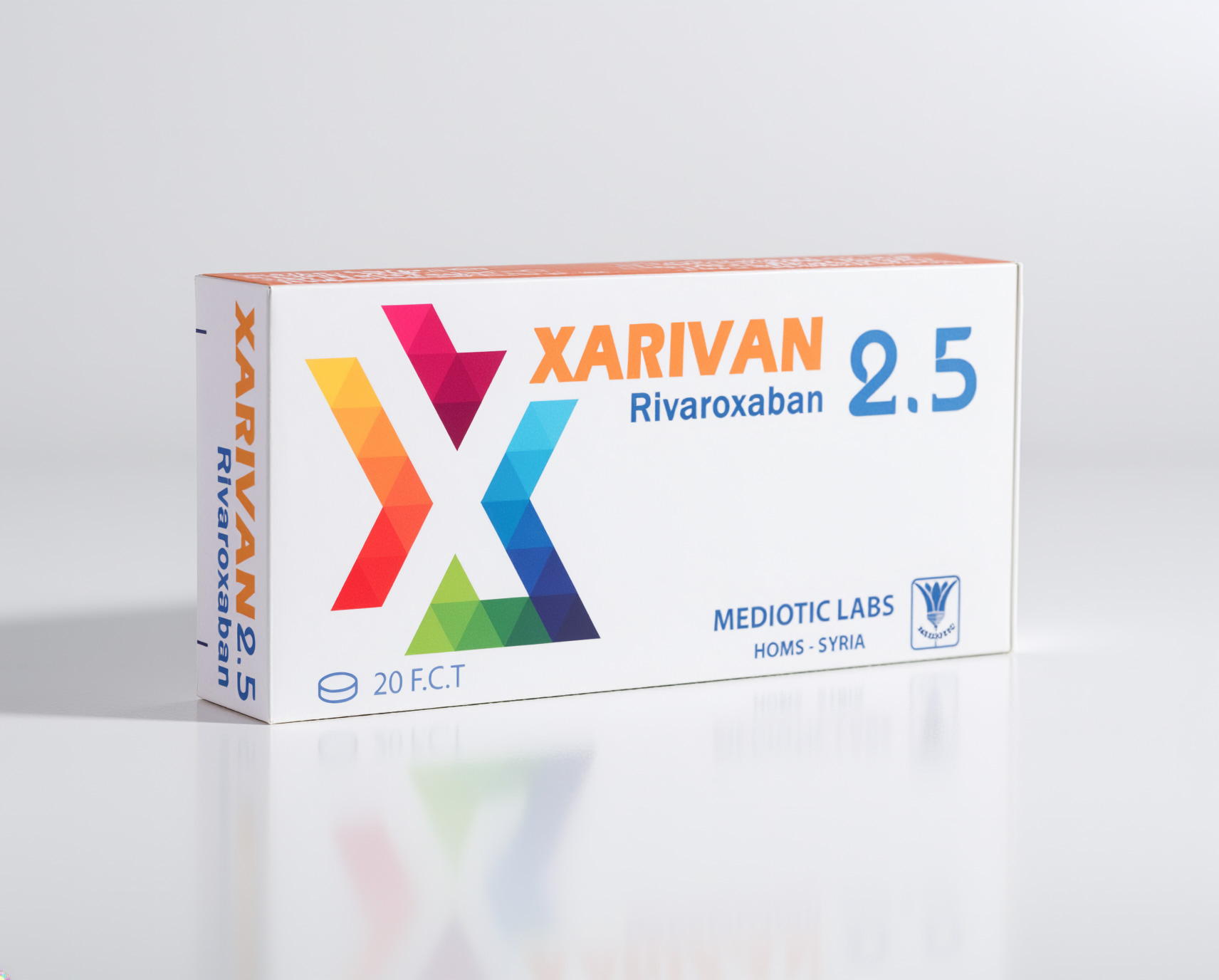
Xarivan 5

Indications:

⚫ is used to reduce the risk of stroke and systemic embolism in patients with non valvular atrial fibrillation.

⚫ is indicated for the treatment of deep vein thrombosis, which may lead to pulmonary embolism in patients undergoing knee or hip replacement surgery.

      is indicated for the treatment of Pulmonary Embolism (P.E.).

⚫ is indicated

WARNING:

A- Premature discontinuation of Rivaroxaban increases the risk of thrombotic events: Premature discontinuation of any oral anticoagulant, including Rivaroxaban, increases the risk of thrombotic events. If anticoagulation with Rivaroxaban is discontinued for a reason other than pathological bleeding or completion of a course of therapy, consider coverage with another anticoagulant.

B- Spinal / Epidural Hematoma:

Epidural or spinal hematomas have occurred in patients treated with Rivaroxaban who are receiving neuraxial anesthesia or undergoing spinal puncture, these hematomas may result in long-term or permanent paralysis. Consider these risks when scheduling patients for spinal procedures. Factors that can increase the risk of developing epidural or spinal hematomas in these patients include:

1- Use of indwelling epidural catheters.

2- Concomitant use of other drugs that affect hemostasis, such as non-steroidal anti-inflammatory drugs (NSAIDs), platelet inhibitors, other anticoagulants.

3- A history of traumatic or repeated epidural or spinal punctures.

4- A history of spinal deformity or spinal surgery.

5- Optimal timing between the administration of Rivaroxaban and neuraxial procedures is not known. Monitor patients frequently for signs and symptoms of neurological impairment. If neurological compromise is noted, urgent treatment is necessary.

Consider the benefits and risks before neuraxial intervention in patients anticoagulated or to be anticoagulated for thromboprophylaxis.

Composition:Xarivan F.C.T Contain 2.5 or 10,or15or20 mg rivaroxaban.

Excipients:

Core:Croscarmellose

sodium,hypromellose, lactose

stearate,microcrystalline cellulose and sodium lauryl sulfate.

monohydrate,magnesium

Film:hypromellose,polyethyleneglycol,titanium dioxide,red iron oxide,yellow iron oxide. Mechanism of Action:

Rivaroxaban is a selective inhibitor of factor Xa; it is a selective inhibitor of FXa. It does not require a cofactor (such as Anti-thrombin III) for activity. Rivaroxaban inhibits free FXa and prothrombinase activity. Rivaroxaban has no direct effect on platelet aggregation, but indirectly inhibits platelet aggregation induced by thrombin. By inhibiting FXa, rivaroxaban decreases thrombin generation. Pharmacokinetics:

Absorption:

The absolute bioavailability of Rivaroxaban is dose-dependent, for the 10 mg dose, it is estimated to be 80% to 100% and is not affected by food; the absolute bioavailability of Rivaroxaban at a dose of 20 mg in the fasted state is approximately 66%. Coadministration of Rivaroxaban with food increases the bioavailability of the 20 mg dose (mean AUC and Cmax increasing by 39% and 76% respectively with food), Rivaroxaban 15 mg and 20 mg tablets should be taken with the meal, the maximum concentrations (Cmax) of Rivaroxaban appear 2 to 4 hours after tablet intake.

Distribution:

Plasma protein binding of Rivaroxaban is approximately 92% to 95%.

Excretion:

Following oral administration of Rivaroxaban dose, 66% of the dose was recovered in urine (36% as unchanged drug) and 7% is excreted by feces (as unchanged drug). The terminal elimination half- life of rivaroxaban is 5 to 9 hours in healthy subjects aged 20 to 45 years.

for reduction in the risk of recurrence of deep vein thrombosis and pulmonary embolism following initial 6 months treatment for DVT and/or PE.

⚫ is indicated for the prophylaxis of Deep Vein Thrombosis (DVT) following Hip or Knee

replacement surgery, which may lead to Pulmonary Embolism (PE).

Reduction of Risk of Major Cardiovascular Events in Patients with Chronic Coronary Artery Disease (CAD) or Peripheral Artery Disease (PAD) (for 2.5 mg

strength).

Contraindications:

is contraindicated in patients with:

  • Active pathological bleeding.
  • Severe hypersensitivity reactions to the drug or its components.

Adverse reactions:

  • Increased risk of stroke after discontinuation in nonvalvular atrial fibrillation.
  • Bleeding risk.
  • Spinal / Epidural Hematoma.

Warnings and Precautions:

Increased risk of thrombotic events after Premature Discontinuation:

Premature discontinuation of any oral anticoagulant, including Rivaroxaban, increases the risk of thrombotic events. If anticoagulation with Rivaroxaban is discontinued for a reason other than pathological bleeding or completion of a course of therapy, consider coverage with another anticoagulant.

Risk of Bleeding:

Rivaroxaban increases the risk of bleeding and can cause serious or fatal bleeding. In deciding whether to prescribe Rivaroxaban to patients at increased risk of bleeding, the risk of thrombotic events should be weighed against the risk of bleeding. Promptly evaluate any signs or symptoms of need for blood replacement. Discontinue Rivaroxaban in patients with and consider the blood loss active pathological hemorrhage.

Spinal / Epidural Anesthesia or Puncture:

When neuraxial anesthesia (Spinal / Epidural anesthesia) or Spinal Puncture is employed, patients treated with anticoagulant agents for prevention of thromboembolic complications are at risk of developing an epidural or spinal hematoma which can result in long-term or permanent paralysis. An epidural catheter should not be removed earlier than 18 hours in young patients aged 20 to 45 years and 26 hours in elderly patients aged 60 to 76 years after the last administration of Rivaroxaban. The next Rivaroxaban dose is not to be administered earlier than 6 hours after the removal of the catheter. If traumatic puncture occurs, the administration of Rivaroxaban is to be delayed for 24 hours.

Use in Patients with Renal Impairment:

– Nonvalvular Atrial Fibrillation:

Periodically assess renal function as clinically indicated (i.e., more frequently in situations in which renal function may decline) and adjust therapy accordingly. Discontinue Rivaroxaban in patients who develop acute renal failure while on Rivaroxaban.

– Treatment of Deep Vein Thrombosis (DVT), Pulmonary Embolism (PE), and Reduction in the Risk of Recurrence of DVT and of PE:

Avoid the use of Rivaroxaban in patients with CrCl <30 mL/min due to an expected increase in Rivaroxaban exposure and pharmacodynamic effects in this patient population.

Prophylaxis of Deep Vein Thrombosis Following Hip or Knee Replacement Surgery:

Avoid the use of Rivaroxaban in patients with CrCl <30 mL/min due to an expected increase in Rivaroxaban exposure and pharmacodynamic effects in this patient population. Patients who develop acute renal failure while on Rivaroxaban should discontinue the treatment.

Use in Patients with Hepatic Impairment:

No clinical data are available for patients with severe hepatic impairment.

Avoid use of Rivaroxaban in patients with moderate and severe hepatic impairment or with any hepatic disease associated with coagulopathy.

Use with P-gp and Strong CYP3A4 Inhibitors or Inducers:

Avoid concomitant use of Rivaroxaban with combined P-gp and strong CYP3A4 inhibitors. Avoid concomitant use of Rivaroxaban with drugs that are combined P-gp and strong CYP3A4 inducers.

Patients with Prosthetic Heart Valves:

The safety and efficacy of Rivaroxaban have not been studied in patients with prosthetic heart valves. Therefore, use of Rivaroxaban is not recommended in these patients.

Acute PE in Hemodynamically Unstable Patients or Patients Who Require Thrombolysis or Pulmonary Embolectomy:

Initiation of Rivaroxaban is not recommended acutely as an alternative to unfractionated heparin in patients with pulmonary embolism who present with hemodynamic instability or who may receive thrombolysis or pulmonary embolectomy.

Pregnancy (category C):

Rivaroxaban should be used with caution in pregnant women and only if the potential benefit justifies the potential risk to the mother and fetus.

Nursing mothers:

It is not known if Rivaroxaban is excreted in human milk. A decision should be made whether to discontinue nursing or discontinue the drug, taking into account the importance of the drug to the mother.

Geriatric:

Rivaroxaban in the elderly (65 years of age and older) was similar to that seen in patients younger than 65 years. Both thrombotic and bleeding event rates were higher in these older patients, but the risk-benefit profile was favorable in all age groups.

Pediatric Use:

Safety and effectiveness in pediatric patients have not been established.

Drug Interactions:

Drugs that Inhibit Cytochrome P450 3A4 Enzymes and Drug Transport Systems:

Interaction with Combined P-gp and Strong CYP3A4 Inhibitor: Avoid concomitant administration with known combined P-gp and strong CYP3A4 inhibitors (e.g., ketoconazole and ritonavir) Although clarithromycin is a combined P-gp and strong CYP3A4 inhibitor, pharmacokinetic data suggests that no precautions are necessary with concomitant administration with Rivaroxaban as the change in exposure is unlikely to affect the bleeding risk.

Interaction with Combined P-gp and Moderate CYP3A4 Inhibitors in Patients with Renal Impairment: Rivaroxaban should not be used in patients with CrCl 15 to <80 mL/min who are receiving

concomitant combined P-gp and moderate CYP3A4 inhibitors (e.g., erythromycin) unless the potential benefit justifies the potential risk.

Drugs that induce Cytochrome P450 3A4 Enzymes and Drug Transport Systems:

Avoid concomitant use of Rivaroxaban with drugs that are combined P-gp and strong CYP3A4 inducers (e.g., carbamazepine, phenytoin, rifampin, St. John’s wort).

Anticoagulants and NSAIDs/Aspirin:

Coadministration of enoxaparin, warfarin, aspirin, clopidogrel and chronic NSAID use may increase the risk of bleeding .Avoid concurrent use of Rivaroxaban with other anticoagulants due to increased bleeding risk unless benefit outweighs risk. Promptly evaluate any signs or symptoms of blood loss if patients are treated concomitantly

with aspirin, other platelet aggregation inhibitors, or NSAIDs.

Dosage and Administration:

Reduction in risk of stroke in Nonvalvular Atrial Fibrillation:

Patients with creatinine clearance (CrCl > 50 ml/min); one tablet of 20 mg once daily with the evening meal.

Patients with (CrCl 15 to 50 mL/min); one tablet of 15 mg once daily with the evening meal. Treatment of Deep Vein Thrombosis (DVT):

One tablet of 15 mg twice daily with food for first 21 days, after 21 days, transition to 20 mg once daily with food for remaining treatment.

Treatment of Pulmonary Embolism (PE):

One tablet of 15 mg twice daily with food for first 21 days, after 21 days, transition to 20 mg once daily with food for remaining treatment.

Reduction in the Risk of Recurrence of DVTand/or PE in patients at continued risk for DVTand/or PE

One tablet of 10 mg once daily with or without food, after at least 6 months of standard anticoagulant treatment. at pproximately the same time each day.

Prophylaxis of DVT following Hip or Knee replacement surgery:

– Hip replacement: one tablet of 10 mg once daily for 35 days, with or without food. The initial dose should be taken 6 to 10 hours after surgery provided that hemostasis has been established  

– Knee replacement: one tablet of 10 mg once daily for 12 days, with or without food. The initial dose should be taken 6 to 10 hours after surgery provided that hemostasis has been established.

Reduction of Risk of Major Cardiovascular Events (CV Death, MI, and Stroke) in Chronic CAD or PAD:

No dose adjustment needed based on CrCl. 2.5 mg twice daily, plus aspirin (75-100 mg) once daily .Take with or without food.

Important food effect information:

The 15 mg and 20 mg tablets should be taken with food, while the 10 mg tablets can be taken with or without food, In the nonvalvular atrial fibrillation efficacy study it was taken with the evening meal. Switching to and from Rivaroxaban to other anticoagulant:

-Switching from warfarin to Rivaroxaban: When switching patients from warfarin to Rivaroxaban discontinue warfarin and start Rivaroxaban as soon as the International Normalized Ratio (INR) is below 3.0 to avoid periods of inadequate anticoagulation.

– Switching from Rivaroxaban to warfarin: No clinical trial data are available to guide converting patients from Rivaroxaban to Warfarin, and because Rivaroxaban affects (INR) so (INR) measurements made during coadministration with warfarin may not be useful for determining the appropriate dose of warfarin. One approach is to discontinue Rivaroxaban and begin both a parenteral anticoagulant and warfarin at the time the next dose of Rivaroxaban would have been taken.

-Switching from Rivaroxaban to anticoagulants other than warfarin: For patients currently taking Rivaroxaban and transitioning to an anticoagulant with rapid onset, discontinue Rivaroxaban and give the first dose of the other anticoagulant (oral or parenteral) at the time that the next Rivaroxaban dose would have been taken.

– Switching from anticoagulants other than warfarin to Rivaroxaban: For patients currently receiving an anticoagulant other than warfarin, start Rivaroxaban between (0 to 2 hours) prior to the next scheduled evening administration of the drug (e.g., low molecular weight heparin or non-warfarin oral anticoagulants) and omit administration of the other anticoagulant. For unfractionated heparin being administered by continuous infusion, stop the infusion and start Rivaroxaban at the same time. Discontinuation for surgery and other interventions:

If anticoagulation must be discontinued to reduce the risk of bleeding with surgical or other procedures, Rivaroxaban should be stopped at least 24 hours before the procedure to reduce the risk of bleeding. In deciding whether a procedure should be delayed until 24 hours after the last dose of Rivaroxaban, the increased risk of bleeding should be weighed against the urgency of intervention. Rivaroxaban should be restarted after the surgical or other procedures as soon as adequate hemostasis has been established, noting that the time to onset of therapeutic effect is short. If oral medication cannot be taken during or after surgical intervention, consider administering a parenteral anticoagulant.

Missed dose:

If a dose of Rivaroxaban is not taken at the scheduled time, administer the dose as soon as possible on the same day as follows:

– For patients receiving 15 mg twice daily: The patient should take Rivaroxaban immediately to ensure intake of 30 mg Rivaroxaban per day. In this particular instance, two 15 mg tablets may be taken at once. The patient should continue with the regular 15 mg twice daily intake as recommended on the following day.

– For patients receiving 20 mg, 15 mg or 10 mg once daily: The patient should take the missed Rivaroxaban dose immediately.

Administration options:

– For patients who are unable to swallow whole tablets, 10 mg, 15 mg or 20 mg Rivaroxaban tablets may be crushed and mixed with applesauce immediately prior to use and administered orally. After the administration of a crushed Rivaroxaban 15 mg or 20 mg tablet, the dose should be immediately followed by food.

– Administration via nasogastric (NG) tube or gastric feeding tube: After confirming gastric placement of the tube, 10 mg, 15 mg or 20 mg Rivaroxaban tablets may be crushed and suspended in 50 mL of water and administered via an NG tube or gastric feeding tube. Since Rivaroxaban absorption is dependent on the site of drug release, avoid administration of Rivaroxaban distal to the stomach which can result in reduced absorption and thereby, reduced drug exposure. After the administration of a crushed Rivaroxaban 15 mg or 20 mg tablet, the dose should then be immediately followed by enteral feeding.

Crushed 10 mg, 15 mg or 20 mg Rivaroxaban tablets are stable in water and in applesauce for up to 4 hours.

Overdosage:

Overdose of Rivaroxaban may lead to hemorrhage. Discontinue Rivaroxaban and initiate appropriate therapy if bleeding complications associated with Overdosage, had occurred. A specific antidote of Rivaroxaban is not available. Rivaroxaban systemic exposure is not further increased at single dose > 50 mg due to limited absorption. The use of activated charcoal to reduce absorption in case of Rivaroxaban overdose may be considered, due to the high plasma protein binding, Rivaroxaban is not expected to be dialyzable.

Storage Conditions: Store at room temperature,between (20-25)° C.

packaging: Xarivan (2.5,10,15,20) 2 blisters in carton box,each blister contains 10 F.C.T
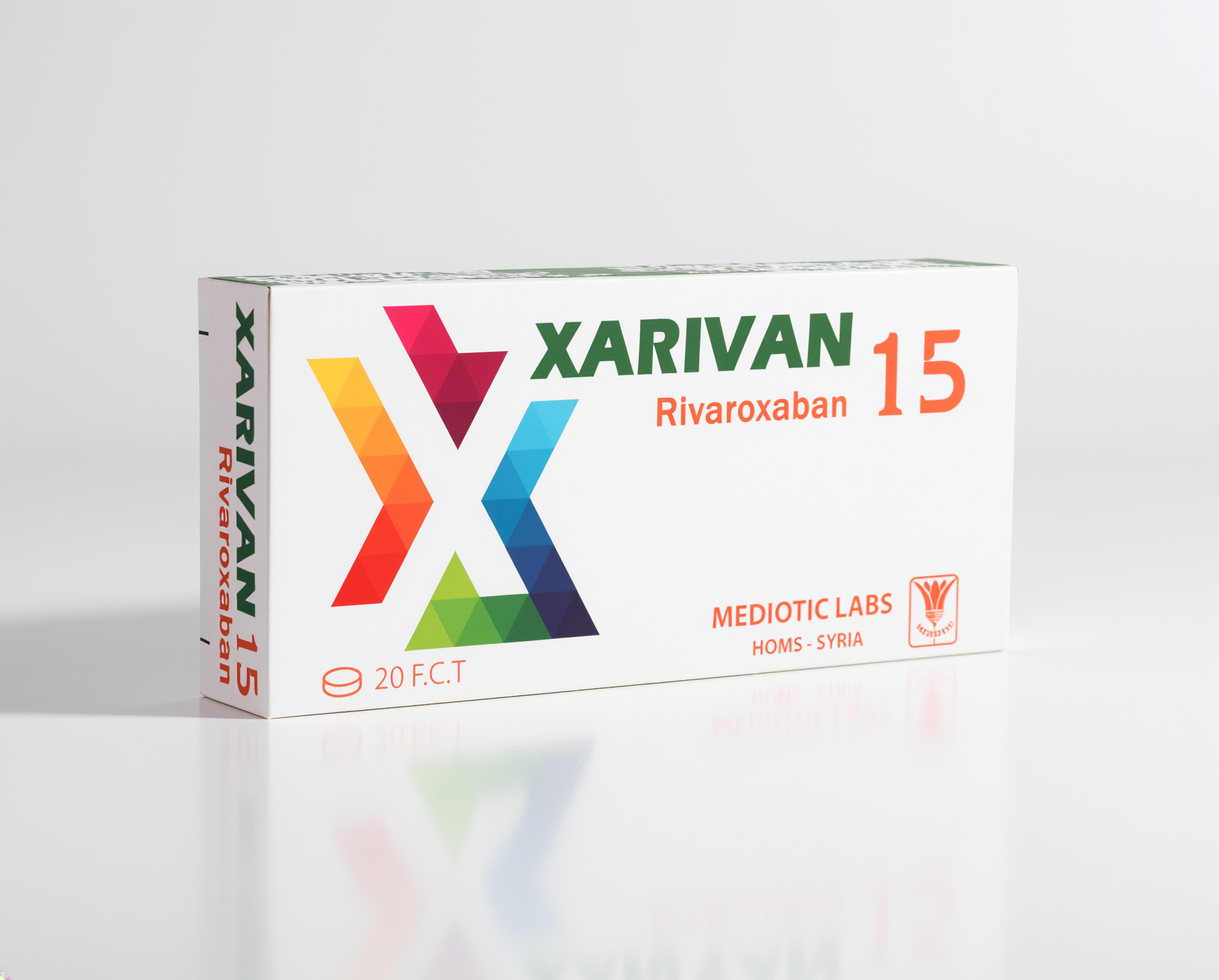
Xarivan 15

Indications:

⚫ is used to reduce the risk of stroke and systemic embolism in patients with non valvular atrial fibrillation.

⚫ is indicated for the treatment of deep vein thrombosis, which may lead to pulmonary embolism in patients undergoing knee or hip replacement surgery.

      is indicated for the treatment of Pulmonary Embolism (P.E.).

⚫ is indicated

WARNING:

A- Premature discontinuation of Rivaroxaban increases the risk of thrombotic events: Premature discontinuation of any oral anticoagulant, including Rivaroxaban, increases the risk of thrombotic events. If anticoagulation with Rivaroxaban is discontinued for a reason other than pathological bleeding or completion of a course of therapy, consider coverage with another anticoagulant.

B- Spinal / Epidural Hematoma:

Epidural or spinal hematomas have occurred in patients treated with Rivaroxaban who are receiving neuraxial anesthesia or undergoing spinal puncture, these hematomas may result in long-term or permanent paralysis. Consider these risks when scheduling patients for spinal procedures. Factors that can increase the risk of developing epidural or spinal hematomas in these patients include:

1- Use of indwelling epidural catheters.

2- Concomitant use of other drugs that affect hemostasis, such as non-steroidal anti-inflammatory drugs (NSAIDs), platelet inhibitors, other anticoagulants.

3- A history of traumatic or repeated epidural or spinal punctures.

4- A history of spinal deformity or spinal surgery.

5- Optimal timing between the administration of Rivaroxaban and neuraxial procedures is not known. Monitor patients frequently for signs and symptoms of neurological impairment. If neurological compromise is noted, urgent treatment is necessary.

Consider the benefits and risks before neuraxial intervention in patients anticoagulated or to be anticoagulated for thromboprophylaxis.

Composition:Xarivan F.C.T Contain 2.5 or 10,or15or20 mg rivaroxaban.

Excipients:

Core:Croscarmellose

sodium,hypromellose, lactose

stearate,microcrystalline cellulose and sodium lauryl sulfate.

monohydrate,magnesium

Film:hypromellose,polyethyleneglycol,titanium dioxide,red iron oxide,yellow iron oxide. Mechanism of Action:

Rivaroxaban is a selective inhibitor of factor Xa; it is a selective inhibitor of FXa. It does not require a cofactor (such as Anti-thrombin III) for activity. Rivaroxaban inhibits free FXa and prothrombinase activity. Rivaroxaban has no direct effect on platelet aggregation, but indirectly inhibits platelet aggregation induced by thrombin. By inhibiting FXa, rivaroxaban decreases thrombin generation. Pharmacokinetics:

Absorption:

The absolute bioavailability of Rivaroxaban is dose-dependent, for the 10 mg dose, it is estimated to be 80% to 100% and is not affected by food; the absolute bioavailability of Rivaroxaban at a dose of 20 mg in the fasted state is approximately 66%. Coadministration of Rivaroxaban with food increases the bioavailability of the 20 mg dose (mean AUC and Cmax increasing by 39% and 76% respectively with food), Rivaroxaban 15 mg and 20 mg tablets should be taken with the meal, the maximum concentrations (Cmax) of Rivaroxaban appear 2 to 4 hours after tablet intake.

Distribution:

Plasma protein binding of Rivaroxaban is approximately 92% to 95%.

Excretion:

Following oral administration of Rivaroxaban dose, 66% of the dose was recovered in urine (36% as unchanged drug) and 7% is excreted by feces (as unchanged drug). The terminal elimination half- life of rivaroxaban is 5 to 9 hours in healthy subjects aged 20 to 45 years.

for reduction in the risk of recurrence of deep vein thrombosis and pulmonary embolism following initial 6 months treatment for DVT and/or PE.

⚫ is indicated for the prophylaxis of Deep Vein Thrombosis (DVT) following Hip or Knee

replacement surgery, which may lead to Pulmonary Embolism (PE).

Reduction of Risk of Major Cardiovascular Events in Patients with Chronic Coronary Artery Disease (CAD) or Peripheral Artery Disease (PAD) (for 2.5 mg

strength).

Contraindications:

is contraindicated in patients with:

  • Active pathological bleeding.
  • Severe hypersensitivity reactions to the drug or its components.

Adverse reactions:

  • Increased risk of stroke after discontinuation in nonvalvular atrial fibrillation.
  • Bleeding risk.
  • Spinal / Epidural Hematoma.

Warnings and Precautions:

Increased risk of thrombotic events after Premature Discontinuation:

Premature discontinuation of any oral anticoagulant, including Rivaroxaban, increases the risk of thrombotic events. If anticoagulation with Rivaroxaban is discontinued for a reason other than pathological bleeding or completion of a course of therapy, consider coverage with another anticoagulant.

Risk of Bleeding:

Rivaroxaban increases the risk of bleeding and can cause serious or fatal bleeding. In deciding whether to prescribe Rivaroxaban to patients at increased risk of bleeding, the risk of thrombotic events should be weighed against the risk of bleeding. Promptly evaluate any signs or symptoms of need for blood replacement. Discontinue Rivaroxaban in patients with and consider the blood loss active pathological hemorrhage.

Spinal / Epidural Anesthesia or Puncture:

When neuraxial anesthesia (Spinal / Epidural anesthesia) or Spinal Puncture is employed, patients treated with anticoagulant agents for prevention of thromboembolic complications are at risk of developing an epidural or spinal hematoma which can result in long-term or permanent paralysis. An epidural catheter should not be removed earlier than 18 hours in young patients aged 20 to 45 years and 26 hours in elderly patients aged 60 to 76 years after the last administration of Rivaroxaban. The next Rivaroxaban dose is not to be administered earlier than 6 hours after the removal of the catheter. If traumatic puncture occurs, the administration of Rivaroxaban is to be delayed for 24 hours.

Use in Patients with Renal Impairment:

– Nonvalvular Atrial Fibrillation:

Periodically assess renal function as clinically indicated (i.e., more frequently in situations in which renal function may decline) and adjust therapy accordingly. Discontinue Rivaroxaban in patients who develop acute renal failure while on Rivaroxaban.

– Treatment of Deep Vein Thrombosis (DVT), Pulmonary Embolism (PE), and Reduction in the Risk of Recurrence of DVT and of PE:

Avoid the use of Rivaroxaban in patients with CrCl <30 mL/min due to an expected increase in Rivaroxaban exposure and pharmacodynamic effects in this patient population.

Prophylaxis of Deep Vein Thrombosis Following Hip or Knee Replacement Surgery:

Avoid the use of Rivaroxaban in patients with CrCl <30 mL/min due to an expected increase in Rivaroxaban exposure and pharmacodynamic effects in this patient population. Patients who develop acute renal failure while on Rivaroxaban should discontinue the treatment.

Use in Patients with Hepatic Impairment:

No clinical data are available for patients with severe hepatic impairment.

Avoid use of Rivaroxaban in patients with moderate and severe hepatic impairment or with any hepatic disease associated with coagulopathy.

Use with P-gp and Strong CYP3A4 Inhibitors or Inducers:

Avoid concomitant use of Rivaroxaban with combined P-gp and strong CYP3A4 inhibitors. Avoid concomitant use of Rivaroxaban with drugs that are combined P-gp and strong CYP3A4 inducers.

Patients with Prosthetic Heart Valves:

The safety and efficacy of Rivaroxaban have not been studied in patients with prosthetic heart valves. Therefore, use of Rivaroxaban is not recommended in these patients.

Acute PE in Hemodynamically Unstable Patients or Patients Who Require Thrombolysis or Pulmonary Embolectomy:

Initiation of Rivaroxaban is not recommended acutely as an alternative to unfractionated heparin in patients with pulmonary embolism who present with hemodynamic instability or who may receive thrombolysis or pulmonary embolectomy.

Pregnancy (category C):

Rivaroxaban should be used with caution in pregnant women and only if the potential benefit justifies the potential risk to the mother and fetus.

Nursing mothers:

It is not known if Rivaroxaban is excreted in human milk. A decision should be made whether to discontinue nursing or discontinue the drug, taking into account the importance of the drug to the mother.

Geriatric:

Rivaroxaban in the elderly (65 years of age and older) was similar to that seen in patients younger than 65 years. Both thrombotic and bleeding event rates were higher in these older patients, but the risk-benefit profile was favorable in all age groups.

Pediatric Use:

Safety and effectiveness in pediatric patients have not been established.

Drug Interactions:

Drugs that Inhibit Cytochrome P450 3A4 Enzymes and Drug Transport Systems:

Interaction with Combined P-gp and Strong CYP3A4 Inhibitor: Avoid concomitant administration with known combined P-gp and strong CYP3A4 inhibitors (e.g., ketoconazole and ritonavir) Although clarithromycin is a combined P-gp and strong CYP3A4 inhibitor, pharmacokinetic data suggests that no precautions are necessary with concomitant administration with Rivaroxaban as the change in exposure is unlikely to affect the bleeding risk.

Interaction with Combined P-gp and Moderate CYP3A4 Inhibitors in Patients with Renal Impairment: Rivaroxaban should not be used in patients with CrCl 15 to <80 mL/min who are receiving

concomitant combined P-gp and moderate CYP3A4 inhibitors (e.g., erythromycin) unless the potential benefit justifies the potential risk.

Drugs that induce Cytochrome P450 3A4 Enzymes and Drug Transport Systems:

Avoid concomitant use of Rivaroxaban with drugs that are combined P-gp and strong CYP3A4 inducers (e.g., carbamazepine, phenytoin, rifampin, St. John’s wort).

Anticoagulants and NSAIDs/Aspirin:

Coadministration of enoxaparin, warfarin, aspirin, clopidogrel and chronic NSAID use may increase the risk of bleeding .Avoid concurrent use of Rivaroxaban with other anticoagulants due to increased bleeding risk unless benefit outweighs risk. Promptly evaluate any signs or symptoms of blood loss if patients are treated concomitantly

with aspirin, other platelet aggregation inhibitors, or NSAIDs.

Dosage and Administration:

Reduction in risk of stroke in Nonvalvular Atrial Fibrillation:

Patients with creatinine clearance (CrCl > 50 ml/min); one tablet of 20 mg once daily with the evening meal.

Patients with (CrCl 15 to 50 mL/min); one tablet of 15 mg once daily with the evening meal. Treatment of Deep Vein Thrombosis (DVT):

One tablet of 15 mg twice daily with food for first 21 days, after 21 days, transition to 20 mg once daily with food for remaining treatment.

Treatment of Pulmonary Embolism (PE):

One tablet of 15 mg twice daily with food for first 21 days, after 21 days, transition to 20 mg once daily with food for remaining treatment.

Reduction in the Risk of Recurrence of DVTand/or PE in patients at continued risk for DVTand/or PE

One tablet of 10 mg once daily with or without food, after at least 6 months of standard anticoagulant treatment. at pproximately the same time each day.

Prophylaxis of DVT following Hip or Knee replacement surgery:

– Hip replacement: one tablet of 10 mg once daily for 35 days, with or without food. The initial dose should be taken 6 to 10 hours after surgery provided that hemostasis has been established  

– Knee replacement: one tablet of 10 mg once daily for 12 days, with or without food. The initial dose should be taken 6 to 10 hours after surgery provided that hemostasis has been established.

Reduction of Risk of Major Cardiovascular Events (CV Death, MI, and Stroke) in Chronic CAD or PAD:

No dose adjustment needed based on CrCl. 2.5 mg twice daily, plus aspirin (75-100 mg) once daily .Take with or without food.

Important food effect information:

The 15 mg and 20 mg tablets should be taken with food, while the 10 mg tablets can be taken with or without food, In the nonvalvular atrial fibrillation efficacy study it was taken with the evening meal. Switching to and from Rivaroxaban to other anticoagulant:

-Switching from warfarin to Rivaroxaban: When switching patients from warfarin to Rivaroxaban discontinue warfarin and start Rivaroxaban as soon as the International Normalized Ratio (INR) is below 3.0 to avoid periods of inadequate anticoagulation.

– Switching from Rivaroxaban to warfarin: No clinical trial data are available to guide converting patients from Rivaroxaban to Warfarin, and because Rivaroxaban affects (INR) so (INR) measurements made during coadministration with warfarin may not be useful for determining the appropriate dose of warfarin. One approach is to discontinue Rivaroxaban and begin both a parenteral anticoagulant and warfarin at the time the next dose of Rivaroxaban would have been taken.

-Switching from Rivaroxaban to anticoagulants other than warfarin: For patients currently taking Rivaroxaban and transitioning to an anticoagulant with rapid onset, discontinue Rivaroxaban and give the first dose of the other anticoagulant (oral or parenteral) at the time that the next Rivaroxaban dose would have been taken.

– Switching from anticoagulants other than warfarin to Rivaroxaban: For patients currently receiving an anticoagulant other than warfarin, start Rivaroxaban between (0 to 2 hours) prior to the next scheduled evening administration of the drug (e.g., low molecular weight heparin or non-warfarin oral anticoagulants) and omit administration of the other anticoagulant. For unfractionated heparin being administered by continuous infusion, stop the infusion and start Rivaroxaban at the same time. Discontinuation for surgery and other interventions:

If anticoagulation must be discontinued to reduce the risk of bleeding with surgical or other procedures, Rivaroxaban should be stopped at least 24 hours before the procedure to reduce the risk of bleeding. In deciding whether a procedure should be delayed until 24 hours after the last dose of Rivaroxaban, the increased risk of bleeding should be weighed against the urgency of intervention. Rivaroxaban should be restarted after the surgical or other procedures as soon as adequate hemostasis has been established, noting that the time to onset of therapeutic effect is short. If oral medication cannot be taken during or after surgical intervention, consider administering a parenteral anticoagulant.

Missed dose:

If a dose of Rivaroxaban is not taken at the scheduled time, administer the dose as soon as possible on the same day as follows:

– For patients receiving 15 mg twice daily: The patient should take Rivaroxaban immediately to ensure intake of 30 mg Rivaroxaban per day. In this particular instance, two 15 mg tablets may be taken at once. The patient should continue with the regular 15 mg twice daily intake as recommended on the following day.

– For patients receiving 20 mg, 15 mg or 10 mg once daily: The patient should take the missed Rivaroxaban dose immediately.

Administration options:

– For patients who are unable to swallow whole tablets, 10 mg, 15 mg or 20 mg Rivaroxaban tablets may be crushed and mixed with applesauce immediately prior to use and administered orally. After the administration of a crushed Rivaroxaban 15 mg or 20 mg tablet, the dose should be immediately followed by food.

– Administration via nasogastric (NG) tube or gastric feeding tube: After confirming gastric placement of the tube, 10 mg, 15 mg or 20 mg Rivaroxaban tablets may be crushed and suspended in 50 mL of water and administered via an NG tube or gastric feeding tube. Since Rivaroxaban absorption is dependent on the site of drug release, avoid administration of Rivaroxaban distal to the stomach which can result in reduced absorption and thereby, reduced drug exposure. After the administration of a crushed Rivaroxaban 15 mg or 20 mg tablet, the dose should then be immediately followed by enteral feeding.

Crushed 10 mg, 15 mg or 20 mg Rivaroxaban tablets are stable in water and in applesauce for up to 4 hours.

Overdosage:

Overdose of Rivaroxaban may lead to hemorrhage. Discontinue Rivaroxaban and initiate appropriate therapy if bleeding complications associated with Overdosage, had occurred. A specific antidote of Rivaroxaban is not available. Rivaroxaban systemic exposure is not further increased at single dose > 50 mg due to limited absorption. The use of activated charcoal to reduce absorption in case of Rivaroxaban overdose may be considered, due to the high plasma protein binding, Rivaroxaban is not expected to be dialyzable.

Storage Conditions: Store at room temperature,between (20-25)° C.

packaging: Xarivan (2.5,10,15,20) 2 blisters in carton box,each blister contains 10 F.C.T
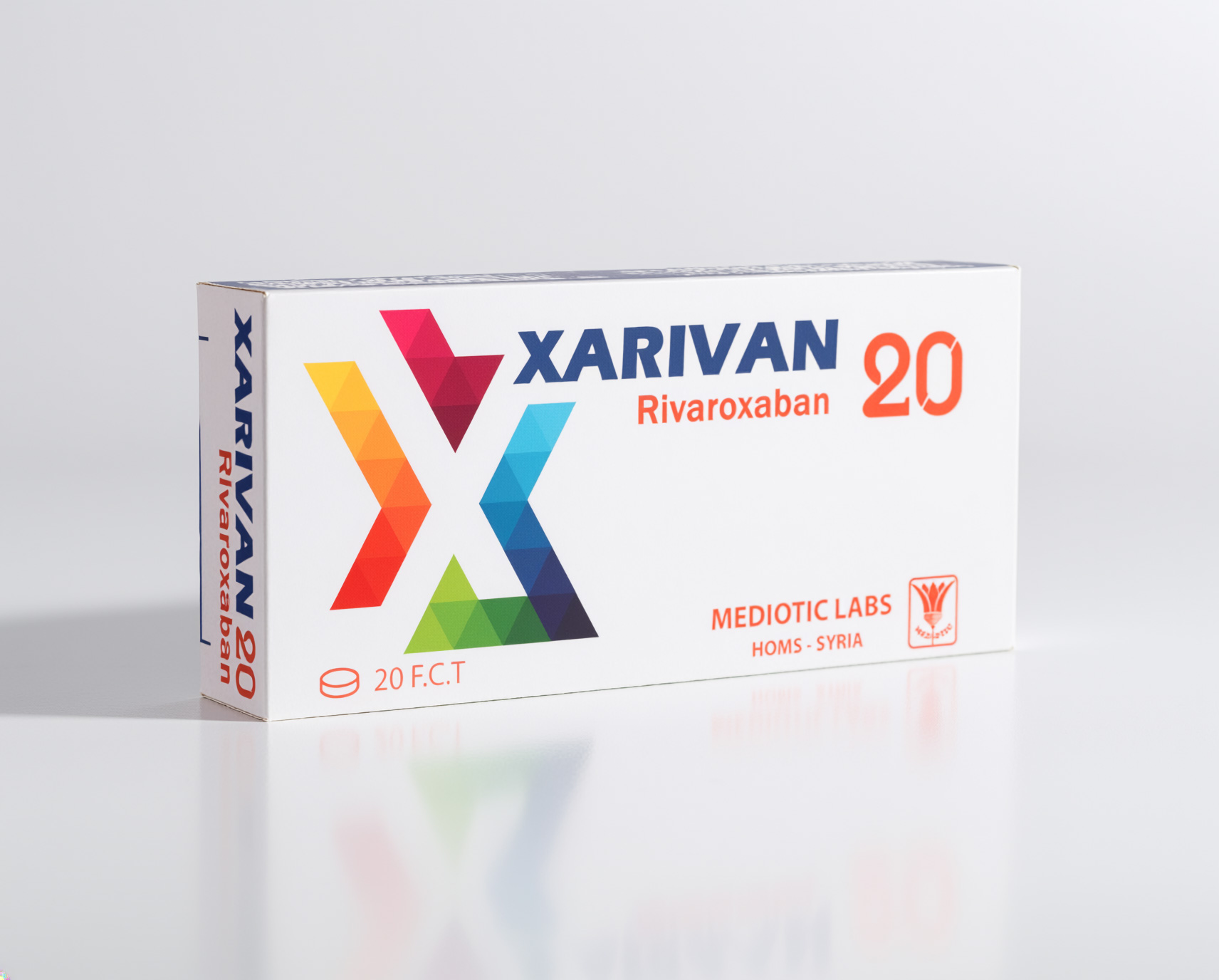
Xarivan 20

Indications:

⚫ is used to reduce the risk of stroke and systemic embolism in patients with non valvular atrial fibrillation.

⚫ is indicated for the treatment of deep vein thrombosis, which may lead to pulmonary embolism in patients undergoing knee or hip replacement surgery.

      is indicated for the treatment of Pulmonary Embolism (P.E.).

⚫ is indicated

WARNING:

A- Premature discontinuation of Rivaroxaban increases the risk of thrombotic events: Premature discontinuation of any oral anticoagulant, including Rivaroxaban, increases the risk of thrombotic events. If anticoagulation with Rivaroxaban is discontinued for a reason other than pathological bleeding or completion of a course of therapy, consider coverage with another anticoagulant.

B- Spinal / Epidural Hematoma:

Epidural or spinal hematomas have occurred in patients treated with Rivaroxaban who are receiving neuraxial anesthesia or undergoing spinal puncture, these hematomas may result in long-term or permanent paralysis. Consider these risks when scheduling patients for spinal procedures. Factors that can increase the risk of developing epidural or spinal hematomas in these patients include:

1- Use of indwelling epidural catheters.

2- Concomitant use of other drugs that affect hemostasis, such as non-steroidal anti-inflammatory drugs (NSAIDs), platelet inhibitors, other anticoagulants.

3- A history of traumatic or repeated epidural or spinal punctures.

4- A history of spinal deformity or spinal surgery.

5- Optimal timing between the administration of Rivaroxaban and neuraxial procedures is not known. Monitor patients frequently for signs and symptoms of neurological impairment. If neurological compromise is noted, urgent treatment is necessary.

Consider the benefits and risks before neuraxial intervention in patients anticoagulated or to be anticoagulated for thromboprophylaxis.

Composition:Xarivan F.C.T Contain 2.5 or 10,or15or20 mg rivaroxaban.

Excipients:

Core:Croscarmellose

sodium,hypromellose, lactose

stearate,microcrystalline cellulose and sodium lauryl sulfate.

monohydrate,magnesium

Film:hypromellose,polyethyleneglycol,titanium dioxide,red iron oxide,yellow iron oxide. Mechanism of Action:

Rivaroxaban is a selective inhibitor of factor Xa; it is a selective inhibitor of FXa. It does not require a cofactor (such as Anti-thrombin III) for activity. Rivaroxaban inhibits free FXa and prothrombinase activity. Rivaroxaban has no direct effect on platelet aggregation, but indirectly inhibits platelet aggregation induced by thrombin. By inhibiting FXa, rivaroxaban decreases thrombin generation. Pharmacokinetics:

Absorption:

The absolute bioavailability of Rivaroxaban is dose-dependent, for the 10 mg dose, it is estimated to be 80% to 100% and is not affected by food; the absolute bioavailability of Rivaroxaban at a dose of 20 mg in the fasted state is approximately 66%. Coadministration of Rivaroxaban with food increases the bioavailability of the 20 mg dose (mean AUC and Cmax increasing by 39% and 76% respectively with food), Rivaroxaban 15 mg and 20 mg tablets should be taken with the meal, the maximum concentrations (Cmax) of Rivaroxaban appear 2 to 4 hours after tablet intake.

Distribution:

Plasma protein binding of Rivaroxaban is approximately 92% to 95%.

Excretion:

Following oral administration of Rivaroxaban dose, 66% of the dose was recovered in urine (36% as unchanged drug) and 7% is excreted by feces (as unchanged drug). The terminal elimination half- life of rivaroxaban is 5 to 9 hours in healthy subjects aged 20 to 45 years.

for reduction in the risk of recurrence of deep vein thrombosis and pulmonary embolism following initial 6 months treatment for DVT and/or PE.

⚫ is indicated for the prophylaxis of Deep Vein Thrombosis (DVT) following Hip or Knee

replacement surgery, which may lead to Pulmonary Embolism (PE).

Reduction of Risk of Major Cardiovascular Events in Patients with Chronic Coronary Artery Disease (CAD) or Peripheral Artery Disease (PAD) (for 2.5 mg

strength).

Contraindications:

is contraindicated in patients with:

  • Active pathological bleeding.
  • Severe hypersensitivity reactions to the drug or its components.

Adverse reactions:

  • Increased risk of stroke after discontinuation in nonvalvular atrial fibrillation.
  • Bleeding risk.
  • Spinal / Epidural Hematoma.

Warnings and Precautions:

Increased risk of thrombotic events after Premature Discontinuation:

Premature discontinuation of any oral anticoagulant, including Rivaroxaban, increases the risk of thrombotic events. If anticoagulation with Rivaroxaban is discontinued for a reason other than pathological bleeding or completion of a course of therapy, consider coverage with another anticoagulant.

Risk of Bleeding:

Rivaroxaban increases the risk of bleeding and can cause serious or fatal bleeding. In deciding whether to prescribe Rivaroxaban to patients at increased risk of bleeding, the risk of thrombotic events should be weighed against the risk of bleeding. Promptly evaluate any signs or symptoms of need for blood replacement. Discontinue Rivaroxaban in patients with and consider the blood loss active pathological hemorrhage.

Spinal / Epidural Anesthesia or Puncture:

When neuraxial anesthesia (Spinal / Epidural anesthesia) or Spinal Puncture is employed, patients treated with anticoagulant agents for prevention of thromboembolic complications are at risk of developing an epidural or spinal hematoma which can result in long-term or permanent paralysis. An epidural catheter should not be removed earlier than 18 hours in young patients aged 20 to 45 years and 26 hours in elderly patients aged 60 to 76 years after the last administration of Rivaroxaban. The next Rivaroxaban dose is not to be administered earlier than 6 hours after the removal of the catheter. If traumatic puncture occurs, the administration of Rivaroxaban is to be delayed for 24 hours.

Use in Patients with Renal Impairment:

– Nonvalvular Atrial Fibrillation:

Periodically assess renal function as clinically indicated (i.e., more frequently in situations in which renal function may decline) and adjust therapy accordingly. Discontinue Rivaroxaban in patients who develop acute renal failure while on Rivaroxaban.

– Treatment of Deep Vein Thrombosis (DVT), Pulmonary Embolism (PE), and Reduction in the Risk of Recurrence of DVT and of PE:

Avoid the use of Rivaroxaban in patients with CrCl <30 mL/min due to an expected increase in Rivaroxaban exposure and pharmacodynamic effects in this patient population.

Prophylaxis of Deep Vein Thrombosis Following Hip or Knee Replacement Surgery:

Avoid the use of Rivaroxaban in patients with CrCl <30 mL/min due to an expected increase in Rivaroxaban exposure and pharmacodynamic effects in this patient population. Patients who develop acute renal failure while on Rivaroxaban should discontinue the treatment.

Use in Patients with Hepatic Impairment:

No clinical data are available for patients with severe hepatic impairment.

Avoid use of Rivaroxaban in patients with moderate and severe hepatic impairment or with any hepatic disease associated with coagulopathy.

Use with P-gp and Strong CYP3A4 Inhibitors or Inducers:

Avoid concomitant use of Rivaroxaban with combined P-gp and strong CYP3A4 inhibitors. Avoid concomitant use of Rivaroxaban with drugs that are combined P-gp and strong CYP3A4 inducers.

Patients with Prosthetic Heart Valves:

The safety and efficacy of Rivaroxaban have not been studied in patients with prosthetic heart valves. Therefore, use of Rivaroxaban is not recommended in these patients.

Acute PE in Hemodynamically Unstable Patients or Patients Who Require Thrombolysis or Pulmonary Embolectomy:

Initiation of Rivaroxaban is not recommended acutely as an alternative to unfractionated heparin in patients with pulmonary embolism who present with hemodynamic instability or who may receive thrombolysis or pulmonary embolectomy.

Pregnancy (category C):

Rivaroxaban should be used with caution in pregnant women and only if the potential benefit justifies the potential risk to the mother and fetus.

Nursing mothers:

It is not known if Rivaroxaban is excreted in human milk. A decision should be made whether to discontinue nursing or discontinue the drug, taking into account the importance of the drug to the mother.

Geriatric:

Rivaroxaban in the elderly (65 years of age and older) was similar to that seen in patients younger than 65 years. Both thrombotic and bleeding event rates were higher in these older patients, but the risk-benefit profile was favorable in all age groups.

Pediatric Use:

Safety and effectiveness in pediatric patients have not been established.

Drug Interactions:

Drugs that Inhibit Cytochrome P450 3A4 Enzymes and Drug Transport Systems:

Interaction with Combined P-gp and Strong CYP3A4 Inhibitor: Avoid concomitant administration with known combined P-gp and strong CYP3A4 inhibitors (e.g., ketoconazole and ritonavir) Although clarithromycin is a combined P-gp and strong CYP3A4 inhibitor, pharmacokinetic data suggests that no precautions are necessary with concomitant administration with Rivaroxaban as the change in exposure is unlikely to affect the bleeding risk.

Interaction with Combined P-gp and Moderate CYP3A4 Inhibitors in Patients with Renal Impairment: Rivaroxaban should not be used in patients with CrCl 15 to <80 mL/min who are receiving

concomitant combined P-gp and moderate CYP3A4 inhibitors (e.g., erythromycin) unless the potential benefit justifies the potential risk.

Drugs that induce Cytochrome P450 3A4 Enzymes and Drug Transport Systems:

Avoid concomitant use of Rivaroxaban with drugs that are combined P-gp and strong CYP3A4 inducers (e.g., carbamazepine, phenytoin, rifampin, St. John’s wort).

Anticoagulants and NSAIDs/Aspirin:

Coadministration of enoxaparin, warfarin, aspirin, clopidogrel and chronic NSAID use may increase the risk of bleeding .Avoid concurrent use of Rivaroxaban with other anticoagulants due to increased bleeding risk unless benefit outweighs risk. Promptly evaluate any signs or symptoms of blood loss if patients are treated concomitantly

with aspirin, other platelet aggregation inhibitors, or NSAIDs.

Dosage and Administration:

Reduction in risk of stroke in Nonvalvular Atrial Fibrillation:

Patients with creatinine clearance (CrCl > 50 ml/min); one tablet of 20 mg once daily with the evening meal.

Patients with (CrCl 15 to 50 mL/min); one tablet of 15 mg once daily with the evening meal. Treatment of Deep Vein Thrombosis (DVT):

One tablet of 15 mg twice daily with food for first 21 days, after 21 days, transition to 20 mg once daily with food for remaining treatment.

Treatment of Pulmonary Embolism (PE):

One tablet of 15 mg twice daily with food for first 21 days, after 21 days, transition to 20 mg once daily with food for remaining treatment.

Reduction in the Risk of Recurrence of DVTand/or PE in patients at continued risk for DVTand/or PE

One tablet of 10 mg once daily with or without food, after at least 6 months of standard anticoagulant treatment. at pproximately the same time each day.

Prophylaxis of DVT following Hip or Knee replacement surgery:

– Hip replacement: one tablet of 10 mg once daily for 35 days, with or without food. The initial dose should be taken 6 to 10 hours after surgery provided that hemostasis has been established  

– Knee replacement: one tablet of 10 mg once daily for 12 days, with or without food. The initial dose should be taken 6 to 10 hours after surgery provided that hemostasis has been established.

Reduction of Risk of Major Cardiovascular Events (CV Death, MI, and Stroke) in Chronic CAD or PAD:

No dose adjustment needed based on CrCl. 2.5 mg twice daily, plus aspirin (75-100 mg) once daily .Take with or without food.

Important food effect information:

The 15 mg and 20 mg tablets should be taken with food, while the 10 mg tablets can be taken with or without food, In the nonvalvular atrial fibrillation efficacy study it was taken with the evening meal. Switching to and from Rivaroxaban to other anticoagulant:

-Switching from warfarin to Rivaroxaban: When switching patients from warfarin to Rivaroxaban discontinue warfarin and start Rivaroxaban as soon as the International Normalized Ratio (INR) is below 3.0 to avoid periods of inadequate anticoagulation.

– Switching from Rivaroxaban to warfarin: No clinical trial data are available to guide converting patients from Rivaroxaban to Warfarin, and because Rivaroxaban affects (INR) so (INR) measurements made during coadministration with warfarin may not be useful for determining the appropriate dose of warfarin. One approach is to discontinue Rivaroxaban and begin both a parenteral anticoagulant and warfarin at the time the next dose of Rivaroxaban would have been taken.

-Switching from Rivaroxaban to anticoagulants other than warfarin: For patients currently taking Rivaroxaban and transitioning to an anticoagulant with rapid onset, discontinue Rivaroxaban and give the first dose of the other anticoagulant (oral or parenteral) at the time that the next Rivaroxaban dose would have been taken.

– Switching from anticoagulants other than warfarin to Rivaroxaban: For patients currently receiving an anticoagulant other than warfarin, start Rivaroxaban between (0 to 2 hours) prior to the next scheduled evening administration of the drug (e.g., low molecular weight heparin or non-warfarin oral anticoagulants) and omit administration of the other anticoagulant. For unfractionated heparin being administered by continuous infusion, stop the infusion and start Rivaroxaban at the same time. Discontinuation for surgery and other interventions:

If anticoagulation must be discontinued to reduce the risk of bleeding with surgical or other procedures, Rivaroxaban should be stopped at least 24 hours before the procedure to reduce the risk of bleeding. In deciding whether a procedure should be delayed until 24 hours after the last dose of Rivaroxaban, the increased risk of bleeding should be weighed against the urgency of intervention. Rivaroxaban should be restarted after the surgical or other procedures as soon as adequate hemostasis has been established, noting that the time to onset of therapeutic effect is short. If oral medication cannot be taken during or after surgical intervention, consider administering a parenteral anticoagulant.

Missed dose:

If a dose of Rivaroxaban is not taken at the scheduled time, administer the dose as soon as possible on the same day as follows:

– For patients receiving 15 mg twice daily: The patient should take Rivaroxaban immediately to ensure intake of 30 mg Rivaroxaban per day. In this particular instance, two 15 mg tablets may be taken at once. The patient should continue with the regular 15 mg twice daily intake as recommended on the following day.

– For patients receiving 20 mg, 15 mg or 10 mg once daily: The patient should take the missed Rivaroxaban dose immediately.

Administration options:

– For patients who are unable to swallow whole tablets, 10 mg, 15 mg or 20 mg Rivaroxaban tablets may be crushed and mixed with applesauce immediately prior to use and administered orally. After the administration of a crushed Rivaroxaban 15 mg or 20 mg tablet, the dose should be immediately followed by food.

– Administration via nasogastric (NG) tube or gastric feeding tube: After confirming gastric placement of the tube, 10 mg, 15 mg or 20 mg Rivaroxaban tablets may be crushed and suspended in 50 mL of water and administered via an NG tube or gastric feeding tube. Since Rivaroxaban absorption is dependent on the site of drug release, avoid administration of Rivaroxaban distal to the stomach which can result in reduced absorption and thereby, reduced drug exposure. After the administration of a crushed Rivaroxaban 15 mg or 20 mg tablet, the dose should then be immediately followed by enteral feeding.

Crushed 10 mg, 15 mg or 20 mg Rivaroxaban tablets are stable in water and in applesauce for up to 4 hours.

Overdosage:

Overdose of Rivaroxaban may lead to hemorrhage. Discontinue Rivaroxaban and initiate appropriate therapy if bleeding complications associated with Overdosage, had occurred. A specific antidote of Rivaroxaban is not available. Rivaroxaban systemic exposure is not further increased at single dose > 50 mg due to limited absorption. The use of activated charcoal to reduce absorption in case of Rivaroxaban overdose may be considered, due to the high plasma protein binding, Rivaroxaban is not expected to be dialyzable.

Storage Conditions: Store at room temperature,between (20-25)° C.

packaging: Xarivan (2.5,10,15,20) 2 blisters in carton box,each blister contains 10 F.C.T
Xarivan 2.5

Indications:

⚫ is used to reduce the risk of stroke and systemic embolism in patients with non valvular atrial fibrillation.

⚫ is indicated for the treatment of deep vein thrombosis, which may lead to pulmonary embolism in patients undergoing knee or hip replacement surgery.

      is indicated for the treatment of Pulmonary Embolism (P.E.).

⚫ is indicated

WARNING:

A- Premature discontinuation of Rivaroxaban increases the risk of thrombotic events: Premature discontinuation of any oral anticoagulant, including Rivaroxaban, increases the risk of thrombotic events. If anticoagulation with Rivaroxaban is discontinued for a reason other than pathological bleeding or completion of a course of therapy, consider coverage with another anticoagulant.

B- Spinal / Epidural Hematoma:

Epidural or spinal hematomas have occurred in patients treated with Rivaroxaban who are receiving neuraxial anesthesia or undergoing spinal puncture, these hematomas may result in long-term or permanent paralysis. Consider these risks when scheduling patients for spinal procedures. Factors that can increase the risk of developing epidural or spinal hematomas in these patients include:

1- Use of indwelling epidural catheters.

2- Concomitant use of other drugs that affect hemostasis, such as non-steroidal anti-inflammatory drugs (NSAIDs), platelet inhibitors, other anticoagulants.

3- A history of traumatic or repeated epidural or spinal punctures.

4- A history of spinal deformity or spinal surgery.

5- Optimal timing between the administration of Rivaroxaban and neuraxial procedures is not known. Monitor patients frequently for signs and symptoms of neurological impairment. If neurological compromise is noted, urgent treatment is necessary.

Consider the benefits and risks before neuraxial intervention in patients anticoagulated or to be anticoagulated for thromboprophylaxis.

Composition:Xarivan F.C.T Contain 2.5 or 10,or15or20 mg rivaroxaban.

Excipients:

Core:Croscarmellose

sodium,hypromellose, lactose

stearate,microcrystalline cellulose and sodium lauryl sulfate.

monohydrate,magnesium

Film:hypromellose,polyethyleneglycol,titanium dioxide,red iron oxide,yellow iron oxide. Mechanism of Action:

Rivaroxaban is a selective inhibitor of factor Xa; it is a selective inhibitor of FXa. It does not require a cofactor (such as Anti-thrombin III) for activity. Rivaroxaban inhibits free FXa and prothrombinase activity. Rivaroxaban has no direct effect on platelet aggregation, but indirectly inhibits platelet aggregation induced by thrombin. By inhibiting FXa, rivaroxaban decreases thrombin generation. Pharmacokinetics:

Absorption:

The absolute bioavailability of Rivaroxaban is dose-dependent, for the 10 mg dose, it is estimated to be 80% to 100% and is not affected by food; the absolute bioavailability of Rivaroxaban at a dose of 20 mg in the fasted state is approximately 66%. Coadministration of Rivaroxaban with food increases the bioavailability of the 20 mg dose (mean AUC and Cmax increasing by 39% and 76% respectively with food), Rivaroxaban 15 mg and 20 mg tablets should be taken with the meal, the maximum concentrations (Cmax) of Rivaroxaban appear 2 to 4 hours after tablet intake.

Distribution:

Plasma protein binding of Rivaroxaban is approximately 92% to 95%.

Excretion:

Following oral administration of Rivaroxaban dose, 66% of the dose was recovered in urine (36% as unchanged drug) and 7% is excreted by feces (as unchanged drug). The terminal elimination half- life of rivaroxaban is 5 to 9 hours in healthy subjects aged 20 to 45 years.

for reduction in the risk of recurrence of deep vein thrombosis and pulmonary embolism following initial 6 months treatment for DVT and/or PE.

⚫ is indicated for the prophylaxis of Deep Vein Thrombosis (DVT) following Hip or Knee

replacement surgery, which may lead to Pulmonary Embolism (PE).

Reduction of Risk of Major Cardiovascular Events in Patients with Chronic Coronary Artery Disease (CAD) or Peripheral Artery Disease (PAD) (for 2.5 mg

strength).

Contraindications:

is contraindicated in patients with:

  • Active pathological bleeding.
  • Severe hypersensitivity reactions to the drug or its components.

Adverse reactions:

  • Increased risk of stroke after discontinuation in nonvalvular atrial fibrillation.
  • Bleeding risk.
  • Spinal / Epidural Hematoma.

Warnings and Precautions:

Increased risk of thrombotic events after Premature Discontinuation:

Premature discontinuation of any oral anticoagulant, including Rivaroxaban, increases the risk of thrombotic events. If anticoagulation with Rivaroxaban is discontinued for a reason other than pathological bleeding or completion of a course of therapy, consider coverage with another anticoagulant.

Risk of Bleeding:

Rivaroxaban increases the risk of bleeding and can cause serious or fatal bleeding. In deciding whether to prescribe Rivaroxaban to patients at increased risk of bleeding, the risk of thrombotic events should be weighed against the risk of bleeding. Promptly evaluate any signs or symptoms of need for blood replacement. Discontinue Rivaroxaban in patients with and consider the blood loss active pathological hemorrhage.

Spinal / Epidural Anesthesia or Puncture:

When neuraxial anesthesia (Spinal / Epidural anesthesia) or Spinal Puncture is employed, patients treated with anticoagulant agents for prevention of thromboembolic complications are at risk of developing an epidural or spinal hematoma which can result in long-term or permanent paralysis. An epidural catheter should not be removed earlier than 18 hours in young patients aged 20 to 45 years and 26 hours in elderly patients aged 60 to 76 years after the last administration of Rivaroxaban. The next Rivaroxaban dose is not to be administered earlier than 6 hours after the removal of the catheter. If traumatic puncture occurs, the administration of Rivaroxaban is to be delayed for 24 hours.

Use in Patients with Renal Impairment:

– Nonvalvular Atrial Fibrillation:

Periodically assess renal function as clinically indicated (i.e., more frequently in situations in which renal function may decline) and adjust therapy accordingly. Discontinue Rivaroxaban in patients who develop acute renal failure while on Rivaroxaban.

– Treatment of Deep Vein Thrombosis (DVT), Pulmonary Embolism (PE), and Reduction in the Risk of Recurrence of DVT and of PE:

Avoid the use of Rivaroxaban in patients with CrCl <30 mL/min due to an expected increase in Rivaroxaban exposure and pharmacodynamic effects in this patient population.

Prophylaxis of Deep Vein Thrombosis Following Hip or Knee Replacement Surgery:

Avoid the use of Rivaroxaban in patients with CrCl <30 mL/min due to an expected increase in Rivaroxaban exposure and pharmacodynamic effects in this patient population. Patients who develop acute renal failure while on Rivaroxaban should discontinue the treatment.

Use in Patients with Hepatic Impairment:

No clinical data are available for patients with severe hepatic impairment.

Avoid use of Rivaroxaban in patients with moderate and severe hepatic impairment or with any hepatic disease associated with coagulopathy.

Use with P-gp and Strong CYP3A4 Inhibitors or Inducers:

Avoid concomitant use of Rivaroxaban with combined P-gp and strong CYP3A4 inhibitors. Avoid concomitant use of Rivaroxaban with drugs that are combined P-gp and strong CYP3A4 inducers.

Patients with Prosthetic Heart Valves:

The safety and efficacy of Rivaroxaban have not been studied in patients with prosthetic heart valves. Therefore, use of Rivaroxaban is not recommended in these patients.

Acute PE in Hemodynamically Unstable Patients or Patients Who Require Thrombolysis or Pulmonary Embolectomy:

Initiation of Rivaroxaban is not recommended acutely as an alternative to unfractionated heparin in patients with pulmonary embolism who present with hemodynamic instability or who may receive thrombolysis or pulmonary embolectomy.

Pregnancy (category C):

Rivaroxaban should be used with caution in pregnant women and only if the potential benefit justifies the potential risk to the mother and fetus.

Nursing mothers:

It is not known if Rivaroxaban is excreted in human milk. A decision should be made whether to discontinue nursing or discontinue the drug, taking into account the importance of the drug to the mother.

Geriatric:

Rivaroxaban in the elderly (65 years of age and older) was similar to that seen in patients younger than 65 years. Both thrombotic and bleeding event rates were higher in these older patients, but the risk-benefit profile was favorable in all age groups.

Pediatric Use:

Safety and effectiveness in pediatric patients have not been established.

Drug Interactions:

Drugs that Inhibit Cytochrome P450 3A4 Enzymes and Drug Transport Systems:

Interaction with Combined P-gp and Strong CYP3A4 Inhibitor: Avoid concomitant administration with known combined P-gp and strong CYP3A4 inhibitors (e.g., ketoconazole and ritonavir) Although clarithromycin is a combined P-gp and strong CYP3A4 inhibitor, pharmacokinetic data suggests that no precautions are necessary with concomitant administration with Rivaroxaban as the change in exposure is unlikely to affect the bleeding risk.

Interaction with Combined P-gp and Moderate CYP3A4 Inhibitors in Patients with Renal Impairment: Rivaroxaban should not be used in patients with CrCl 15 to <80 mL/min who are receiving

concomitant combined P-gp and moderate CYP3A4 inhibitors (e.g., erythromycin) unless the potential benefit justifies the potential risk.

Drugs that induce Cytochrome P450 3A4 Enzymes and Drug Transport Systems:

Avoid concomitant use of Rivaroxaban with drugs that are combined P-gp and strong CYP3A4 inducers (e.g., carbamazepine, phenytoin, rifampin, St. John’s wort).

Anticoagulants and NSAIDs/Aspirin:

Coadministration of enoxaparin, warfarin, aspirin, clopidogrel and chronic NSAID use may increase the risk of bleeding .Avoid concurrent use of Rivaroxaban with other anticoagulants due to increased bleeding risk unless benefit outweighs risk. Promptly evaluate any signs or symptoms of blood loss if patients are treated concomitantly

with aspirin, other platelet aggregation inhibitors, or NSAIDs.

Dosage and Administration:

Reduction in risk of stroke in Nonvalvular Atrial Fibrillation:

Patients with creatinine clearance (CrCl > 50 ml/min); one tablet of 20 mg once daily with the evening meal.

Patients with (CrCl 15 to 50 mL/min); one tablet of 15 mg once daily with the evening meal. Treatment of Deep Vein Thrombosis (DVT):

One tablet of 15 mg twice daily with food for first 21 days, after 21 days, transition to 20 mg once daily with food for remaining treatment.

Treatment of Pulmonary Embolism (PE):

One tablet of 15 mg twice daily with food for first 21 days, after 21 days, transition to 20 mg once daily with food for remaining treatment.

Reduction in the Risk of Recurrence of DVTand/or PE in patients at continued risk for DVTand/or PE

One tablet of 10 mg once daily with or without food, after at least 6 months of standard anticoagulant treatment. at pproximately the same time each day.

Prophylaxis of DVT following Hip or Knee replacement surgery:

– Hip replacement: one tablet of 10 mg once daily for 35 days, with or without food. The initial dose should be taken 6 to 10 hours after surgery provided that hemostasis has been established  

– Knee replacement: one tablet of 10 mg once daily for 12 days, with or without food. The initial dose should be taken 6 to 10 hours after surgery provided that hemostasis has been established.

Reduction of Risk of Major Cardiovascular Events (CV Death, MI, and Stroke) in Chronic CAD or PAD:

No dose adjustment needed based on CrCl. 2.5 mg twice daily, plus aspirin (75-100 mg) once daily .Take with or without food.

Important food effect information:

The 15 mg and 20 mg tablets should be taken with food, while the 10 mg tablets can be taken with or without food, In the nonvalvular atrial fibrillation efficacy study it was taken with the evening meal. Switching to and from Rivaroxaban to other anticoagulant:

-Switching from warfarin to Rivaroxaban: When switching patients from warfarin to Rivaroxaban discontinue warfarin and start Rivaroxaban as soon as the International Normalized Ratio (INR) is below 3.0 to avoid periods of inadequate anticoagulation.

– Switching from Rivaroxaban to warfarin: No clinical trial data are available to guide converting patients from Rivaroxaban to Warfarin, and because Rivaroxaban affects (INR) so (INR) measurements made during coadministration with warfarin may not be useful for determining the appropriate dose of warfarin. One approach is to discontinue Rivaroxaban and begin both a parenteral anticoagulant and warfarin at the time the next dose of Rivaroxaban would have been taken.

-Switching from Rivaroxaban to anticoagulants other than warfarin: For patients currently taking Rivaroxaban and transitioning to an anticoagulant with rapid onset, discontinue Rivaroxaban and give the first dose of the other anticoagulant (oral or parenteral) at the time that the next Rivaroxaban dose would have been taken.

– Switching from anticoagulants other than warfarin to Rivaroxaban: For patients currently receiving an anticoagulant other than warfarin, start Rivaroxaban between (0 to 2 hours) prior to the next scheduled evening administration of the drug (e.g., low molecular weight heparin or non-warfarin oral anticoagulants) and omit administration of the other anticoagulant. For unfractionated heparin being administered by continuous infusion, stop the infusion and start Rivaroxaban at the same time. Discontinuation for surgery and other interventions:

If anticoagulation must be discontinued to reduce the risk of bleeding with surgical or other procedures, Rivaroxaban should be stopped at least 24 hours before the procedure to reduce the risk of bleeding. In deciding whether a procedure should be delayed until 24 hours after the last dose of Rivaroxaban, the increased risk of bleeding should be weighed against the urgency of intervention. Rivaroxaban should be restarted after the surgical or other procedures as soon as adequate hemostasis has been established, noting that the time to onset of therapeutic effect is short. If oral medication cannot be taken during or after surgical intervention, consider administering a parenteral anticoagulant.

Missed dose:

If a dose of Rivaroxaban is not taken at the scheduled time, administer the dose as soon as possible on the same day as follows:

– For patients receiving 15 mg twice daily: The patient should take Rivaroxaban immediately to ensure intake of 30 mg Rivaroxaban per day. In this particular instance, two 15 mg tablets may be taken at once. The patient should continue with the regular 15 mg twice daily intake as recommended on the following day.

– For patients receiving 20 mg, 15 mg or 10 mg once daily: The patient should take the missed Rivaroxaban dose immediately.

Administration options:

– For patients who are unable to swallow whole tablets, 10 mg, 15 mg or 20 mg Rivaroxaban tablets may be crushed and mixed with applesauce immediately prior to use and administered orally. After the administration of a crushed Rivaroxaban 15 mg or 20 mg tablet, the dose should be immediately followed by food.

– Administration via nasogastric (NG) tube or gastric feeding tube: After confirming gastric placement of the tube, 10 mg, 15 mg or 20 mg Rivaroxaban tablets may be crushed and suspended in 50 mL of water and administered via an NG tube or gastric feeding tube. Since Rivaroxaban absorption is dependent on the site of drug release, avoid administration of Rivaroxaban distal to the stomach which can result in reduced absorption and thereby, reduced drug exposure. After the administration of a crushed Rivaroxaban 15 mg or 20 mg tablet, the dose should then be immediately followed by enteral feeding.

Crushed 10 mg, 15 mg or 20 mg Rivaroxaban tablets are stable in water and in applesauce for up to 4 hours.

Overdosage:

Overdose of Rivaroxaban may lead to hemorrhage. Discontinue Rivaroxaban and initiate appropriate therapy if bleeding complications associated with Overdosage, had occurred. A specific antidote of Rivaroxaban is not available. Rivaroxaban systemic exposure is not further increased at single dose > 50 mg due to limited absorption. The use of activated charcoal to reduce absorption in case of Rivaroxaban overdose may be considered, due to the high plasma protein binding, Rivaroxaban is not expected to be dialyzable.

Storage Conditions: Store at room temperature,between (20-25)° C.

packaging: Xarivan (2.5,10,15,20) 2 blisters in carton box,each blister contains 10 F.C.T
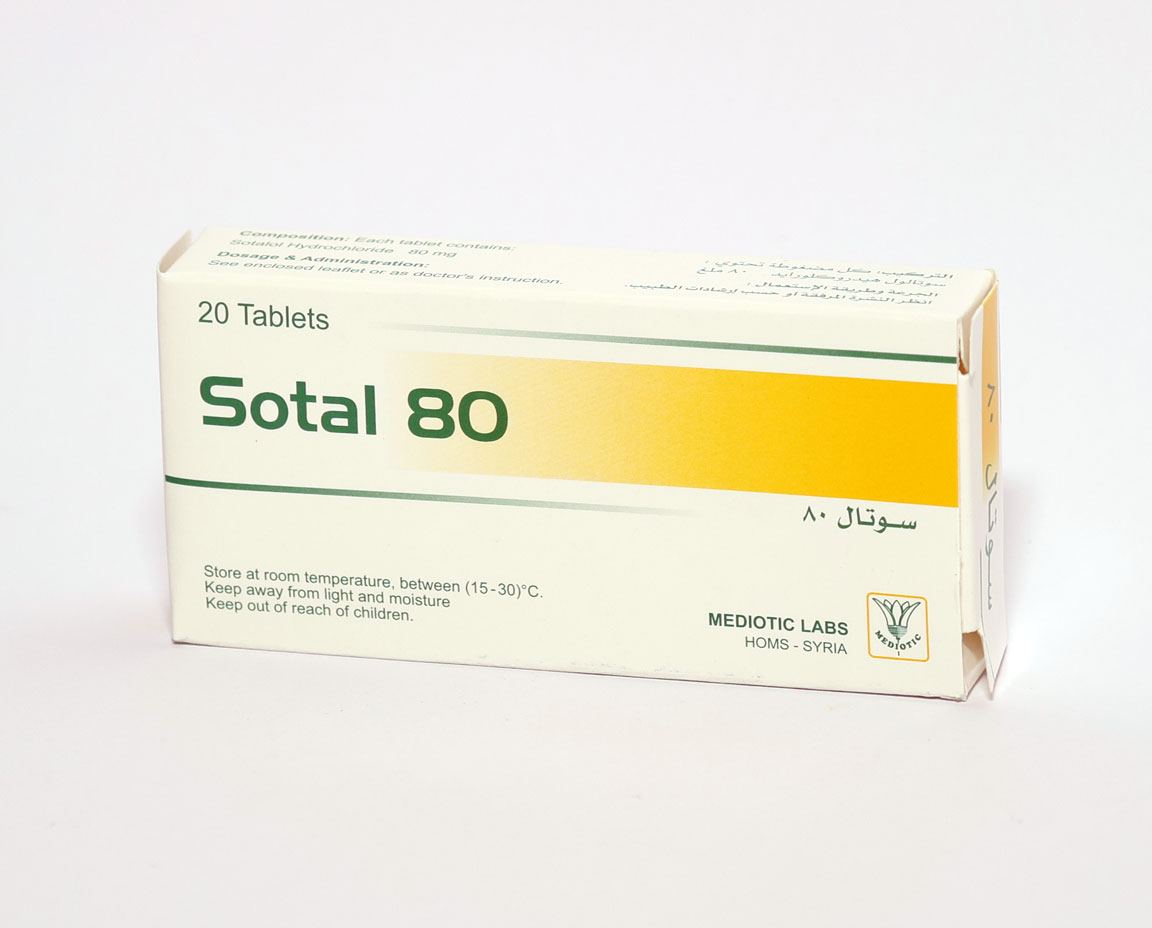
SOTAL 80

Pharmacokinetics:

– Sotalol Hydrochloride is completely absorbed from the gastro-intestinal tract. Peak plasma concentrations are obtained about 2 to 4 hours after a dose. It has low lipid solubility, very little is metabolised and it is excreted unchanged in urine.

– Sotalol Hydrochloride binds to plasma proteins in small percentages, passing the then dispersing into mother’s milk. Indications:

-Sotal is used in the management of ventricular and supraventricular arrhythmias (ventricular tachyarrhythmias, non- sustained ventricular tachyarrhythmias).

Prophylaxis of paroxysmal aterial tachycardia, fibrillation, paroxysmal supraventricular tachycardia after cardiac surgery, and maintenance of sinus rhythm following cardioversion.

In treatment of hypertension and angina pectoris and in thyrocele after your doctor consultation.

Contra-Indications:

-Patients with bronchospasm or asthma.

Sinus bradycardia.

Atrioventricular block (second or third degree).

– Patients with renal failure or Patients with congestive heart failure can’t be controlled.

– Patients with asymptomatic ventricular arrhythmias.

– Congenital or acquired long QT syndrome (torsades de pointes).

– Pregnancy.

Sensitivity to Sotalol Hydrochloride.

Side effects:

Bradycardia, bronchospasm, fatigue, coldness of the extremities, myasthenia, Hypotension, dizziness, sleep disturbances, nausea, skin rash and pruritus, rarely agranulocytosis, and it has arrhythmogenic effect. Precautions:

– The dose may need to be reduced in patients with renal dysfunction.

– Patients on long-term treatment with Sotal should have their medication discontinued gradually over a period of 1-2 weeks.

Serum electrolyte concentrations should be monitored before and during treatment with Sotal.

– The QT interval should be monitored and extreme caution is required if the QT interval exceeds 0.5 second, and Sotal should be discontinued or the dose reduced if the QT interval exceeds 0.55 second.

– It must be taken with caution by patients with: ill sinus node syndrome, new cardiac infarction, thyroid gland disturbances, and diabetes.

It’s not recommended for nursing-mothers for it has been reported to be present in human milk.

Drug Interactions:

– Sotal should not be given concurrently with other drugs that prolong the QT interval due to the increased risk of precipitating ventricular arrhythmias.

– Sotal should not be given with amiodarone, disopyramide, procainamide, quinidine, phenothiazine, astemizole, and erythromycin.

Sotal may potentiate bradycardia due to digoxin.

– Sotal should not be given with drugs that cause electrolyte disturbances such as diuretics.

Dosage & Administration:

– Initiation of Sotal treatment should be in hospital with suitable monitoring facilities.

The QT interval is monitored before the treatment and whenever the dosage is adjusted. Dosage to be determined according to patient’s response.

– Dosage is increased gradually allowing two or three days between dosing increments.

Suggested initial dose is 80 mg daily as a single dose or in two divided doses.

– Most patients respond to doses of 240 mg to 320 mg daily. (Usually given in two divided doses 120-160mg).

Some patients may require doses as high as 460 mg.

– Dose of 80-120 mg daily in treatment of hypertension.

STORAGE CONDITIONS:

– Store at room temperature, between (15-30) °C.

– Keep away from light and moisture

– Keep out of reach of children.

Presentation:

– 2 blisters, each one contains 10 white tablets Sotal 80 / carton box.

– 2 blisters, each one contains 10 pink tablets Sotal 120/carton box.

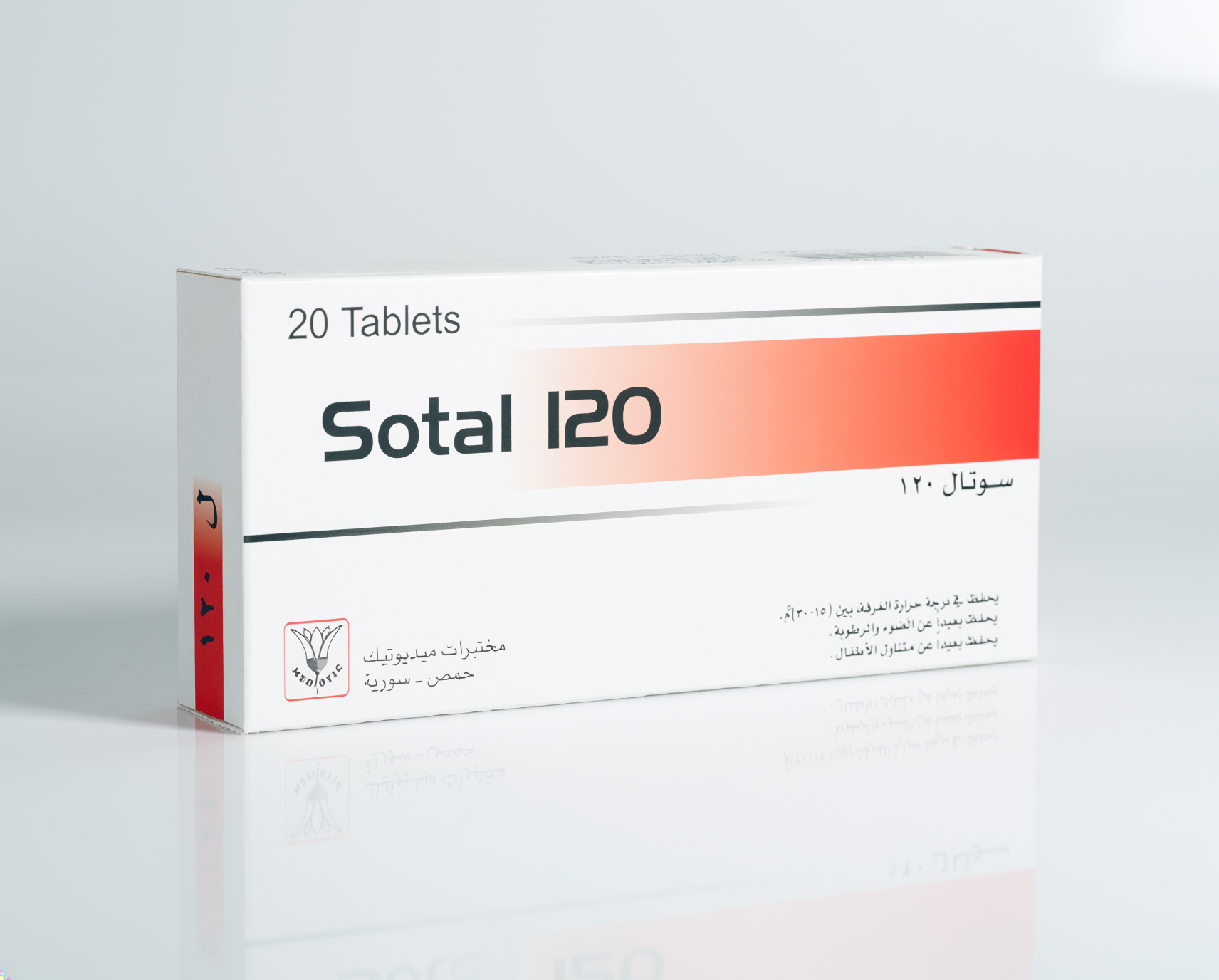
SOTAL 120

Pharmacokinetics:

– Sotalol Hydrochloride is completely absorbed from the gastro-intestinal tract. Peak plasma concentrations are obtained about 2 to 4 hours after a dose. It has low lipid solubility, very little is metabolised and it is excreted unchanged in urine.

– Sotalol Hydrochloride binds to plasma proteins in small percentages, passing the then dispersing into mother’s milk. Indications:

-Sotal is used in the management of ventricular and supraventricular arrhythmias (ventricular tachyarrhythmias, non- sustained ventricular tachyarrhythmias).

Prophylaxis of paroxysmal aterial tachycardia, fibrillation, paroxysmal supraventricular tachycardia after cardiac surgery, and maintenance of sinus rhythm following cardioversion.

In treatment of hypertension and angina pectoris and in thyrocele after your doctor consultation.

Contra-Indications:

-Patients with bronchospasm or asthma.

Sinus bradycardia.

Atrioventricular block (second or third degree).

– Patients with renal failure or Patients with congestive heart failure can’t be controlled.

– Patients with asymptomatic ventricular arrhythmias.

– Congenital or acquired long QT syndrome (torsades de pointes).

– Pregnancy.

Sensitivity to Sotalol Hydrochloride.

Side effects:

Bradycardia, bronchospasm, fatigue, coldness of the extremities, myasthenia, Hypotension, dizziness, sleep disturbances, nausea, skin rash and pruritus, rarely agranulocytosis, and it has arrhythmogenic effect. Precautions:

– The dose may need to be reduced in patients with renal dysfunction.

– Patients on long-term treatment with Sotal should have their medication discontinued gradually over a period of 1-2 weeks.

Serum electrolyte concentrations should be monitored before and during treatment with Sotal.

– The QT interval should be monitored and extreme caution is required if the QT interval exceeds 0.5 second, and Sotal should be discontinued or the dose reduced if the QT interval exceeds 0.55 second.

– It must be taken with caution by patients with: ill sinus node syndrome, new cardiac infarction, thyroid gland disturbances, and diabetes.

It’s not recommended for nursing-mothers for it has been reported to be present in human milk.

Drug Interactions:

– Sotal should not be given concurrently with other drugs that prolong the QT interval due to the increased risk of precipitating ventricular arrhythmias.

– Sotal should not be given with amiodarone, disopyramide, procainamide, quinidine, phenothiazine, astemizole, and erythromycin.

Sotal may potentiate bradycardia due to digoxin.

– Sotal should not be given with drugs that cause electrolyte disturbances such as diuretics.

Dosage & Administration:

– Initiation of Sotal treatment should be in hospital with suitable monitoring facilities.

The QT interval is monitored before the treatment and whenever the dosage is adjusted. Dosage to be determined according to patient’s response.

– Dosage is increased gradually allowing two or three days between dosing increments.

Suggested initial dose is 80 mg daily as a single dose or in two divided doses.

– Most patients respond to doses of 240 mg to 320 mg daily. (Usually given in two divided doses 120-160mg).

Some patients may require doses as high as 460 mg.

– Dose of 80-120 mg daily in treatment of hypertension.

STORAGE CONDITIONS:

– Store at room temperature, between (15-30) °C.

– Keep away from light and moisture

– Keep out of reach of children.

Presentation:

– 2 blisters, each one contains 10 white tablets Sotal 80 / carton box.

– 2 blisters, each one contains 10 pink tablets Sotal 120/carton box.

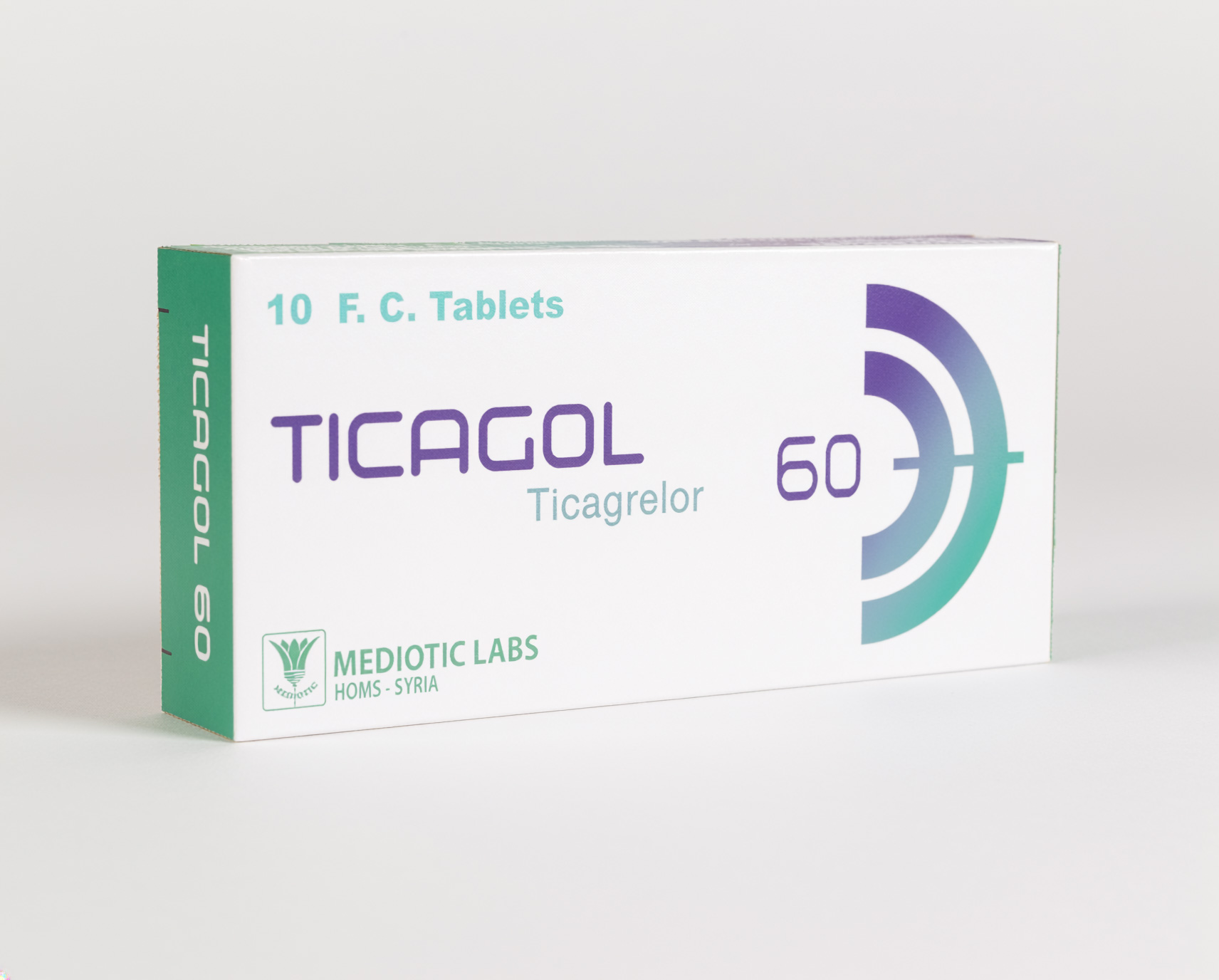
TICAGOL 60

Bleeding Risk:

  • Ticagrelor, like other antiplatelets agents, can cause significant, sometimes fatal bleeding.
  • Do not use Ticagrelor in patients with active pathological bleeding or a history of intracranial hemorrhage.
  • Do not start using Ticagrelor in patients planned to undergo urgent coronary artery bypass graft surgery (CABG). When possible, discontinue Ticagrelor at least 5 days prior to any surgery.
  • Suspect bleeding in any patient who is hypotensive and has recently undergone coronary angiography, percutaneous coronary intervention (PCI), CABG, or other surgical procedures in case of using Ticagrelor.
  • If possible, manage bleeding without discontinuing Ticagrelor. Stopping Ticagrelor increase the risk of subsequent cardiovascular events.
  • Do not stop taking Ticagrelor without talking to your doctor.

Aspirin dose and Ticagrelor effectiveness:

  • Maintenance doses of aspirin above 100 mg reduce the effectiveness of Ticagrelor and should be avoided. After any initial dose, use with Aspirin 75-100 mg per day.

PHARMACOLOGICAL PROPERTIES:

Mechanism of Action:

Ticagrelor and its major metabolites reversibly interact with the platelets P2Y 12 ADP-receptor to prevent signal transduction and platelets activation. Ticagrelor and its active metabolites are approximately equipotent.

Pharmacodynamics:

The maximum IPA (The inhibition of platelets aggregation) effect of Ticagrelor was reached at around 2 hours, and was maintained for at least 8 hours. Pharmacokinetics:

Absorption:

The mean absolute bioavailability of Ticagrelor is about 36%, (range 30%-42%). Ingestion of a high-fat meal had no effect on Ticagrelor Cmax, but resulted in a 21% increase in AUC. The Cmax of its major metabolite was decreased by 22% with no change in AUC. TICAGRELOR can be taken with or without food.

Distribution:

The steady state volume of distribution of Ticagrelor is 88 L. Ticagrelor and the active metabolite are extensively bound to human plasma proteins (>99%).

Metabolism:

CYP3A4 is the major enzyme responsible for Ticagrelor metabolism and the formation of its major active metabolite. Ticagrelor and its major active metabolite are weak P-glycoprotein substrates and inhibitors. The systemic exposure to the active metabolite is approximately 30-40% of the exposure of Ticagrelor.

Excretion:

The primary route of Ticagrelor elimination is hepatic metabolism.

The primary route of elimination for the major metabolite of Ticagrelor is most likely to be biliary secretion. The mean t1/2 is approximately 7 hours for Ticagrelor and 9 hours for the active metabolite. INDICATIONS:

Acute Coronary Syndromes:

TICAGRELOR is a P2Y12 platelets inhibitor indicated to reduce the rate of thrombotic cardiovascular events in patients with acute coronary syndrome (ACS) (unstable angina, non-ST elevation myocardial infarction, or ST elevation myocardial infarction). TICAGRELOR has been shown to reduce the rate of a combined endpoint of cardiovascular death, myocardial infarction or stroke compared to Clopidogrel. In patients treated with PCI, it also reduces the rate of stent thrombosis.

TICAGRELOR has been studied in ACS in combination with Aspirin. Maintenance doses of Aspirin above 100 mg decreased the effectiveness of TICAGRELOR. Avoid maintenance doses of Aspirin above 100 mg daily.

CONTRAINDICATIONS:

History of Intracranial Hemorrhage:

TICAGRELOR is contraindicated in patients with a history of intracranial hemorrhage (ICH) because of the high risk of recurrent ICH in this population.

Active Bleeding:

TICAGRELOR is contraindicated in patients with active pathological bleeding such as peptic ulcer or intracranial hemorrhage. Severe Hepatic Impairment:

TICAGRELOR is contraindicated in patients with severe hepatic impairment because of a probable increase in exposure, and it has not been studied in these patients. Severe hepatic impairment increases the risk of bleeding because of reduced synthesis of coagulation proteins.

Hypersensitivity:

TICAGRELOR is contraindicated in patients with hypersensitivity (e.g. angioedema) to ticagrelor or any component of the product. ADVERSE REACTIONS:

  • Bleeding:

Major bleeding – fatal/life-threatening: Any one of the following: fatal; intracranial; intrapericardial bleeding with cardiac tamponade; hypovolemic shock or severe hypotension due to bleeding and requiring pressors or surgery; clinically overt or apparent bleeding associated with a decrease in hemoglobin (Hb) of more than 5 g/dL; transfusion of 4 or more units (whole blood or packed red blood cells (PRBCs)) for bleeding.

Major bleeding – other: Any one of the following: significantly disabling (e.g., intraocular bleeding with permanent vision loss); clinically overt or apparent bleeding associated with a decrease in Hb of 3 g/dL; transfusion of 2-3 units (whole blood or PRBCs) for bleeding.

Minor bleed: Requires medical intervention to stop or treat bleeding (e.g., epistaxis requiring visit to medical facility for packing).

Minimal bleeding: All others (e.g., bruising, bleeding gums, oozing from injection sites, etc.) not requiring intervention or treatment.

  • Non-hemorrhagic adverse events:

Dyspnea, headache, cough, dizziness, nausea, atrial fibrillation, hypertension, non-cardiac chest pain, diarrhea, back pain, hypotension, fatigue, chest pain, bradycardia, gynecomastia.

  • Lab abnormalities:

Increased levels of serum uric acid, increased serum creatinine levels.

WARNINGS & PRECAUTIONS:

General Risk of Bleeding:

Drugs that inhibit platelets function including TICAGRELOR increase the risk of bleeding. TICAGRELOR increased the overall risk of bleeding (Major + Minor) to a somewhat greater extent than did Clopidogrel. The increase was seen for non CABG-related bleeding, but not for CABG-related bleeding. Fatal and life-threatening bleeding rates were not increased.

In general, risk factors for bleeding include aging, a history of bleeding disorders, performance of percutaneous invasive procedures, and concomitant use of medications that increase the risk of bleeding (e.g., anticoagulant and fibrinolytic therapy, higher doses of Aspirin, and chronic nonsteroidal anti-inflammatory drugs [NSAIDS]).

When possible, discontinue TICAGRELOR five days prior to surgery. Suspect bleeding in any patient who is hypotensive and has recently undergone coronary angiography, PCI, CABG, or other surgical procedures, even if the patient does not have any signs of bleeding.

If possible, manage bleeding without discontinuing TICAGRELOR. Stopping TICAGRELOR increases the risk of subsequent cardiovascular events. 

Concomitant Aspirin Maintenance Dose:

Use of TICAGRELOR with maintenance doses of Aspirin above 100 mg decreased the effectiveness of TICAGRELOR. Therefore, after the initial loading dose of Aspirin (usually 325 mg), use TICAGRELOR with a maintenance dose of Aspirin of 75-100 mg. Moderate Hepatic Impairment:

TICAGRELOR has not been studied in patients with moderate hepatic impairment. Consider the risks and benefits of treatment, noting the probable increase in exposure to Ticagrelor. Dyspnea:

Dyspnea was reported in 14% of patients treated with TICAGRELOR and in 8% of patients taking Clopidogrel. Dyspnea was usually mild to moderate in intensity and often resolved during continued treatment, but occasionally required discontinuation (0.9% of patients taking TICAGRELOR versus 0.1% of patients taking Clopidogrel). If a patient develops new, prolonged, or worsened dyspnea during treatment with TICAGRELOR, exclude underlying diseases that may require treatment. If dyspnea is determined to be related to TICAGRELOR, no specific treatment is required; continue TICAGRELOR without interruption. In the case of intolerable dyspnea requiring discontinuation of TICAGRELOR, consider prescribing another antiplatelets agent.

Discontinuation of TICAGRELOR:

Avoid interruption of TICAGRELOR treatment. If TICAGRELOR must be temporarily discontinued (e.g., to treat bleeding or for elective surgery), restart it as soon as possible. Discontinuation of TICAGRELOR will increase the risk of myocardial infarction, stent thrombosis, and death.

Strong Inhibitors of Cytochrome CYP3A:

Ticagrelor is metabolized by CYP3A4/5. Avoid use with strong CYP3A inhibitors, such as Atazanavir, Clarithromycin, indinavir, Itraconazole, ketoconazole, Nefazodone, Nelfinavir, Ritonavir, Saquinavir, Telithromycin and Voriconazole.

Cytochrome CYP3A Potent Inducers:

Avoid use with potent CYP3A inducers, such as Rifampin, Dexamethasone, Phenytoin, Carbamazepine, and Phenobarbital. DRUG INTERACTIONS:

  • Effects of other drugs:

Ticagrelor is predominantly metabolized by CYP3A4 and to a lesser extent by CYP3A5. Ticagrelor is also a p-glycoprotein (P-gp) substrate.

Strong CYP3A inhibitors:

Avoid use of strong inhibitors of CYP3A (e.g., Ketoconazole, Itraconazole, Voriconazole, Clarithromycin, Nefazodone, Ritonavir, Saquinavir, Nelfinavir, Indinavir, Atazanavir and Telithromycin).

Strong CYP3A inducers:

Avoid use with potent inducers of CYP3A (e.g., Rifampin, Phenytoin, Carbamazepine and Phenobarbital). Aspirin:

Use of TICAGRELOR with Aspirin maintenance doses above 100 mg reduced the effectiveness of TICAGRELOR.

  • Effect of TICAGRELOR on other drugs:

Ticagrelor is an inhibitor of CYP3A4/5 and the P-glycoprotein transporter.

Simvastatin, Lovastatin :

TICAGRELOR will cause an increase at serum concentrations of Simvastatin and Lovastatin because these drugs are metabolized by CYP3A4. Avoid Simvastatin and Lovastatin doses greater than 40 mg.

Digoxin :

Because of inhibition of the P-glycoprotein transporter, monitor Digoxin levels with initiation of or any change in TICAGRELOR therapy.

  • Other Concomitant Therapy

TICAGRELOR can be administered with unfractionated or low-molecular-weight heparin, GPIIb/Illa inhibitors, proton pump inhibitors, beta-blockers, angiotensin converting enzyme inhibitors, and angiotensin receptor blockers. PREGNANCY & LACTATION:

Pregnancy Category C:

There are no adequate and well-controlled studies of TICAGRELOR use in pregnant women. In animal studies, Ticagrelor caused structural abnormalities at maternal doses about 5 to 7 times the maximum recommended human dose (MRHD) based on body surface area. TICAGRELOR should be used during pregnancy only if the potential benefit justifies the potential risk to the fetus. Lactation:

It is not known whether Ticagrelor or its active metabolites are excreted in human milk. Ticagrelor is excreted in rat milk. Because many drugs are excreted in human milk, and because of the potential for serious adverse reactions in nursing infants from TICAGRELOR, a decision should be made whether to discontinue nursing or to discontinue drug, taking into account the importance of the drug to the mother.

PEDIATRIC USE:

The safety and effectiveness of TICAGRELOR in pediatric patients have not been established.

GERIATRIC USE:

The relative risk of bleeding is similar in patients over 65 years and people over 75 years. However, excessive sensitivity cannot be ruled out by some elderly people.

HEPATIC IMPAIRMENT:

TICAGRELOR has not been studied in patients with moderate or severe hepatic impairment. Ticagrelor is metabolized by the liver and impaired hepatic function can increase risks for bleeding and other adverse events. Hence, TICAGRELOR is contraindicated in patients with severe hepatic impairment and its use should be considered carefully in patients with moderate hepatic impairment. No dosage adjustment is needed in patients with mild hepatic impairment.

RENAL IMPAIRMENT:

No dosage adjustment is needed in patients with renal impairment. Patients receiving dialysis have not been studied. DOSAGE AND ADMINISTRATION:

Initiate TICAGRELOR treatment with a 180 mg (two 90 mg tablets) loading dose and continue treatment with 90 mg twice daily. during the first year after an ACS event.

After one year administer 60mg twice daily. Don’t administer Ticagrelor with another oral P2Y12 platelet inhibitor. After the initial loading dose of aspirin (usually 325 mg), use TICAGRELOR with a daily maintenance dose of Aspirin of 75 – 100 mg. A patient who misses a dose of TICAGRELOR should take one 90 mg tablet (at the next dose) at its scheduled time. OVERDOSAGE:

There is currently no known treatment to reverse the effects of TICAGRELOR, and Ticagrelor is not expected to be dialyzable. Treatment of overdose should follow local standard medical practice. Bleeding is the expected pharmacologic effect of overdosing. If bleeding occurs, appropriate supportive measures should be taken.

Other effects of overdosage may include gastrointestinal effects (nausea, vomiting, diarrhea) or ventricular pauses. Monitor the ECG. Packaging: 3 blisters, each contains 10 film-coated tablets/carton box.

1 blisters, each contains 10 film-coated tablets/carton box.

Storage Conditions: “Store at room temperature, 15° – 30° C”

TICAGOL 90

Bleeding Risk:

  • Ticagrelor, like other antiplatelets agents, can cause significant, sometimes fatal bleeding.
  • Do not use Ticagrelor in patients with active pathological bleeding or a history of intracranial hemorrhage.
  • Do not start using Ticagrelor in patients planned to undergo urgent coronary artery bypass graft surgery (CABG). When possible, discontinue Ticagrelor at least 5 days prior to any surgery.
  • Suspect bleeding in any patient who is hypotensive and has recently undergone coronary angiography, percutaneous coronary intervention (PCI), CABG, or other surgical procedures in case of using Ticagrelor.
  • If possible, manage bleeding without discontinuing Ticagrelor. Stopping Ticagrelor increase the risk of subsequent cardiovascular events.
  • Do not stop taking Ticagrelor without talking to your doctor.

Aspirin dose and Ticagrelor effectiveness:

  • Maintenance doses of aspirin above 100 mg reduce the effectiveness of Ticagrelor and should be avoided. After any initial dose, use with Aspirin 75-100 mg per day.

PHARMACOLOGICAL PROPERTIES:

Mechanism of Action:

Ticagrelor and its major metabolites reversibly interact with the platelets P2Y 12 ADP-receptor to prevent signal transduction and platelets activation. Ticagrelor and its active metabolites are approximately equipotent.

Pharmacodynamics:

The maximum IPA (The inhibition of platelets aggregation) effect of Ticagrelor was reached at around 2 hours, and was maintained for at least 8 hours. Pharmacokinetics:

Absorption:

The mean absolute bioavailability of Ticagrelor is about 36%, (range 30%-42%). Ingestion of a high-fat meal had no effect on Ticagrelor Cmax, but resulted in a 21% increase in AUC. The Cmax of its major metabolite was decreased by 22% with no change in AUC. TICAGRELOR can be taken with or without food.

Distribution:

The steady state volume of distribution of Ticagrelor is 88 L. Ticagrelor and the active metabolite are extensively bound to human plasma proteins (>99%).

Metabolism:

CYP3A4 is the major enzyme responsible for Ticagrelor metabolism and the formation of its major active metabolite. Ticagrelor and its major active metabolite are weak P-glycoprotein substrates and inhibitors. The systemic exposure to the active metabolite is approximately 30-40% of the exposure of Ticagrelor.

Excretion:

The primary route of Ticagrelor elimination is hepatic metabolism.

The primary route of elimination for the major metabolite of Ticagrelor is most likely to be biliary secretion. The mean t1/2 is approximately 7 hours for Ticagrelor and 9 hours for the active metabolite. INDICATIONS:

Acute Coronary Syndromes:

TICAGRELOR is a P2Y12 platelets inhibitor indicated to reduce the rate of thrombotic cardiovascular events in patients with acute coronary syndrome (ACS) (unstable angina, non-ST elevation myocardial infarction, or ST elevation myocardial infarction). TICAGRELOR has been shown to reduce the rate of a combined endpoint of cardiovascular death, myocardial infarction or stroke compared to Clopidogrel. In patients treated with PCI, it also reduces the rate of stent thrombosis.

TICAGRELOR has been studied in ACS in combination with Aspirin. Maintenance doses of Aspirin above 100 mg decreased the effectiveness of TICAGRELOR. Avoid maintenance doses of Aspirin above 100 mg daily.

CONTRAINDICATIONS:

History of Intracranial Hemorrhage:

TICAGRELOR is contraindicated in patients with a history of intracranial hemorrhage (ICH) because of the high risk of recurrent ICH in this population.

Active Bleeding:

TICAGRELOR is contraindicated in patients with active pathological bleeding such as peptic ulcer or intracranial hemorrhage. Severe Hepatic Impairment:

TICAGRELOR is contraindicated in patients with severe hepatic impairment because of a probable increase in exposure, and it has not been studied in these patients. Severe hepatic impairment increases the risk of bleeding because of reduced synthesis of coagulation proteins.

Hypersensitivity:

TICAGRELOR is contraindicated in patients with hypersensitivity (e.g. angioedema) to ticagrelor or any component of the product. ADVERSE REACTIONS:

  • Bleeding:

Major bleeding – fatal/life-threatening: Any one of the following: fatal; intracranial; intrapericardial bleeding with cardiac tamponade; hypovolemic shock or severe hypotension due to bleeding and requiring pressors or surgery; clinically overt or apparent bleeding associated with a decrease in hemoglobin (Hb) of more than 5 g/dL; transfusion of 4 or more units (whole blood or packed red blood cells (PRBCs)) for bleeding.

Major bleeding – other: Any one of the following: significantly disabling (e.g., intraocular bleeding with permanent vision loss); clinically overt or apparent bleeding associated with a decrease in Hb of 3 g/dL; transfusion of 2-3 units (whole blood or PRBCs) for bleeding.

Minor bleed: Requires medical intervention to stop or treat bleeding (e.g., epistaxis requiring visit to medical facility for packing).

Minimal bleeding: All others (e.g., bruising, bleeding gums, oozing from injection sites, etc.) not requiring intervention or treatment.

  • Non-hemorrhagic adverse events:

Dyspnea, headache, cough, dizziness, nausea, atrial fibrillation, hypertension, non-cardiac chest pain, diarrhea, back pain, hypotension, fatigue, chest pain, bradycardia, gynecomastia.

  • Lab abnormalities:

Increased levels of serum uric acid, increased serum creatinine levels.

WARNINGS & PRECAUTIONS:

General Risk of Bleeding:

Drugs that inhibit platelets function including TICAGRELOR increase the risk of bleeding. TICAGRELOR increased the overall risk of bleeding (Major + Minor) to a somewhat greater extent than did Clopidogrel. The increase was seen for non CABG-related bleeding, but not for CABG-related bleeding. Fatal and life-threatening bleeding rates were not increased.

In general, risk factors for bleeding include aging, a history of bleeding disorders, performance of percutaneous invasive procedures, and concomitant use of medications that increase the risk of bleeding (e.g., anticoagulant and fibrinolytic therapy, higher doses of Aspirin, and chronic nonsteroidal anti-inflammatory drugs [NSAIDS]).

When possible, discontinue TICAGRELOR five days prior to surgery. Suspect bleeding in any patient who is hypotensive and has recently undergone coronary angiography, PCI, CABG, or other surgical procedures, even if the patient does not have any signs of bleeding.

If possible, manage bleeding without discontinuing TICAGRELOR. Stopping TICAGRELOR increases the risk of subsequent cardiovascular events. 

Concomitant Aspirin Maintenance Dose:

Use of TICAGRELOR with maintenance doses of Aspirin above 100 mg decreased the effectiveness of TICAGRELOR. Therefore, after the initial loading dose of Aspirin (usually 325 mg), use TICAGRELOR with a maintenance dose of Aspirin of 75-100 mg. Moderate Hepatic Impairment:

TICAGRELOR has not been studied in patients with moderate hepatic impairment. Consider the risks and benefits of treatment, noting the probable increase in exposure to Ticagrelor. Dyspnea:

Dyspnea was reported in 14% of patients treated with TICAGRELOR and in 8% of patients taking Clopidogrel. Dyspnea was usually mild to moderate in intensity and often resolved during continued treatment, but occasionally required discontinuation (0.9% of patients taking TICAGRELOR versus 0.1% of patients taking Clopidogrel). If a patient develops new, prolonged, or worsened dyspnea during treatment with TICAGRELOR, exclude underlying diseases that may require treatment. If dyspnea is determined to be related to TICAGRELOR, no specific treatment is required; continue TICAGRELOR without interruption. In the case of intolerable dyspnea requiring discontinuation of TICAGRELOR, consider prescribing another antiplatelets agent.

Discontinuation of TICAGRELOR:

Avoid interruption of TICAGRELOR treatment. If TICAGRELOR must be temporarily discontinued (e.g., to treat bleeding or for elective surgery), restart it as soon as possible. Discontinuation of TICAGRELOR will increase the risk of myocardial infarction, stent thrombosis, and death.

Strong Inhibitors of Cytochrome CYP3A:

Ticagrelor is metabolized by CYP3A4/5. Avoid use with strong CYP3A inhibitors, such as Atazanavir, Clarithromycin, indinavir, Itraconazole, ketoconazole, Nefazodone, Nelfinavir, Ritonavir, Saquinavir, Telithromycin and Voriconazole.

Cytochrome CYP3A Potent Inducers:

Avoid use with potent CYP3A inducers, such as Rifampin, Dexamethasone, Phenytoin, Carbamazepine, and Phenobarbital. DRUG INTERACTIONS:

  • Effects of other drugs:

Ticagrelor is predominantly metabolized by CYP3A4 and to a lesser extent by CYP3A5. Ticagrelor is also a p-glycoprotein (P-gp) substrate.

Strong CYP3A inhibitors:

Avoid use of strong inhibitors of CYP3A (e.g., Ketoconazole, Itraconazole, Voriconazole, Clarithromycin, Nefazodone, Ritonavir, Saquinavir, Nelfinavir, Indinavir, Atazanavir and Telithromycin).

Strong CYP3A inducers:

Avoid use with potent inducers of CYP3A (e.g., Rifampin, Phenytoin, Carbamazepine and Phenobarbital). Aspirin:

Use of TICAGRELOR with Aspirin maintenance doses above 100 mg reduced the effectiveness of TICAGRELOR.

  • Effect of TICAGRELOR on other drugs:

Ticagrelor is an inhibitor of CYP3A4/5 and the P-glycoprotein transporter.

Simvastatin, Lovastatin :

TICAGRELOR will cause an increase at serum concentrations of Simvastatin and Lovastatin because these drugs are metabolized by CYP3A4. Avoid Simvastatin and Lovastatin doses greater than 40 mg.

Digoxin :

Because of inhibition of the P-glycoprotein transporter, monitor Digoxin levels with initiation of or any change in TICAGRELOR therapy.

  • Other Concomitant Therapy

TICAGRELOR can be administered with unfractionated or low-molecular-weight heparin, GPIIb/Illa inhibitors, proton pump inhibitors, beta-blockers, angiotensin converting enzyme inhibitors, and angiotensin receptor blockers. PREGNANCY & LACTATION:

Pregnancy Category C:

There are no adequate and well-controlled studies of TICAGRELOR use in pregnant women. In animal studies, Ticagrelor caused structural abnormalities at maternal doses about 5 to 7 times the maximum recommended human dose (MRHD) based on body surface area. TICAGRELOR should be used during pregnancy only if the potential benefit justifies the potential risk to the fetus. Lactation:

It is not known whether Ticagrelor or its active metabolites are excreted in human milk. Ticagrelor is excreted in rat milk. Because many drugs are excreted in human milk, and because of the potential for serious adverse reactions in nursing infants from TICAGRELOR, a decision should be made whether to discontinue nursing or to discontinue drug, taking into account the importance of the drug to the mother.

PEDIATRIC USE:

The safety and effectiveness of TICAGRELOR in pediatric patients have not been established.

GERIATRIC USE:

The relative risk of bleeding is similar in patients over 65 years and people over 75 years. However, excessive sensitivity cannot be ruled out by some elderly people.

HEPATIC IMPAIRMENT:

TICAGRELOR has not been studied in patients with moderate or severe hepatic impairment. Ticagrelor is metabolized by the liver and impaired hepatic function can increase risks for bleeding and other adverse events. Hence, TICAGRELOR is contraindicated in patients with severe hepatic impairment and its use should be considered carefully in patients with moderate hepatic impairment. No dosage adjustment is needed in patients with mild hepatic impairment.

RENAL IMPAIRMENT:

No dosage adjustment is needed in patients with renal impairment. Patients receiving dialysis have not been studied. DOSAGE AND ADMINISTRATION:

Initiate TICAGRELOR treatment with a 180 mg (two 90 mg tablets) loading dose and continue treatment with 90 mg twice daily. during the first year after an ACS event.

After one year administer 60mg twice daily. Don’t administer Ticagrelor with another oral P2Y12 platelet inhibitor. After the initial loading dose of aspirin (usually 325 mg), use TICAGRELOR with a daily maintenance dose of Aspirin of 75 – 100 mg. A patient who misses a dose of TICAGRELOR should take one 90 mg tablet (at the next dose) at its scheduled time. OVERDOSAGE:

There is currently no known treatment to reverse the effects of TICAGRELOR, and Ticagrelor is not expected to be dialyzable. Treatment of overdose should follow local standard medical practice. Bleeding is the expected pharmacologic effect of overdosing. If bleeding occurs, appropriate supportive measures should be taken.

Other effects of overdosage may include gastrointestinal effects (nausea, vomiting, diarrhea) or ventricular pauses. Monitor the ECG. Packaging: 3 blisters, each contains 10 film-coated tablets/carton box.

1 blisters, each contains 10 film-coated tablets/carton box.

Storage Conditions: “Store at room temperature, 15° – 30° C”

MEDIOCARD 40

Excipients: Magnesium stearate, Sorbitol,Sodium hydroxide, Microcrystalline cellulose (MCC), Cross carmellose sodium, Povidon,Starch. The use of angiotensin II receptor antagonists is not recommended during the first trimester of pregnancy. Warnings box:

The use of angiotensin II receptor antagonists is contraindicated during the second and third trimesters of pregnancy (see sections: Warnings and Pregnancy).

:

PHARMACOLOGICAL CLASSIFICATION: Antihypertensive drugs.

PHARMACODYNAMIC EFFECTS: Mechanism of action:

Telmisartan is an orally active and specific angiotensin II receptor (type AT1) antagonist. Telmisartan displaces angiotensin II with very high affinity from its binding site at the AT1 receptor subtype, which is responsible for the known actions of angiotensin II.

In human, an 80 mg dose of telmisartan almost completely inhibits the angiotensin II evoked blood pressure increase. The inhibitory effect is maintained over 24 hours and still measurable up to 48 hours.

PHARMACOKINETICS:

Absorption: Absorption of telmisartan is rapid although the amount absorbed varies. The mean absolute bioavailability for telmisartan is about 50%.

Distribution: Telmisartan is largely bound to plasma protein (>99.5%)

Metabolism: Telmisartan is metabolised by conjugation to the glucuronide of the parent compound.

Elimination: terminal elimination half-life of >20 hours. After oral (and intravenous) administration telmisartan is nearly exclusively excreted with the faeces, mainly as unchanged compound. Cumulative urinary excretion is <1% of dose. Total plasma clearance (Cltot) is high (approximately 1,000 ml/min) compared with hepatic blood flow (about 1,500 ml/min).

Special populations:

Gender. Differences in plasma concentrations were observed, with Cmax and AUC being approximately 3- and 2-fold higher, respectively, in females compared to males.

Elderly: The pharmacokinetics of telmisartan do not differ between the elderly and those younger than 65 years.

Renal impairment: In patients with mild to moderate and severe renal impairment, doubling of plasma concentrations was observed. However, lower plasma concentrations were observed in patients with renal insufficiency undergoing dialysis. Telmisartan is highly bound to plasma protein in renalinsufficient patients and cannot be removed by dialysis. The elimination half-life is not changed in patients with renal impairment.

Hepatic impairment: Pharmacokinetic studies in patients with hepatic impairment showed an increase in absolute bioavailability up to nearly 100 %.

INDICATIONS:

Hypertension: Treatment of essential hypertension in adults.

Cardiovascular prevention: Reduction of cardiovascular morbidity in adults with:

  • manifest atherothrombotic cardiovascular disease (history of coronary heart disease, stroke, or peripheral arterial disease)

⚫ type 2 diabetes mellitus with documented target organ damage.

CONTRAINDICATIONS:

  • Hypersensitivity to the active substance or to any of the excipients.
  • Second and third trimesters of pregnancy.
  • Biliary obstructive disorders
  • Severe hepatic impairment

The concomitant use of Telmisartan with aliskiren-containing products is contraindicated in patients with diabetes mellitus or renal impairment (GFR< 60 ml/min/1.73 m2).

ADVERSE EFFECTS:

Uncommon: Urinary tract infection including cystitis, upper respiratory tract infection including pharyngitis and sinusitis, Anaemia, Hyperkalaemia, Insomnia, depression, Syncope, Vertigo, Bradycardia, Hypotension, orthostatic hypotension, Dyspnoea, cough, Abdominal pain, diarrhoea, dyspepsia, flatulence, vomiting, Pruritus, hyperhidrosis, rash, Back pain (e.g. sciatica), muscle spasms, myalgia, Renal impairment including acute renal failure, Chest pain, asthenia (weakness), Blood creatinine increased.

EFFECTS ON ABILITY TO DRIVE AND USE MACHINES:

It should be taken into account that dizziness or drowsiness may occasionally occur when taking Telmisartan. WARNINGS AND PRECAUTIONS:

Pregnancy:

Angiotensin II receptor antagonists should not be initiated during pregnancy. When pregnancy is diagnosed, treatment with angiotensin II receptor antagonists should be stopped immediately, and, if appropriate, alternative therapy should be started Hepatic impairment:

Telmisartan is not to be given to patients with cholestasis, biliary obstructive disorders or severe hepatic impairment. Telmisartan should be used only with caution in patients with mild to moderate hepatic impairment.

Renovascular hypertension:

There is an increased risk of severe hypotension and renal insufficiency when patients with bilateral renal artery stenosis or stenosis of the artery to a single functioning kidney are treated with medicinal products that affect the reninangiotensin-aldosterone system. Renal impairment and kidney transplantation:

When Telmisartan is used in patients with impaired renal function, periodic monitoring of potassium and creatinine serum levels is recommended. There is no experience regarding the administration of Telmisartan in patients with recent kidney transplantation. Intravascular hypovolaemia:

Symptomatic hypotension, especially after the first dose of Telmisartan, may occur in patients who are volume and/or sodium depleted by vigorous diuretic therapy, dietary salt restriction, diarrhoea, or vomiting. Volume and/or sodium depletion should be corrected prior to administration of Telmisartan .

Dual blockade of the renin-angiotensin-aldosterone system (RAAS):

The concomitant use of ACE-inhibitors, angiotensin II receptor blockers or aliskiren is not recommended because it increases the risk of hypotension, hyperkalaemia and decreased renal function (including acute renal failure). If dual blockade therapy is considered absolutely necessary, this should only occur under specialist supervision and subject to frequent close monitoring of renal function, electrolytes and blood pressure.

ACE-inhibitors and angiotensin II receptor blockers should not be used concomitantly in patients with diabetic nephropathy.

Other conditions with stimulation of the renin-angiotensin-aldosterone system:

In patients whose vascular tone and renal function depend predominantly on the activity of the renin-angiotensin aldosterone system (e.g. patients with severe congestive heart failure or underlying renal disease, including renal artery stenosis), treatment with telmisartan has been associated with acute hypotension, hyperazotaemia, oliguria, or rarely acute renal failure.

Primary aldosteronism:

Patients with primary aldosteronism generally will not respond to antihypertensive medicinal products acting through inhibition of the renin- angiotensin system. Therefore, the use of telmisartan is not recommended.

Aortic and mitral valve stenosis, obstructive hypertrophic cardiomyopathy:

As with other vasodilators, special caution is indicated in patients suffering from aortic or mitral stenosis, or obstructive hypertrophic cardiomyopathy.

Diabetic patients treated with insulin or antidiabetics:

In these patients hypoglycaemia may occur under telmisartan treatment. Therefore, in these patients an approptiate blood glucose monitoring should be considered; a dose adjustment of insulin or antidiabetics may be required, when indicated.

Hyperkalaemia:

The use of medicinal products that affect the renin-angiotensin-aldosterone system may cause hyperkalaemia. The main risk factors for hyperkalaemia to be considered are:

– Diabetes mellitus, renal impairment, age (>70 years)

– Combination with one or more other medicinal products that affect the renin-angiotensin-aldosterone system and/or potassium supplements.

– Intercurrent events, in particular dehydratation, acute cardiac decompensation, metabolic acidosis, worsening of renal function, sudden worsening of the renal condition (e.g. infectious diseases), cellular lysis (e.g. acute limb ischemia, rhabdomyolysis, extend trauma). Close monitoring of serum potassium in at risk patients is recommended.

Sorbitol:

This medicinal product contains sorbitol (E420). Patients with rare hereditary problems of fructose intolerance should not take it. Ethnic differences:

Telmisartan is apparently less effective in lowering blood pressure in black people than in non-blacks, possibly because of higher prevalence of low-renin states in the black hypertensive population.

Other:

As with any antihypertensive agent, excessive reduction of blood pressure in patients with ischaemic cardiopathy or ischaemic cardiovascular disease could result in a myocardial infarction or stroke.

DRUG INTERACTIONS:

Digoxin

When telmisartan was co-administered with digoxin, median increases in digoxin peak plasma concentration and in trough concentration were observed. When initiating, adjusting, and discontinuing telmisartan, monitor digoxin levels in order to maintain levels within the therapeutic range.

Medicinal products that may also provoke hyperkalaemia: Telmisartan may provoke hyperkalaemia. The risk may increase in case of treatment combination with other medicinal products that may also provoke hyperkalaemia (salt substitutes containing potassium, potassium- sparing diuretics, ACE inhibitors, angiotensin II receptor antagonists, non steroidal anti-inflammatory medicinal products (NSAIDs, including selective COX-2 inhibitors), heparin, immunosuppressives (cyclosporin or tacrolimus), and trimethoprim).

Concomitant use not recommended:

Potassium sparing diuretics or potassium supplements: such as spirinolactone, eplerenone, triamterene, or amiloride, potassium supplements, or potassium-containing salt substitutes may lead to a significant increase in serum potassium. Lithium

Reversible increases in serum lithium concentrations and toxicity have been reported during concomitant administration of lithium with Telmisartan.

Concomitant use requiring caution:

Non-steroidal anti-inflammatory medicinal products: (i.e. acetylsalicylic acid at anti-inflammatory dosage regimens, COX-2 inhibitors and non- selective NSAIDs) may reduce the antihypertensive effect of angiotensin II receptor antagonists. Therefore, the combination should be administered with caution, especially in the elderly. Patients should be adequately hydrated and consideration should be given to monitoring of renal function after initiation of concomitant therapy and periodically thereafter.

Ramipril: the co-administration of telmisartan and ramipril led to an increase the AUC and Cmax of ramipril and ramiprilat. Diuretics (thiazide or loop diuretics):

Prior treatment with high dose diuretics such as furosemide (loop diuretic) and hydrochlorothiazide (thiazide diuretic) may result in volume depletion and in a risk of hypotension when initiating therapy with telmisartan. To be taken into account with concomitant use:

Other antihypertensive agents:

The blood pressure lowering effect of telmisartan can be increased by concomitant use of other antihypertensive medicinal products. Furthermore, orthostatic hypotension may be aggravated by alcohol, barbiturates, narcotics or antidepressants. Corticosteroids (systemic route): Reduction of the antihypertensive effect.

PREGNANCY AND LACTATION:

Pregnancy:

Pregnancy category: 1st trimester: C, 2nd and 3rd trimesters : D.

The use of angiotensin II receptor antagonists is not recommended during the first trimester of pregnancy.

The use of angiotensin II receptor antagonists is contraindicated during the second and third trimesters of pregnancy.

When pregnancy is diagnosed, treatment with angiotensin II receptor antagonists should be stopped immediately, and, if appropriate, alternative therapy should be started.

Should exposure to angiotensin II receptor antagonists have occurred from the second trimester of pregnancy, ultrasound check of renal function and skull is recommended.

Infants whose mothers have taken angiotensin II receptor antagonists should be closely observed for hypotension. Lactation:

Telmisartan is not recommended and alternative treatments with better established safety profiles during breast-feeding are preferable, especially while nursing a newborn or preterm infant.

DOSAGE AND ADMINISTRATION:

Method of administration:

Telmisartan tablets are for once-daily oral administration and should be taken with liquid, with or without food.

Tablets should be taken out of the blister shortly before administration due to the hygroscopic property of the tablets. Treatment of essential hypertension:

The usually effective dose is 40 mg once daily. Some patients may already benefit at a daily dose of 20 mg. In cases where the target blood pressure is not achieved, the dose of telmisartan can be increased to a maximum of 80 mg once daily. It must be borne in mind that the maximum antihypertensive effect is generally attained four to eight weeks after the start of treatment

Cardiovascular prevention:

The recommended dose is 80 mg once daily. When initiating telmisartan therapy for the reduction of cardiovascular morbidity, close monitoring of blood pressure is recommended, and if appropriate adjustment of medications that lower blood pressure may be necessary. Patients with renal impairment:

A lower starting dose of 20 mg is recommended in patients with severe renal impairment or haemodialysis. No posology adjustment is required for patients with mild to moderate renal impairment.

Patients with hepatic impairment:

Telmisartan is contraindicated in patients with severe hepatic impairment. In patients with mild to moderate hepatic impairment, the posology should not exceed 40 mg once daily.

Elderly patients:

No dose adjustment is necessary for elderly patients.

Pediatric populations:

The safety and efficacy of Telmisartan in children and adolescents aged below 18 years have not been established. OVERDOSAGE:

Symptoms: Hypotension and tachycardia; bradycardia, dizziness, increase in serum creatinine, and acute renal failure have been reported. Treatment: Telmisartan is not removed by haemodialysis. The patient should be closely monitored, and the treatment should be symptomatic and supportive. Suggested measures include induction of emesis and / or gastric lavage. Activated charcoal may be useful in the treatment of overdosage. STORAGE: “Keep at temperature below 25 °c.

“Protect from moisture”

MEDIOCARD 80

Excipients: Magnesium stearate, Sorbitol,Sodium hydroxide, Microcrystalline cellulose (MCC), Cross carmellose sodium, Povidon,Starch. The use of angiotensin II receptor antagonists is not recommended during the first trimester of pregnancy. Warnings box:

The use of angiotensin II receptor antagonists is contraindicated during the second and third trimesters of pregnancy (see sections: Warnings and Pregnancy).

:

PHARMACOLOGICAL CLASSIFICATION: Antihypertensive drugs.

PHARMACODYNAMIC EFFECTS: Mechanism of action:

Telmisartan is an orally active and specific angiotensin II receptor (type AT1) antagonist. Telmisartan displaces angiotensin II with very high affinity from its binding site at the AT1 receptor subtype, which is responsible for the known actions of angiotensin II.

In human, an 80 mg dose of telmisartan almost completely inhibits the angiotensin II evoked blood pressure increase. The inhibitory effect is maintained over 24 hours and still measurable up to 48 hours.

PHARMACOKINETICS:

Absorption: Absorption of telmisartan is rapid although the amount absorbed varies. The mean absolute bioavailability for telmisartan is about 50%.

Distribution: Telmisartan is largely bound to plasma protein (>99.5%)

Metabolism: Telmisartan is metabolised by conjugation to the glucuronide of the parent compound.

Elimination: terminal elimination half-life of >20 hours. After oral (and intravenous) administration telmisartan is nearly exclusively excreted with the faeces, mainly as unchanged compound. Cumulative urinary excretion is <1% of dose. Total plasma clearance (Cltot) is high (approximately 1,000 ml/min) compared with hepatic blood flow (about 1,500 ml/min).

Special populations:

Gender. Differences in plasma concentrations were observed, with Cmax and AUC being approximately 3- and 2-fold higher, respectively, in females compared to males.

Elderly: The pharmacokinetics of telmisartan do not differ between the elderly and those younger than 65 years.

Renal impairment: In patients with mild to moderate and severe renal impairment, doubling of plasma concentrations was observed. However, lower plasma concentrations were observed in patients with renal insufficiency undergoing dialysis. Telmisartan is highly bound to plasma protein in renalinsufficient patients and cannot be removed by dialysis. The elimination half-life is not changed in patients with renal impairment.

Hepatic impairment: Pharmacokinetic studies in patients with hepatic impairment showed an increase in absolute bioavailability up to nearly 100 %.

INDICATIONS:

Hypertension: Treatment of essential hypertension in adults.

Cardiovascular prevention: Reduction of cardiovascular morbidity in adults with:

  • manifest atherothrombotic cardiovascular disease (history of coronary heart disease, stroke, or peripheral arterial disease)

⚫ type 2 diabetes mellitus with documented target organ damage.

CONTRAINDICATIONS:

  • Hypersensitivity to the active substance or to any of the excipients.
  • Second and third trimesters of pregnancy.
  • Biliary obstructive disorders
  • Severe hepatic impairment

The concomitant use of Telmisartan with aliskiren-containing products is contraindicated in patients with diabetes mellitus or renal impairment (GFR< 60 ml/min/1.73 m2).

ADVERSE EFFECTS:

Uncommon: Urinary tract infection including cystitis, upper respiratory tract infection including pharyngitis and sinusitis, Anaemia, Hyperkalaemia, Insomnia, depression, Syncope, Vertigo, Bradycardia, Hypotension, orthostatic hypotension, Dyspnoea, cough, Abdominal pain, diarrhoea, dyspepsia, flatulence, vomiting, Pruritus, hyperhidrosis, rash, Back pain (e.g. sciatica), muscle spasms, myalgia, Renal impairment including acute renal failure, Chest pain, asthenia (weakness), Blood creatinine increased.

EFFECTS ON ABILITY TO DRIVE AND USE MACHINES:

It should be taken into account that dizziness or drowsiness may occasionally occur when taking Telmisartan. WARNINGS AND PRECAUTIONS:

Pregnancy:

Angiotensin II receptor antagonists should not be initiated during pregnancy. When pregnancy is diagnosed, treatment with angiotensin II receptor antagonists should be stopped immediately, and, if appropriate, alternative therapy should be started Hepatic impairment:

Telmisartan is not to be given to patients with cholestasis, biliary obstructive disorders or severe hepatic impairment. Telmisartan should be used only with caution in patients with mild to moderate hepatic impairment.

Renovascular hypertension:

There is an increased risk of severe hypotension and renal insufficiency when patients with bilateral renal artery stenosis or stenosis of the artery to a single functioning kidney are treated with medicinal products that affect the reninangiotensin-aldosterone system. Renal impairment and kidney transplantation:

When Telmisartan is used in patients with impaired renal function, periodic monitoring of potassium and creatinine serum levels is recommended. There is no experience regarding the administration of Telmisartan in patients with recent kidney transplantation. Intravascular hypovolaemia:

Symptomatic hypotension, especially after the first dose of Telmisartan, may occur in patients who are volume and/or sodium depleted by vigorous diuretic therapy, dietary salt restriction, diarrhoea, or vomiting. Volume and/or sodium depletion should be corrected prior to administration of Telmisartan .

Dual blockade of the renin-angiotensin-aldosterone system (RAAS):

The concomitant use of ACE-inhibitors, angiotensin II receptor blockers or aliskiren is not recommended because it increases the risk of hypotension, hyperkalaemia and decreased renal function (including acute renal failure). If dual blockade therapy is considered absolutely necessary, this should only occur under specialist supervision and subject to frequent close monitoring of renal function, electrolytes and blood pressure.

ACE-inhibitors and angiotensin II receptor blockers should not be used concomitantly in patients with diabetic nephropathy.

Other conditions with stimulation of the renin-angiotensin-aldosterone system:

In patients whose vascular tone and renal function depend predominantly on the activity of the renin-angiotensin aldosterone system (e.g. patients with severe congestive heart failure or underlying renal disease, including renal artery stenosis), treatment with telmisartan has been associated with acute hypotension, hyperazotaemia, oliguria, or rarely acute renal failure.

Primary aldosteronism:

Patients with primary aldosteronism generally will not respond to antihypertensive medicinal products acting through inhibition of the renin- angiotensin system. Therefore, the use of telmisartan is not recommended.

Aortic and mitral valve stenosis, obstructive hypertrophic cardiomyopathy:

As with other vasodilators, special caution is indicated in patients suffering from aortic or mitral stenosis, or obstructive hypertrophic cardiomyopathy.

Diabetic patients treated with insulin or antidiabetics:

In these patients hypoglycaemia may occur under telmisartan treatment. Therefore, in these patients an approptiate blood glucose monitoring should be considered; a dose adjustment of insulin or antidiabetics may be required, when indicated.

Hyperkalaemia:

The use of medicinal products that affect the renin-angiotensin-aldosterone system may cause hyperkalaemia. The main risk factors for hyperkalaemia to be considered are:

– Diabetes mellitus, renal impairment, age (>70 years)

– Combination with one or more other medicinal products that affect the renin-angiotensin-aldosterone system and/or potassium supplements.

– Intercurrent events, in particular dehydratation, acute cardiac decompensation, metabolic acidosis, worsening of renal function, sudden worsening of the renal condition (e.g. infectious diseases), cellular lysis (e.g. acute limb ischemia, rhabdomyolysis, extend trauma). Close monitoring of serum potassium in at risk patients is recommended.

Sorbitol:

This medicinal product contains sorbitol (E420). Patients with rare hereditary problems of fructose intolerance should not take it. Ethnic differences:

Telmisartan is apparently less effective in lowering blood pressure in black people than in non-blacks, possibly because of higher prevalence of low-renin states in the black hypertensive population.

Other:

As with any antihypertensive agent, excessive reduction of blood pressure in patients with ischaemic cardiopathy or ischaemic cardiovascular disease could result in a myocardial infarction or stroke.

DRUG INTERACTIONS:

Digoxin

When telmisartan was co-administered with digoxin, median increases in digoxin peak plasma concentration and in trough concentration were observed. When initiating, adjusting, and discontinuing telmisartan, monitor digoxin levels in order to maintain levels within the therapeutic range.

Medicinal products that may also provoke hyperkalaemia: Telmisartan may provoke hyperkalaemia. The risk may increase in case of treatment combination with other medicinal products that may also provoke hyperkalaemia (salt substitutes containing potassium, potassium- sparing diuretics, ACE inhibitors, angiotensin II receptor antagonists, non steroidal anti-inflammatory medicinal products (NSAIDs, including selective COX-2 inhibitors), heparin, immunosuppressives (cyclosporin or tacrolimus), and trimethoprim).

Concomitant use not recommended:

Potassium sparing diuretics or potassium supplements: such as spirinolactone, eplerenone, triamterene, or amiloride, potassium supplements, or potassium-containing salt substitutes may lead to a significant increase in serum potassium. Lithium

Reversible increases in serum lithium concentrations and toxicity have been reported during concomitant administration of lithium with Telmisartan.

Concomitant use requiring caution:

Non-steroidal anti-inflammatory medicinal products: (i.e. acetylsalicylic acid at anti-inflammatory dosage regimens, COX-2 inhibitors and non- selective NSAIDs) may reduce the antihypertensive effect of angiotensin II receptor antagonists. Therefore, the combination should be administered with caution, especially in the elderly. Patients should be adequately hydrated and consideration should be given to monitoring of renal function after initiation of concomitant therapy and periodically thereafter.

Ramipril: the co-administration of telmisartan and ramipril led to an increase the AUC and Cmax of ramipril and ramiprilat. Diuretics (thiazide or loop diuretics):

Prior treatment with high dose diuretics such as furosemide (loop diuretic) and hydrochlorothiazide (thiazide diuretic) may result in volume depletion and in a risk of hypotension when initiating therapy with telmisartan. To be taken into account with concomitant use:

Other antihypertensive agents:

The blood pressure lowering effect of telmisartan can be increased by concomitant use of other antihypertensive medicinal products. Furthermore, orthostatic hypotension may be aggravated by alcohol, barbiturates, narcotics or antidepressants. Corticosteroids (systemic route): Reduction of the antihypertensive effect.

PREGNANCY AND LACTATION:

Pregnancy:

Pregnancy category: 1st trimester: C, 2nd and 3rd trimesters : D.

The use of angiotensin II receptor antagonists is not recommended during the first trimester of pregnancy.

The use of angiotensin II receptor antagonists is contraindicated during the second and third trimesters of pregnancy.

When pregnancy is diagnosed, treatment with angiotensin II receptor antagonists should be stopped immediately, and, if appropriate, alternative therapy should be started.

Should exposure to angiotensin II receptor antagonists have occurred from the second trimester of pregnancy, ultrasound check of renal function and skull is recommended.

Infants whose mothers have taken angiotensin II receptor antagonists should be closely observed for hypotension. Lactation:

Telmisartan is not recommended and alternative treatments with better established safety profiles during breast-feeding are preferable, especially while nursing a newborn or preterm infant.

DOSAGE AND ADMINISTRATION:

Method of administration:

Telmisartan tablets are for once-daily oral administration and should be taken with liquid, with or without food.

Tablets should be taken out of the blister shortly before administration due to the hygroscopic property of the tablets. Treatment of essential hypertension:

The usually effective dose is 40 mg once daily. Some patients may already benefit at a daily dose of 20 mg. In cases where the target blood pressure is not achieved, the dose of telmisartan can be increased to a maximum of 80 mg once daily. It must be borne in mind that the maximum antihypertensive effect is generally attained four to eight weeks after the start of treatment

Cardiovascular prevention:

The recommended dose is 80 mg once daily. When initiating telmisartan therapy for the reduction of cardiovascular morbidity, close monitoring of blood pressure is recommended, and if appropriate adjustment of medications that lower blood pressure may be necessary. Patients with renal impairment:

A lower starting dose of 20 mg is recommended in patients with severe renal impairment or haemodialysis. No posology adjustment is required for patients with mild to moderate renal impairment.

Patients with hepatic impairment:

Telmisartan is contraindicated in patients with severe hepatic impairment. In patients with mild to moderate hepatic impairment, the posology should not exceed 40 mg once daily.

Elderly patients:

No dose adjustment is necessary for elderly patients.

Pediatric populations:

The safety and efficacy of Telmisartan in children and adolescents aged below 18 years have not been established. OVERDOSAGE:

Symptoms: Hypotension and tachycardia; bradycardia, dizziness, increase in serum creatinine, and acute renal failure have been reported. Treatment: Telmisartan is not removed by haemodialysis. The patient should be closely monitored, and the treatment should be symptomatic and supportive. Suggested measures include induction of emesis and / or gastric lavage. Activated charcoal may be useful in the treatment of overdosage. STORAGE: “Keep at temperature below 25 °c.

“Protect from moisture”

MEDIOCARZID

Use in Pregnancy

When pregnancy is detected, Mediocarzid should be discontinued as soon as possible.

(See warnings: fetal/ neonatal morbidity and mortality).

Composition:

Each Mediocarzid tablet contains 40 mg Telmisartan & 12.5 mg Hydrochlorothiazide.

Pharmacological Properties:

Mediocarzid is a combination of a non-peptide angiotensin II receptor (type AT1) antagonist, Telmisartan, and a thiazide diuretic, Hydrochlorothiazide. The combination of these ingredients has an additive antihypertensive effect, reducing blood pressure to a greater degree than each component alone.

Angiotensin II is the principal pressor agent of the renin-angiotensin system, with effects that include vasoconstriction, stimulation of synthesis and release of aldosterone, cardiac stimulation, and renal re-absorption of sodium.

Telmisartan blocks the vasoconstrictor and aldosterone-releasing effects of angiotensin II by selectively blocking the binding of angiotensin II to AT1 receptors in many tissues, such as vascular smooth muscles and the adrenal gland. Its action is therefore independent of the pathways for angiotensin II synthesis.

The diuretic action of Hydrochlorothiazide reduces plasma volume, increases plasma renin activity, increases aldosterone secretion, with consequent increases in urinary potassium and bicarbonate loss, and decreases in serum potassium.

Presumably through blockade of the renin-angiotensin-aldosterone system, co- administration of Telmisartan tends to reverse the potassium loss associated with these diuretics.

With Hydrochlorothiazide, onset of diuresis occurs in 2 hours, and peak effect occurs at about 4 hours, while the action persists for approximately 6-12 hours.

Pharmacokinetics:

Telmisartan:

Following oral administration, peak concentrations of telmisartan are reached in 0.5 1 hour after dosing.

The absolute bioavailability of telmisartan is dose dependent. At 40 and 160 mg the bioavailability was 42% and 58%. Food slightly reduces the bioavailability of Telmisartan.

Telmisartan shows a terminal elimination half-life of approximately 24 hours. Most of the administered dose (>97%) was eliminated unchanged in feces via biliary excretion; only small amounts were found in the urine (0.91%). Telmisartan is highly bound to plasma proteins (>99.5%) mainly albumin and a 1- acid glycoprotein.

The pharmacokinetics of telmisartan do not differ between the elderly and those younger than 65 years so no dosage adjustment is necessary. Hydrochlorothiazide:

Following oral administration, peak concentrations are reached in 1-3 hours after dosing.

Based on cumulative renal excretion of hydrochlorothiazide the absolute bioavailability was about 60%..

Hydrochlorothiazide is 64% protein bound in plasma.

It shows a terminal elimination half-life of 10-15 hours. Most of the administered dose (>60%) is eliminated unchanged in urine within 48 hours. 

Indications:

Mediocarzid is indicated for the treatment of essential hypertension. Mediocarzid is indicated in patients whose blood pressure is not adequately controlled by Telmisartan or Hydrochlorothiazide alone

Contraindications:

Hypersensitivity to the active ingredients, to any of the excipients, or to other sulphonamide-derived substances (hydrochlorothiazide is a sulphonamide- derived substance).

Second and third trimesters of pregnancy and lactation.

Cholestasis and biliary obstructive disorders

Severe hepatic impairment

Severe renal impairment (creatinine clearance 30

Refractory hypokalaemia or hypercalcaemia

Warnings:

Fetal/neonatal morbidity and mortality:

ml/min) When pregnancy is detected Mediocarzid tablets should be discontinued as soon as possible. The use of drugs that act directly on the renin-angiotensin system during the second and third trimesters of pregnancy has been associated with fetal and neonatal injury.

It is not known whether telmisartan is excreted in human milk but because of the potential for adverse effects on the nursing infant, a decision should be made whether to discontinue nursing or discontinue the drug, taking into account the importance of the drug to the mother.

Precautions:

Impaired hepatic function: As the majority of telmisartan is eliminated by biliary excretion, patients with biliary obstructive disorders or hepatic Insufficiency can be expected to have reduced clearance. Mediocarzid tablets should be used with caution in these patients.

Symptomatic hypotension may occur after initiation of treatment with Mediocarzid in patients with volume and/ or sodium-depletion by vigorous diuretic therapy, dietary salt restriction, diarrhea or vomiting. Such condition should be corrected prior to administration of Mediocarzid tablets. Caution should be taken in patients whose renal function may depend on the activity of the renin-angiotensin-aldosterone system (e.g., patients with sever congestive heart failure or renal disorders including renal artery stenosis). Because treatment with angiotensin receptor antagonists can be associated in these conditions with acute hypotension, oliguria, and/or progressive azotemia and (rarely) with acute renal failure.

Metabolic and endocrine effects: Thiazide therapy may impair glucose tolerance. In diabetic patients dosage adjustments of insulin or oral hypoglycaemic agents may be required. Latent diabetes mellitus may become manifest during thiazide therapy. Increase in cholesterol and triglyceride levels have been associated with thiazide diuretic therapy; however, at the 12.5 mg dose contained in Mediocarzid, minimal or no effects were reported. Hyperuricaemia may occur or frank gout may be precipitated in some patients receiving thiazide therapy. Electrolyte imbalance: As for any patient receiving diuretic therapy, periodic determination of serum electrolytes should be performed at appropriate intervals. Thiazides, including hydrochlorothiazide, can cause fluid or electrolyte imbalance (hypokalaemia, hyponatramia, and hypochloraemic alkalosis). Warning signs of fluid or electrolyte imbalance are dryness of mouth, thirst, weakness, lethargy, drowsiness, restlessness, muscle pain or cramps, muscular fatigue, hypotension, oliguria, tachycardia, and gastro-intestinal disturbances such as nausea or vomiting.

Thiazides may decrease urinary calcium excretion and cause an intermittent and slight elevation of serum calcium.

Ability to drive and operating machines: It must be borne in mind that dizziness or drowsiness may occasionally occur when taking antihypertensive therapy.

Drug Interactions:

Co-administration of lithium and Mediocarzid may result in a reversible increase of serum lithium concentrations.

Potentiation of the antihypertensive effect may occur when Mediocarzid is given in commitant with: alcohol, barbiturates, narcotics, antidepressants, amifostine.

Periodic monitoring of serum potassium and ECG is recommended when Mediocarzid is administered with drugs affected by serum potassium disturbances such as: digoxin, antiarrhythmics, some antipsychotics. Telmisartan increases the antihypertensive effect of other antihypertensives. In diabetic patients, the dosage of insulin or oral antidiabetic agents may need adjustment during Mediocarzid therapy.

Non steroidal anti-inflammatory drugs may reduce the diuretic, natriuretic and antihypertensive effects of thiazide diuretics.

Side effects:

There was no dose-relationship to undesirable effects and there was no correlation with gender or age of the patient.

The common side effects: upper respiratory tract infections including pharyngitis and sinusitis, urinary tract infections, gastritis, diarrhea, dyspepsia, gastrointestinal disorders, skin disorders, arthrosis, back pain, myalgia, anxiety, dizziness and influenza like symptoms.

Dosage & administration:

Adults:

Take one Mediocarzid tablet once daily.

Mediocarzid may be administered with another antihypertensive drug.

It can be taken with or without food.

The maximum antihypertensive effect is generally attained with Mediocarzid 4-8 weeks after the start of treatment.

Elderly:

No dosage adjustment is necessary.

Children and adolescents:

Safety and efficacy of Mediocarzid have not been established in children and in adolescents up to 18 years.

Overdose:

The patient should be closely monitored, and the treatment should be symptomatic and supportive. Suggested measures include induction of emesis and/ or gastric lavage. Activated charcoal may be useful in the treatment of overdose.

If hypotension occurs, the patient should be placed in a supine position, with salt and volume replacements given quickly.

The most likely manifestations of telmisartan overdose are expected to be hypotension and tachycardia; bradycardia might also occur.

Overdose with hydrochlorothiazide is associated with electrolyte depletion and dehydration resulting from excessive diuresis. The most common symptoms are nausea and somnolence, muscle spasm and/ or accentuate cardiac arrhythmias.

Storage: Store below 25°C, out of reach of children.

Presentation: Box contains: 30 tablets.

PREVERSIL2

The use of ACE inhibitors is contra-indicated during the 2nd and 3rd trimester of pregnancy.

Composition:Each tablet contains perindopril Erbumine 2 or 4 or 8 mg

  • The use of ACE inhibitors is not recommended during the first trimester of pregnancy.

 Warning:

Pharmacokinetics:

Excipients: Microcrystalline cellouse, Anhydrous lactouse, Magnesium Stearate, Silicone dioxide. Mechanism of action

perindopril is an inhibitor of the enzyme that converts angiotensin I into angiotensin II .It is possible that this mechanism contributes to the blood pressure-lowering action of ACE inhibitors.

  • After oral administration, the absorption of perindopril is rapid .The plasma half-life of perindopril is equal to 1 hour Perindopril is a prodrug .Twenty seven percent of the administreted perindopril dose reaches the blood stream as the active metabolite
  •  perindoprilat .In addition to active perindoprilat, perindopril yields five metabolites, all inactive. The peak plasma concentration of perindoprilat is achieved within 3 to 4 hours.
  • As ingestion of food decreases conversion to perindoprilat, hence bioavailability, perindopril should be administered orally in a single daily dose in the morning before a meal. Protein binding of perindoprilat to plasma proteins is 20%.
  •   Perindoprilat is eliminated in the urine and the half-life of the unbound fraction is approximately 17 hours resulting in steady-state within 4 days.

Indications:

  • Hypertension.
  • Heart failure(Only for 2,4 mg strengths).
  • Stable coronary artery disease.

Contraindications:

  • Hypersensitivity to perindopril, to any of the excipients.
  • History of angioedema associated with previous ACEI therapy.
  • Hereditary of idiopathic angioedema.
  • Second and third trimesters of pregnancy.

The concomitant use of Perindopril tert-butylamine with aliskiren- containing products is contraindicated in patients with diabetes mellitus or renal impairment (GFR< 60 ml/min/1.73 m2). Pregnancy and lactation:

The use of ACE inhibitors is not recommended during the first trimester of pregnancy .The use of ACE inhibitors is contraindicated during the second and third trimester of pregnancy.

Because no information is available regarding the use of Perindopril during breastfeeding, Perindopril is not recommended during breast-feeding. Adverse effect:

The common side effects are:

Headache, dizziness, vertigo, paresthaesia, tinnitus,vision disturbance, hypotension and effects related to hypotension, cough, dyspnea, nausea, vomiting, abdominal pain, dyspepsia, diarrhea, constipation, rash, pruritus, muscle cramps and asthenia. The uncommon side effects are: mood or sleep disturbances, bronchospasm, dry mouth, angioedema, urticaria, renal insufficiency, impotence, sweating. Warning:

Stable coronary artery disease:

If an episode of unstable angina pectoris (major or not) occurs during the first month of perindopril treatment, a careful appraisal of the benefit/risk should be performed before treatment continuation. Hypotension :

ACE inhibitors may cause a fall in blood pressure. Symptomatic hypotension is seen rarely in uncomplicated hypertensive patients and is more likely to occur in patients who have been volume-depleted. If hypotension occurs, the patient should be placed in the supine position and, if necessary, should receive an intravenous infusion of normal saline .A transient hypotensive response is not a contraindication to further doses. In some patients with congestive heart failure who have normal or low blood pressure, additional lowering of systemic blood pressure may occur with perindopril .If hypotension becomes symptomatic, a reduction of dose or discontinuation of perindopril may be necessary.

Aortic and mitral valve stenosis / hypertrophic cardiomyopathy:

As with other ACE inhibitors, perindopril should be given with caution to patients with mitral valve stenosis and

obstruction in the outflow of the left ventricle such as aortic stenosis or hypertrophic cardiomyopathy. Renal impairment:

In cases of renal impairment (creatinine clearance < 60 ml/min) the initial perindopril dosage should be adjusted according to the patient’s creatinine clearance.

In patients with symptomatic heart failure, hypotension following the initiation of therapy with ACE inhibitors may lead to some further impairment in renal function. Acute renal failure, usually reversible, has been reported in this situation.

In some patients with bilateral renal artery stenosis or stenosis of the artery to a solitary kidney, who have been treated with ACE inhibitors, increases in blood urea and serum creatinine, usually reversible upon discontinuation of therapy have been seen.

Some hypertensive patients with no apparent pre-existing renal vascular disease have developed increases in blood urea and serum creatinine, usually minor and transient, especially when perindopril has been given concomitantly with a diuretic. This is more likely to occur in patients with pre-existing renal impairment. Dosage reduction and/or discontinuation of the diuretic and/or perindopril may be required. Haemodialysis patients:

Anaphylactoid reactions have been reported in patients dialysed with high flux membranes, and treated concomitantly with an ACE inhibitor. Hypersensitivity/Angioedema :

Angioedema of the face, extremities, lips, mucous membranes, tongue, glottis and/or larynx has been reported rarely in patients treated with ACE inhibitors, including Perindopril. Angioedema associated with laryngeal oedema may be fatal,the condition generally resolved without treatment, although antihistamines have been useful in relieving symptoms .Intestinal angioedema has been reported rarely in patients treated with ACE inhibitors, These patients presented with abdominal pain (with or without nausea or vomiting). Patients with a history of angioedema unrelated to ACE inhibitor therapy maybe at increased risk of angioedema while receiving an ACE inhibitor.

Anaphylactoid reactions during desensitisation:

There have been isolated reports of patients experiencing sustained, life-threatening anaphylactoid reactions while receiving ACE inhibitors during desensitization treatment with hymenoptera (bees, wasps) venom.

Hepatic failure : Patients receiving ACE inhibitors who develop jaundice or marked elevations of hepatic enzymes should discontinue the ACE inhibitor and receive appropriate medical follow-up.

Neutropenia/Agranulocytosis/Thrombocytopenia/Anemia have been reported in patients receiving ACE inhibitors .Perindopril should be used with extreme caution in patients with collagen vascular disease, immunosuppressant therapy, treatment with allopurinol or procainamide, or a combination of these complicating factors, especially if there is pre-existing impaired renal function.

Cough Cough has been reported with the use of ACE inhibitors,the cough is non-productive, persistent and resolves after discontinuation of therapy. Surgery/Anesthesia: The treatment should be discontinued one day prior to the surgery.

Hyperkalaemia:

Elevations in serum potassium have been observed in some patients treated with ACE inhibitors, Hyperkalemia can cause serious, sometimes fatal arrhythmias. If concomitant use of agents that increase serum potassium is deemed appropriate, they should be used with caution and with frequent monitoring of serum potassium. 

Diabetic patients:

In diabetic patients treated with oral antidiabetic agents or insulin, glycaemic control should be closely monitored during the first month of treatment with an ACE inhibitor.

Lithium:The combination of lithium and perindopril is generally not recommended.

Potassium sparing diuretics, potassium supplements or potassium containing salt substitutes:

The combination of perindopril and potassium sparing diuretics, potassium supplements or potassium containing salt substitutes is generally not recommended. Pregnancy:

ACE inhibitors should not be initiated during pregnancy. When pregnancy is diagnosed, treatment with ACE inhibitors should be stopped immediately, and if appropriate, alternative therapy should be started.

Dual blockade of the renin-angiotensin-aldosterone system (RAAS):

There is evidence that the concomitant use of ACE-inhibitors, angiotensin II receptor blockers or aliskiren increases the risk of hypotension, hyperkalaemia and decreased renal function (including acute renal failure).

Drug interactions:

  • Diuretics:Patients on diuretics, and especially those who are volume and/or salt depleted, may experience excessive reduction in blood pressure after initiation of therapy with an ACE inhibitor.
  • Potassium sparing diuretics, potassium supplements or potassium-containing salt substitutes :Although serum potassium usually remains within normal limits, the combination of perindopril with the above-mentioned drugs is not recommended.

Lithium:Reversible increases in serum lithium concentrations and toxicity have been reported during concomitant administration of lithium with ACE inhibitors. Use of perindopril with lithium is not recommended.

(Non-steroidal anti-inflammatory drugs) NSAIDs (including aspirin≤ 3 g/day:When ACE-inhibitors are administered simultaneously with non-steroidal anti- inflammatory drugs, attenuation of the antihypertensive effect may occur.

Anti hypertensive agents and vasodilators: Concomitant use of these agents may increase the hypotensive effects of perindopril.

  • Antidiabetic agents:concomitant administration of ACE inhibitors and antidiabetic medicines (insulin,oral hypoglycemic agents) may cause an increased blood- glucose lowering effect. This phenomenon appeared to be more likely to occur during the first weeks of combined treatment and in patients with renal impairment.
  • Tricyclicantidepressants/Antipsychotics/Anesthetics:Concomitant use of certain anesthetic medicinal products, tricyclic antidepressants and antipsychotics with ACE inhibitors may result in further reduction of blood pressure.
  • Sympathomimetics: Sympathomimetics may reduce the antihypertensive effects of ACE inhibitors.
  • Gold: Nitritoid reactions (symptoms include facial flushing, nausea, vomiting and hypotension) have been reported rarely in patients on therapy with injectable gold (sodium aurothiomalate) and concomitant ACE inhibitor therapy including perindopril.

Dosage and administration:

It is recommended that Perindopril tert-butyl amine is taken once daily in the morning before a meal with sufficient amount of fluid. Hypertension:

Perindopril tert butyl amine may be used in monotherapy or in combination with other classes of antihypertensive therapy .The recommended starting dose is 4 mg given once daily in the morning. Patients with a strongly activated renin-angiotensin-aldosterone system may experience an excessive drop in blood pressure following the initial dose. A starting dose of 2 mg is recommended in such patients and the initiation of treatment should take place under medical supervision. The dose maybe increased to 8 mg once daily after one month of treatment .Symptomatic hypotension may occur following initiation of therapy with perindopril; this is more likely in patients who are being treated concurrently with diuretics. Caution is therefore recommended since these patients may be volume and/or salt depleted. If possible, the diuretic should be discontinued 2 to 3 days before beginning therapy with perindopril. In hypertensive patients in whom the diuretic cannot be discontinued, therapy with perindopril should be initiated with a 2 mg dose. In elderly patients treatment should be initiated at a dose of 2 mg which may be progressively increased to 4 mg after one month then to 8 mg if necessary depending on renal function. Symptomatic heart failure(Only for 2,4 mg strengths):

It is recommended that Perindopriltert-butylamine, generally associated with non potassium-sparing diuretic and/or digoxin and/or a beta blocker, be introduced under close medical supervision with a recommended starting dose of 2 mg taken in the morning. This dose maybe increased by increments of 2 mg at intervals of no less than 2 weeks to 4 mg once daily if tolerated.

Stable coronary artery disease:

Perindopriltert-butylamine should be introduced at a dose of 4 mg once daily for two weeks, then increased to 8 mg once daily. depending on renal function and provided that 4 mg dose is well tolerated.

Elderly patients should receive 2 mg once daily for one week, then 4 mg once daily the next week, before increasing the dose up to 8 mg once daily depending on renal function.

Dosage adjustment in renal impairment:

Dosage in patients with renal impairment should be based on creatinine clearance.

Creatinine clearance

Dosage adjustment in hepatic impairment:

No dosage adjustment is necessary in patients with hepatic impairment.

Children and adolescents:

Efficacy and safety use in children has not been established .Therefore, use in children is not recommended. Overdosage:

Symptoms associated with overdose of ACE inhibitors may include hypotension, circulatory shock, electrolyte disturbances, renal failure hyperventilation, tachycardia, palpitations, bradycardia, dizziness, anxiety, and cough .The recommended treatment of overdose is intravenous infusion of normal saline solution .If hypotension occurs, the patient should be placed in the shock position .If available, treatment with angiotensinll infusion and/or intravenous catecholamines may also be considered .Perindopril may be removed from the general circulation by haemodialysis:

Storage condition”: Store at room temperature (15-25)°C, away from moisture”.

Packaging: 2or 3 blister, each contains 10 tablets/carton box.

PREVERSIL 4

The use of ACE inhibitors is contra-indicated during the 2nd and 3rd trimester of pregnancy.

Composition:Each tablet contains perindopril Erbumine 2 or 4 or 8 mg

  • The use of ACE inhibitors is not recommended during the first trimester of pregnancy.

 Warning:

Pharmacokinetics:

Excipients: Microcrystalline cellouse, Anhydrous lactouse, Magnesium Stearate, Silicone dioxide. Mechanism of action

perindopril is an inhibitor of the enzyme that converts angiotensin I into angiotensin II .It is possible that this mechanism contributes to the blood pressure-lowering action of ACE inhibitors.

  • After oral administration, the absorption of perindopril is rapid .The plasma half-life of perindopril is equal to 1 hour Perindopril is a prodrug .Twenty seven percent of the administreted perindopril dose reaches the blood stream as the active metabolite
  •  perindoprilat .In addition to active perindoprilat, perindopril yields five metabolites, all inactive. The peak plasma concentration of perindoprilat is achieved within 3 to 4 hours.
  • As ingestion of food decreases conversion to perindoprilat, hence bioavailability, perindopril should be administered orally in a single daily dose in the morning before a meal. Protein binding of perindoprilat to plasma proteins is 20%.
  •   Perindoprilat is eliminated in the urine and the half-life of the unbound fraction is approximately 17 hours resulting in steady-state within 4 days.

Indications:

  • Hypertension.
  • Heart failure(Only for 2,4 mg strengths).
  • Stable coronary artery disease.

Contraindications:

  • Hypersensitivity to perindopril, to any of the excipients.
  • History of angioedema associated with previous ACEI therapy.
  • Hereditary of idiopathic angioedema.
  • Second and third trimesters of pregnancy.

The concomitant use of Perindopril tert-butylamine with aliskiren- containing products is contraindicated in patients with diabetes mellitus or renal impairment (GFR< 60 ml/min/1.73 m2). Pregnancy and lactation:

The use of ACE inhibitors is not recommended during the first trimester of pregnancy .The use of ACE inhibitors is contraindicated during the second and third trimester of pregnancy.

Because no information is available regarding the use of Perindopril during breastfeeding, Perindopril is not recommended during breast-feeding. Adverse effect:

The common side effects are:

Headache, dizziness, vertigo, paresthaesia, tinnitus,vision disturbance, hypotension and effects related to hypotension, cough, dyspnea, nausea, vomiting, abdominal pain, dyspepsia, diarrhea, constipation, rash, pruritus, muscle cramps and asthenia. The uncommon side effects are: mood or sleep disturbances, bronchospasm, dry mouth, angioedema, urticaria, renal insufficiency, impotence, sweating. Warning:

Stable coronary artery disease:

If an episode of unstable angina pectoris (major or not) occurs during the first month of perindopril treatment, a careful appraisal of the benefit/risk should be performed before treatment continuation. Hypotension :

ACE inhibitors may cause a fall in blood pressure. Symptomatic hypotension is seen rarely in uncomplicated hypertensive patients and is more likely to occur in patients who have been volume-depleted. If hypotension occurs, the patient should be placed in the supine position and, if necessary, should receive an intravenous infusion of normal saline .A transient hypotensive response is not a contraindication to further doses. In some patients with congestive heart failure who have normal or low blood pressure, additional lowering of systemic blood pressure may occur with perindopril .If hypotension becomes symptomatic, a reduction of dose or discontinuation of perindopril may be necessary.

Aortic and mitral valve stenosis / hypertrophic cardiomyopathy:

As with other ACE inhibitors, perindopril should be given with caution to patients with mitral valve stenosis and

obstruction in the outflow of the left ventricle such as aortic stenosis or hypertrophic cardiomyopathy. Renal impairment:

In cases of renal impairment (creatinine clearance < 60 ml/min) the initial perindopril dosage should be adjusted according to the patient’s creatinine clearance.

In patients with symptomatic heart failure, hypotension following the initiation of therapy with ACE inhibitors may lead to some further impairment in renal function. Acute renal failure, usually reversible, has been reported in this situation.

In some patients with bilateral renal artery stenosis or stenosis of the artery to a solitary kidney, who have been treated with ACE inhibitors, increases in blood urea and serum creatinine, usually reversible upon discontinuation of therapy have been seen.

Some hypertensive patients with no apparent pre-existing renal vascular disease have developed increases in blood urea and serum creatinine, usually minor and transient, especially when perindopril has been given concomitantly with a diuretic. This is more likely to occur in patients with pre-existing renal impairment. Dosage reduction and/or discontinuation of the diuretic and/or perindopril may be required. Haemodialysis patients:

Anaphylactoid reactions have been reported in patients dialysed with high flux membranes, and treated concomitantly with an ACE inhibitor. Hypersensitivity/Angioedema :

Angioedema of the face, extremities, lips, mucous membranes, tongue, glottis and/or larynx has been reported rarely in patients treated with ACE inhibitors, including Perindopril. Angioedema associated with laryngeal oedema may be fatal,the condition generally resolved without treatment, although antihistamines have been useful in relieving symptoms .Intestinal angioedema has been reported rarely in patients treated with ACE inhibitors, These patients presented with abdominal pain (with or without nausea or vomiting). Patients with a history of angioedema unrelated to ACE inhibitor therapy maybe at increased risk of angioedema while receiving an ACE inhibitor.

Anaphylactoid reactions during desensitisation:

There have been isolated reports of patients experiencing sustained, life-threatening anaphylactoid reactions while receiving ACE inhibitors during desensitization treatment with hymenoptera (bees, wasps) venom.

Hepatic failure : Patients receiving ACE inhibitors who develop jaundice or marked elevations of hepatic enzymes should discontinue the ACE inhibitor and receive appropriate medical follow-up.

Neutropenia/Agranulocytosis/Thrombocytopenia/Anemia have been reported in patients receiving ACE inhibitors .Perindopril should be used with extreme caution in patients with collagen vascular disease, immunosuppressant therapy, treatment with allopurinol or procainamide, or a combination of these complicating factors, especially if there is pre-existing impaired renal function.

Cough Cough has been reported with the use of ACE inhibitors,the cough is non-productive, persistent and resolves after discontinuation of therapy. Surgery/Anesthesia: The treatment should be discontinued one day prior to the surgery.

Hyperkalaemia:

Elevations in serum potassium have been observed in some patients treated with ACE inhibitors, Hyperkalemia can cause serious, sometimes fatal arrhythmias. If concomitant use of agents that increase serum potassium is deemed appropriate, they should be used with caution and with frequent monitoring of serum potassium. 

Diabetic patients:

In diabetic patients treated with oral antidiabetic agents or insulin, glycaemic control should be closely monitored during the first month of treatment with an ACE inhibitor.

Lithium:The combination of lithium and perindopril is generally not recommended.

Potassium sparing diuretics, potassium supplements or potassium containing salt substitutes:

The combination of perindopril and potassium sparing diuretics, potassium supplements or potassium containing salt substitutes is generally not recommended. Pregnancy:

ACE inhibitors should not be initiated during pregnancy. When pregnancy is diagnosed, treatment with ACE inhibitors should be stopped immediately, and if appropriate, alternative therapy should be started.

Dual blockade of the renin-angiotensin-aldosterone system (RAAS):

There is evidence that the concomitant use of ACE-inhibitors, angiotensin II receptor blockers or aliskiren increases the risk of hypotension, hyperkalaemia and decreased renal function (including acute renal failure).

Drug interactions:

  • Diuretics:Patients on diuretics, and especially those who are volume and/or salt depleted, may experience excessive reduction in blood pressure after initiation of therapy with an ACE inhibitor.
  • Potassium sparing diuretics, potassium supplements or potassium-containing salt substitutes :Although serum potassium usually remains within normal limits, the combination of perindopril with the above-mentioned drugs is not recommended.

Lithium:Reversible increases in serum lithium concentrations and toxicity have been reported during concomitant administration of lithium with ACE inhibitors. Use of perindopril with lithium is not recommended.

(Non-steroidal anti-inflammatory drugs) NSAIDs (including aspirin≤ 3 g/day:When ACE-inhibitors are administered simultaneously with non-steroidal anti- inflammatory drugs, attenuation of the antihypertensive effect may occur.

Anti hypertensive agents and vasodilators: Concomitant use of these agents may increase the hypotensive effects of perindopril.

  • Antidiabetic agents:concomitant administration of ACE inhibitors and antidiabetic medicines (insulin,oral hypoglycemic agents) may cause an increased blood- glucose lowering effect. This phenomenon appeared to be more likely to occur during the first weeks of combined treatment and in patients with renal impairment.
  • Tricyclicantidepressants/Antipsychotics/Anesthetics:Concomitant use of certain anesthetic medicinal products, tricyclic antidepressants and antipsychotics with ACE inhibitors may result in further reduction of blood pressure.
  • Sympathomimetics: Sympathomimetics may reduce the antihypertensive effects of ACE inhibitors.
  • Gold: Nitritoid reactions (symptoms include facial flushing, nausea, vomiting and hypotension) have been reported rarely in patients on therapy with injectable gold (sodium aurothiomalate) and concomitant ACE inhibitor therapy including perindopril.

Dosage and administration:

It is recommended that Perindopril tert-butyl amine is taken once daily in the morning before a meal with sufficient amount of fluid. Hypertension:

Perindopril tert butyl amine may be used in monotherapy or in combination with other classes of antihypertensive therapy .The recommended starting dose is 4 mg given once daily in the morning. Patients with a strongly activated renin-angiotensin-aldosterone system may experience an excessive drop in blood pressure following the initial dose. A starting dose of 2 mg is recommended in such patients and the initiation of treatment should take place under medical supervision. The dose maybe increased to 8 mg once daily after one month of treatment .Symptomatic hypotension may occur following initiation of therapy with perindopril; this is more likely in patients who are being treated concurrently with diuretics. Caution is therefore recommended since these patients may be volume and/or salt depleted. If possible, the diuretic should be discontinued 2 to 3 days before beginning therapy with perindopril. In hypertensive patients in whom the diuretic cannot be discontinued, therapy with perindopril should be initiated with a 2 mg dose. In elderly patients treatment should be initiated at a dose of 2 mg which may be progressively increased to 4 mg after one month then to 8 mg if necessary depending on renal function. Symptomatic heart failure(Only for 2,4 mg strengths):

It is recommended that Perindopriltert-butylamine, generally associated with non potassium-sparing diuretic and/or digoxin and/or a beta blocker, be introduced under close medical supervision with a recommended starting dose of 2 mg taken in the morning. This dose maybe increased by increments of 2 mg at intervals of no less than 2 weeks to 4 mg once daily if tolerated.

Stable coronary artery disease:

Perindopriltert-butylamine should be introduced at a dose of 4 mg once daily for two weeks, then increased to 8 mg once daily. depending on renal function and provided that 4 mg dose is well tolerated.

Elderly patients should receive 2 mg once daily for one week, then 4 mg once daily the next week, before increasing the dose up to 8 mg once daily depending on renal function.

Dosage adjustment in renal impairment:

Dosage in patients with renal impairment should be based on creatinine clearance.

Creatinine clearance

Dosage adjustment in hepatic impairment:

No dosage adjustment is necessary in patients with hepatic impairment.

Children and adolescents:

Efficacy and safety use in children has not been established .Therefore, use in children is not recommended. Overdosage:

Symptoms associated with overdose of ACE inhibitors may include hypotension, circulatory shock, electrolyte disturbances, renal failure hyperventilation, tachycardia, palpitations, bradycardia, dizziness, anxiety, and cough .The recommended treatment of overdose is intravenous infusion of normal saline solution .If hypotension occurs, the patient should be placed in the shock position .If available, treatment with angiotensinll infusion and/or intravenous catecholamines may also be considered .Perindopril may be removed from the general circulation by haemodialysis:

Storage condition”: Store at room temperature (15-25)°C, away from moisture”.

Packaging: 2or 3 blister, each contains 10 tablets/carton box.

PREVERSIL 8

The use of ACE inhibitors is contra-indicated during the 2nd and 3rd trimester of pregnancy.

Composition:Each tablet contains perindopril Erbumine 2 or 4 or 8 mg

  • The use of ACE inhibitors is not recommended during the first trimester of pregnancy.

 Warning:

Pharmacokinetics:

Excipients: Microcrystalline cellouse, Anhydrous lactouse, Magnesium Stearate, Silicone dioxide. Mechanism of action

perindopril is an inhibitor of the enzyme that converts angiotensin I into angiotensin II .It is possible that this mechanism contributes to the blood pressure-lowering action of ACE inhibitors.

  • After oral administration, the absorption of perindopril is rapid .The plasma half-life of perindopril is equal to 1 hour Perindopril is a prodrug .Twenty seven percent of the administreted perindopril dose reaches the blood stream as the active metabolite
  •  perindoprilat .In addition to active perindoprilat, perindopril yields five metabolites, all inactive. The peak plasma concentration of perindoprilat is achieved within 3 to 4 hours.
  • As ingestion of food decreases conversion to perindoprilat, hence bioavailability, perindopril should be administered orally in a single daily dose in the morning before a meal. Protein binding of perindoprilat to plasma proteins is 20%.
  •   Perindoprilat is eliminated in the urine and the half-life of the unbound fraction is approximately 17 hours resulting in steady-state within 4 days.

Indications:

  • Hypertension.
  • Heart failure(Only for 2,4 mg strengths).
  • Stable coronary artery disease.

Contraindications:

  • Hypersensitivity to perindopril, to any of the excipients.
  • History of angioedema associated with previous ACEI therapy.
  • Hereditary of idiopathic angioedema.
  • Second and third trimesters of pregnancy.

The concomitant use of Perindopril tert-butylamine with aliskiren- containing products is contraindicated in patients with diabetes mellitus or renal impairment (GFR< 60 ml/min/1.73 m2). Pregnancy and lactation:

The use of ACE inhibitors is not recommended during the first trimester of pregnancy .The use of ACE inhibitors is contraindicated during the second and third trimester of pregnancy.

Because no information is available regarding the use of Perindopril during breastfeeding, Perindopril is not recommended during breast-feeding. Adverse effect:

The common side effects are:

Headache, dizziness, vertigo, paresthaesia, tinnitus,vision disturbance, hypotension and effects related to hypotension, cough, dyspnea, nausea, vomiting, abdominal pain, dyspepsia, diarrhea, constipation, rash, pruritus, muscle cramps and asthenia. The uncommon side effects are: mood or sleep disturbances, bronchospasm, dry mouth, angioedema, urticaria, renal insufficiency, impotence, sweating. Warning:

Stable coronary artery disease:

If an episode of unstable angina pectoris (major or not) occurs during the first month of perindopril treatment, a careful appraisal of the benefit/risk should be performed before treatment continuation. Hypotension :

ACE inhibitors may cause a fall in blood pressure. Symptomatic hypotension is seen rarely in uncomplicated hypertensive patients and is more likely to occur in patients who have been volume-depleted. If hypotension occurs, the patient should be placed in the supine position and, if necessary, should receive an intravenous infusion of normal saline .A transient hypotensive response is not a contraindication to further doses. In some patients with congestive heart failure who have normal or low blood pressure, additional lowering of systemic blood pressure may occur with perindopril .If hypotension becomes symptomatic, a reduction of dose or discontinuation of perindopril may be necessary.

Aortic and mitral valve stenosis / hypertrophic cardiomyopathy:

As with other ACE inhibitors, perindopril should be given with caution to patients with mitral valve stenosis and

obstruction in the outflow of the left ventricle such as aortic stenosis or hypertrophic cardiomyopathy. Renal impairment:

In cases of renal impairment (creatinine clearance < 60 ml/min) the initial perindopril dosage should be adjusted according to the patient’s creatinine clearance.

In patients with symptomatic heart failure, hypotension following the initiation of therapy with ACE inhibitors may lead to some further impairment in renal function. Acute renal failure, usually reversible, has been reported in this situation.

In some patients with bilateral renal artery stenosis or stenosis of the artery to a solitary kidney, who have been treated with ACE inhibitors, increases in blood urea and serum creatinine, usually reversible upon discontinuation of therapy have been seen.

Some hypertensive patients with no apparent pre-existing renal vascular disease have developed increases in blood urea and serum creatinine, usually minor and transient, especially when perindopril has been given concomitantly with a diuretic. This is more likely to occur in patients with pre-existing renal impairment. Dosage reduction and/or discontinuation of the diuretic and/or perindopril may be required. Haemodialysis patients:

Anaphylactoid reactions have been reported in patients dialysed with high flux membranes, and treated concomitantly with an ACE inhibitor. Hypersensitivity/Angioedema :

Angioedema of the face, extremities, lips, mucous membranes, tongue, glottis and/or larynx has been reported rarely in patients treated with ACE inhibitors, including Perindopril. Angioedema associated with laryngeal oedema may be fatal,the condition generally resolved without treatment, although antihistamines have been useful in relieving symptoms .Intestinal angioedema has been reported rarely in patients treated with ACE inhibitors, These patients presented with abdominal pain (with or without nausea or vomiting). Patients with a history of angioedema unrelated to ACE inhibitor therapy maybe at increased risk of angioedema while receiving an ACE inhibitor.

Anaphylactoid reactions during desensitisation:

There have been isolated reports of patients experiencing sustained, life-threatening anaphylactoid reactions while receiving ACE inhibitors during desensitization treatment with hymenoptera (bees, wasps) venom.

Hepatic failure : Patients receiving ACE inhibitors who develop jaundice or marked elevations of hepatic enzymes should discontinue the ACE inhibitor and receive appropriate medical follow-up.

Neutropenia/Agranulocytosis/Thrombocytopenia/Anemia have been reported in patients receiving ACE inhibitors .Perindopril should be used with extreme caution in patients with collagen vascular disease, immunosuppressant therapy, treatment with allopurinol or procainamide, or a combination of these complicating factors, especially if there is pre-existing impaired renal function.

Cough Cough has been reported with the use of ACE inhibitors,the cough is non-productive, persistent and resolves after discontinuation of therapy. Surgery/Anesthesia: The treatment should be discontinued one day prior to the surgery.

Hyperkalaemia:

Elevations in serum potassium have been observed in some patients treated with ACE inhibitors, Hyperkalemia can cause serious, sometimes fatal arrhythmias. If concomitant use of agents that increase serum potassium is deemed appropriate, they should be used with caution and with frequent monitoring of serum potassium. 

Diabetic patients:

In diabetic patients treated with oral antidiabetic agents or insulin, glycaemic control should be closely monitored during the first month of treatment with an ACE inhibitor.

Lithium:The combination of lithium and perindopril is generally not recommended.

Potassium sparing diuretics, potassium supplements or potassium containing salt substitutes:

The combination of perindopril and potassium sparing diuretics, potassium supplements or potassium containing salt substitutes is generally not recommended. Pregnancy:

ACE inhibitors should not be initiated during pregnancy. When pregnancy is diagnosed, treatment with ACE inhibitors should be stopped immediately, and if appropriate, alternative therapy should be started.

Dual blockade of the renin-angiotensin-aldosterone system (RAAS):

There is evidence that the concomitant use of ACE-inhibitors, angiotensin II receptor blockers or aliskiren increases the risk of hypotension, hyperkalaemia and decreased renal function (including acute renal failure).

Drug interactions:

  • Diuretics:Patients on diuretics, and especially those who are volume and/or salt depleted, may experience excessive reduction in blood pressure after initiation of therapy with an ACE inhibitor.
  • Potassium sparing diuretics, potassium supplements or potassium-containing salt substitutes :Although serum potassium usually remains within normal limits, the combination of perindopril with the above-mentioned drugs is not recommended.

Lithium:Reversible increases in serum lithium concentrations and toxicity have been reported during concomitant administration of lithium with ACE inhibitors. Use of perindopril with lithium is not recommended.

(Non-steroidal anti-inflammatory drugs) NSAIDs (including aspirin≤ 3 g/day:When ACE-inhibitors are administered simultaneously with non-steroidal anti- inflammatory drugs, attenuation of the antihypertensive effect may occur.

Anti hypertensive agents and vasodilators: Concomitant use of these agents may increase the hypotensive effects of perindopril.

  • Antidiabetic agents:concomitant administration of ACE inhibitors and antidiabetic medicines (insulin,oral hypoglycemic agents) may cause an increased blood- glucose lowering effect. This phenomenon appeared to be more likely to occur during the first weeks of combined treatment and in patients with renal impairment.
  • Tricyclicantidepressants/Antipsychotics/Anesthetics:Concomitant use of certain anesthetic medicinal products, tricyclic antidepressants and antipsychotics with ACE inhibitors may result in further reduction of blood pressure.
  • Sympathomimetics: Sympathomimetics may reduce the antihypertensive effects of ACE inhibitors.
  • Gold: Nitritoid reactions (symptoms include facial flushing, nausea, vomiting and hypotension) have been reported rarely in patients on therapy with injectable gold (sodium aurothiomalate) and concomitant ACE inhibitor therapy including perindopril.

Dosage and administration:

It is recommended that Perindopril tert-butyl amine is taken once daily in the morning before a meal with sufficient amount of fluid. Hypertension:

Perindopril tert butyl amine may be used in monotherapy or in combination with other classes of antihypertensive therapy .The recommended starting dose is 4 mg given once daily in the morning. Patients with a strongly activated renin-angiotensin-aldosterone system may experience an excessive drop in blood pressure following the initial dose. A starting dose of 2 mg is recommended in such patients and the initiation of treatment should take place under medical supervision. The dose maybe increased to 8 mg once daily after one month of treatment .Symptomatic hypotension may occur following initiation of therapy with perindopril; this is more likely in patients who are being treated concurrently with diuretics. Caution is therefore recommended since these patients may be volume and/or salt depleted. If possible, the diuretic should be discontinued 2 to 3 days before beginning therapy with perindopril. In hypertensive patients in whom the diuretic cannot be discontinued, therapy with perindopril should be initiated with a 2 mg dose. In elderly patients treatment should be initiated at a dose of 2 mg which may be progressively increased to 4 mg after one month then to 8 mg if necessary depending on renal function. Symptomatic heart failure(Only for 2,4 mg strengths):

It is recommended that Perindopriltert-butylamine, generally associated with non potassium-sparing diuretic and/or digoxin and/or a beta blocker, be introduced under close medical supervision with a recommended starting dose of 2 mg taken in the morning. This dose maybe increased by increments of 2 mg at intervals of no less than 2 weeks to 4 mg once daily if tolerated.

Stable coronary artery disease:

Perindopriltert-butylamine should be introduced at a dose of 4 mg once daily for two weeks, then increased to 8 mg once daily. depending on renal function and provided that 4 mg dose is well tolerated.

Elderly patients should receive 2 mg once daily for one week, then 4 mg once daily the next week, before increasing the dose up to 8 mg once daily depending on renal function.

Dosage adjustment in renal impairment:

Dosage in patients with renal impairment should be based on creatinine clearance.

Creatinine clearance

Dosage adjustment in hepatic impairment:

No dosage adjustment is necessary in patients with hepatic impairment.

Children and adolescents:

Efficacy and safety use in children has not been established .Therefore, use in children is not recommended. Overdosage:

Symptoms associated with overdose of ACE inhibitors may include hypotension, circulatory shock, electrolyte disturbances, renal failure hyperventilation, tachycardia, palpitations, bradycardia, dizziness, anxiety, and cough .The recommended treatment of overdose is intravenous infusion of normal saline solution .If hypotension occurs, the patient should be placed in the shock position .If available, treatment with angiotensinll infusion and/or intravenous catecholamines may also be considered .Perindopril may be removed from the general circulation by haemodialysis:

Storage condition”: Store at room temperature (15-25)°C, away from moisture”.

Packaging: 2or 3 blister, each contains 10 tablets/carton box.

EXOZIDE 160/12.5

WARNING: FETAL TOXICITY

When pregnancy is detected, discontinue valsartan and hydrochlorothiazide tablets as soon as possible.

Drugs that act directly on the renin_angiotens in system can cause injury and death to the developing fetus.

Composition:

Exozide F.C.T contain:valsartan/Hydrochlorothiazide:

80mg valsartan/12.5mg hydrochlorothiazide.

160mg valsartan/12.5mg hydrochlorothiazide.

160mg valsartan/25mg hydrochlorothiazide.

Excipients:

Core:Colloidal silicon dioxide, Crospovidone, Magnesium stearate, Microcrystalline cellulose,

Film: Hydroxypropyl methylcellulose, Red iron oxide, Yellow iron oxide, Polyethylene glycol 8000, Talc, and Titanium dioxide.

Mechanism of action :

Valsartan blocks the vasoconstrictor and aldosterone_secreting effects of angiotensin II by selectively blocking the binding of angiotensin II to the AT1 receptor in many tissues, such as vascular smooth muscle and the adrenal gland. Its action is therefore independent of the pathways for angiotensin II synthesis.

Hydrochlorothiazide is a thiazide diuretic. Thiazides affect the renal tubular mechanisms of electrolyte reabsorption, directly increasing the excretion of sodium and chloride in approximately equivalent amounts. Indirectly, the diuretic action of hydrochlorothiazide reduces plasma volume, with consequent increases in plasma renin activity, increases in aldosterone secretion, increases in urinary potassium loss, and decreases in serum potassium. The renin_aldosterone link is mediated by angiotensin II, so coadministration of an angiotensin II receptor antagonist tends to reverse the potassium loss associated with these diuretics.

The mechanism of the antihypertensive effect of thiazides is unknown.

PHARMACODYNAMIC PROPERTIES:

Valsartan:

An oral dose of 80 mg inhibits the presser effect by about 80% at peak with approximately 30% inhibition persisting for 24 hours. No information on the effect of larger doses is available. Hydrochlorothiazide: After oral administration of hydrochlorothiazide, diuresis begins within 2 hours, peaks in about 4 hours and lasts about 6 to 12 hours.

PHARMACOKINETIC PROPERTIES:

Valsartan:

Valsartan peak plasma concentration is reached 2 to 4 hours after dosing.

Absolute bioavailability for the capsule formulation is about 25%.Food decreases the exposure (as measured by AUC)to valsartan by about 40% and peak plasma concentration (Cmax) by about 50%. Hydrochlorothiazide:

The estimated absolute bioavailability of hydrochlorothiazide after oral administration is about 70%.Peak plasma hydrochlorothiazide concentrations (Cmax) are reached within 2 to 5 hours after oral administration. There is no clinically significant effect of food on the bioavailability of hydrochlorothiazide.

Hydrochlorothiazide binds to albumin (40% to 70%) and distributes into erythrocytes. Following oral administration, plasma hydrochlorothiazide concentrations decline bi_exponentially, with a mean distribution half_life of about 2 hours and an elimination half_life of about 10 hours. Distribution:

Valsartan is highly bound to serum proteins (95%), mainly serum albumin.

Metabolism:

Valsartan: The primary metabolite, accounting for about 9% of dose, is valeryl 4_hydroxy valsartan.

Hydrochlorothiazide: Is not metabolized.

Excretion:

Valsartan: Valsartan, is primarily recovered in feces (about 83% of dose) and urine (about 13% of dose). Hydrochlorothiazide:About 70% of an orally administered dose of hydrochlorothiazide is eliminated in the urine as unchanged drug.

INDICATIONS:

VALSARTAN /HYDROCHLOROTHIAZIDE is indicated for the treatment of essential

hypertension. This fixed_dose combination is indicated in patients whose blood pressure is not adequately controlled on valsartan or hydrochlorothiazide monotherapy.

CONTRAINDICATIONS:

VALSARTAN /HYDROCHLOROTHIAZIDE is contraindicated in patients who are hypersensitive to any component of this product.

Because of the presence of hydrochlorothiazide, this product is contraindicated in patients with anuria or hypersensitivity to other sulfonamide_derived drugs.

Do not coadminister aliskiren with valsartan and hydrochlorothiazide in patients with diabetes. Side EFFECTS:

Palpitations and tachycardia, Tinnitus and vertigo, Dyspepsia, diarrhea,flatulence, dry mouth, nausea, abdominal pain, abdominal pain upper, and vomiting, Asthenia, chest pain, fatigue, peripheral edema and pyrexia, Bronchitis, bronchitis acute,influenza, gastroenteritis, sinusitis, upper respiratory tract infection and urinary tract infection, Blood urea increased, Arthralgia, back pain, muscle cramps,myalgia, and pain in extremity, Dizziness postural,paraesthesia, and somnolence,Anxiety and insomnia, Pollakiuria, Erectile dysfunction, Dyspnea, cough, nasal  congestion, pharyngolaryngeal pain and sinus congestion, Hyperhidrosis and rash, Hypotension, Loss of appetite, mild nausea and vomiting, Postural hypotension, Hyponatraemia,

hypomagnesaemia, hyperuricaemia, Hypokalaemia, blood lipids increased (mainly at higher doses). WARNINGS:

Fetal Toxicity: Pregnancy Category D

Use of drugs that act on the renin_angiotensin system during the second and third trimesters of pregnancy reduces fetal renal function and increases fetal and neonatal morbidity and death.. Hypotension in Volume – and/or Salt Depleted Patients:

In patients with an activated renin-angiotensin system, such as volume – and/or salt_depleted patients receiving high dose of diuretics, symptomatic hypotension may occur.

This condition should be corrected prior to administration of valsartan/hydrochlorothiazide, or the treatment should start under close medical supervision.

Impaired Renal Function:

Changes in renal function including acute renal failure can be caused by drugs that inhibit the rennin angiotensin system and by diuretics. Patients whose renal function may depend in part on the activity of the renin_angiotensin system (e.g., patients with renal artery stenosis, chronic kidney disease, severe congestive heart failure, or volume depletion) may be at particular risk of developing acute renal failure on valsartan and hydrochlorothiazide. Monitor renal function periodically in these patients.

Hypersensitivity Reaction:

Hypersensitivity reactions to hydrochlorothiazide may occur in patients with or without a history of allergy or bronchial asthma, but are more likely in patients with such a history.

Systemic Lupus Erythematous:

Thiazide diuretics have been reported to cause exacerbation or activation of systemic lupus erythematous.

Lithium Interaction:

Increases in serum lithium concentrations and lithium toxicity have been reported with concomitant use of valsartan or thiazide diuretics.

Potassium Abnormalities:

Hydrochlorothiazide can cause hypokalemia and hyponatremia. Hypomagnesemia can result in hypokalemia which appears difficult to treat despite potassium repletion. Drugs that inhibit the rennin angiotensin

system can cause hyperkalemia. Monitor serum electrolytes periodically.

Acute Myopia and Secondary Angle Closure Glaucoma:

Hydrochlorothiazide, a sulfonamide, can cause an idiosyncratic reaction, resulting in acute transient myopia and acute angle_closure glaucoma. Symptoms include acute onset of decreased visual acuity or ocular pain and typically occur within hours to weeks of drug initiation. Untreated acute angle_closure glaucoma can lead to permanent vision loss. The primary treatment is to discontinue hydrochlorothiazide as rapidly as possible.

Metabolic Disturbances:

Hydrochlorothiazide may alter glucose tolerance and raise serum levels of cholesterol and triglycerides.

Hydrochlorothiazide may raise the serum uric acid level due to reduced clearance of uric acid and may cause or exacerbate hyperuricemia and precipitate gout in susceptible patients. Hydrochlorothiazide decreases urinary calcium excretion and may cause elevations of serum

calcium.

Driving and using machines:

VALSARTAN /HYDROCHLOROTHIAZIDE may occasionally cause dizziness and affect the ability to concentrate. Patients should be adviced not to drive or use machines.

DRUG INTERACTIONS:

Valsartan:

No clinically significant phatmacolinetic interactions were observerd when valsartan was coadministered with: amlodipine, atenolol, cimetidine, digoxin, furosemide, glyburide, hydrochlorothiazide, or indomethacin. The valsartan-atenolol combination was more antihypertensive than either component, but it did not lower the heart rate more than atenolol

alone.

Coadministration of valsartan and warfarin change the pharmacokinetics of valsartan or the time_course of the anticoagulant properties of warfarin.

Hydrochlorothiazide:

When administered concurrently the following drugs may interact with thiazide diuretics: Alcohole, barbiturates, or narcotics – Potentiation of orthostatic hypotention may occure. Antidiabeticdrugs(oral agents and insulin) – Dosage adjustment of the antidiabetic drug may be

required.

Other antihypertensive drugs – Additive effect or potentiation.

Cholestyramine and colestipol resins – Absorption of hydrochlorothiazide is impaired in the presence of anionic exchange resins. Single doses of either cholestyramine or colestipol resins bind the hydrochlorothiazide and reduce its absorption from the gastrointestinal tract by up to 85% and 43% respectively.

Corticosteroids, ACTH_Intensified electrolyte depletion, particularly hypokalemia.

Pressor amines (e.g., norepinphtine)_ Possible decreased response to pressoramines but not sufficient to preclude their use.

Skeletal muscle relaxents, nondepolarizing (e.g., tubocurarine) – Possible increased

responsiveness to the muscle relaxent.

Lithium – should not generally be given with diuretics. Diuretics agents reduce the renal clearance of lithium and add a high risk of lithium toxicity.

Non_steroidal anti-inflammatory Drugs – In some patients, the administration of a non_steroidal anti_inflammatory agent can reduce the diuretic, natriuretic, and antihypertensive effects of loop, potassium-sparing and thiazide diuretics. Therefore, when valsartan /hydrochlorothiazide and non_steroidal anti_inflammatory agent are used concomitantly, the patient should be observed closely to determine if the desired effect of the diuretics is obtained.

Potassium:

Concomitant use of valsartan with other agents that block the renin_angiotensin system, potassium_sparing diuretics (e.g., spironolactone, triamterene, amiloride), potassium supplements, 

salt substitutes containing potassium or other drugs that may increase potassium levels (e.g., heparin) may lead to increases in serum potassium and in heart failure patients to increases in serum creatinine. If comedication is considered necessary, monitoring of serum potassium is advisable.

Dual Blockade of the Renin_ Angiotensin System (RAS):

Dual blockade of the RAS with angiotensin receptor blockers, ACE inhibitors, or aliskiren is associated with increased risks of hypotension, hyperkalemia, and changes in renal function (including acute renal failure) compared to monotherapy.

Do not coadminister aliskiren with valsartan and hydrochlorothiazide in patients with diabetes. Avoid use of aliskiren with valsartan and hydrochlorothiazide in patients with renal impairment (GFR< 60mL/min).

Pregnancy: Teratogenic Effects. Pregnancy Category D

Use of drugs that act on the renin_angiotensin system during the second and third trimesters of pregnancy reduces fetal renal function and increases fetal and neonatal morbidity and death. Resulting

oligohydramnios can be associated with fetal lung hypoplasia and skeletal deformations. Nursing Mothers:

It is not known whether valsartan is excreted in women milk, but valsartan was excreted In the milk of lactating rats. Thiazide appear in women milk. Because of the potential for adverse effects on the nursing infant, a decision should be made whether to discontinue nursing or discontinue the drug, taking into account the importance of the drug to the mother.

Pediatric Use:

Safety and effectiveness of valsartan and hydrochlorothiazide in pediatric patients have not been established.

DOSAGE AND ADMINISTRATION:

General Considerations:

The usual starting dose of valsartan and hydrochlorothiazide tablets is 160 mg/12.5 mg once daily. The dosage can be increased after 1 to 2 weeks of therapy to a maximum of one 320 mg/25 mg tablet once daily as needed to control blood pressure. Maximum antihypertensive effects are attained within 2 to 4 weeks after a change in dose.

Add On Therapy:

A patient whose blood pressure is not adequately controlled with valsartan (or another ARB) alone or hydrochlorothiazide alone may be switched to combination therapy with valsartan and hydrochlorothiazide tablets.

The clinical response to valsartan and hydrochlorothiazide tablets should be subsequently evaluated and if blood pressure remains uncontrolled after 3 to 4 weeks of therapy, the dose may be titrated up to a maximum of 320 mg/25 mg.

Initial Therapy:

Valsartan and hydrochlorothiazide tablets are not recommended as initial therapy in patients with intravascular volume depletion.

Valsartan and hydrochlorothiazide tablets may be administered with other antihypertensive agents. Renal impairment:

No dose adjustment is required for patients with mild to moderate renal impairment (Glomerular Filtration Rate ≥ 30 ml/min). Due to the presence of hydrochlorothiazide, VALSARTAN /HYDROCHLOROTHIAZIDEis contraindicated in patients with severe renal impairment (Glomerular Filtration Rate< 30 ml/min) and anuria. Concomitant use of valsartan with aliskiren is contraindicated in patients with renal impairment (Glomerular Filtration Rate< 60 mL/min/1.73 m2). Concomitant use of valsartan with aliskiren is contraindicated in patients with diabetes mellitus. Hepatic impairment:

In patients with mild to moderate hepatic impairment without cholestasis the dose of valsartan should not exceed 80 mg. No adjustment of the hydrochlorothiazide dose is required for patients with mild to moderate hepatic impairment. Due to the presence of valsartan, VALSARTAN /HYDROCHLOROTHIAZIDE is contraindicated in patients with severe hepatic impairment or with biliary cirrhosis and cholestasis.

Elderly :No dose adjustment is required in elderly patients.

Pediatric patients : VALSARTAN /HYDROCHLOROTHIAZIDE is not recommended for use in children below the age of 18 years due to a lack of data on safety and efficacy.

OVERDOSE:

The most likely manifestations of overdose would be hypotension and tachycardia; bradycardia could occur from parasympathetic (vagal) stimulation. Depressed level of consciousness, circulatory collapse and shock have been reported. If symptomatic hypotention should occur, supportive treatment should be instituted.

Valsartan is not removed from the plasma by dialysis.

The degree to which hydrochlorothiazide is removed by hemodialysis has not been established. The most common signs and symptoms observed in patients are those caused by electrolyte depletion (hypokalemia, hypochloremia, hyponatremia) and dehydration resulting from excessive diuresis. If digitalis has also been administered, hypokalemia may accelerate cardiac arrhythmias.

Storage conditions: Keep out of reach of children.

Store at room temperature, (15-30°C) away from moisture. Packaging: 2 Blisters, each containing, 10 F.C.T/carton box

EXOZIDE 160/25

WARNING: FETAL TOXICITY

When pregnancy is detected, discontinue valsartan and hydrochlorothiazide tablets as soon as possible.

Drugs that act directly on the renin_angiotens in system can cause injury and death to the developing fetus.

Composition:

Exozide F.C.T contain:valsartan/Hydrochlorothiazide:

80mg valsartan/12.5mg hydrochlorothiazide.

160mg valsartan/12.5mg hydrochlorothiazide.

160mg valsartan/25mg hydrochlorothiazide.

Excipients:

Core:Colloidal silicon dioxide, Crospovidone, Magnesium stearate, Microcrystalline cellulose,

Film: Hydroxypropyl methylcellulose, Red iron oxide, Yellow iron oxide, Polyethylene glycol 8000, Talc, and Titanium dioxide.

Mechanism of action :

Valsartan blocks the vasoconstrictor and aldosterone_secreting effects of angiotensin II by selectively blocking the binding of angiotensin II to the AT1 receptor in many tissues, such as vascular smooth muscle and the adrenal gland. Its action is therefore independent of the pathways for angiotensin II synthesis.

Hydrochlorothiazide is a thiazide diuretic. Thiazides affect the renal tubular mechanisms of electrolyte reabsorption, directly increasing the excretion of sodium and chloride in approximately equivalent amounts. Indirectly, the diuretic action of hydrochlorothiazide reduces plasma volume, with consequent increases in plasma renin activity, increases in aldosterone secretion, increases in urinary potassium loss, and decreases in serum potassium. The renin_aldosterone link is mediated by angiotensin II, so coadministration of an angiotensin II receptor antagonist tends to reverse the potassium loss associated with these diuretics.

The mechanism of the antihypertensive effect of thiazides is unknown.

PHARMACODYNAMIC PROPERTIES:

Valsartan:

An oral dose of 80 mg inhibits the presser effect by about 80% at peak with approximately 30% inhibition persisting for 24 hours. No information on the effect of larger doses is available. Hydrochlorothiazide: After oral administration of hydrochlorothiazide, diuresis begins within 2 hours, peaks in about 4 hours and lasts about 6 to 12 hours.

PHARMACOKINETIC PROPERTIES:

Valsartan:

Valsartan peak plasma concentration is reached 2 to 4 hours after dosing.

Absolute bioavailability for the capsule formulation is about 25%.Food decreases the exposure (as measured by AUC)to valsartan by about 40% and peak plasma concentration (Cmax) by about 50%. Hydrochlorothiazide:

The estimated absolute bioavailability of hydrochlorothiazide after oral administration is about 70%.Peak plasma hydrochlorothiazide concentrations (Cmax) are reached within 2 to 5 hours after oral administration. There is no clinically significant effect of food on the bioavailability of hydrochlorothiazide.

Hydrochlorothiazide binds to albumin (40% to 70%) and distributes into erythrocytes. Following oral administration, plasma hydrochlorothiazide concentrations decline bi_exponentially, with a mean distribution half_life of about 2 hours and an elimination half_life of about 10 hours. Distribution:

Valsartan is highly bound to serum proteins (95%), mainly serum albumin.

Metabolism:

Valsartan: The primary metabolite, accounting for about 9% of dose, is valeryl 4_hydroxy valsartan.

Hydrochlorothiazide: Is not metabolized.

Excretion:

Valsartan: Valsartan, is primarily recovered in feces (about 83% of dose) and urine (about 13% of dose). Hydrochlorothiazide:About 70% of an orally administered dose of hydrochlorothiazide is eliminated in the urine as unchanged drug.

INDICATIONS:

VALSARTAN /HYDROCHLOROTHIAZIDE is indicated for the treatment of essential

hypertension. This fixed_dose combination is indicated in patients whose blood pressure is not adequately controlled on valsartan or hydrochlorothiazide monotherapy.

CONTRAINDICATIONS:

VALSARTAN /HYDROCHLOROTHIAZIDE is contraindicated in patients who are hypersensitive to any component of this product.

Because of the presence of hydrochlorothiazide, this product is contraindicated in patients with anuria or hypersensitivity to other sulfonamide_derived drugs.

Do not coadminister aliskiren with valsartan and hydrochlorothiazide in patients with diabetes. Side EFFECTS:

Palpitations and tachycardia, Tinnitus and vertigo, Dyspepsia, diarrhea,flatulence, dry mouth, nausea, abdominal pain, abdominal pain upper, and vomiting, Asthenia, chest pain, fatigue, peripheral edema and pyrexia, Bronchitis, bronchitis acute,influenza, gastroenteritis, sinusitis, upper respiratory tract infection and urinary tract infection, Blood urea increased, Arthralgia, back pain, muscle cramps,myalgia, and pain in extremity, Dizziness postural,paraesthesia, and somnolence,Anxiety and insomnia, Pollakiuria, Erectile dysfunction, Dyspnea, cough, nasal  congestion, pharyngolaryngeal pain and sinus congestion, Hyperhidrosis and rash, Hypotension, Loss of appetite, mild nausea and vomiting, Postural hypotension, Hyponatraemia,

hypomagnesaemia, hyperuricaemia, Hypokalaemia, blood lipids increased (mainly at higher doses). WARNINGS:

Fetal Toxicity: Pregnancy Category D

Use of drugs that act on the renin_angiotensin system during the second and third trimesters of pregnancy reduces fetal renal function and increases fetal and neonatal morbidity and death.. Hypotension in Volume – and/or Salt Depleted Patients:

In patients with an activated renin-angiotensin system, such as volume – and/or salt_depleted patients receiving high dose of diuretics, symptomatic hypotension may occur.

This condition should be corrected prior to administration of valsartan/hydrochlorothiazide, or the treatment should start under close medical supervision.

Impaired Renal Function:

Changes in renal function including acute renal failure can be caused by drugs that inhibit the rennin angiotensin system and by diuretics. Patients whose renal function may depend in part on the activity of the renin_angiotensin system (e.g., patients with renal artery stenosis, chronic kidney disease, severe congestive heart failure, or volume depletion) may be at particular risk of developing acute renal failure on valsartan and hydrochlorothiazide. Monitor renal function periodically in these patients.

Hypersensitivity Reaction:

Hypersensitivity reactions to hydrochlorothiazide may occur in patients with or without a history of allergy or bronchial asthma, but are more likely in patients with such a history.

Systemic Lupus Erythematous:

Thiazide diuretics have been reported to cause exacerbation or activation of systemic lupus erythematous.

Lithium Interaction:

Increases in serum lithium concentrations and lithium toxicity have been reported with concomitant use of valsartan or thiazide diuretics.

Potassium Abnormalities:

Hydrochlorothiazide can cause hypokalemia and hyponatremia. Hypomagnesemia can result in hypokalemia which appears difficult to treat despite potassium repletion. Drugs that inhibit the rennin angiotensin

system can cause hyperkalemia. Monitor serum electrolytes periodically.

Acute Myopia and Secondary Angle Closure Glaucoma:

Hydrochlorothiazide, a sulfonamide, can cause an idiosyncratic reaction, resulting in acute transient myopia and acute angle_closure glaucoma. Symptoms include acute onset of decreased visual acuity or ocular pain and typically occur within hours to weeks of drug initiation. Untreated acute angle_closure glaucoma can lead to permanent vision loss. The primary treatment is to discontinue hydrochlorothiazide as rapidly as possible.

Metabolic Disturbances:

Hydrochlorothiazide may alter glucose tolerance and raise serum levels of cholesterol and triglycerides.

Hydrochlorothiazide may raise the serum uric acid level due to reduced clearance of uric acid and may cause or exacerbate hyperuricemia and precipitate gout in susceptible patients. Hydrochlorothiazide decreases urinary calcium excretion and may cause elevations of serum

calcium.

Driving and using machines:

VALSARTAN /HYDROCHLOROTHIAZIDE may occasionally cause dizziness and affect the ability to concentrate. Patients should be adviced not to drive or use machines.

DRUG INTERACTIONS:

Valsartan:

No clinically significant phatmacolinetic interactions were observerd when valsartan was coadministered with: amlodipine, atenolol, cimetidine, digoxin, furosemide, glyburide, hydrochlorothiazide, or indomethacin. The valsartan-atenolol combination was more antihypertensive than either component, but it did not lower the heart rate more than atenolol

alone.

Coadministration of valsartan and warfarin change the pharmacokinetics of valsartan or the time_course of the anticoagulant properties of warfarin.

Hydrochlorothiazide:

When administered concurrently the following drugs may interact with thiazide diuretics: Alcohole, barbiturates, or narcotics – Potentiation of orthostatic hypotention may occure. Antidiabeticdrugs(oral agents and insulin) – Dosage adjustment of the antidiabetic drug may be

required.

Other antihypertensive drugs – Additive effect or potentiation.

Cholestyramine and colestipol resins – Absorption of hydrochlorothiazide is impaired in the presence of anionic exchange resins. Single doses of either cholestyramine or colestipol resins bind the hydrochlorothiazide and reduce its absorption from the gastrointestinal tract by up to 85% and 43% respectively.

Corticosteroids, ACTH_Intensified electrolyte depletion, particularly hypokalemia.

Pressor amines (e.g., norepinphtine)_ Possible decreased response to pressoramines but not sufficient to preclude their use.

Skeletal muscle relaxents, nondepolarizing (e.g., tubocurarine) – Possible increased

responsiveness to the muscle relaxent.

Lithium – should not generally be given with diuretics. Diuretics agents reduce the renal clearance of lithium and add a high risk of lithium toxicity.

Non_steroidal anti-inflammatory Drugs – In some patients, the administration of a non_steroidal anti_inflammatory agent can reduce the diuretic, natriuretic, and antihypertensive effects of loop, potassium-sparing and thiazide diuretics. Therefore, when valsartan /hydrochlorothiazide and non_steroidal anti_inflammatory agent are used concomitantly, the patient should be observed closely to determine if the desired effect of the diuretics is obtained.

Potassium:

Concomitant use of valsartan with other agents that block the renin_angiotensin system, potassium_sparing diuretics (e.g., spironolactone, triamterene, amiloride), potassium supplements, 

salt substitutes containing potassium or other drugs that may increase potassium levels (e.g., heparin) may lead to increases in serum potassium and in heart failure patients to increases in serum creatinine. If comedication is considered necessary, monitoring of serum potassium is advisable.

Dual Blockade of the Renin_ Angiotensin System (RAS):

Dual blockade of the RAS with angiotensin receptor blockers, ACE inhibitors, or aliskiren is associated with increased risks of hypotension, hyperkalemia, and changes in renal function (including acute renal failure) compared to monotherapy.

Do not coadminister aliskiren with valsartan and hydrochlorothiazide in patients with diabetes. Avoid use of aliskiren with valsartan and hydrochlorothiazide in patients with renal impairment (GFR< 60mL/min).

Pregnancy: Teratogenic Effects. Pregnancy Category D

Use of drugs that act on the renin_angiotensin system during the second and third trimesters of pregnancy reduces fetal renal function and increases fetal and neonatal morbidity and death. Resulting

oligohydramnios can be associated with fetal lung hypoplasia and skeletal deformations. Nursing Mothers:

It is not known whether valsartan is excreted in women milk, but valsartan was excreted In the milk of lactating rats. Thiazide appear in women milk. Because of the potential for adverse effects on the nursing infant, a decision should be made whether to discontinue nursing or discontinue the drug, taking into account the importance of the drug to the mother.

Pediatric Use:

Safety and effectiveness of valsartan and hydrochlorothiazide in pediatric patients have not been established.

DOSAGE AND ADMINISTRATION:

General Considerations:

The usual starting dose of valsartan and hydrochlorothiazide tablets is 160 mg/12.5 mg once daily. The dosage can be increased after 1 to 2 weeks of therapy to a maximum of one 320 mg/25 mg tablet once daily as needed to control blood pressure. Maximum antihypertensive effects are attained within 2 to 4 weeks after a change in dose.

Add On Therapy:

A patient whose blood pressure is not adequately controlled with valsartan (or another ARB) alone or hydrochlorothiazide alone may be switched to combination therapy with valsartan and hydrochlorothiazide tablets.

The clinical response to valsartan and hydrochlorothiazide tablets should be subsequently evaluated and if blood pressure remains uncontrolled after 3 to 4 weeks of therapy, the dose may be titrated up to a maximum of 320 mg/25 mg.

Initial Therapy:

Valsartan and hydrochlorothiazide tablets are not recommended as initial therapy in patients with intravascular volume depletion.

Valsartan and hydrochlorothiazide tablets may be administered with other antihypertensive agents. Renal impairment:

No dose adjustment is required for patients with mild to moderate renal impairment (Glomerular Filtration Rate ≥ 30 ml/min). Due to the presence of hydrochlorothiazide, VALSARTAN /HYDROCHLOROTHIAZIDEis contraindicated in patients with severe renal impairment (Glomerular Filtration Rate< 30 ml/min) and anuria. Concomitant use of valsartan with aliskiren is contraindicated in patients with renal impairment (Glomerular Filtration Rate< 60 mL/min/1.73 m2). Concomitant use of valsartan with aliskiren is contraindicated in patients with diabetes mellitus. Hepatic impairment:

In patients with mild to moderate hepatic impairment without cholestasis the dose of valsartan should not exceed 80 mg. No adjustment of the hydrochlorothiazide dose is required for patients with mild to moderate hepatic impairment. Due to the presence of valsartan, VALSARTAN /HYDROCHLOROTHIAZIDE is contraindicated in patients with severe hepatic impairment or with biliary cirrhosis and cholestasis.

Elderly :No dose adjustment is required in elderly patients.

Pediatric patients : VALSARTAN /HYDROCHLOROTHIAZIDE is not recommended for use in children below the age of 18 years due to a lack of data on safety and efficacy.

OVERDOSE:

The most likely manifestations of overdose would be hypotension and tachycardia; bradycardia could occur from parasympathetic (vagal) stimulation. Depressed level of consciousness, circulatory collapse and shock have been reported. If symptomatic hypotention should occur, supportive treatment should be instituted.

Valsartan is not removed from the plasma by dialysis.

The degree to which hydrochlorothiazide is removed by hemodialysis has not been established. The most common signs and symptoms observed in patients are those caused by electrolyte depletion (hypokalemia, hypochloremia, hyponatremia) and dehydration resulting from excessive diuresis. If digitalis has also been administered, hypokalemia may accelerate cardiac arrhythmias.

Storage conditions: Keep out of reach of children.

Store at room temperature, (15-30°C) away from moisture. Packaging: 2 Blisters, each containing, 10 F.C.T/carton box

INDELOL 10

Propranolol hydrochloride (10,40,80) mg

Composition: Each film -tablet contains:10or 40 or 80 mg of propranolol hydrochloride. Excipients:

core:Maize starch, lactose monohydrate, stearic acid, magnesium stearate, HPMC. Coating:HPMC, poly sorbate 80,titanium dioxide, red iron oxide, yellow iron oxide.

Mechanism of action:

The mechanism of the antihypertensive effect of propranolol has not been established. Factors that may contribute to the antihypertensive action include:

1- decreased cardiac output.

2- inhibition of renin release by the kidneys.

3- diminution of tonic sympathetic nerve outflow from vasomotor centers in the brain.

In angina pectoris, propranolol generally reduces the oxygen requirement of the heart at any given level of effort by blocking the catecholamine-induced increases in the heart rate, systolic blood pressure, and the velocity and extent of myocardial contraction.

Propranolol may increase oxygen requirements by increasing left ventricular fiber length, end diastolic pressure, and systolic ejection period.

Pharmacokinetics:

Absorption:

Propranolol is highly lipophilic and almost completely

absorbed after oral administration. However, it undergoes high first-pass metabolism by the liver, only about 25% of propranolol reaches the systemic circulation. Peak plasma concentrations occur about 1 to 4 hours after an oral dose.

Administration of protein-rich foods increase the bioavailability of propranolol by about 50% with no change in time to peak concentration, plasma binding, half-life, or the amount of unchanged drug in the urine. Distribution:

Approximately 90% of circulating propranolol is bound to plasma proteins. The volume of distribution of propranolol is approximately 4 liters/kg.

Propranolol crosses the blood-brain barrier and the placenta, and is distributed into breast milk. Metabolism and Elimination:

Propranolol is extensively metabolized with most metabolites appearing in the urine.

The four major metabolites are propranolol glucuronide, naphthyloxylactic acid and glucuronic acid, and sulfate conjugates of 4-hydroxy propranolol.

The plasma half-life of propranolol is from 3 to 6 hours.

Indications:

Hypertension:

INDELOL tablets are indicated in the management of hypertension. They may be used alone or used in combination with other antihypertensive agents, particularly a thiazide diuretic.

INDELOL tablets are not indicated in the management of hypertensive emergencies.

Angina Pectoris Due to Coronary Atherosclerosis:

INDELOL tablets are indicated to decrease angina frequency and increase exercise tolerance in patients with angina pectoris.

Atrial Fibrillation:

INDELOL tablets are indicated control ventricular rate in patients with atrial fibrillation and a rapid ventricular response.

Myocardial Infarction:

INDELOL tablets are indicated to reduce cardiovascular mortality in patients who have survived the acute phase of myocardial infarction and are clinically stable.

Migraine:

INDELOL tablets are indicated for the prophylaxis of common migraine headache. The efficacy of propranolol in the treatment of a migraine attack that has started has not been established, and propranolol is not indicated for such use.

Essential Tremor:

INDELOL tablets are indicated in the management of familial or hereditary essential tremor.

Familial or essential tremor consists of involuntary, rhythmic, oscillatory movements, usually limited to the upper limbs. Propranolol hydrochloride tablets, causes a reduction in the tremor amplitude but not in the tremor frequency. Propranolol hydrochloride tablets are not indicated for the treatment of tremor associated with Parkinsonism.

Hypertrophic Subaortic Stenosis:

INDELOL tablets improve New York Heart Association (NYHA) functional class in symptomatic patients with hypertrophic subaortic stenosis.

Pheochromocytoma:

INDELOL tablets are indicated as an adjunct to alpha-adrenergic blockade to control blood pressure and reduce symptoms of catecholamine secreting tumors.

Contraindications:

Propranolol is contraindicated in:

1- cardiogenic shock.

2- sinus bradycardia and greater than first degree block.

3- bronchial asthma.

4- in patients with known hypersensitivity to propranolol hydrochloride.

Side Effects:

The following adverse events were observed and have been reported in patients using propranolol. Cardiovascular. Bradycardia; congestive heart failure; intensification of AV block; hypotension; paresthesia of hands; thrombocytopenic purpura; arterial insufficiency, usually of the Raynaud type.

Central Nervous System: Lightheadedness, mental depression manifested by insomnia, lassitude, weakness, fatigue; catatonia; visual disturbances; hallucinations; vivid dreams; an acute reversible syndrome characterized by disorientation for time and place, short-term memory loss, emotional lability, slightly clouded sensorium, and decreased performance on neuropsychometrics. For immediate-release formulations, fatigue, lethargy, and vivid dreams appear dose-related.

Gastrointestinal:

Nausea, vomiting, epigastric distress, abdominal cramping, diarrhea, constipation, mesenteric arterial thrombosis, ischemic colitis.

Allergic:

Hypersensitivity reactions, including anaphylactic/anaphylactoid reactions, pharyngitis and agranulocytosis; erythematous rash, fever combined with aching and sore throat; laryngospasm, and respiratory distress. Respiratory: Bronchospasm.

Hematologic: Agranulocytosis, nonthrombocytopenic purpura, thrombocytopenic purpura.

Autoimmune: Systemic lupus erythematosus (SLE).

Skin and mucous membranes: Stevens-Johnson Syndrome, toxic epidermal necrolysis, dry eyes, exfoliative dermatitis, erythema multiforme, urticaria, alopecia, SLE like reactions, and psoriasiform rashes.

Genitourinary: Male impotence; Peyronie’s disease.

Warnings:

Angina Pectoris:

There have been reports of exacerbation of angina and, in some cases, myocardial infarction, following abrupt discontinuance of propranolol therapy. Therefore, when discontinuance of propranolol is planned, the dosage should be gradually reduced over at least a few weeks

and the patient should be cautioned against interruption or cessation of therapy without the physician’s advice.

If propranolol therapy is interrupted and exacerbation of angina occurs, it usually is advisable to reinstitute propranolol therapy and take other measures appropriate for the management of angina pectoris. Since coronary artery disease may be unrecognized, it may be prudent to follow the above advice in patients considered at risk of having occult atherosclerotic heart disease who are given propranolol for other indications.

Hypersensitivity and Skin Reactions:

anaphylactic/anaphylactoid reactions, have been associated with the Hypersensitivity reactions, including administration of propranolol.

Cutaneous reactions, including Stevens-Johnson Syndrome, toxic epidermal necrolysis, exfoliative dermatitis, erythema multiforme, and urticaria, have been reported with use of propranolol.

Cardiac Failure:

Sympathetic stimulation may be a vital component supporting circulatory function in patients with congestive heart failure, and its inhibition by beta blockade may precipitate more severe failure. Although beta-blockers should be avoided in overt congestive heart failure, some have been shown to be highly beneficial when used with close follow-up in patients with a history of failure who are well compensated and are receiving additional therapies, including diuretics as needed. Beta-adrenergic blocking agents do not abolish the inotropic action of digitalis on heart muscle.

In Patients without a History of Heart Failure:

continued use of beta-blockers can, in some cases, lead to cardiac failure.

Non allergic Bronchospasm (e.g., Chronic Bronchitis, Emphysema)

In general, patients with bronchospastic lung disease should not receive beta-blockers. Propranolol should be administered with caution in this setting since it may provoke a bronchial asthmatic attack by blocking bronchodilation produced by endogenous and exogenous catecholamine stimulation of beta-receptors. Major Surgery:

Chronically administered beta-blocking therapy should not be routinely withdrawn prior to major surgery, however the impaired ability of the heart to respond to reflex adrenergic stimuli may augment the risks of general anesthesia and surgical procedures.

Wolff-Parkinson-White Syndrome:

Beta-adrenergic blockade in patients with Wolf-Parkinson-White syndrome and tachycardia has been associated with severe bradycardia requiring treatment with a pacemaker.

Thyrotoxicosis:

Beta-adrenergic blockade may mask certain clinical signs of hyperthyroidism. Therefore, abrupt withdrawal of propranolol may be followed by an exacerbation of symptoms of hyperthyroidism, including thyroid storm. Propranolol may change thyroid-function tests, increasing T4 and reverse T3 and decreasing T3. Diabetes and Hypoglycemia:

Beta-adrenergic blockade may prevent the appearance of certain premonitory signs and symptoms (pulse rate and pressure changes) of acute hypoglycemia, especially in labile insulin-dependent diabetics. In these patients, it may be more difficult to adjust the dosage of insulin.

Propranolol therapy, particularly when given to infants and children, diabetic or not, has been associated with hypoglycemia especially during fasting as in preparation for surgery. Hypoglycemia has been reported in patients taking propranolol after prolonged physical exertion and in patients with renal insufficiency.

Precautions:

General

Propranolol should be used with caution in patients with impaired hepatic or renal function. Propranolol hydrochloride tablets are not indicated for the treatment of hypertensive emergencies.

Beta-adrenergic receptor blockade can cause reduction of intraocular pressure. Patients should be told that propranolol hydrochloride tablets may interfere with the glaucoma screening test. Withdrawal may lead to a return of increased intraocular pressure. 

Drug Interactions:

Interactions with Substrates, Inhibitors or Inducers of Cytochrome P-450 Enzymes:

Because propranolol’s metabolism involves multiple pathways in the cytochrome P-450 system,

coadministration with drugs that are metabolized by, or effect the activity (induction or inhibition) of one or more of these pathways may lead to clinically relevant drug interactions.

Substrates or Inhibitors of CYP2D6:

Blood levels and/ or toxicity of propranolol may be increased by coadministration with substrates or inhibitors of CYP2D6, such as amiodarone, cimetidine, delavudin, fluoxetine, paroxetine, quinidine, and ritonavir. No interactions were observed with either ranitidine or lansoprazole.

Substrates or Inhibitors of CYP1A2:

Blood levels and/ or toxicity of propranolol may be increased by coadministration with substrates or inhibitors of CYP1A2, such as imipramine, cimetidine, ciprofloxacin, fluvoxamine, isoniazid, ritonavir, theophylline, zileuton, zolmitriptan, and rizatriptan.

Substrates or Inhibitors of CYP2C19:

Blood levels and/ or toxicity of propranolol may be increased by coadministration with substrates or inhibitors of CYP2C19, such as fluconazole, cimetidine, fluoxetine, fluvoxamine, tenioposide, and tolbutamide. No interaction was observed with omeprazole.

Inducers of Hepatic Drug Metabolism

Blood levels of propranolol may be decreased by coadministration with inducers such as rifampin, ethanol, phenytoin, and phenobarbital. Cigarette smoking also induces hepatic metabolism and has been shown to increase up to 77% the clearance of propranolol, resulting in decreased plasma concentrations. Cardiovascular Drugs:

Antiarrhythmics:

The AUC of propafenone is increased by more than 200% by coadministration of propranolol.

The metabolism of propranolol is reduced by coadministration of quinidine, leading to a two-three fold increased blood concentration and greater degrees of clinical beta-blockade.

The metabolism of lidocaine is inhibited by coadministration of propranolol, resulting in a 25% increase in Lidocaine concentrations.

Calcium Channel Blockers:

The mean Cmax and AUC of propranolol are increased respectively, by 50% and 30% by coadministration of nisoldipine and by 80% and 47%, by coadministration of nicardipine.

The mean Cmax and AUC of nifedipine are increased by 64% and 79%, respectively, by coadministration of propranolol. Propranolol does not affect the pharmacokinetics of verapamil and norverapamil. Verapamil does not affect the pharmacokinetics of propranolol.

Non-Cardiovascular Drugs

Migraine Drugs:

Administration of zolmitriptan or rizatriptan with propranolol resulted in increased concentrations of zolmitriptan or rizatriptan

Theophylline:

Coadministration of theophylline with propranolol decreases theophylline oral clearance by 30% to 52%. Benzodiazepines:

Propranolol can inhibit the metabolism of diazepam, resulting in increased concentrations of diazepam and its metabolites.

Diazepam does not alter the pharmacokinetics of propranolol.

The pharmacokinetics of oxazepam, triazolam, lorazepam, and alprazolam are not affected by

coadministration of propranolol.

Neuroleptic Drugs:

Coadministration of long-acting propranolol at doses greater than or equal to 160mg/day resulted in increased thioridazine plasma concentrations ranging from 55% to 369% and increased thioridazine metabolite (mesoridazine) concentrations ranging from 33% to 209%.

Lipid Lowering Drugs:

Coadministration of cholestyramine or colestipol with propranolol resulted in up to 50% decrease in propranolol concentrations.

Coadministration of propranolol with lovastatin or pravastatin, decreased 18% to 23% the AUC of both, but did not alter their pharmacodynamics. Propranolol did not have an effect on the pharmacokinetics of fluvastatin.

Warfarin:

Concomitant administration of propranolol and warfarin has been shown to increase warfarin bioavailability and increase prothrombin time.

Alcohol:

Concomitant use of alcohol may increase plasma levels of propranolol.

Doses and Administration:

General:

Because of the variable bioavailability of propranolol, the dose should be individualized based on response. Hypertension:

The usual initial dosage is 40 mg propranolol hydrochloride twice daily, whether used alone or added to a diuretic. Dosage may be increased gradually until adequate blood pressure control is achieved. The usual maintenance dosage is 120 mg to 240 mg per day.

In some instances a dosage of 640 mg a day may be required. The time needed for full antihypertensive response to a given dosage is variable and may range from a few days to several weeks.

While twice-daily dosing is effective and can maintain a reduction in blood pressure throughout the day, some patients, especially when lower doses are used, may experience a modest rise in blood pressure toward the end of the 12-hour dosing interval. If control is not adequate, a larger dose, or 3-times-daily therapy may achieve better control.

Angina Pectoris:

Total daily doses of 80 mg to 320 mg propranolol hydrochloride when administered orally, twice a day, three times a day, or four times a day, have been shown to increase exercise tolerance and to reduce ischemic changes in the ECG. If treatment is to be discontinued, reduce dosage gradually over a period of several weeks.

Atrial Fibrillation:

The recommended dose is 10 mg to 30 mg propranolol hydrochloride three or four times daily before meals and at bedtime.

Myocardial Infarction:

The recommended daily dosage is 180 mg to 240 mg propranolol hydrochloride per day in divided doses. The effectiveness and safety of daily dosages greater than 240 mg for prevention of cardiac mortality have not been established.

Migraine:

The initial dose is 80 mg propranolol hydrochloride daily in divided doses. The usual effective dose range is 160 mg to 240 mg per day. The dosage may be increased gradually to achieve optimum migraine prophylaxis. If a satisfactory response is not obtained within four to six weeks after reaching the maximum dose, propranolol hydrochloride therapy should be discontinued. It may be advisable to withdraw the drug gradually over a period of several weeks.

Essential Tremor:

The initial dosage is 40 mg propranolol hydrochloride twice daily. Optimum reduction of essential tremor is usually achieved with a dose of 120 mg per day.

Occasionally, it may be necessary to administer 240 mg to 320 mg per day.

Hypertrophic Subaortic Stenosis:

The usual dosage is 20 mg to 40 mg propranolol hydrochloride three or four times daily before meals and at bedtime.

Pheochromocytoma:

The usual dosage is 60 mg propranolol hydrochloride daily in divided doses for three days prior to surgery as adjunctive therapy to alpha-adrenergic blockade. For the management of inoperable tumors, the usual dosage is 30 mg daily in divided doses as adjunctive therapy to alpha-adrenergic blockade.

Use in pregnancy:

There are no adequate and well-controlled studies in pregnant women.

Nursing Mothers:

Propranolol is excreted in human milk. Caution should be exercised when propranolol hydrochloride tablets are administered to a nursing woman.

Pediatric Use:

Safety and effectiveness of propranolol in pediatric patients have not been established.

Bronchospasm and congestive heart failure have been reported coincident with the administration of propranolol therapy in pediatric patients.

Geriatric Use:

Clinical studies of propranolol hydrochloride did not include sufficient numbers of subjects aged 65 and over to determine whether they respond differently from younger subjects.

Over dosage:

Propranolol is not significantly dialyzable. In the event of overdosage or exaggerated response, the following measures should b employed:

General: If ingestion is or may have been recent, evacuate gastric contents, taking care to prevent pulmonary aspiration.

Supportive Therapy: Hypotension and bradycardia have been reported following propranolol overdose and should be treated appropriately.

Glucagon can exert potent inotropic and chronotropic effects and may be particularly useful for the treatment of hypotension or depressed myocardial function after a propranolol overdose. Glucagon should be administered as 50-150 mcg/kg intravenously followed by continuous drip of 1-5 mg/hour for positive chronotropic effect.

Isoproterenol, dopamine or phosphodiesterase inhibitors may also be useful. Epinephrine, however, may provoke uncontrolled hypertension. Bradycardia can be treated with atropine or isoproterenol. Serious bradycardia may require temporary cardiac pacing.

The electrocardiogram, pulse, blood pressure, neurobehavioral status and intake and output balance must be monitored.

Isoproterenol and aminophylline may be used for bronchospasm.

Packaging: INDELOL(10,40,80) 3 blister in carton box,Each blister contains 10 F.C.T.

Storage conditions: Store at room temperature,between(20-25)°C

Away from light and moisture. Rxonly.

INDELOL 40

Propranolol hydrochloride (10,40,80) mg

Composition: Each film -tablet contains:10or 40 or 80 mg of propranolol hydrochloride. Excipients:

core:Maize starch, lactose monohydrate, stearic acid, magnesium stearate, HPMC. Coating:HPMC, poly sorbate 80,titanium dioxide, red iron oxide, yellow iron oxide.

Mechanism of action:

The mechanism of the antihypertensive effect of propranolol has not been established. Factors that may contribute to the antihypertensive action include:

1- decreased cardiac output.

2- inhibition of renin release by the kidneys.

3- diminution of tonic sympathetic nerve outflow from vasomotor centers in the brain.

In angina pectoris, propranolol generally reduces the oxygen requirement of the heart at any given level of effort by blocking the catecholamine-induced increases in the heart rate, systolic blood pressure, and the velocity and extent of myocardial contraction.

Propranolol may increase oxygen requirements by increasing left ventricular fiber length, end diastolic pressure, and systolic ejection period.

Pharmacokinetics:

Absorption:

Propranolol is highly lipophilic and almost completely

absorbed after oral administration. However, it undergoes high first-pass metabolism by the liver, only about 25% of propranolol reaches the systemic circulation. Peak plasma concentrations occur about 1 to 4 hours after an oral dose.

Administration of protein-rich foods increase the bioavailability of propranolol by about 50% with no change in time to peak concentration, plasma binding, half-life, or the amount of unchanged drug in the urine. Distribution:

Approximately 90% of circulating propranolol is bound to plasma proteins. The volume of distribution of propranolol is approximately 4 liters/kg.

Propranolol crosses the blood-brain barrier and the placenta, and is distributed into breast milk. Metabolism and Elimination:

Propranolol is extensively metabolized with most metabolites appearing in the urine.

The four major metabolites are propranolol glucuronide, naphthyloxylactic acid and glucuronic acid, and sulfate conjugates of 4-hydroxy propranolol.

The plasma half-life of propranolol is from 3 to 6 hours.

Indications:

Hypertension:

INDELOL tablets are indicated in the management of hypertension. They may be used alone or used in combination with other antihypertensive agents, particularly a thiazide diuretic.

INDELOL tablets are not indicated in the management of hypertensive emergencies.

Angina Pectoris Due to Coronary Atherosclerosis:

INDELOL tablets are indicated to decrease angina frequency and increase exercise tolerance in patients with angina pectoris.

Atrial Fibrillation:

INDELOL tablets are indicated control ventricular rate in patients with atrial fibrillation and a rapid ventricular response.

Myocardial Infarction:

INDELOL tablets are indicated to reduce cardiovascular mortality in patients who have survived the acute phase of myocardial infarction and are clinically stable.

Migraine:

INDELOL tablets are indicated for the prophylaxis of common migraine headache. The efficacy of propranolol in the treatment of a migraine attack that has started has not been established, and propranolol is not indicated for such use.

Essential Tremor:

INDELOL tablets are indicated in the management of familial or hereditary essential tremor.

Familial or essential tremor consists of involuntary, rhythmic, oscillatory movements, usually limited to the upper limbs. Propranolol hydrochloride tablets, causes a reduction in the tremor amplitude but not in the tremor frequency. Propranolol hydrochloride tablets are not indicated for the treatment of tremor associated with Parkinsonism.

Hypertrophic Subaortic Stenosis:

INDELOL tablets improve New York Heart Association (NYHA) functional class in symptomatic patients with hypertrophic subaortic stenosis.

Pheochromocytoma:

INDELOL tablets are indicated as an adjunct to alpha-adrenergic blockade to control blood pressure and reduce symptoms of catecholamine secreting tumors.

Contraindications:

Propranolol is contraindicated in:

1- cardiogenic shock.

2- sinus bradycardia and greater than first degree block.

3- bronchial asthma.

4- in patients with known hypersensitivity to propranolol hydrochloride.

Side Effects:

The following adverse events were observed and have been reported in patients using propranolol. Cardiovascular. Bradycardia; congestive heart failure; intensification of AV block; hypotension; paresthesia of hands; thrombocytopenic purpura; arterial insufficiency, usually of the Raynaud type.

Central Nervous System: Lightheadedness, mental depression manifested by insomnia, lassitude, weakness, fatigue; catatonia; visual disturbances; hallucinations; vivid dreams; an acute reversible syndrome characterized by disorientation for time and place, short-term memory loss, emotional lability, slightly clouded sensorium, and decreased performance on neuropsychometrics. For immediate-release formulations, fatigue, lethargy, and vivid dreams appear dose-related.

Gastrointestinal:

Nausea, vomiting, epigastric distress, abdominal cramping, diarrhea, constipation, mesenteric arterial thrombosis, ischemic colitis.

Allergic:

Hypersensitivity reactions, including anaphylactic/anaphylactoid reactions, pharyngitis and agranulocytosis; erythematous rash, fever combined with aching and sore throat; laryngospasm, and respiratory distress. Respiratory: Bronchospasm.

Hematologic: Agranulocytosis, nonthrombocytopenic purpura, thrombocytopenic purpura.

Autoimmune: Systemic lupus erythematosus (SLE).

Skin and mucous membranes: Stevens-Johnson Syndrome, toxic epidermal necrolysis, dry eyes, exfoliative dermatitis, erythema multiforme, urticaria, alopecia, SLE like reactions, and psoriasiform rashes.

Genitourinary: Male impotence; Peyronie’s disease.

Warnings:

Angina Pectoris:

There have been reports of exacerbation of angina and, in some cases, myocardial infarction, following abrupt discontinuance of propranolol therapy. Therefore, when discontinuance of propranolol is planned, the dosage should be gradually reduced over at least a few weeks

and the patient should be cautioned against interruption or cessation of therapy without the physician’s advice.

If propranolol therapy is interrupted and exacerbation of angina occurs, it usually is advisable to reinstitute propranolol therapy and take other measures appropriate for the management of angina pectoris. Since coronary artery disease may be unrecognized, it may be prudent to follow the above advice in patients considered at risk of having occult atherosclerotic heart disease who are given propranolol for other indications.

Hypersensitivity and Skin Reactions:

anaphylactic/anaphylactoid reactions, have been associated with the Hypersensitivity reactions, including administration of propranolol.

Cutaneous reactions, including Stevens-Johnson Syndrome, toxic epidermal necrolysis, exfoliative dermatitis, erythema multiforme, and urticaria, have been reported with use of propranolol.

Cardiac Failure:

Sympathetic stimulation may be a vital component supporting circulatory function in patients with congestive heart failure, and its inhibition by beta blockade may precipitate more severe failure. Although beta-blockers should be avoided in overt congestive heart failure, some have been shown to be highly beneficial when used with close follow-up in patients with a history of failure who are well compensated and are receiving additional therapies, including diuretics as needed. Beta-adrenergic blocking agents do not abolish the inotropic action of digitalis on heart muscle.

In Patients without a History of Heart Failure:

continued use of beta-blockers can, in some cases, lead to cardiac failure.

Non allergic Bronchospasm (e.g., Chronic Bronchitis, Emphysema)

In general, patients with bronchospastic lung disease should not receive beta-blockers. Propranolol should be administered with caution in this setting since it may provoke a bronchial asthmatic attack by blocking bronchodilation produced by endogenous and exogenous catecholamine stimulation of beta-receptors. Major Surgery:

Chronically administered beta-blocking therapy should not be routinely withdrawn prior to major surgery, however the impaired ability of the heart to respond to reflex adrenergic stimuli may augment the risks of general anesthesia and surgical procedures.

Wolff-Parkinson-White Syndrome:

Beta-adrenergic blockade in patients with Wolf-Parkinson-White syndrome and tachycardia has been associated with severe bradycardia requiring treatment with a pacemaker.

Thyrotoxicosis:

Beta-adrenergic blockade may mask certain clinical signs of hyperthyroidism. Therefore, abrupt withdrawal of propranolol may be followed by an exacerbation of symptoms of hyperthyroidism, including thyroid storm. Propranolol may change thyroid-function tests, increasing T4 and reverse T3 and decreasing T3. Diabetes and Hypoglycemia:

Beta-adrenergic blockade may prevent the appearance of certain premonitory signs and symptoms (pulse rate and pressure changes) of acute hypoglycemia, especially in labile insulin-dependent diabetics. In these patients, it may be more difficult to adjust the dosage of insulin.

Propranolol therapy, particularly when given to infants and children, diabetic or not, has been associated with hypoglycemia especially during fasting as in preparation for surgery. Hypoglycemia has been reported in patients taking propranolol after prolonged physical exertion and in patients with renal insufficiency.

Precautions:

General

Propranolol should be used with caution in patients with impaired hepatic or renal function. Propranolol hydrochloride tablets are not indicated for the treatment of hypertensive emergencies.

Beta-adrenergic receptor blockade can cause reduction of intraocular pressure. Patients should be told that propranolol hydrochloride tablets may interfere with the glaucoma screening test. Withdrawal may lead to a return of increased intraocular pressure. 

Drug Interactions:

Interactions with Substrates, Inhibitors or Inducers of Cytochrome P-450 Enzymes:

Because propranolol’s metabolism involves multiple pathways in the cytochrome P-450 system,

coadministration with drugs that are metabolized by, or effect the activity (induction or inhibition) of one or more of these pathways may lead to clinically relevant drug interactions.

Substrates or Inhibitors of CYP2D6:

Blood levels and/ or toxicity of propranolol may be increased by coadministration with substrates or inhibitors of CYP2D6, such as amiodarone, cimetidine, delavudin, fluoxetine, paroxetine, quinidine, and ritonavir. No interactions were observed with either ranitidine or lansoprazole.

Substrates or Inhibitors of CYP1A2:

Blood levels and/ or toxicity of propranolol may be increased by coadministration with substrates or inhibitors of CYP1A2, such as imipramine, cimetidine, ciprofloxacin, fluvoxamine, isoniazid, ritonavir, theophylline, zileuton, zolmitriptan, and rizatriptan.

Substrates or Inhibitors of CYP2C19:

Blood levels and/ or toxicity of propranolol may be increased by coadministration with substrates or inhibitors of CYP2C19, such as fluconazole, cimetidine, fluoxetine, fluvoxamine, tenioposide, and tolbutamide. No interaction was observed with omeprazole.

Inducers of Hepatic Drug Metabolism

Blood levels of propranolol may be decreased by coadministration with inducers such as rifampin, ethanol, phenytoin, and phenobarbital. Cigarette smoking also induces hepatic metabolism and has been shown to increase up to 77% the clearance of propranolol, resulting in decreased plasma concentrations. Cardiovascular Drugs:

Antiarrhythmics:

The AUC of propafenone is increased by more than 200% by coadministration of propranolol.

The metabolism of propranolol is reduced by coadministration of quinidine, leading to a two-three fold increased blood concentration and greater degrees of clinical beta-blockade.

The metabolism of lidocaine is inhibited by coadministration of propranolol, resulting in a 25% increase in Lidocaine concentrations.

Calcium Channel Blockers:

The mean Cmax and AUC of propranolol are increased respectively, by 50% and 30% by coadministration of nisoldipine and by 80% and 47%, by coadministration of nicardipine.

The mean Cmax and AUC of nifedipine are increased by 64% and 79%, respectively, by coadministration of propranolol. Propranolol does not affect the pharmacokinetics of verapamil and norverapamil. Verapamil does not affect the pharmacokinetics of propranolol.

Non-Cardiovascular Drugs

Migraine Drugs:

Administration of zolmitriptan or rizatriptan with propranolol resulted in increased concentrations of zolmitriptan or rizatriptan

Theophylline:

Coadministration of theophylline with propranolol decreases theophylline oral clearance by 30% to 52%. Benzodiazepines:

Propranolol can inhibit the metabolism of diazepam, resulting in increased concentrations of diazepam and its metabolites.

Diazepam does not alter the pharmacokinetics of propranolol.

The pharmacokinetics of oxazepam, triazolam, lorazepam, and alprazolam are not affected by

coadministration of propranolol.

Neuroleptic Drugs:

Coadministration of long-acting propranolol at doses greater than or equal to 160mg/day resulted in increased thioridazine plasma concentrations ranging from 55% to 369% and increased thioridazine metabolite (mesoridazine) concentrations ranging from 33% to 209%.

Lipid Lowering Drugs:

Coadministration of cholestyramine or colestipol with propranolol resulted in up to 50% decrease in propranolol concentrations.

Coadministration of propranolol with lovastatin or pravastatin, decreased 18% to 23% the AUC of both, but did not alter their pharmacodynamics. Propranolol did not have an effect on the pharmacokinetics of fluvastatin.

Warfarin:

Concomitant administration of propranolol and warfarin has been shown to increase warfarin bioavailability and increase prothrombin time.

Alcohol:

Concomitant use of alcohol may increase plasma levels of propranolol.

Doses and Administration:

General:

Because of the variable bioavailability of propranolol, the dose should be individualized based on response. Hypertension:

The usual initial dosage is 40 mg propranolol hydrochloride twice daily, whether used alone or added to a diuretic. Dosage may be increased gradually until adequate blood pressure control is achieved. The usual maintenance dosage is 120 mg to 240 mg per day.

In some instances a dosage of 640 mg a day may be required. The time needed for full antihypertensive response to a given dosage is variable and may range from a few days to several weeks.

While twice-daily dosing is effective and can maintain a reduction in blood pressure throughout the day, some patients, especially when lower doses are used, may experience a modest rise in blood pressure toward the end of the 12-hour dosing interval. If control is not adequate, a larger dose, or 3-times-daily therapy may achieve better control.

Angina Pectoris:

Total daily doses of 80 mg to 320 mg propranolol hydrochloride when administered orally, twice a day, three times a day, or four times a day, have been shown to increase exercise tolerance and to reduce ischemic changes in the ECG. If treatment is to be discontinued, reduce dosage gradually over a period of several weeks.

Atrial Fibrillation:

The recommended dose is 10 mg to 30 mg propranolol hydrochloride three or four times daily before meals and at bedtime.

Myocardial Infarction:

The recommended daily dosage is 180 mg to 240 mg propranolol hydrochloride per day in divided doses. The effectiveness and safety of daily dosages greater than 240 mg for prevention of cardiac mortality have not been established.

Migraine:

The initial dose is 80 mg propranolol hydrochloride daily in divided doses. The usual effective dose range is 160 mg to 240 mg per day. The dosage may be increased gradually to achieve optimum migraine prophylaxis. If a satisfactory response is not obtained within four to six weeks after reaching the maximum dose, propranolol hydrochloride therapy should be discontinued. It may be advisable to withdraw the drug gradually over a period of several weeks.

Essential Tremor:

The initial dosage is 40 mg propranolol hydrochloride twice daily. Optimum reduction of essential tremor is usually achieved with a dose of 120 mg per day.

Occasionally, it may be necessary to administer 240 mg to 320 mg per day.

Hypertrophic Subaortic Stenosis:

The usual dosage is 20 mg to 40 mg propranolol hydrochloride three or four times daily before meals and at bedtime.

Pheochromocytoma:

The usual dosage is 60 mg propranolol hydrochloride daily in divided doses for three days prior to surgery as adjunctive therapy to alpha-adrenergic blockade. For the management of inoperable tumors, the usual dosage is 30 mg daily in divided doses as adjunctive therapy to alpha-adrenergic blockade.

Use in pregnancy:

There are no adequate and well-controlled studies in pregnant women.

Nursing Mothers:

Propranolol is excreted in human milk. Caution should be exercised when propranolol hydrochloride tablets are administered to a nursing woman.

Pediatric Use:

Safety and effectiveness of propranolol in pediatric patients have not been established.

Bronchospasm and congestive heart failure have been reported coincident with the administration of propranolol therapy in pediatric patients.

Geriatric Use:

Clinical studies of propranolol hydrochloride did not include sufficient numbers of subjects aged 65 and over to determine whether they respond differently from younger subjects.

Over dosage:

Propranolol is not significantly dialyzable. In the event of overdosage or exaggerated response, the following measures should b employed:

General: If ingestion is or may have been recent, evacuate gastric contents, taking care to prevent pulmonary aspiration.

Supportive Therapy: Hypotension and bradycardia have been reported following propranolol overdose and should be treated appropriately.

Glucagon can exert potent inotropic and chronotropic effects and may be particularly useful for the treatment of hypotension or depressed myocardial function after a propranolol overdose. Glucagon should be administered as 50-150 mcg/kg intravenously followed by continuous drip of 1-5 mg/hour for positive chronotropic effect.

Isoproterenol, dopamine or phosphodiesterase inhibitors may also be useful. Epinephrine, however, may provoke uncontrolled hypertension. Bradycardia can be treated with atropine or isoproterenol. Serious bradycardia may require temporary cardiac pacing.

The electrocardiogram, pulse, blood pressure, neurobehavioral status and intake and output balance must be monitored.

Isoproterenol and aminophylline may be used for bronchospasm.

Packaging: INDELOL(10,40,80) 3 blister in carton box,Each blister contains 10 F.C.T.

Storage conditions: Store at room temperature,between(20-25)°C

Away from light and moisture. Rxonly.

INDELOL 80

Propranolol hydrochloride (10,40,80) mg

Composition: Each film -tablet contains:10or 40 or 80 mg of propranolol hydrochloride. Excipients:

core:Maize starch, lactose monohydrate, stearic acid, magnesium stearate, HPMC. Coating:HPMC, poly sorbate 80,titanium dioxide, red iron oxide, yellow iron oxide.

Mechanism of action:

The mechanism of the antihypertensive effect of propranolol has not been established. Factors that may contribute to the antihypertensive action include:

1- decreased cardiac output.

2- inhibition of renin release by the kidneys.

3- diminution of tonic sympathetic nerve outflow from vasomotor centers in the brain.

In angina pectoris, propranolol generally reduces the oxygen requirement of the heart at any given level of effort by blocking the catecholamine-induced increases in the heart rate, systolic blood pressure, and the velocity and extent of myocardial contraction.

Propranolol may increase oxygen requirements by increasing left ventricular fiber length, end diastolic pressure, and systolic ejection period.

Pharmacokinetics:

Absorption:

Propranolol is highly lipophilic and almost completely

absorbed after oral administration. However, it undergoes high first-pass metabolism by the liver, only about 25% of propranolol reaches the systemic circulation. Peak plasma concentrations occur about 1 to 4 hours after an oral dose.

Administration of protein-rich foods increase the bioavailability of propranolol by about 50% with no change in time to peak concentration, plasma binding, half-life, or the amount of unchanged drug in the urine. Distribution:

Approximately 90% of circulating propranolol is bound to plasma proteins. The volume of distribution of propranolol is approximately 4 liters/kg.

Propranolol crosses the blood-brain barrier and the placenta, and is distributed into breast milk. Metabolism and Elimination:

Propranolol is extensively metabolized with most metabolites appearing in the urine.

The four major metabolites are propranolol glucuronide, naphthyloxylactic acid and glucuronic acid, and sulfate conjugates of 4-hydroxy propranolol.

The plasma half-life of propranolol is from 3 to 6 hours.

Indications:

Hypertension:

INDELOL tablets are indicated in the management of hypertension. They may be used alone or used in combination with other antihypertensive agents, particularly a thiazide diuretic.

INDELOL tablets are not indicated in the management of hypertensive emergencies.

Angina Pectoris Due to Coronary Atherosclerosis:

INDELOL tablets are indicated to decrease angina frequency and increase exercise tolerance in patients with angina pectoris.

Atrial Fibrillation:

INDELOL tablets are indicated control ventricular rate in patients with atrial fibrillation and a rapid ventricular response.

Myocardial Infarction:

INDELOL tablets are indicated to reduce cardiovascular mortality in patients who have survived the acute phase of myocardial infarction and are clinically stable.

Migraine:

INDELOL tablets are indicated for the prophylaxis of common migraine headache. The efficacy of propranolol in the treatment of a migraine attack that has started has not been established, and propranolol is not indicated for such use.

Essential Tremor:

INDELOL tablets are indicated in the management of familial or hereditary essential tremor.

Familial or essential tremor consists of involuntary, rhythmic, oscillatory movements, usually limited to the upper limbs. Propranolol hydrochloride tablets, causes a reduction in the tremor amplitude but not in the tremor frequency. Propranolol hydrochloride tablets are not indicated for the treatment of tremor associated with Parkinsonism.

Hypertrophic Subaortic Stenosis:

INDELOL tablets improve New York Heart Association (NYHA) functional class in symptomatic patients with hypertrophic subaortic stenosis.

Pheochromocytoma:

INDELOL tablets are indicated as an adjunct to alpha-adrenergic blockade to control blood pressure and reduce symptoms of catecholamine secreting tumors.

Contraindications:

Propranolol is contraindicated in:

1- cardiogenic shock.

2- sinus bradycardia and greater than first degree block.

3- bronchial asthma.

4- in patients with known hypersensitivity to propranolol hydrochloride.

Side Effects:

The following adverse events were observed and have been reported in patients using propranolol. Cardiovascular. Bradycardia; congestive heart failure; intensification of AV block; hypotension; paresthesia of hands; thrombocytopenic purpura; arterial insufficiency, usually of the Raynaud type.

Central Nervous System: Lightheadedness, mental depression manifested by insomnia, lassitude, weakness, fatigue; catatonia; visual disturbances; hallucinations; vivid dreams; an acute reversible syndrome characterized by disorientation for time and place, short-term memory loss, emotional lability, slightly clouded sensorium, and decreased performance on neuropsychometrics. For immediate-release formulations, fatigue, lethargy, and vivid dreams appear dose-related.

Gastrointestinal:

Nausea, vomiting, epigastric distress, abdominal cramping, diarrhea, constipation, mesenteric arterial thrombosis, ischemic colitis.

Allergic:

Hypersensitivity reactions, including anaphylactic/anaphylactoid reactions, pharyngitis and agranulocytosis; erythematous rash, fever combined with aching and sore throat; laryngospasm, and respiratory distress. Respiratory: Bronchospasm.

Hematologic: Agranulocytosis, nonthrombocytopenic purpura, thrombocytopenic purpura.

Autoimmune: Systemic lupus erythematosus (SLE).

Skin and mucous membranes: Stevens-Johnson Syndrome, toxic epidermal necrolysis, dry eyes, exfoliative dermatitis, erythema multiforme, urticaria, alopecia, SLE like reactions, and psoriasiform rashes.

Genitourinary: Male impotence; Peyronie’s disease.

Warnings:

Angina Pectoris:

There have been reports of exacerbation of angina and, in some cases, myocardial infarction, following abrupt discontinuance of propranolol therapy. Therefore, when discontinuance of propranolol is planned, the dosage should be gradually reduced over at least a few weeks

and the patient should be cautioned against interruption or cessation of therapy without the physician’s advice.

If propranolol therapy is interrupted and exacerbation of angina occurs, it usually is advisable to reinstitute propranolol therapy and take other measures appropriate for the management of angina pectoris. Since coronary artery disease may be unrecognized, it may be prudent to follow the above advice in patients considered at risk of having occult atherosclerotic heart disease who are given propranolol for other indications.

Hypersensitivity and Skin Reactions:

anaphylactic/anaphylactoid reactions, have been associated with the Hypersensitivity reactions, including administration of propranolol.

Cutaneous reactions, including Stevens-Johnson Syndrome, toxic epidermal necrolysis, exfoliative dermatitis, erythema multiforme, and urticaria, have been reported with use of propranolol.

Cardiac Failure:

Sympathetic stimulation may be a vital component supporting circulatory function in patients with congestive heart failure, and its inhibition by beta blockade may precipitate more severe failure. Although beta-blockers should be avoided in overt congestive heart failure, some have been shown to be highly beneficial when used with close follow-up in patients with a history of failure who are well compensated and are receiving additional therapies, including diuretics as needed. Beta-adrenergic blocking agents do not abolish the inotropic action of digitalis on heart muscle.

In Patients without a History of Heart Failure:

continued use of beta-blockers can, in some cases, lead to cardiac failure.

Non allergic Bronchospasm (e.g., Chronic Bronchitis, Emphysema)

In general, patients with bronchospastic lung disease should not receive beta-blockers. Propranolol should be administered with caution in this setting since it may provoke a bronchial asthmatic attack by blocking bronchodilation produced by endogenous and exogenous catecholamine stimulation of beta-receptors. Major Surgery:

Chronically administered beta-blocking therapy should not be routinely withdrawn prior to major surgery, however the impaired ability of the heart to respond to reflex adrenergic stimuli may augment the risks of general anesthesia and surgical procedures.

Wolff-Parkinson-White Syndrome:

Beta-adrenergic blockade in patients with Wolf-Parkinson-White syndrome and tachycardia has been associated with severe bradycardia requiring treatment with a pacemaker.

Thyrotoxicosis:

Beta-adrenergic blockade may mask certain clinical signs of hyperthyroidism. Therefore, abrupt withdrawal of propranolol may be followed by an exacerbation of symptoms of hyperthyroidism, including thyroid storm. Propranolol may change thyroid-function tests, increasing T4 and reverse T3 and decreasing T3. Diabetes and Hypoglycemia:

Beta-adrenergic blockade may prevent the appearance of certain premonitory signs and symptoms (pulse rate and pressure changes) of acute hypoglycemia, especially in labile insulin-dependent diabetics. In these patients, it may be more difficult to adjust the dosage of insulin.

Propranolol therapy, particularly when given to infants and children, diabetic or not, has been associated with hypoglycemia especially during fasting as in preparation for surgery. Hypoglycemia has been reported in patients taking propranolol after prolonged physical exertion and in patients with renal insufficiency.

Precautions:

General

Propranolol should be used with caution in patients with impaired hepatic or renal function. Propranolol hydrochloride tablets are not indicated for the treatment of hypertensive emergencies.

Beta-adrenergic receptor blockade can cause reduction of intraocular pressure. Patients should be told that propranolol hydrochloride tablets may interfere with the glaucoma screening test. Withdrawal may lead to a return of increased intraocular pressure. 

Drug Interactions:

Interactions with Substrates, Inhibitors or Inducers of Cytochrome P-450 Enzymes:

Because propranolol’s metabolism involves multiple pathways in the cytochrome P-450 system,

coadministration with drugs that are metabolized by, or effect the activity (induction or inhibition) of one or more of these pathways may lead to clinically relevant drug interactions.

Substrates or Inhibitors of CYP2D6:

Blood levels and/ or toxicity of propranolol may be increased by coadministration with substrates or inhibitors of CYP2D6, such as amiodarone, cimetidine, delavudin, fluoxetine, paroxetine, quinidine, and ritonavir. No interactions were observed with either ranitidine or lansoprazole.

Substrates or Inhibitors of CYP1A2:

Blood levels and/ or toxicity of propranolol may be increased by coadministration with substrates or inhibitors of CYP1A2, such as imipramine, cimetidine, ciprofloxacin, fluvoxamine, isoniazid, ritonavir, theophylline, zileuton, zolmitriptan, and rizatriptan.

Substrates or Inhibitors of CYP2C19:

Blood levels and/ or toxicity of propranolol may be increased by coadministration with substrates or inhibitors of CYP2C19, such as fluconazole, cimetidine, fluoxetine, fluvoxamine, tenioposide, and tolbutamide. No interaction was observed with omeprazole.

Inducers of Hepatic Drug Metabolism

Blood levels of propranolol may be decreased by coadministration with inducers such as rifampin, ethanol, phenytoin, and phenobarbital. Cigarette smoking also induces hepatic metabolism and has been shown to increase up to 77% the clearance of propranolol, resulting in decreased plasma concentrations. Cardiovascular Drugs:

Antiarrhythmics:

The AUC of propafenone is increased by more than 200% by coadministration of propranolol.

The metabolism of propranolol is reduced by coadministration of quinidine, leading to a two-three fold increased blood concentration and greater degrees of clinical beta-blockade.

The metabolism of lidocaine is inhibited by coadministration of propranolol, resulting in a 25% increase in Lidocaine concentrations.

Calcium Channel Blockers:

The mean Cmax and AUC of propranolol are increased respectively, by 50% and 30% by coadministration of nisoldipine and by 80% and 47%, by coadministration of nicardipine.

The mean Cmax and AUC of nifedipine are increased by 64% and 79%, respectively, by coadministration of propranolol. Propranolol does not affect the pharmacokinetics of verapamil and norverapamil. Verapamil does not affect the pharmacokinetics of propranolol.

Non-Cardiovascular Drugs

Migraine Drugs:

Administration of zolmitriptan or rizatriptan with propranolol resulted in increased concentrations of zolmitriptan or rizatriptan

Theophylline:

Coadministration of theophylline with propranolol decreases theophylline oral clearance by 30% to 52%. Benzodiazepines:

Propranolol can inhibit the metabolism of diazepam, resulting in increased concentrations of diazepam and its metabolites.

Diazepam does not alter the pharmacokinetics of propranolol.

The pharmacokinetics of oxazepam, triazolam, lorazepam, and alprazolam are not affected by

coadministration of propranolol.

Neuroleptic Drugs:

Coadministration of long-acting propranolol at doses greater than or equal to 160mg/day resulted in increased thioridazine plasma concentrations ranging from 55% to 369% and increased thioridazine metabolite (mesoridazine) concentrations ranging from 33% to 209%.

Lipid Lowering Drugs:

Coadministration of cholestyramine or colestipol with propranolol resulted in up to 50% decrease in propranolol concentrations.

Coadministration of propranolol with lovastatin or pravastatin, decreased 18% to 23% the AUC of both, but did not alter their pharmacodynamics. Propranolol did not have an effect on the pharmacokinetics of fluvastatin.

Warfarin:

Concomitant administration of propranolol and warfarin has been shown to increase warfarin bioavailability and increase prothrombin time.

Alcohol:

Concomitant use of alcohol may increase plasma levels of propranolol.

Doses and Administration:

General:

Because of the variable bioavailability of propranolol, the dose should be individualized based on response. Hypertension:

The usual initial dosage is 40 mg propranolol hydrochloride twice daily, whether used alone or added to a diuretic. Dosage may be increased gradually until adequate blood pressure control is achieved. The usual maintenance dosage is 120 mg to 240 mg per day.

In some instances a dosage of 640 mg a day may be required. The time needed for full antihypertensive response to a given dosage is variable and may range from a few days to several weeks.

While twice-daily dosing is effective and can maintain a reduction in blood pressure throughout the day, some patients, especially when lower doses are used, may experience a modest rise in blood pressure toward the end of the 12-hour dosing interval. If control is not adequate, a larger dose, or 3-times-daily therapy may achieve better control.

Angina Pectoris:

Total daily doses of 80 mg to 320 mg propranolol hydrochloride when administered orally, twice a day, three times a day, or four times a day, have been shown to increase exercise tolerance and to reduce ischemic changes in the ECG. If treatment is to be discontinued, reduce dosage gradually over a period of several weeks.

Atrial Fibrillation:

The recommended dose is 10 mg to 30 mg propranolol hydrochloride three or four times daily before meals and at bedtime.

Myocardial Infarction:

The recommended daily dosage is 180 mg to 240 mg propranolol hydrochloride per day in divided doses. The effectiveness and safety of daily dosages greater than 240 mg for prevention of cardiac mortality have not been established.

Migraine:

The initial dose is 80 mg propranolol hydrochloride daily in divided doses. The usual effective dose range is 160 mg to 240 mg per day. The dosage may be increased gradually to achieve optimum migraine prophylaxis. If a satisfactory response is not obtained within four to six weeks after reaching the maximum dose, propranolol hydrochloride therapy should be discontinued. It may be advisable to withdraw the drug gradually over a period of several weeks.

Essential Tremor:

The initial dosage is 40 mg propranolol hydrochloride twice daily. Optimum reduction of essential tremor is usually achieved with a dose of 120 mg per day.

Occasionally, it may be necessary to administer 240 mg to 320 mg per day.

Hypertrophic Subaortic Stenosis:

The usual dosage is 20 mg to 40 mg propranolol hydrochloride three or four times daily before meals and at bedtime.

Pheochromocytoma:

The usual dosage is 60 mg propranolol hydrochloride daily in divided doses for three days prior to surgery as adjunctive therapy to alpha-adrenergic blockade. For the management of inoperable tumors, the usual dosage is 30 mg daily in divided doses as adjunctive therapy to alpha-adrenergic blockade.

Use in pregnancy:

There are no adequate and well-controlled studies in pregnant women.

Nursing Mothers:

Propranolol is excreted in human milk. Caution should be exercised when propranolol hydrochloride tablets are administered to a nursing woman.

Pediatric Use:

Safety and effectiveness of propranolol in pediatric patients have not been established.

Bronchospasm and congestive heart failure have been reported coincident with the administration of propranolol therapy in pediatric patients.

Geriatric Use:

Clinical studies of propranolol hydrochloride did not include sufficient numbers of subjects aged 65 and over to determine whether they respond differently from younger subjects.

Over dosage:

Propranolol is not significantly dialyzable. In the event of overdosage or exaggerated response, the following measures should b employed:

General: If ingestion is or may have been recent, evacuate gastric contents, taking care to prevent pulmonary aspiration.

Supportive Therapy: Hypotension and bradycardia have been reported following propranolol overdose and should be treated appropriately.

Glucagon can exert potent inotropic and chronotropic effects and may be particularly useful for the treatment of hypotension or depressed myocardial function after a propranolol overdose. Glucagon should be administered as 50-150 mcg/kg intravenously followed by continuous drip of 1-5 mg/hour for positive chronotropic effect.

Isoproterenol, dopamine or phosphodiesterase inhibitors may also be useful. Epinephrine, however, may provoke uncontrolled hypertension. Bradycardia can be treated with atropine or isoproterenol. Serious bradycardia may require temporary cardiac pacing.

The electrocardiogram, pulse, blood pressure, neurobehavioral status and intake and output balance must be monitored.

Isoproterenol and aminophylline may be used for bronchospasm.

Packaging: INDELOL(10,40,80) 3 blister in carton box,Each blister contains 10 F.C.T.

Storage conditions: Store at room temperature,between(20-25)°C

Away from light and moisture. Rxonly.

ATENOTEC 50/12.5

Atenolol / Chlorthalidone (Film Coated Tablets)

Atenolol 50 mg/ Chlorthalidone 12.5 mg or Atenolol 100 mg/ Chlorthalidone 25 mg. Excipients:Maize starch,calcium hydrogen phosphste,microcrystalline

cellulose, povidone,sodium starch glycollate,magnesium stearate.

Film coate:Pink opadry.

Pharmacological properties:

Pharmacotherapeutic group: Beta-blocking agents, selective, and other diuretics.

This product tablets combine the antihypertensive activity of two agents, a beta-blocker (atenolol) and a diuretic (Chlorthalidone).

Atenolol:

Atenolol is beta1-selective (i.e. acts preferentially on beta1-adrenergic receptors in the heart). Selectivity decreases with increasing dose.

Atenolol is without intrinsic sympathomimetic and membrane-stabilising activities and, as with other beta-adrenoceptor- blocking drugs, has negative inotropic effects (and is therefore contraindicated in uncontrolled heart failure).

As with other beta-blockers, the mode of action in the treatment of hypertension is unclear.

It is unlikely that any additional ancillary properties possessed by S (-) atenolol, in comparison with the racemic mixture, will give rise to different therapeutic effects.

Atenolol is effective and well-tolerated in most ethnic populations. Black patients respond better to the combination of atenolol and Chlorthalidone, than to atenolol alone.

The combination of atenolol with thiazide-like diuretics has been shown to be compatible and generally more effective than either drug used alone.

Chlorthalidone:

Chlorthalidone, a monosulfonamyl diuretic, increases excretion of sodium and chloride.

Natriuresis is accompanied by some loss of potassium. The mechanism by which Chlorthalidone reduces blood pressure is not fully known but may be related to the excretion and redistribution of body sodium.

Pharmacokinetic properties:

Atenolol:

Absorption of atenolol following oral dosing is consistent but incomplete (approximately 40-50%) with peak plasma concentrations occurring 2-4 hours after dosing. The atenolol blood levels are consistent and subject to little variability.

There is no significant hepatic metabolism of atenolol and more than 90% of that absorbed reaches the systemic circulation unaltered. The plasma half-life is about 6 hours but this may rise in severe renal impairment since the kidney is the major route of elimination. Atenolol penetrates tissues poorly due to its low lipid solubility and its concentration in brain tissue is low. Plasma protein binding is low (approximately 3%).

Chlorthalidone:

Absorption of Chlorthalidone following oral dosing is consistent but incomplete (approximately 60%) with peak plasma concentrations occurring about 12 hours after dosing. The Chlorthalidone blood levels are consistent and subject to little variability. The plasma half-life is about 50 hours and the kidney is the major route of elimination. Plasma protein binding is high (approximately 75%). Coadministration of Chlorthalidone and atenolol has little effect on the pharmacokinetics of either. This product tablets are effective for at least 24 hours after a single oral daily dose. This simplicity of dosing facilitates compliance by its acceptability to patients.

Indications:

Management of hypertension.

Dosage:

Adults: One tablet daily.

Elderly:

One tablet daily. The elderly with hypertension who do not respond to low dose therapy with a single agent should have a satisfactory response to a single tablet daily of Tenoret. Where hypertensive control is not achieved, addition of a small dose of a third agent e.g. as a vasodilator, may be appropriate.

Pediatric population:

The use of This product is not recommended in children. The safety and efficacy of This product in children has not yet been established.

Renal Impairment:

Due to the properties of the Chlorthalidone component, This product tablets has reduced efficacy in the presence of renal insufficiency. This fixed dose combination should thus not be administrated to patients with severe renal impairment.

Contraindications:

This product tablets should not be used in the following:

– Hypersensitivity to the active substances (or to sulphonamide derived medicinal products) or to

any of the excipients.

Bradycardia.

– Cardiogenic shock.

– Hypotension.

– Metabolic acidosis.

– Severe peripheral arterial circulatory disturbances.

Second- or third-degree heart block.

– Sick sinus syndrom e.

– Untreated phaeochromocytoma.

Severe renal failure.

– Uncontrolled heart failure.

This product tablets must not be given during pregnancy or lactation.

Warnings and precautions:

Due to its beta-blocker component (Atenolol ):

Although contraindicated in uncontrolled heart failure may be used in patients whose signs of heart failure have been controlled. Caution must be exercised in patients whose cardiac reserve is poor.

May increase the number and duration of angina attacks in patients with Prinzmetal’s angina due to unopposed alpha receptor mediated coronary artery vasoconstriction. Atenolol is a beta1- selective beta-blocker; consequently the use of This product tablets may be considered although utmost caution must be exercised.

– Although contraindicated in severe peripheral arterial circulatory disturbances may also aggravate less severe peripheral arterial circulatory disturbances.

– Due to its negative effect on conduction time, caution must be exercised if it is given to patients with first-degree heart block.

May modify warning signs of hypoglycaemia as tachycardia, palpitation and sweating. May mask the cardiovascular signs of thyrotoxicosis.

Will reduce heart rate, as a result of its pharmacological action. In the rare instances when a treated patient develops symptoms which may be attributable to a slow heart rate, the dose may be reduced.

-Should not be discontinued abruptly in patients suffering from ischaemic heart disease. May cause a more severe reaction to a variety of allergens, when given to patients with a history of anaphylactic reaction to such allergens. Such patients may be unresponsive to the usual doses of adrenaline used to treat the allergic reactions.

– May cause a hypersensitivity reaction including angioedema and urticaria.

– Patients with bronchospastic disease should, in general, not receive beta-blockers due to increasing in airways resistance. Atenolol is a beta1-selective beta-blocker; however this selectivity is not absolute. Therefore the lowest possible dose of This product tablets should be used and utmost caution must be exercised. If increased airways resistance does occur, This product tablets should be discontinued and bronchodilator therapy (e.g. salbutamol) administered if necessary.

The patient information leaflet for this product states the following warning:

“If you have ever had asthma or wheezing, do not take this medicine without first checking with your doctor”.

Systemic effects of oral beta-blockers may be potentiated when used concomitantly with ophthalmic beta-blockers.

– In patients with phaeochromocytoma must be administered only after alfa-receptor blockade. Blood pressure should be monitored closely.

– Caution must be exercised when using anaesthetic agents with This product tablets.

The anaesthetist should be informed and the choice of anaesthetic should be an agent with as little negative inotropic activity as possible.

Use of beta-blockers with anaesthetic drugs may result in attenuation of the reflex tachycardia and increase the risk of hypotension.

Anaesthetic agents causing myocardial depression are best avoided.

Due to its Chlorthalidone component:

– Plasma electrolyte should be periodically determined in appropriate intervals to detect possible electrolyte imbalance especially hypokalaemia and hyponatraemia.

Hypokalaemia and hyponatraemia may occur. Measurement of electrolytes is recommended, especially in the older patient, those receiving digitalis preparations for cardiac failure, those taking an abnormal (low in potassium) diet or those suffering from gastrointestinal complaints. Hypokalaemia may predispose to arrhythmias in patients receiving digitalis.

– Impaired glucose tolerance may occur and diabetic patients should be aware of the potential for increased glucose levels. Close monitoring of glycaemia is recommended in the initial phase of therapy and in prolonged therapy test for glucosuria should be carried out at regular intervals. – In patients with impaired hepatic function or progressive liver disease, minor alterations in fluid and electrolyte balance may precipitate hepatic coma.

Hyperuricaemia may occur. Only a minor increase in serum uric acid usually occurs but in cases of prolonged elevation, the concurrent use of a uricosuric agent will reverse the hyperuricaemia.

Interaction:

Due to atenolol:

Combined use of beta-blockers and calcium channel blockers with negative inotropic effects e.g. verapamil, diltiazem, can lead to an exaggeration of these effects particularly in patients with impaired ventricular function and/or sino-atrial or atrio-ventricular conduction abnormalities. This may result in severe hypotension, bradycardia and cardiac failure.

Neither the beta-blocker nor the calcium channel blocker should be administered intravenously within 48 hours of discontinuing the other.

Class I anti-arrhythmic drugs (e.g. disopyramide) and amiodarone may have a potentiating effect on atrial-conduction time and induce negative inotropic effect.

Digitalis glycosides, in association with beta-blockers, may increase atrio-ventricular conduction time.

Beta-blockers may exacerbate the rebound hypertension which can follow the withdrawal of clonidine. If the two drugs are co-administered, the beta-blocker should be withdrawn several days before discontinuing clonidine. If replacing clonidine by beta-blocker therapy, the introduction of beta-blockers should be delayed for several days after clonidine administration has stopped.

Concomitant use of sympathomimetic agents, e.g. adrenaline (epinephrine), may counteract the effect of beta-blockers.

Concomitant use of prostaglandin synthetase inhibiting drugs (e.g. ibuprofen, indometacin) may decrease the hypotensive effects of beta-blockers

Caution must be exercised when using anaesthetic agents with This product tablets.

Due to Chlorthalidone:

The Chlorthalidone component may reduce the renal clearance of lithium leading to increased serum concentrations. Dose adjustments of lithium may therefore be necessary.

Concomitant use with insulin and oral antidiabetic drugs may lead to the intensification of the blood sugar lowering effects of these drugs.

Due to the combination product:

Concomitant therapy with dihydropyridines e.g. nifedipine, may increase the risk of hypotension, and cardiac failure may occur in patients with latent cardiac insufficiency.

Concomitant use of baclofen may increase the antihypertensive effect making dose adjustments necessary.

Pregnancy:

This product tablets must not be given during pregnancy.

Lactation:

This product tablets must not be given during lactation. Effects on ability to drive and use machines

Use is unlikely to result in any impairment of the ability of patients to drive or use machinery. However, it should be taken into account that occasionally dizziness or fatigue may occur. Undesirable effects

This product tablets are well tolerated. In clinical studies, the undesired events reported are usually attributable to the pharmacological actions of its components.

System Organ Class

Psychiatric disorders

Frequency Uncommon

Adverse Drug Reaction

Sleep disturbances of the type noted with other beta-blockers

Bradycardia

Cardiac disorders

Common

Vascular disorders

Common

Cold extremities

Gastrointestinal disorders

Common

Not known

Not known

Gastrointestinal disturbances (including nausea related to Chlorthalidone)

Constipation

Hypersensitivity reactions, including

angioedema and urticaria

Musculoskeletal and connective

Not known

Lupus-like syndrome

tissue disorders

General disorders and

Common

Fatigue

administration site conditions

Investigations

Common

Related to Chlorthalidone:

Uncommon

Hyperuricaemia,

hyponatraemia, hypokalaemia, impaired glucose tolerance

Elevations of transaminase levels.

Discontinuance of This product tablets should be considered if, according to clinical judgement, the well-being of the patient is adversely affected by any of the above reactions. Overdose:

The symptoms of overdosage may include bradycardia, hypotension, acute cardiac insufficiency and bronchospasm.

General treatment should include: close supervision, treatment in an intensive care ward, the use of gastric lavage, activated charcoal and a laxative to prevent absorption of any drug still present in the gastrointestinal tract, the use of plasma or plasma substitutes to treat hypotension and shock. The possible use of haemodialysis or haemoperfusion may be considered. Packaging:Atenotec (50/12.5)3blisters in carton box, each blister contains 10 F.C.T.

Atenotec (100/25)3blisters in carton box,each blister contains 10 F.C.T. Storage conditions: Store at room temperature below 25°C,away from moisture.

ATENOTEC 100/25

Atenolol / Chlorthalidone (Film Coated Tablets)

Atenolol 50 mg/ Chlorthalidone 12.5 mg or Atenolol 100 mg/ Chlorthalidone 25 mg. Excipients:Maize starch,calcium hydrogen phosphste,microcrystalline

cellulose, povidone,sodium starch glycollate,magnesium stearate.

Film coate:Pink opadry.

Pharmacological properties:

Pharmacotherapeutic group: Beta-blocking agents, selective, and other diuretics.

This product tablets combine the antihypertensive activity of two agents, a beta-blocker (atenolol) and a diuretic (Chlorthalidone).

Atenolol:

Atenolol is beta1-selective (i.e. acts preferentially on beta1-adrenergic receptors in the heart). Selectivity decreases with increasing dose.

Atenolol is without intrinsic sympathomimetic and membrane-stabilising activities and, as with other beta-adrenoceptor- blocking drugs, has negative inotropic effects (and is therefore contraindicated in uncontrolled heart failure).

As with other beta-blockers, the mode of action in the treatment of hypertension is unclear.

It is unlikely that any additional ancillary properties possessed by S (-) atenolol, in comparison with the racemic mixture, will give rise to different therapeutic effects.

Atenolol is effective and well-tolerated in most ethnic populations. Black patients respond better to the combination of atenolol and Chlorthalidone, than to atenolol alone.

The combination of atenolol with thiazide-like diuretics has been shown to be compatible and generally more effective than either drug used alone.

Chlorthalidone:

Chlorthalidone, a monosulfonamyl diuretic, increases excretion of sodium and chloride.

Natriuresis is accompanied by some loss of potassium. The mechanism by which Chlorthalidone reduces blood pressure is not fully known but may be related to the excretion and redistribution of body sodium.

Pharmacokinetic properties:

Atenolol:

Absorption of atenolol following oral dosing is consistent but incomplete (approximately 40-50%) with peak plasma concentrations occurring 2-4 hours after dosing. The atenolol blood levels are consistent and subject to little variability.

There is no significant hepatic metabolism of atenolol and more than 90% of that absorbed reaches the systemic circulation unaltered. The plasma half-life is about 6 hours but this may rise in severe renal impairment since the kidney is the major route of elimination. Atenolol penetrates tissues poorly due to its low lipid solubility and its concentration in brain tissue is low. Plasma protein binding is low (approximately 3%).

Chlorthalidone:

Absorption of Chlorthalidone following oral dosing is consistent but incomplete (approximately 60%) with peak plasma concentrations occurring about 12 hours after dosing. The Chlorthalidone blood levels are consistent and subject to little variability. The plasma half-life is about 50 hours and the kidney is the major route of elimination. Plasma protein binding is high (approximately 75%). Coadministration of Chlorthalidone and atenolol has little effect on the pharmacokinetics of either. This product tablets are effective for at least 24 hours after a single oral daily dose. This simplicity of dosing facilitates compliance by its acceptability to patients.

Indications:

Management of hypertension.

Dosage:

Adults: One tablet daily.

Elderly:

One tablet daily. The elderly with hypertension who do not respond to low dose therapy with a single agent should have a satisfactory response to a single tablet daily of Tenoret. Where hypertensive control is not achieved, addition of a small dose of a third agent e.g. as a vasodilator, may be appropriate.

Pediatric population:

The use of This product is not recommended in children. The safety and efficacy of This product in children has not yet been established.

Renal Impairment:

Due to the properties of the Chlorthalidone component, This product tablets has reduced efficacy in the presence of renal insufficiency. This fixed dose combination should thus not be administrated to patients with severe renal impairment.

Contraindications:

This product tablets should not be used in the following:

– Hypersensitivity to the active substances (or to sulphonamide derived medicinal products) or to

any of the excipients.

Bradycardia.

– Cardiogenic shock.

– Hypotension.

– Metabolic acidosis.

– Severe peripheral arterial circulatory disturbances.

Second- or third-degree heart block.

– Sick sinus syndrom e.

– Untreated phaeochromocytoma.

Severe renal failure.

– Uncontrolled heart failure.

This product tablets must not be given during pregnancy or lactation.

Warnings and precautions:

Due to its beta-blocker component (Atenolol ):

Although contraindicated in uncontrolled heart failure may be used in patients whose signs of heart failure have been controlled. Caution must be exercised in patients whose cardiac reserve is poor.

May increase the number and duration of angina attacks in patients with Prinzmetal’s angina due to unopposed alpha receptor mediated coronary artery vasoconstriction. Atenolol is a beta1- selective beta-blocker; consequently the use of This product tablets may be considered although utmost caution must be exercised.

– Although contraindicated in severe peripheral arterial circulatory disturbances may also aggravate less severe peripheral arterial circulatory disturbances.

– Due to its negative effect on conduction time, caution must be exercised if it is given to patients with first-degree heart block.

May modify warning signs of hypoglycaemia as tachycardia, palpitation and sweating. May mask the cardiovascular signs of thyrotoxicosis.

Will reduce heart rate, as a result of its pharmacological action. In the rare instances when a treated patient develops symptoms which may be attributable to a slow heart rate, the dose may be reduced.

-Should not be discontinued abruptly in patients suffering from ischaemic heart disease. May cause a more severe reaction to a variety of allergens, when given to patients with a history of anaphylactic reaction to such allergens. Such patients may be unresponsive to the usual doses of adrenaline used to treat the allergic reactions.

– May cause a hypersensitivity reaction including angioedema and urticaria.

– Patients with bronchospastic disease should, in general, not receive beta-blockers due to increasing in airways resistance. Atenolol is a beta1-selective beta-blocker; however this selectivity is not absolute. Therefore the lowest possible dose of This product tablets should be used and utmost caution must be exercised. If increased airways resistance does occur, This product tablets should be discontinued and bronchodilator therapy (e.g. salbutamol) administered if necessary.

The patient information leaflet for this product states the following warning:

“If you have ever had asthma or wheezing, do not take this medicine without first checking with your doctor”.

Systemic effects of oral beta-blockers may be potentiated when used concomitantly with ophthalmic beta-blockers.

– In patients with phaeochromocytoma must be administered only after alfa-receptor blockade. Blood pressure should be monitored closely.

– Caution must be exercised when using anaesthetic agents with This product tablets.

The anaesthetist should be informed and the choice of anaesthetic should be an agent with as little negative inotropic activity as possible.

Use of beta-blockers with anaesthetic drugs may result in attenuation of the reflex tachycardia and increase the risk of hypotension.

Anaesthetic agents causing myocardial depression are best avoided.

Due to its Chlorthalidone component:

– Plasma electrolyte should be periodically determined in appropriate intervals to detect possible electrolyte imbalance especially hypokalaemia and hyponatraemia.

Hypokalaemia and hyponatraemia may occur. Measurement of electrolytes is recommended, especially in the older patient, those receiving digitalis preparations for cardiac failure, those taking an abnormal (low in potassium) diet or those suffering from gastrointestinal complaints. Hypokalaemia may predispose to arrhythmias in patients receiving digitalis.

– Impaired glucose tolerance may occur and diabetic patients should be aware of the potential for increased glucose levels. Close monitoring of glycaemia is recommended in the initial phase of therapy and in prolonged therapy test for glucosuria should be carried out at regular intervals. – In patients with impaired hepatic function or progressive liver disease, minor alterations in fluid and electrolyte balance may precipitate hepatic coma.

Hyperuricaemia may occur. Only a minor increase in serum uric acid usually occurs but in cases of prolonged elevation, the concurrent use of a uricosuric agent will reverse the hyperuricaemia.

Interaction:

Due to atenolol:

Combined use of beta-blockers and calcium channel blockers with negative inotropic effects e.g. verapamil, diltiazem, can lead to an exaggeration of these effects particularly in patients with impaired ventricular function and/or sino-atrial or atrio-ventricular conduction abnormalities. This may result in severe hypotension, bradycardia and cardiac failure.

Neither the beta-blocker nor the calcium channel blocker should be administered intravenously within 48 hours of discontinuing the other.

Class I anti-arrhythmic drugs (e.g. disopyramide) and amiodarone may have a potentiating effect on atrial-conduction time and induce negative inotropic effect.

Digitalis glycosides, in association with beta-blockers, may increase atrio-ventricular conduction time.

Beta-blockers may exacerbate the rebound hypertension which can follow the withdrawal of clonidine. If the two drugs are co-administered, the beta-blocker should be withdrawn several days before discontinuing clonidine. If replacing clonidine by beta-blocker therapy, the introduction of beta-blockers should be delayed for several days after clonidine administration has stopped.

Concomitant use of sympathomimetic agents, e.g. adrenaline (epinephrine), may counteract the effect of beta-blockers.

Concomitant use of prostaglandin synthetase inhibiting drugs (e.g. ibuprofen, indometacin) may decrease the hypotensive effects of beta-blockers

Caution must be exercised when using anaesthetic agents with This product tablets.

Due to Chlorthalidone:

The Chlorthalidone component may reduce the renal clearance of lithium leading to increased serum concentrations. Dose adjustments of lithium may therefore be necessary.

Concomitant use with insulin and oral antidiabetic drugs may lead to the intensification of the blood sugar lowering effects of these drugs.

Due to the combination product:

Concomitant therapy with dihydropyridines e.g. nifedipine, may increase the risk of hypotension, and cardiac failure may occur in patients with latent cardiac insufficiency.

Concomitant use of baclofen may increase the antihypertensive effect making dose adjustments necessary.

Pregnancy:

This product tablets must not be given during pregnancy.

Lactation:

This product tablets must not be given during lactation. Effects on ability to drive and use machines

Use is unlikely to result in any impairment of the ability of patients to drive or use machinery. However, it should be taken into account that occasionally dizziness or fatigue may occur. Undesirable effects

This product tablets are well tolerated. In clinical studies, the undesired events reported are usually attributable to the pharmacological actions of its components.

System Organ Class

Psychiatric disorders

Frequency Uncommon

Adverse Drug Reaction 

Sleep disturbances of the type noted with other beta-blockers

Bradycardia

Cardiac disorders

Common

Vascular disorders 

Common

Cold extremities

Gastrointestinal disorders

Common

Not known

Not known

Gastrointestinal disturbances (including nausea related to Chlorthalidone)

Constipation

Hypersensitivity reactions, including

angioedema and urticaria

Musculoskeletal and connective

Not known

Lupus-like syndrome

tissue disorders

General disorders and

Common

Fatigue

administration site conditions

Investigations

Common

Related to Chlorthalidone:

Uncommon

Hyperuricaemia,

hyponatraemia, hypokalaemia, impaired glucose tolerance

Elevations of transaminase levels.

Discontinuance of This product tablets should be considered if, according to clinical judgement, the well-being of the patient is adversely affected by any of the above reactions. Overdose:

The symptoms of overdosage may include bradycardia, hypotension, acute cardiac insufficiency and bronchospasm.

General treatment should include: close supervision, treatment in an intensive care ward, the use of gastric lavage, activated charcoal and a laxative to prevent absorption of any drug still present in the gastrointestinal tract, the use of plasma or plasma substitutes to treat hypotension and shock. The possible use of haemodialysis or haemoperfusion may be considered. Packaging:Atenotec (50/12.5)3blisters in carton box, each blister contains 10 F.C.T.

Atenotec (100/25)3blisters in carton box,each blister contains 10 F.C.T. Storage conditions: Store at room temperature below 25°C,away from moisture.