
MECHANISM OF ACTION:
Desloratadine is a non-sedating, long-acting histamine antagonist with selective peripheral H1- receptor antagonist activity. PHARMACOKINETICS:
Absorption:
Desloratadine plasma concentrations can be detected within 30 minutes of administration. Desloratadine is well absorbed with maximum concentration achieved after approximately 3 hours; the terminal phase half-life is approximately 27 hours. The degree of accumulation of desloratadine was consistent with its half-life (approximately 27 hours) and a once daily dosing frequency. The bioavailability of desloratadine was dose proportional over the range of 5 mg to 20 mg.
Distribution:
Desloratadine is moderately bound (83% – 87 %) to plasma proteins. There is no evidence of clinically relevant medicine accumulation following once daily dosing of desloratadine (5 mg to 20 mg) for 14 days.
Biotransformation:
The enzyme responsible for the metabolism of desloratadine has not been identified yet, and therefore, some interactions with other medicinal products cannot be fully excluded. Desloratadine does not inhibit CYP3A4 in vivo, and in vitro studies have shown that the medicinal product does not inhibit CYP2D6 and is neither a substrate nor an inhibitor of P-glycoprotein.
Elimination:
In a single dose trial using a 7.5 mg dose of desloratadine, there was no effect of food (high-fat, high caloric breakfast) on the disposition of desloratadine. In another study, grapefruit juice had no effect on the disposition of desloratadine.
INDICATIONS:
Desloratadine is indicated in adults and adolescents aged 12 years or older for the relief of symptoms associated with:
– Allergic rhinitis.
– Urticaria.
CONTRAINDICATIONS:
Hypersensitivity to the active substance (loratadine), OR to any of the excipients.
SIDE EFFECT:
Fatigue, Dry mouth, Headache, Jaundice, Photosensitivity and Very rare cases of Hypersensitivity reactions.
PRECAUTION:
In the case of severe renal insufficiency, desloratadine should be used with caution. Desloratadine tablets contains lactose. Patients with rare hereditary problems of galactose intolerance, the Lapp lactase deficiency or glucose-galactose malabsorption should not take this medicine.
Pregnancy:
indicate no malformative nor foeto/neonatal toxicity of desloratadine. Animal studies do not indicate A large amount of data on pregnant women direct or indirect harmful effects. As a precautionary measure, it is preferable to avoid the use of desloratadine during pregnancy.
Breast-feeding:
Desloratadine has been identified in breastfed newborns/infants of treated women. The effect of desloratadine on newborns/infants is unknown. A decision must be made whether to discontinue breast-feeding or to discontinue/abstain from desloratadine therapy taking into account the benefit of breast-feeding for the child and the benefit of therapy for the woman.
POSOLOGY AND METHOD OF ADMINISTRATION:
Adults and adolescents 12 years of age and over:
The recommended dose of desloratadine oral solution is 10ml (5mg) oral solution once a day.
Paediatric Population:
The prescriber should be aware that most cases of rhinitis below 2 years of age are of infectious origin and there are no data supporting the treatment of infectious rhinitis with desloratadine oral solution.
Children 1 through 5 years of age: 2.5 ml (1.25 mg) desloratadine oral solution once a day.
Children 6 through 11 years of age: 5 ml (2.5 mg) desloratadine oral solution once a day.
adolescents population (12-17 years), Children (1 -11 years):
There is limited clinical trial efficacy experience with the use of desloratadine in this population.
Intermittent allergic rhinitis (presence of symptoms for less than 4 days per week or for less than 4 weeks) should be managed in accordance with the evaluation of patient’s disease history and the treatment could be discontinued after symptoms are resolved and reinitiated upon their reappearance.
In persistent allergic rhinitis (presence of symptoms for 4 days or more per week and for more than 4 weeks), continued treatment may be proposed to the patients during the allergen exposure periods.
The dose can be taken with or without food.
OVERDOSE:
In the event of overdose, consider standard measures to remove unabsorbed active substance. Symptomatic and supportive treatment is recommended.
Desloratadine is not eliminated by haemodialysis; it is not known if it is eliminated by peritoneal dialysis. PACKAGING:
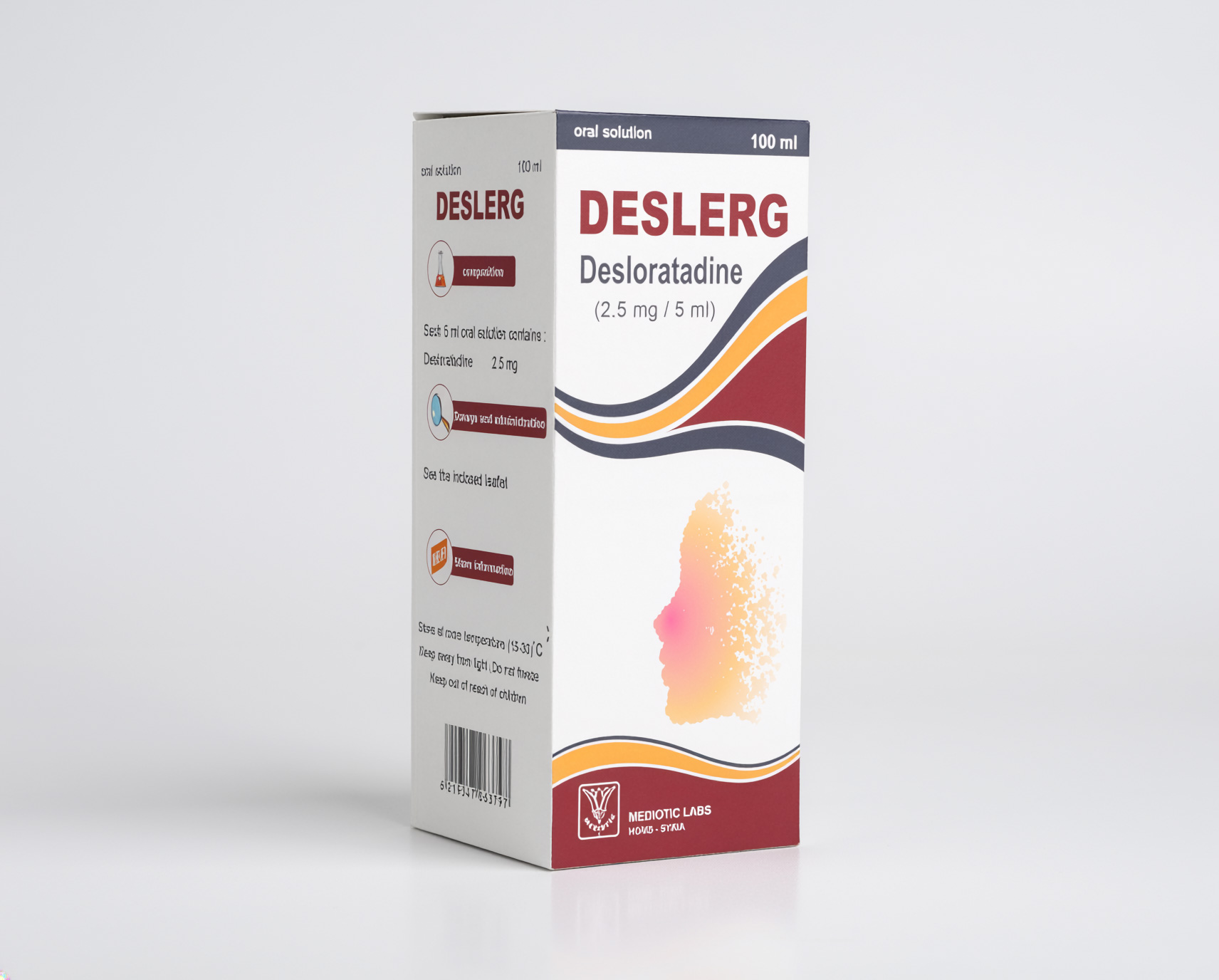
100 ml amber glass bottle with an aluminum cap/carton box.
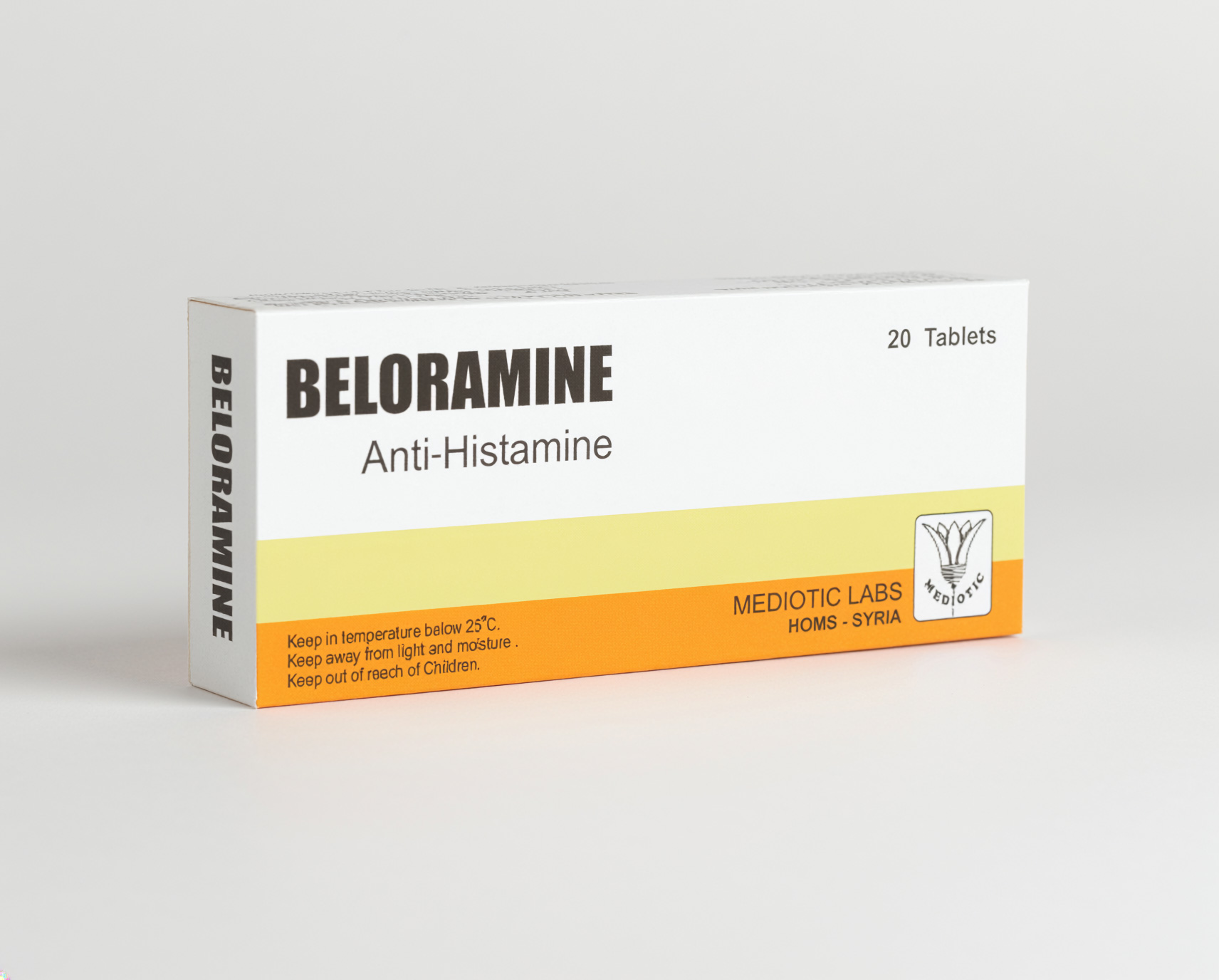
2 blisters, each contains 10 F.C.T/Carton box